AI Checker
Plagiarism Checker
Grammar Checker
Content Quality
Guideline Checker
Readability Checker
Fact & AI Hallucination Checker

Extensions
MCP

Pinterest is one of the most used platforms for fitness inspiration and workout planning.
For many people, it’s where they seek out their first strength training program, look up how to do a pull-up correctly, or discover a beginner running plan for their first 5K.
The concern is that AI-generated content has made its way into the fitness blog ecosystem at significant scale, and fitness content carries its own set of risks.
Following probable AI-generated fitness guides with incorrect progressive overload advice, poor form cues, or an unsupported injury prevention protocol can risk a genuine injury.
A 2022 research study around fitness center injuries identifies improper exercise technique as one of several contributing factors behind gym-related injuries.
For beginner exercisers, one of the most common Pinterest fitness audiences, guidance on form, intensity, and progression isn’t optional context. It’s what makes a workout guide useful or potentially dangerous.
We set out to measure how widespread the probable AI content problem is in fitness guides on Pinterest.
Using the same Playwright system developed for our medical diet and weight loss supplement Pinterest studies, we scraped 1,250 fitness guide URLs across 25 workout and exercise keywords (50 per keyword), filtered the dataset to blog content only, and ran each through the Originality.ai detection API.
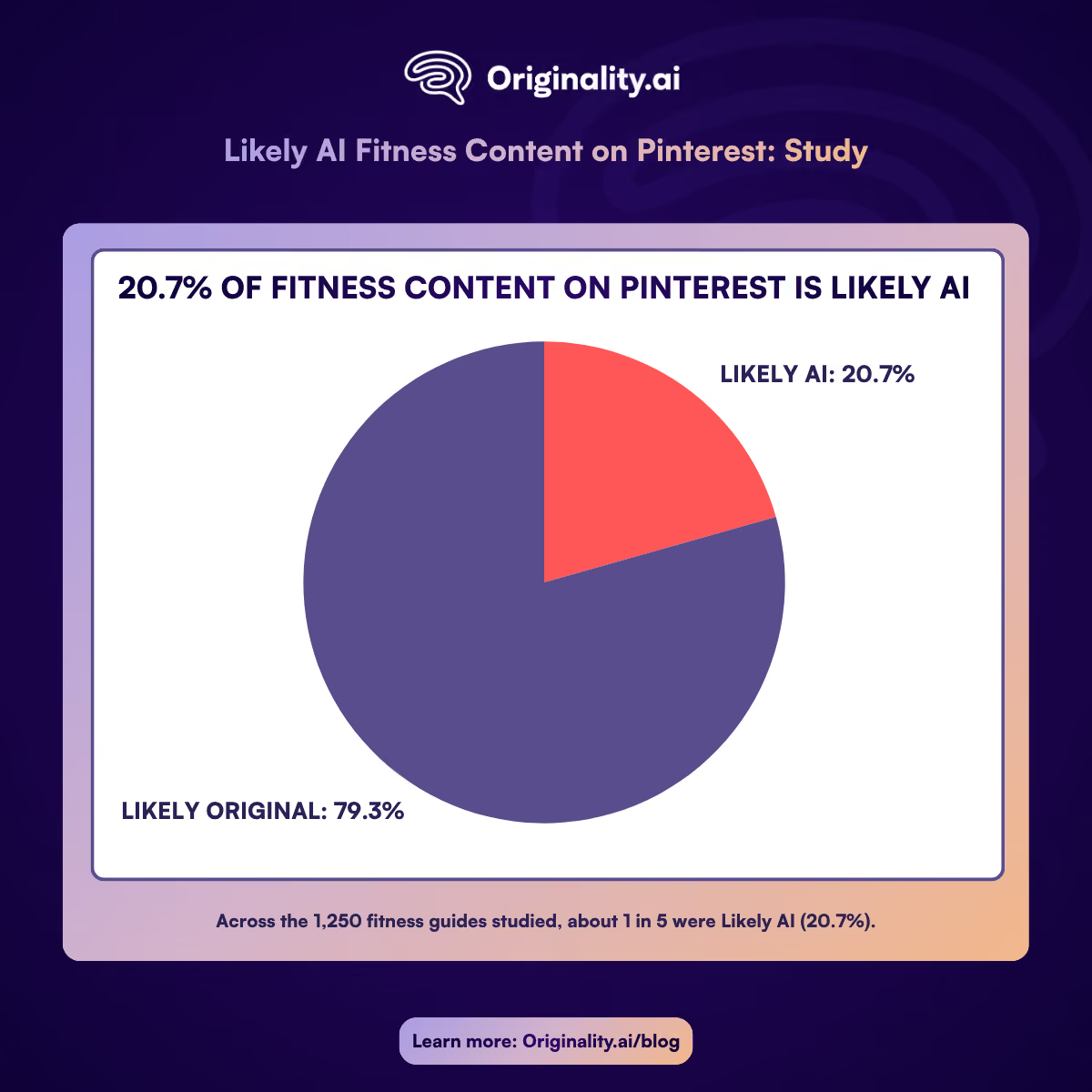
Of the 1,250 URLs scored, 259 (20.7%) were classified as Likely AI, or roughly 1 in 5 fitness guides surfaced on Pinterest to people actively planning workouts.
The fitness category's relatively high probable AI rate reflects that it’s one of the highest-value categories for AI content operations.
Fitness content is also particularly easy to generate convincingly: it consists of familiar exercise names, rep and set schemes, and general wellness language that AI handles fluently.
However, this poses a concern that possible AI-generated fitness guides are harder for casual readers to identify as inauthentic. Especially considering studies have proven that humans have difficulty identifying AI content.
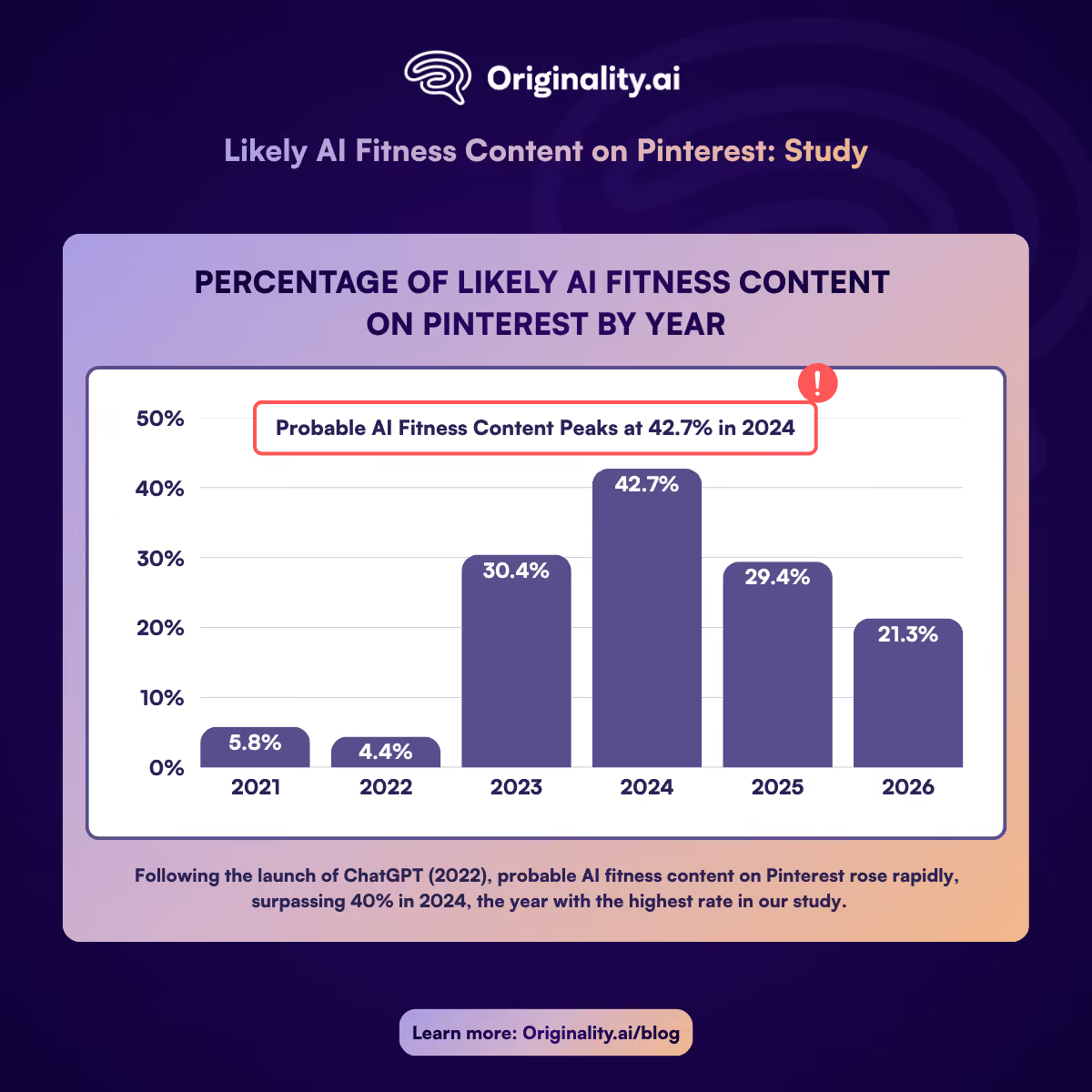
The relationship between publication year and AI detection rate is a notable finding in the fitness dataset.
Among fitness guides with a valid publication date:
The year-by-year breakdown of probable AI guides shows a clear inflection point.
Note: 2026 takes into account only the first half of the year. Additionally, publication dates were available for 82.4% of URLs (1,030 of 1,250). The remaining 17.6% returned no detectable date metadata and are excluded from year-based analysis.
Goal-based fitness keywords had the highest AI rate of any category at 23%, with 79 of 349 guides flagged.
These are the keywords that attract some of the most motivated, and therefore most vulnerable, Pinterest users: people who have a specific outcome in mind (lose belly fat, build muscle, lose weight) and are looking for a structured plan to get there.
They are also the keywords where possible AI-generated misinformation is consequential, because goal-specific fitness content tends to make more specific claims about timelines, caloric deficits, and exercise selection.
16 of 50 guides were flagged as probable AI content for one of the most safety-critical keywords in the study. A person searching for injury prevention information is either recovering from an injury or trying to avoid one.
In either case, wrong information could result in just what the keyword is supposedly trying to avoid or prevent — injuries.
One guide flagged as Likely AI describes the ACL as a stabilizer that "prevents the knee cap from sliding during movements," which is an anatomically incorrect description.
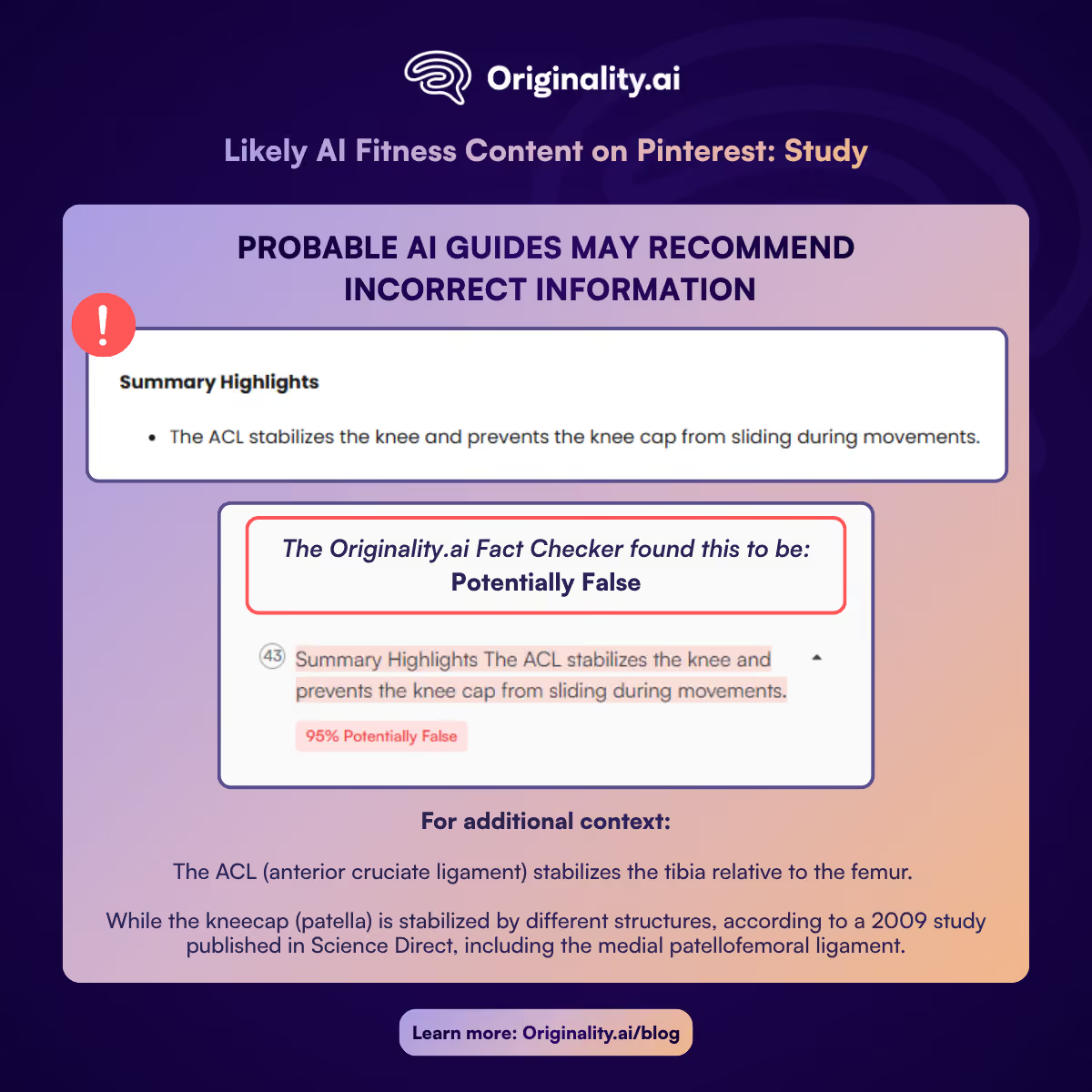
According to an orthopedic clinic’s guide, the ACL (anterior cruciate ligament) stabilizes the tibia relative to the femur. The kneecap (patella) is stabilized by different structures, according to a 2009 study, including the medial patellofemoral ligament.
Considering that this article also mentions it was written by a licensed physical therapist assistant, the incorrect information poses clear concerns, especially if readers unfamiliar with injury prevention and physical therapy were to rely on it.
14 of 50 guides were flagged. "Spot reduction," or the idea that you can target fat loss in a specific body area (like belly fat in the case of this keyword) through exercise, is one of the most consistently debunked myths in exercise science.
The American Council on Exercise has directly addressed this, noting there is no evidence that exercising specific muscles causes fat loss in that area.
Training concept keywords had the second-highest AI rate at 22%, with 54 of 250 guides flagged. This category includes some of the most technically demanding content in the study: progressive overload, functional fitness, and workout recovery.
Here, specific, accurate information matters. This poses concerns when AI can generate confident-sounding guidance that may contradict established exercise science.
16 of 50 progressive overload workout guides were flagged as Likely AI.
Progressive overload is one of the foundational concepts in exercise science.
Details matter here: how much to increase, over what timeframe, and how to manage fatigue alongside progression are all questions with evidence-based answers that vary significantly by training age and goal.
One guide flagged as Likely AI presents itself as suitable for everyone, "whether you're new to fitness, a bit experienced, or a total pro," then prescribes a progression cycle that culminates in "6 sets of 4 reps till failure."
However, the American College of Sports Medicine 2026 guidance advises that “training to fatigue or momentary muscle failure… did not consistently impact outcomes for the average healthy adult.”
13 of 50 guides were flagged. "Functional fitness" has a specific meaning in exercise science a.k.a training movement patterns, with the goal of improving performance in everyday activities.
Probable AI guides could conflate functional fitness with general fitness and recommend exercises based on the word "functional" without explaining the movement pattern rationale, or define the term in ways that contradict the academic literature.
Exercise modality keywords had the lowest AI rate at 19%, with 126 of 651 guides flagged.
These may be the most straightforward keywords to generate AI content for, which may explain why they attract a higher volume of both human and AI content, and a slightly lower relative AI rate.
However, there were still concerning findings in this category. See the image below, then keep reading for more details.
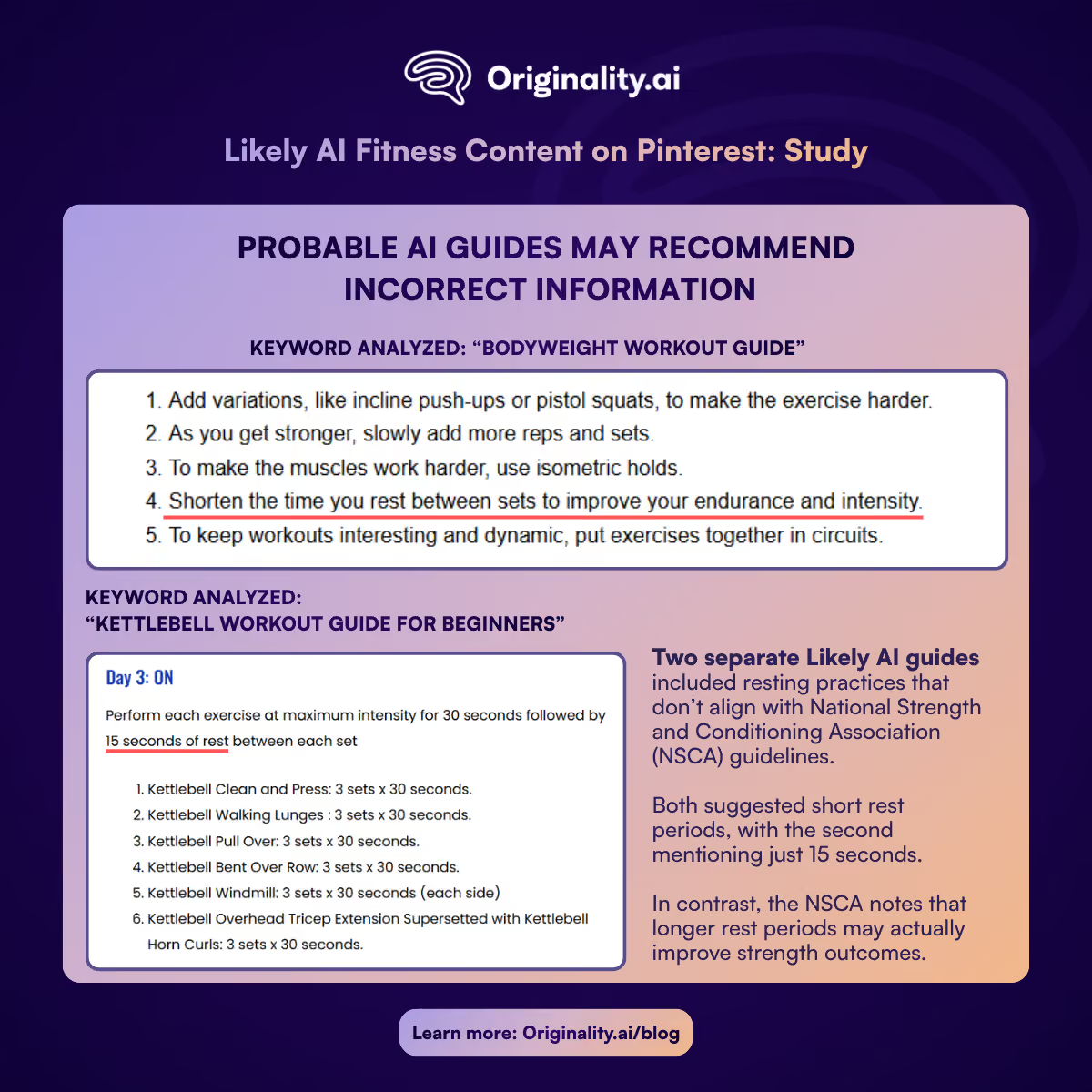
17 of 50 bodyweight guides were flagged, tied for the highest rate by keyword in the dataset.
One guide flagged as Likely AI describes itself as a beginner bodyweight workout and, within the same article, recommends one-arm push-ups and pistol squats as progression targets.
These are two of the most technically demanding bodyweight movements, requiring exceptional stability, balance, and mobility that beginners simply haven’t had the time to develop.
The guide also advises "Shorten the time you rest between sets to improve your endurance and intensity."
However, when it comes to general strength training, this contradicts the NSCA, which notes that longer rest periods may actually improve strength outcomes.
17 of 50 kettlebell guides were flagged, tying it with “bodyweight workout guide” for the highest rate of probable AI content by keyword in the study.
One guide flagged as Likely AI prescribes a 4-day HIIT kettlebell programme in which exercises are performed "at maximum repetitions for 30 seconds", with only 15 seconds of rest, including kettlebell cleans, presses, and windmills, which are technically demanding movements requiring established movement competency.
This directly contradicts NSCA guidelines for resistance training, which emphasize longer rest intervals for strength and power development: “longer rest intervals of at least 2–3 minutes for primary, multiple-joint exercises are typically recommended during adult resistance training programs.”
Exercise guidance requires accurate information about movement mechanics, appropriate loading, rest and recovery, and progression.
A beginner who follows a fitness guide may not have pre-existing knowledge to filter out bad advice. They could follow what the guide says, with their body bearing the consequences of whatever errors the guide contains.
The injury prevention and beginner categories are the most concerning.
A person searching for injury prevention information is trusting that the guide they find has been written by someone with knowledge of injury mechanisms and rehabilitation principles.
An AI that generates injury prevention content has no such knowledge; it generates text that sounds authoritative because it has learned to produce fitness-sounding language, not because it understands the biomechanics involved.
Red flags:
What to do instead:
Roughly 1 in 5 Pinterest fitness guides is likely AI-generated.
By category, the probable AI rate is highest for goal-based fitness content, which includes keywords or topics like injury prevention, where accurate information is crucial and wrong guidance can have direct physical consequences.
At 28.3% among guides published since 2022, probable AI content has also significantly risen since before ChatGPT was launched (late 2022).
Pinterest's fitness content reaches people who are trying to improve their health. They deserve to know whether the guide they're about to follow was written by a qualified human or generated by a model that has learned to sound like one.
Not sure if a fitness guide you’re reading is real or Likely AI? Check it with Originality.ai.
Further Reading:
We collected fitness guide URLs by automating a Pinterest search session using the Playwright browser automation library, the same system developed for our medical diet, U.S. hiking, Canadian hiking, and weight loss supplement Pinterest studies.
For each of the 25 target keywords, the system logged into Pinterest, navigated to the search results page, collected pins in relevance order (most relevant first), and extracted the outbound destination URL from each pin along with the publication date where available.
Before any URL was scored, it was passed through a blog content filter that excluded gym equipment retailers, activewear brands, fitness apps and platforms, interactive workout builders, affiliate redirects, social media profiles, and official medical authority sites. Only independent blog content was retained for scoring.
URLs were passed to the Originality.ai API for AI detection scoring. Each URL received a probability score between 0 and 1 and was classified as Likely AI if the score was 0.5 or above.
Target keywords were selected across three tiers: 13 exercise modality keywords, 7 goal-based fitness keywords, and 5 training concept keywords. All data collection was completed in 2026.

AI & Plagiarism Detector for Serious Content Publishers
Originality.ai
64 Hurontario St
Collingwood, Ontario
L9Y 2L6