AI Checker
Plagiarism Checker
Grammar Checker
Content Quality
Guideline Checker
Readability Checker
Fact & AI Hallucination Checker

Extensions
MCP

Pinterest has become one of the most popular starting points for planning outdoor adventures.
Whether someone’s mapping out their first national park visit or researching a multiday backcountry route, hiking guides shared on Pinterest are often among the first resources they seek out before booking flights or packing a bag.
The concern is that probable AI content has made its way into the travel blog ecosystem just as it has in recipes for medical diets, reviews (such as for holiday shopping), and even ‘success’ self-help books.
An AI model writing about "the complete guide to hiking to (destination)" may not know which trails require permits this season, whether a route has been rerouted after storm damage, or that water availability on a given trail changes year to year. For hikers heading into remote terrain, it can be genuinely dangerous to rely on AI information.
Outside of guides on Pinterest, the concern around AI hiking content is already well-documented.
In 2025, Sandra Riches, executive director of BC AdventureSmart, told Canada's National Observer that when hikers trust AI routes without cross-referencing official sources, "they have that risk of getting lost or putting themselves in unsafe situations."
A HuffPost article that same year featured a travel professional who used AI for travel recommendations when planning a family trip. AI continuously recommended they go on a waterfall hike in the Smoky Mountains — despite the fact the trail was closed for an 18-month rehabilitation project.
So, at Originaity.ai, we set out to measure how widespread the impact of probable AI hiking guides is on Pinterest, specifically.
Using the same Playwright browser automation library developed for our medical diet Pinterest study, we analyzed 1,000 hiking guide URLs from Pinterest searches across 40 U.S. national parks and backcountry trail keywords, then ran each through the Originality.ai detection API.
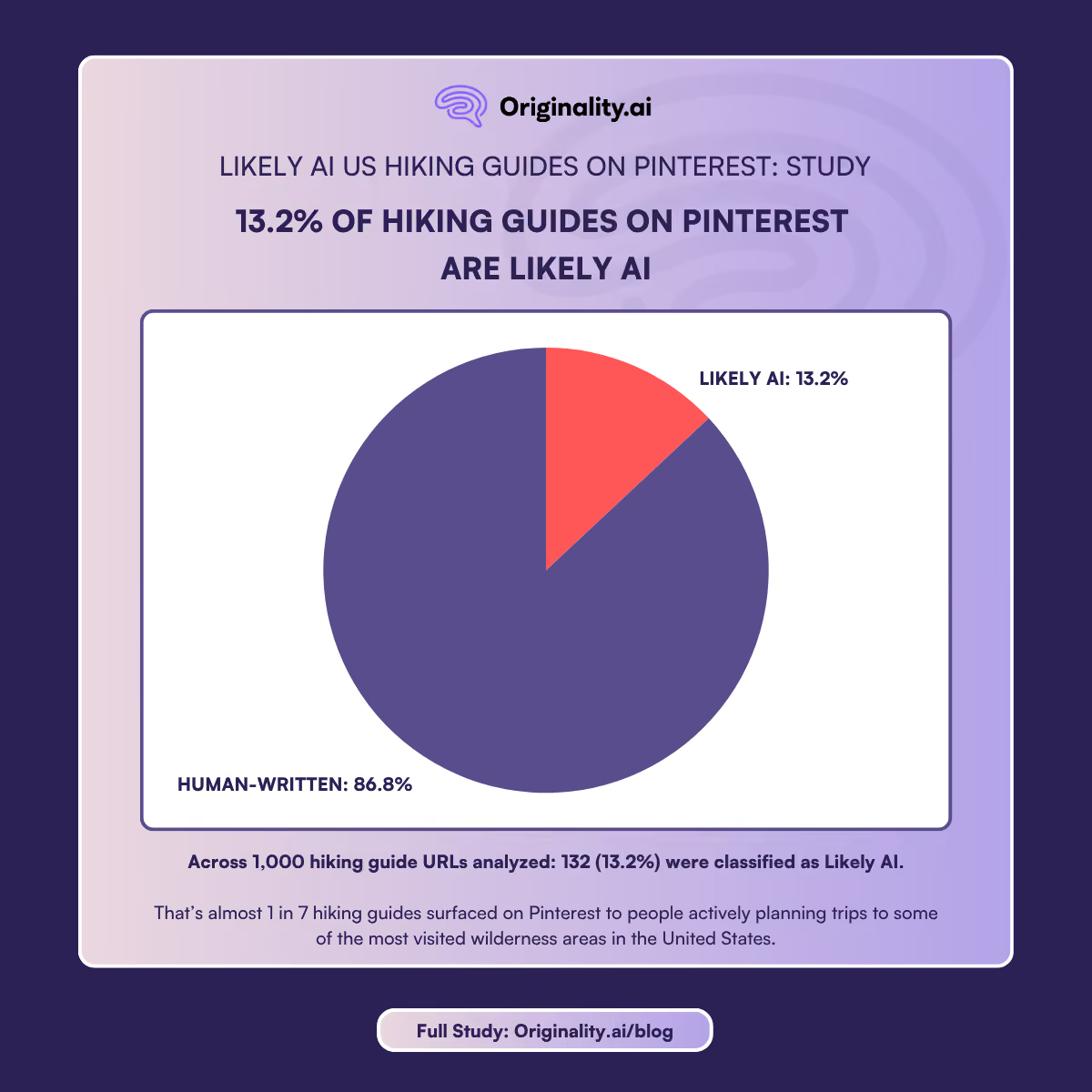
Of the 1,000 URLs scored, 132 (13.2%) were classified as Likely AI.
That’s almost 1 in 7 hiking guides surfaced on Pinterest to people actively planning trips to some of the most visited wilderness areas in the United States.
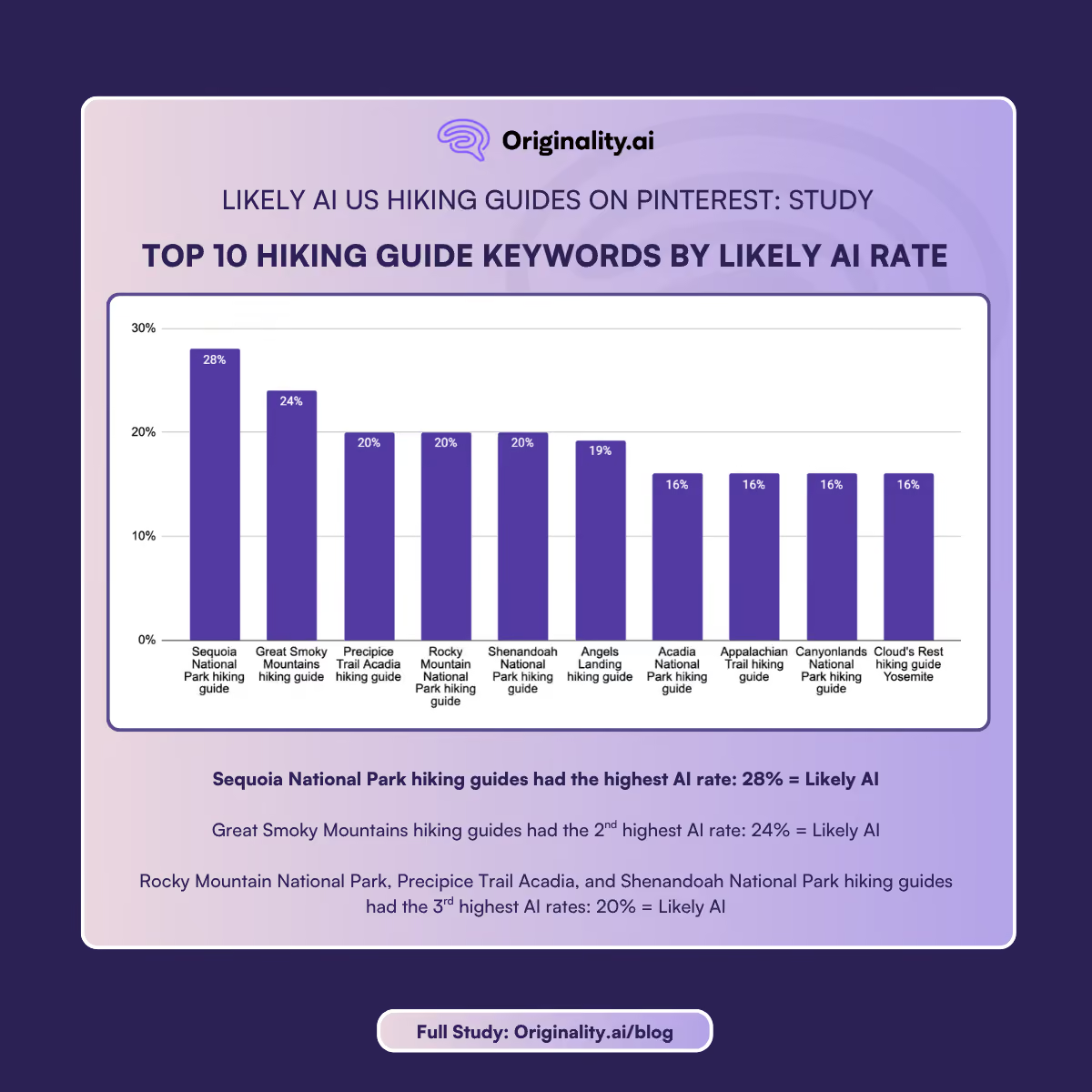
Sequoia had the highest AI rate in the study, with 7 of 25 scored guides flagged.
It’s a logistically complex park to visit: road access to key areas like Moro Rock is restricted by a shuttle system during peak season, and closed in the winter due to snow.
If you’re visiting General Sherman Tree (approx. 2,200 years old), NPS advises preparing for an intensive hike back “Be prepared for a 200 foot uphill climb when returning from your hike to the main Sherman parking lot” (except in summer when they note that a shuttle service is available by hiking to the accessible parking lot).
Further, trail availability and conditions can change significantly depending on the season.
If AI is generating a hiking guide and relying on training data from a prior season, it may confidently describe a shuttle stop, trailhead access, or road restriction that no longer functions as described.
Six of 25 Smoky Mountains guides were flagged, the second-highest rate in the study.
This finding echoes a documented real-world incident: a travel industry professional told HuffPost in 2025 that she had asked AI to recommend a hike in the Smokies, and it repeatedly suggested Laurel Falls, which was closed for an 18-month rehabilitation project at the time, which she found out through a Facebook page.
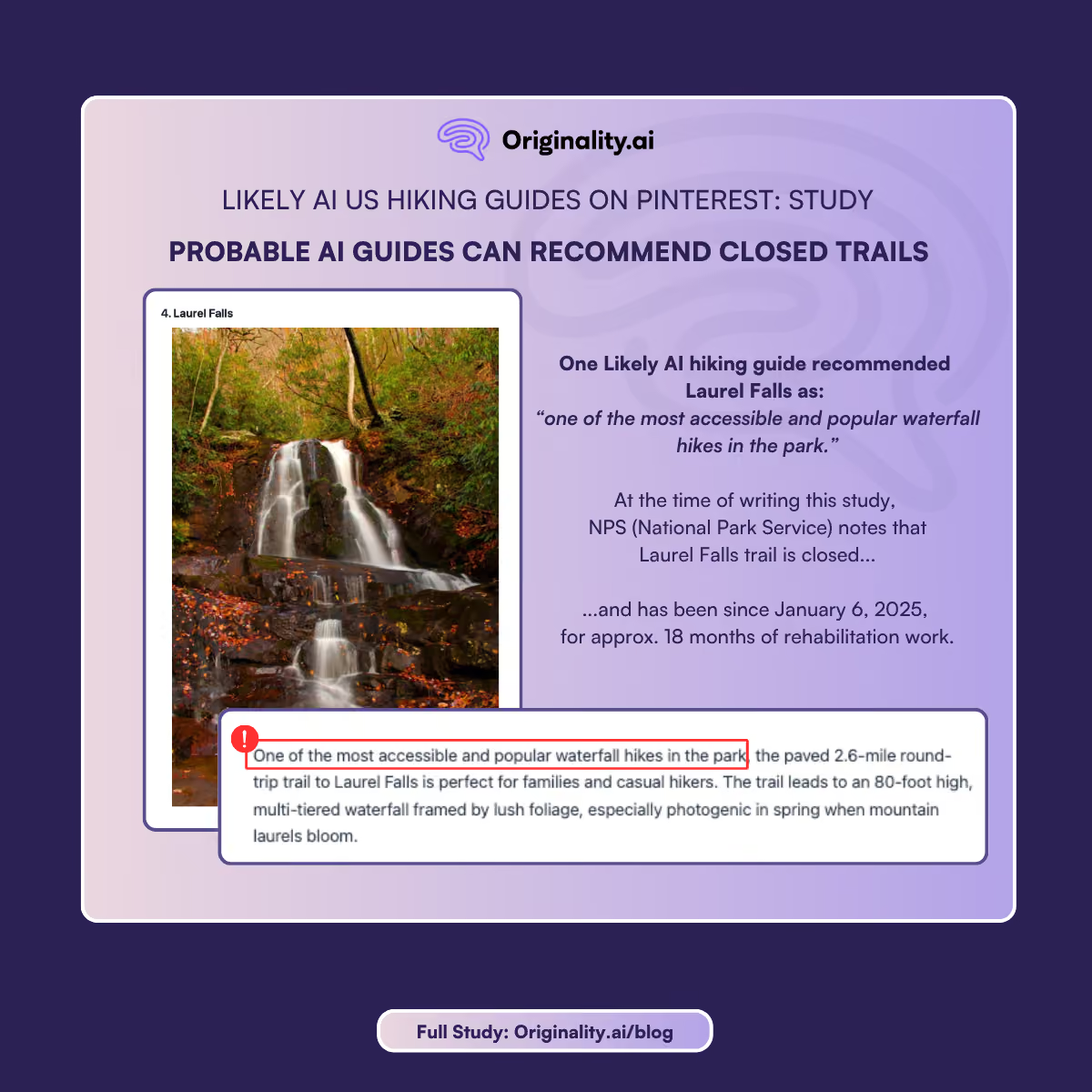
At the time of writing this article, the Laurel Falls trail is still closed, according to the NPS, “Laurel Falls Trail is closed as of January 6, 2025, for about 18 months of rehabilitation work.”
Yet, in this investigation, we came across one Likely AI post titled “Great Smoky Mountains National Park Tennessee: 1st Time Visitor Guide” that recommended Laurel Falls as “one of the most accessible and popular waterfall hikes in the park.”
The Smokies are the most visited national park in the U.S., with just under 12 million visitors annually and no entrance fee (although parking tags are required if you park for 15+ mins).
That combination drives high search volume and significant incentive for AI content farms to target the keyword.
The park's trail network is large and complex enough that errors in specific trail descriptions can be hard for first-time visitors to identify.
For Rocky Mountain, Precipice Trail Acadia, and Shenandoah guides, five out of 25 guides were flagged as being Likely AI (20%).
Rocky Mountain National Park in Colorado is one of the most logistically complicated parks in the country to plan around. The Timed Entry Permit system means reservations are required.
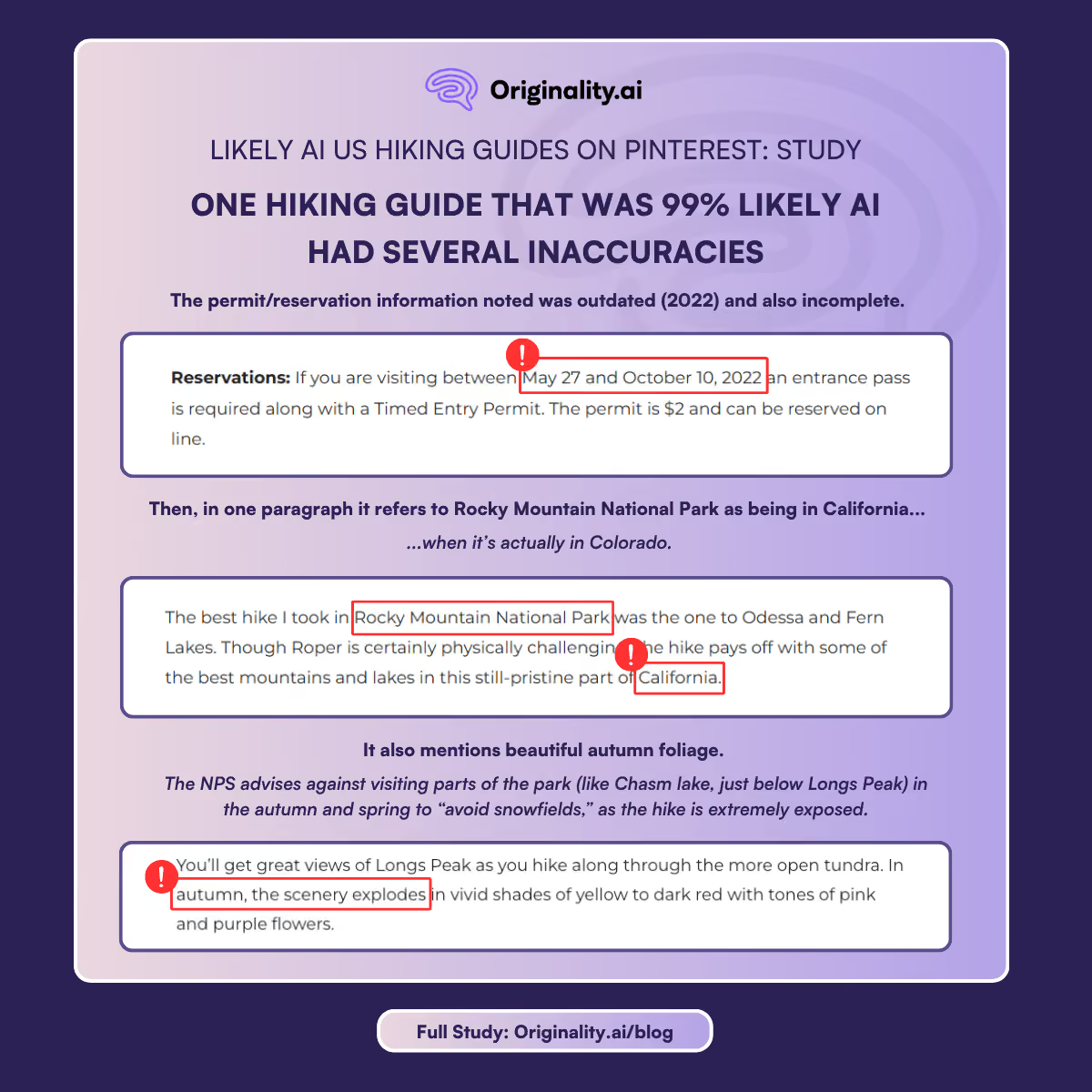
In one article titled “Perfect 3-Day Itinerary Rocky Mountain National Park: Epic Drive on Trail Ridge Road & Hike to Lakes,” flagged as 99% Likely AI, we found numerous inaccuracies.
Although the guide mentions that reservations are required, “Reservations: If you are visiting between May 27 and October 10, 2022 an entrance pass is required along with a Timed Entry Permit” it sends readers to Bear Lake Trailhead without clearly mentioning the separate Time Entry + Bear Lake Road permit required.
The permit information noted was also outdated (2022), and in one paragraph refers to Rocky Mountain National Park as being in California, when it’s actually in Colorado.
NPS says trail conditions in Rocky Mountain can change rapidly, making inaccurate information all the more dangerous.
As of early April 17, 2026, it reported dry lower-elevation trails but snow, ice, postholing, and avalanche concerns above about 9,000 feet, with traction devices recommended on many routes. That means hiking advice that treats the park like a regular destination can understate the real challenge, especially on high routes
In the same probable AI Rocky Mountain hiking guide example as above, the guide includes a line that mentions that the hike features beautiful autumn foliage, while the official NPS website actually advises against visiting parts of the park (like Chasm Lake, just below Longs Peak) in the autumn and spring to “avoid snowfields,” as the hike is extremely exposed.
Precipice Trail in Acadia is one of the most exposed and technically demanding hikes on the East Coast, with iron rungs and ladders bolted to cliff faces (climbing 1,000 feet in just under a mile). The NPS warns that the trail isn’t recommended for small children, for those with a fear of heights, or in any wet weather conditions.
Shenandoah likely draws a high volume of beginner hikers due to its proximity to Washington DC, making it a natural target for AI content ranking on broad keywords.
Probable AI rates alone don’t capture the full picture here.
Angels Landing came in at 19% Likely AI and Grand Canyon at 8% Likely AI, considerably high but not at the top of the list.
However, these are two of the most dangerous hiking destinations in the U.S. national park system, and the consequences of wrong information on these specific trails can be very dangerous.
Five of 26 Angels Landing guides were flagged as likely AI. This is the result that most directly illustrates the safety stakes of this study.
Angels Landing is one of the most famous and genuinely dangerous hikes in the national park system. The hike spans 2.5 miles and reaches heights of 1500ft.
Since 1989, 16 reported fatalities have occurred on the trails, according to a 2026 Department of Parks, Recreation, and Tourism report.
Since 2022, the NPS has required a permit system for the chains section, which is oversubscribed and competitive.
The same report as noted above, published by the Department of Parks, Recreation, and Tourism states, “Sensationalized and often misrepresentative news articles, websites, and blog posts have made outlandish and sometimes contradictory claims about the dangers associated with hiking the Angels Landing trail.”
One Likely AI hiking guide that includes Angels Landing, published in 2026, fails to adequately explain the considerable height that hikers could be at (1500 ft). Although it did mention that those with a fear of heights should avoid the trail and noted it could be daunting for some, it also described the hike as “moderate.”
Considering that the trail has had documented fatalities, without the full context of the exceptional heights the hike reaches, hikers planning their trip could be concerningly unprepared.
Further, the article omitted mentioning that a permit system is required to complete the hike.
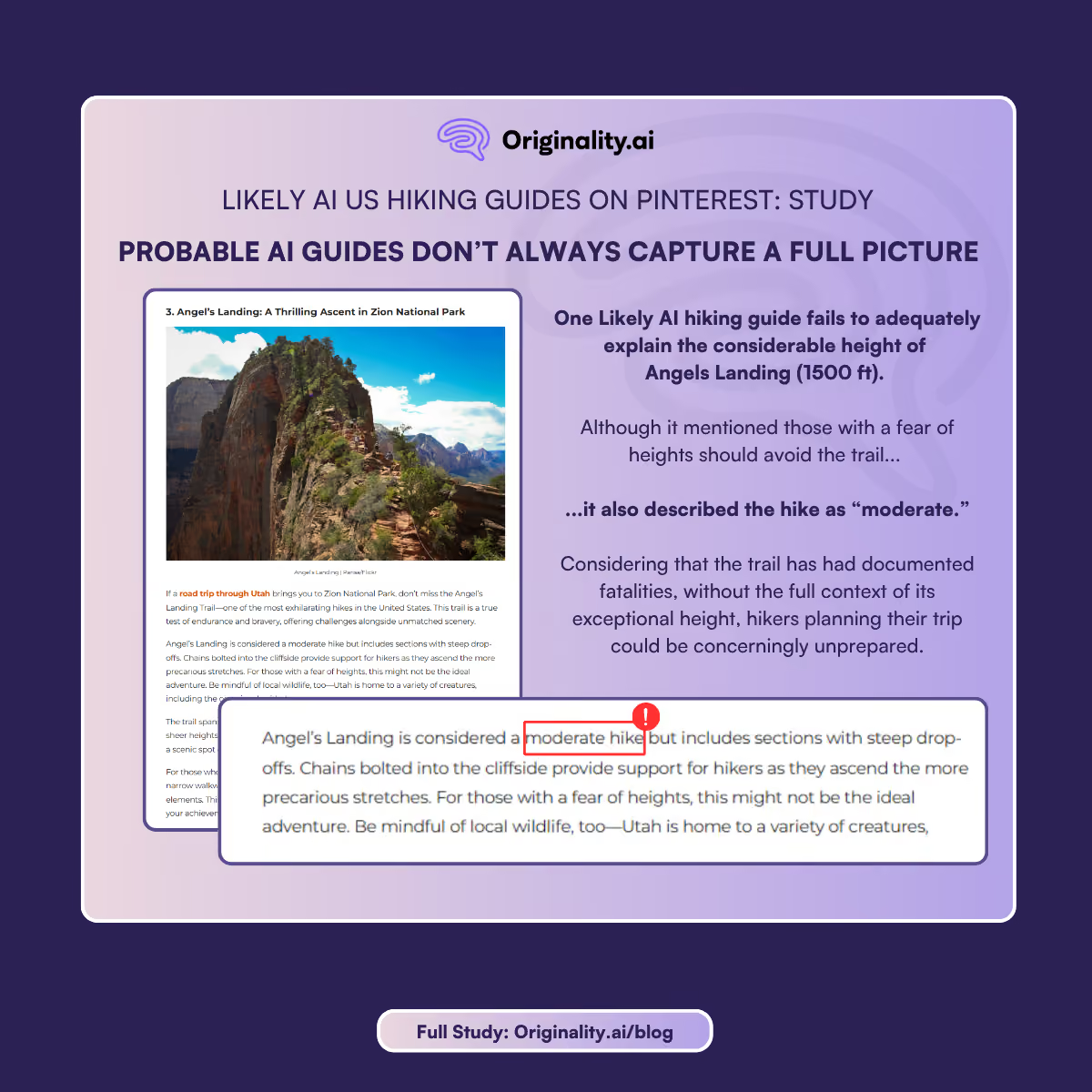
An AI guide that fails to accurately describe the permit requirement, the genuine difficulty of the route, or the conditions that make the hike dangerous is not providing safety-relevant information to people making real decisions about whether and how to attempt one of the most hazardous routes in the country.
Two of 24 Grand Canyon guides were flagged as probable AI content. The Canyon is one of the U.S. hiking destinations with the highest rescue volume, and it is also among the most dangerous due to heat, terrain, and exposure.
The NPS reports hundreds of search and rescue incidents annually (300+ on average). A 2018 study also noted that EMS (emergency medical services) workers attend 1,100 EMS incidents each year. This is often due to heat exposure on the corridor trails.
Accurate information about water cache availability, seasonal temperature extremes, and the route's difficulty is critical for anyone considering a hike.
Equally important is up-to-date information on trail and bridge closures, as following an outdated or closed route can leave hikers stranded in the inner canyon without a viable exit.
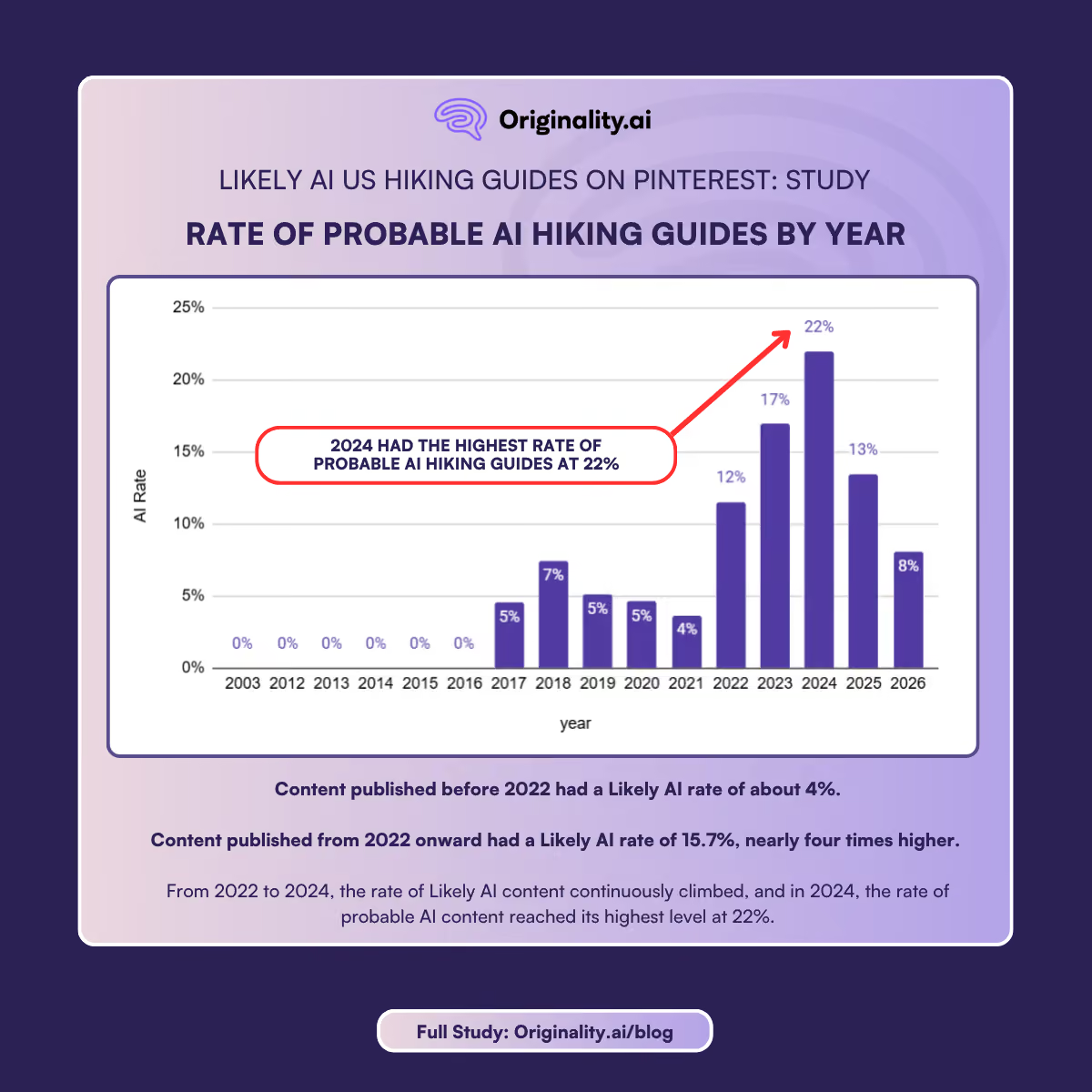
One of the clearest findings in this dataset is the relationship between publication year and AI detection rate. Content published before 2022 had a Likely AI rate of about 4%.
Content published from 2022 onward had a Likely AI rate of 15.7%, nearly four times higher. That inflection point corresponds closely with the launch of ChatGPT in November 2022.
From 2022 to 2024, the rate of Likely AI content continuously climbed, and in 2024, the rate of probable AI content reached its highest level at 22%.
From 2025 to 2026, the rate of Likely AI content interestingly drops, with just 8% so far in 2026. As the data for 2026 can only take into account the first few months of the year, it will be interesting to see if this trend continues as the year progresses.
While the majority of hiking guides on Pinterest are likely original, the presence of 13.2% probable AI content overall is still a cause for concern.
Likely AI-generated content about backcountry hiking carries big risks.
When a hiker follows a guide that understates a trail's difficulty, gives outdated permit information, or leaves out critical information about wildlife or other hazards, the real-life consequences play out in the wilderness.
Search and rescue operations in U.S. national parks are costly and dangerous for the rescue teams involved.
There are several distinct concerns with AI-generated hiking content.
Pinterest's algorithm surfaces this content to people who have signaled a clear intent to hike. At probable AI rates of 13.2% overall and 15.7% among guides published since 2022, almost 1 in 7 hiking guides may be AI-generated.
Red flags:
What to do instead:
Almost 1 in 7 Pinterest hiking guides for U.S. national parks and trails is likely AI-generated.
The probable AI rate is highest for Sequoia, then the Smoky Mountains, and the Rocky Mountain National Parks hiking guides.
Further, since ChatGPT launched in late 2022, the level of probable AI content has risen to an 15.7%.
In 2024, it reached its highest rate at 22% of hiking guides on Pinterest flagged as Likely AI.
The stakes here are high.
Hikers planning trips to these parks are making real decisions about gear, permits, fitness preparation, and route logistics based on what they read.
Probable AI content that gets those details wrong and delivers them in a confident and authoritative voice is a genuine risk to the people who trust it and act on it.
Not sure if something is Likely AI? Use Originality.ai’s AI Checker.
For this study, we collected recipe URLs by automating a Pinterest search session using the Playwright browser automation library.
For each of the 40 target keywords, the system logged into Pinterest, navigated to the search results page, scrolled to collect approximately 25 pins, and then visited each individual pin to extract the outbound destination URL along with the publication date of the destination page, where available. Out of the 1,000 hiking guide URLs, 54 (5.4%) were missing a date.
URLs were passed to the Originality.ai API for AI detection scoring. Each URL received a probability score between 0 and 1 and was classified as Likely AI if the score was 0.5 or above. Of the 1,000 URLs collected, all 1,000 (100%) returned a valid score.
Target keywords combined park or trail name with "hiking guide" to capture content signaling planning intent and authority. The 40 keywords covered major US national parks and backcountry trails and routes, selected based on NPS visitor statistics, known Pinterest search volume, and the safety significance of accurate trail information.
All data collection was completed in March 2026. Results reflect one crawl session per keyword and represent organic Pinterest search results as a user would encounter them.

AI & Plagiarism Detector for Serious Content Publishers
Originality.ai
64 Hurontario St
Collingwood, Ontario
L9Y 2L6