AI Checker
Plagiarism Checker
Grammar Checker
Content Quality
Guideline Checker
Readability Checker
Fact & AI Hallucination Checker

Extensions
MCP

With over 600 million monthly active users according to Statista, Pinterest has become one of the most popular spots to discover recipes for everything from weeknight dinners to the latest viral TikTok food trend.
It's also become a popular resource for people managing chronic medical conditions to seek out recipes that are safe for their specific diets. Someone diagnosed with celiac disease, a parent navigating a child's severe nut allergy, or an individual trying to figure out what a family member’s dietary requirements are; these are real people turning to Pinterest for dietary guidance.
The problem is that AI-generated content has flooded the recipe blog ecosystem, and it doesn't differentiate between a chocolate chip cookie and a kidney-safe meal plan.
For folks managing conditions like celiac disease, CKD (chronic kidney disease), type 2 diabetes, severe nut allergies, or IBS via the low FODMAP diet, that distinction matters a lot. A recipe that confidently labels a gluten-containing ingredient as "celiac safe," or recommends a high-potassium food to a kidney disease patient, isn't just wrong — it can cause serious harm.
We set out to measure how widespread this problem actually is.
We analyzed 1,109 recipe URLs from Pinterest search results across five medically sensitive diet categories and ran each through the Originality.ai AI detection API.
These are our findings.
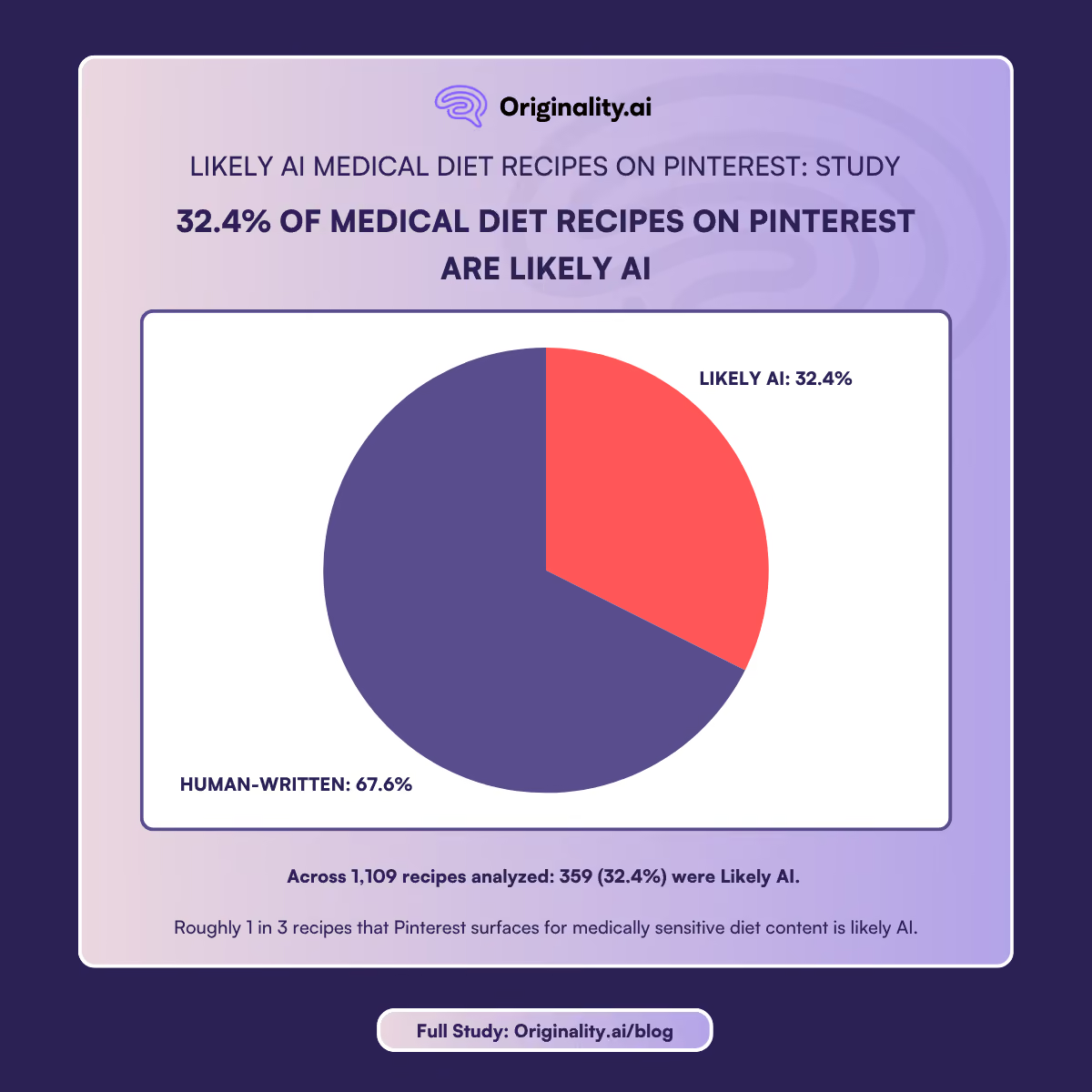
Across all 1,109 recipes analyzed, 359 (32.4%) were classified as Likely AI by Originality.ai AI detection.
This means roughly 1 in 3 recipes that Pinterest surfaces to people searching for medically sensitive diet content is likely generated by AI — instead of written by a human with lived experience, medical training, or even basic culinary knowledge.
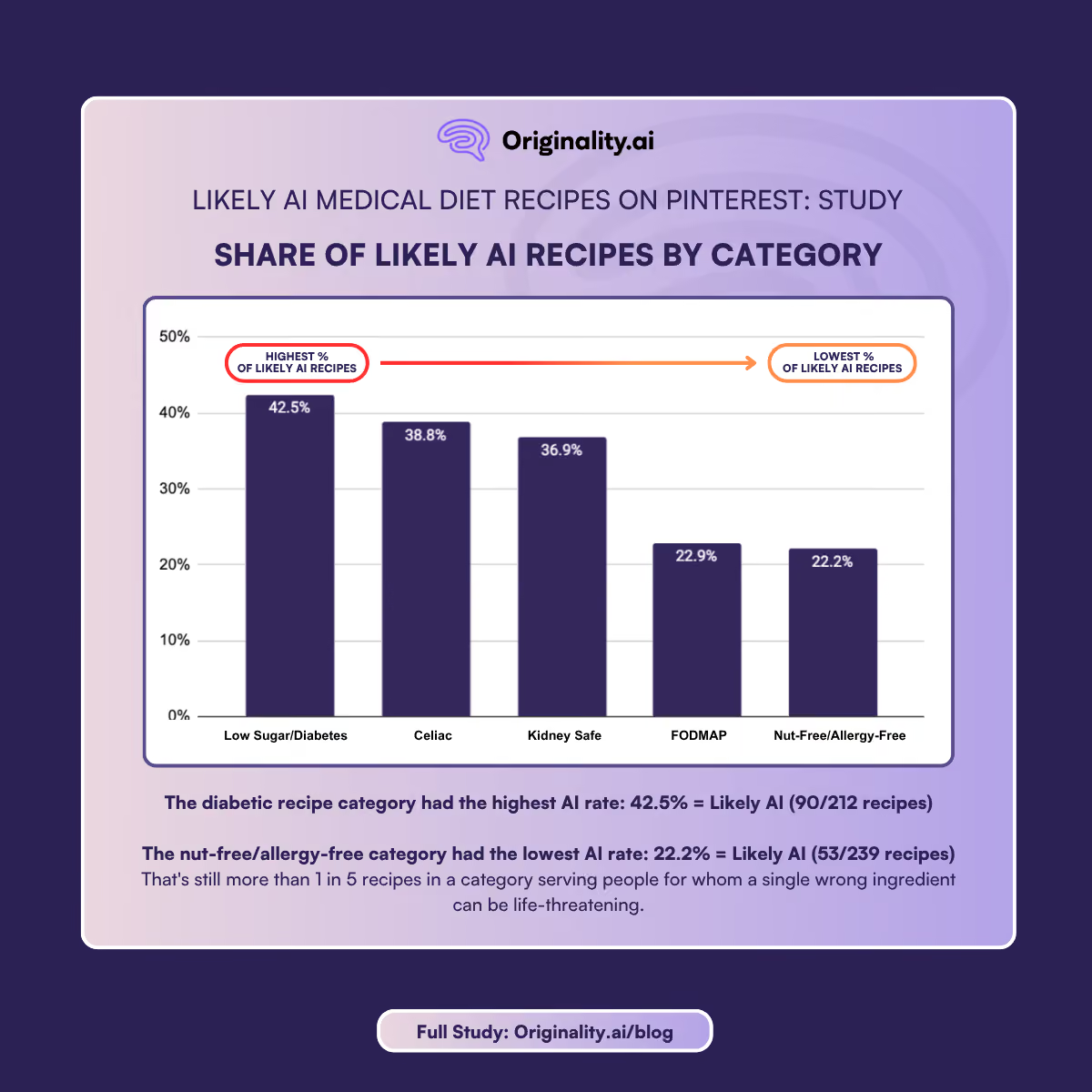
The diabetic recipe category had the highest AI rate in the study, with 90 out of 212 recipes (42.5%) classified as Likely AI.
That's nearly half of the diabetes recipe content Pinterest serves to people who are actively managing blood sugar.
This is a major red flag because glycemic accuracy is essential for diabetics. A recipe that may have inaccurate information about the carbohydrate content of an ingredient, incorrectly labels a high-glycemic food as "diabetic friendly," or leaves out relevant sugar content can significantly affect someone's glucose management.
The stakes are especially high considering the risk of hypoglycemia or dangerous blood sugar spikes.
In the diabetic category, 9 domains had 2+ recipes, all flagged as Likely AI, including one website with 13 recipes, all flagged as 100% Likely AI.
With 92 of 237 recipes (38.8%) flagged as Likely AI, the celiac category has the second-highest AI rate in this study.
That figure deserves emphasis.
Celiac disease is an autoimmune condition, not a dietary preference.
According to the Celiac Disease Foundation, even trace amounts of gluten can trigger an immune response in someone with celiac disease, causing intestinal damage that compounds over time.
The Celiac Disease Foundation notes that according to the FDA, for a product to receive a label of gluten-free, it must contain under 20 parts per million (ppm) of gluten.
The danger zone for celiac patients isn't always obvious gluten sources, like bread or pasta. It's the hidden ingredients like soy sauce (which often contains wheat), types of modified food starch, malt, or oats, as well as the risks of food processing in shared facilities.
A human recipe developer with celiac disease or close experience with it would typically know not to include these. An AI language model generating something like a "celiac safe chicken stir fry" is making probabilistic word choices based on training data, and could easily generate a recipe involving non-gluten-free safe ingredients.
One celiac community blogger noted seeing consistent errors in AI results while researching for their articles. They also noticed that AI features for reviews of products on Amazon were providing incorrect information about whether foods contain gluten or allergens.
"I have a pretty good grasp of the general ingredients in a large variety of foods," the author wrote, “This isn't usually the case for the newly diagnosed."
However, that's exactly who these Pinterest recipes are reaching.
In the celiac category, 9 domains had 2+ recipes they published flagged as Likely AI, including at least one whose name brands it as a trusted gluten-free resource.
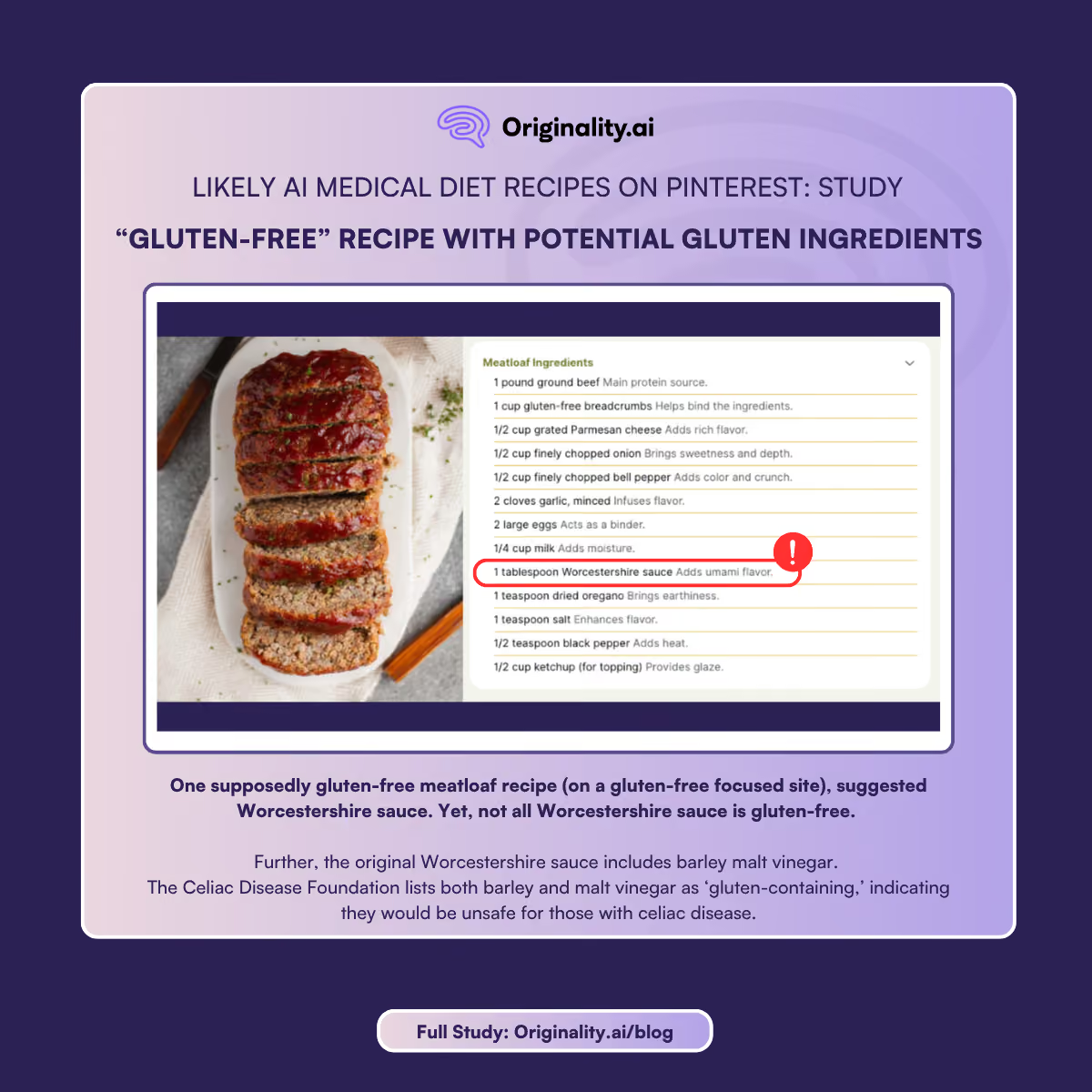
One gluten-free meatloaf recipe from a domain that brands itself as a gluten-free specific resource had “1 tablespoon Worcestershire sauce” as one of its ingredients.
According to Beyond Celiac, not all Worcestershire sauce is gluten-free; each product needs to be checked for its ingredients.
Further, the original Worcestershire sauce includes barley malt vinegar. The Celiac Disease Foundation lists both barley and malt vinegar as ‘gluten-containing,’ indicating they would be unsafe for those with celiac disease.
Chronic kidney disease (CKD) is one of the more nutritionally complex conditions to manage.
According to the National Kidney Foundation, patients may need to carefully monitor potassium, phosphorus, sodium, and protein intake.
Then they also need to take into account what stage of CKD they're in, whether they're on dialysis, and what medications they're taking.
There is no universal "kidney safe" diet; a food or diet that is safe for one CKD patient may be dangerous for another. An AI model generating a "kidney friendly" recipe may not have a nuanced understanding of these distinctions.
Yet 73 of 198 recipes (36.9%) in our kidney safe category were flagged as Likely AI.
AI might know that folks with kidney diseases should limit their potassium intake. However, if it’s suggesting a recipe, it might not mention whether the ingredients are high in potassium.
For instance, bananas, oranges, and winter squashes (foods commonly associated with "healthy eating") are high-potassium foods according to the National Kidney Foundation.
Depending on their medical professional’s advice, CKD patients may even be told to limit or avoid some of these entirely.
A newly diagnosed CKD patient, who may still be learning which foods to avoid and is trusting the internet to help them figure it out, may find it difficult to know the difference.
In the kidney safe category, 8 domains had 2+ recipes they published, flagged as Likely AI. One of those domains, whose name also signaled some sort of authority for CKD patients, had 14 recipes flagged as Likely AI.
The low FODMAP category had the second-lowest AI rate at 22.9% (51 of 223).
FODMAP compliance is one of the most technically complex diets and is mostly used by folks managing IBS and other digestive conditions to identify and avoid foods that trigger symptoms. The list of approved foods is maintained and regularly updated by Monash University, the institution that developed the diet.
What’s important to note is that many FODMAP foods are impacted by serving size, according to Monash University. For instance, some may be low FODMAP at small servings and problematic at larger ones.
This creates a nuance that requires not just knowing the ingredients, but knowing the serving size. The danger here is subtle: a recipe may look correct, while still recommending serving sizes or ingredient combinations that prompt symptoms.
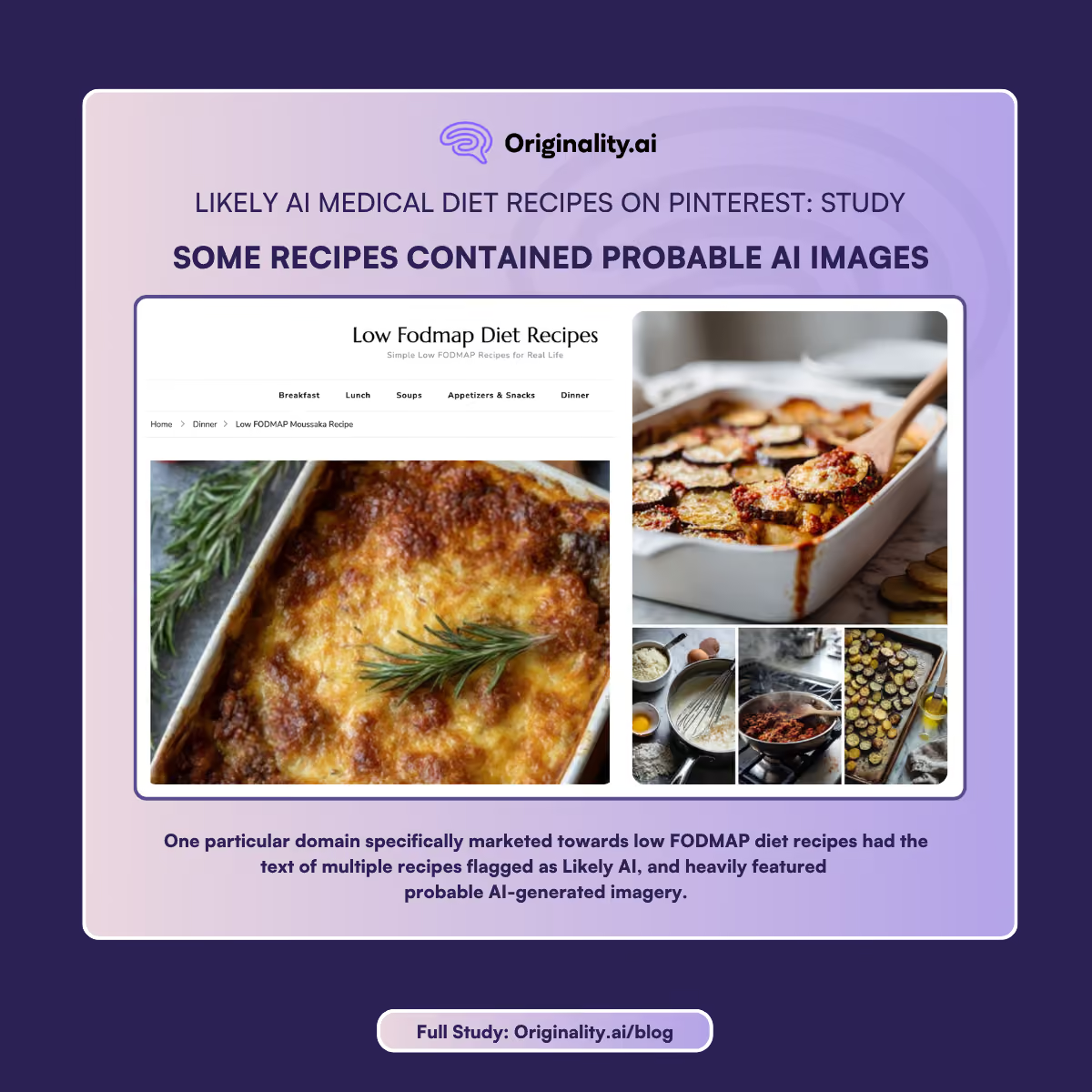
In the FODMAP category, 6 domains had 2+ recipes flagged as Likely AI, including one specifically targeting low FODMAP diet recipes.
One particular domain specifically marketed towards low FODMAP diet recipes had multiple recipes flagged as Likely AI, and heavily featured probable AI-generated imagery.
The nut-free/allergy-free category had the lowest AI rate in the study at 22.2% (53 of 239). That's still more than 1 in 5 recipes in a category serving people for whom a single wrong ingredient can be life-threatening.
Anaphylaxis, which can be life-threatening, results from accidental allergen exposure and can occur within minutes (or even seconds), including for some nut allergies like peanuts, according to the Mayo Clinic. For people managing severe tree nut or peanut allergies, and for the parents of children with these allergies, recipe accuracy poses a serious safety risk.
An AI-generated recipe that fails to flag shared-facility cross-contamination risks, or incorrectly identifies a nut-derived ingredient as safe, puts real people at real risk.
A 2023 Forbes article reported that the technology has already produced dangerous outputs in other contexts, including one incident where a supermarket AI recipe generator produced instructions that would have created chlorine gas.
In the nut-free category, 6 domains had 2+ recipes flagged as Likely AI. Among those, one domain had 6 of its recipes flagged as Likely AI.
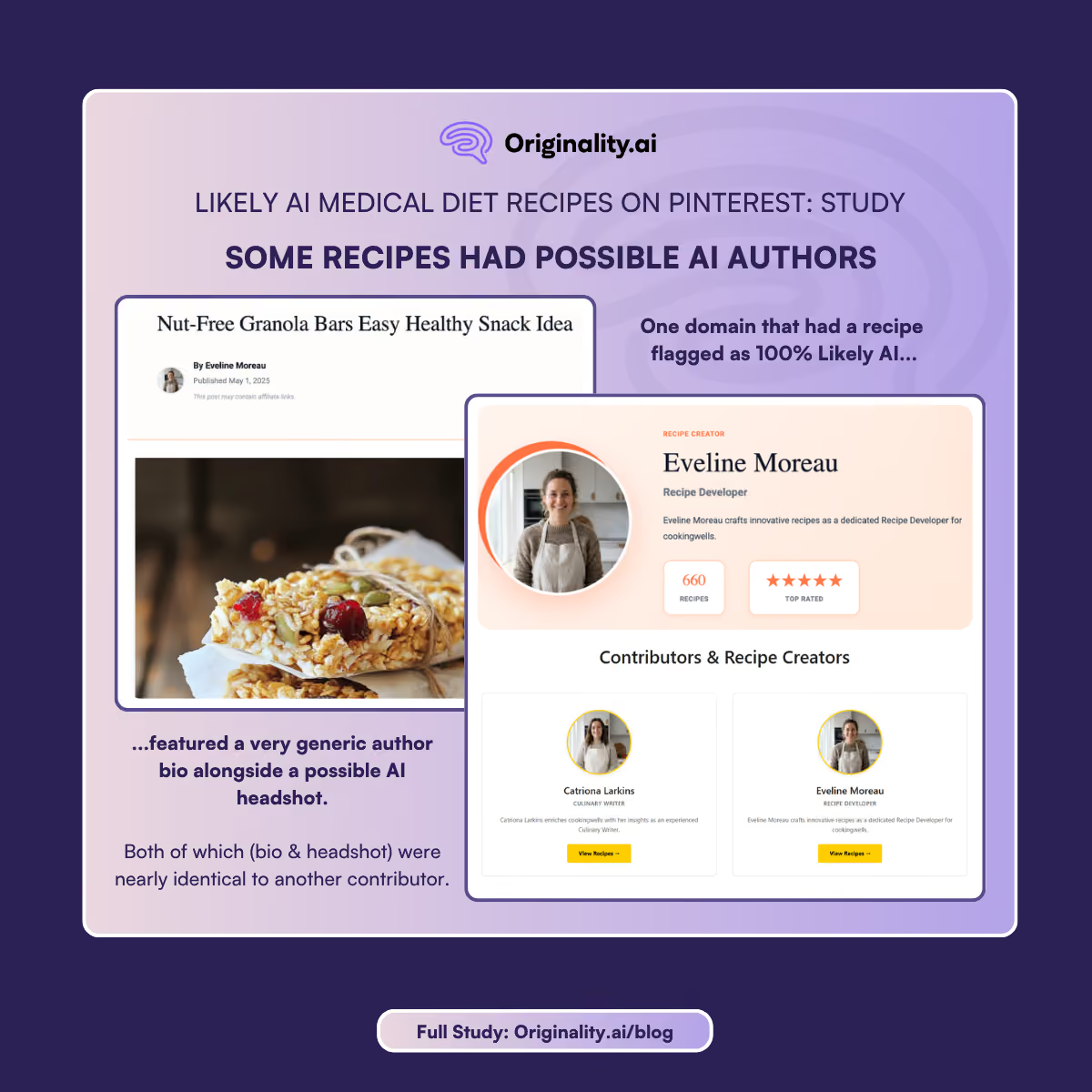
One keyword-stuffed recipe titled “Nut-Free Granola Bars Easy Healthy Snack Idea” was flagged as 100% Likely AI, and also features a generic author bio alongside a possible AI-generated headshot (both of which bio and headshot were nearly identical to that of another contributor).
One domain appeared with probable AI recipes across multiple categories: chefsbliss.com. It was flagged as 100% Likely AI for topics such as "kidney friendly dinner recipes," "3-ingredient diabetic recipes," and "dairy-free egg-free nut-free recipes."
In our domain-level analysis, chefsbliss.com had 22 Likely AI-flagged recipes, the highest of any domain in the dataset.
This is a theme that Originality.ai has documented in prior research on Amazon success books: a small number of high-volume operators can produce AI content at scale, in this case, specifically targeting highly searched medical health keywords.
The recipe blog world is developing a similar dynamic, and the consequences for people seeking dietary and medical guidance are high.
The five diet categories in this study aren’t just lifestyle choices. They’re medical diet protocols or strategies for real diseases and health conditions that require limiting specific ingredients.
There are two distinct risks at play. The first is the risk of a straightforward factual error, such as an unsafe ingredient listed as safe, an incorrect serving size, or a missing cross-contamination warning.
The second is more concerning: the confident, authoritative tone that AI-generated health content consistently adopts. As ECRI noted in its 2026 health technology hazard report, AI systems are designed to produce an answer and to sound like an expert doing it.
For instance, a language model could generate an article like "the complete guide to kidney-safe cooking" that sounds the same as a registered dietitian, but without any of the medical training, clinical judgment, or legal accountability.
To make matters worse, Pinterest's algorithm is surfacing this content to users who have explicitly signaled some sort of interest in the medical diet.
At a 32.4% overall probable AI rate (rising to 42.5% for Likely AI diabetic content), the platform may be serving probable AI-generated medical diet information to users, some of whom may not have experience with a particular medical condition to tell the difference if the content contains incorrect information.
Here's what to watch for to help identify AI content.
Red flags that a recipe may be AI-generated:
What to do instead:
Roughly 1 in 3 recipes surfaced for medically sensitive diet searches on Pinterest is likely AI-generated.
The problem is the most pervasive in diabetic and celiac content, where Likely AI rates exceed 38%. Further, our research also found that there are high-volume domains that seem to be operating probable AI content farms targeting medical health keywords.
At the end of the day, hallucinations in a recipe for someone with kidney disease or celiac disease can lead to a potential health emergency.
As AI-generated content continues to saturate health and recipe blogs, platforms need to implement tools to support users who are managing serious medical conditions.
Not sure if something is Likely AI or accurate? Use Originality.ai’s AI Checker and Fact Checker.
For this study, we collected recipe URLs by automating a Pinterest search session using the Playwright browser automation library.
For each diet category, the system logged into Pinterest, navigated to a keyword search results page, scrolled the feed to load at least 250 pins, and then visited each individual pin to extract the outbound destination URL (the actual recipe blog or article the pin links to).
URLs were then passed to the Originality.ai API for AI detection scoring. Each URL received an AI probability score between 0 and 1, and was classified as either "Likely AI" or "Not Likely AI" based on Originality.ai's detection model. Recipes were considered “Likely AI” if their AI score was 0.5 or over.
Some URLs were unable to be scanned by Originality.ai due to issues loading the content.
A total of 1,109 unique recipe URLs were successfully scored across five search queries:
Data collection and analysis were completed in March 2026. The dataset reflects organic Pinterest search results as a real user would encounter them.

AI & Plagiarism Detector for Serious Content Publishers
Originality.ai
64 Hurontario St
Collingwood, Ontario
L9Y 2L6