AI Checker
Plagiarism Checker
Grammar Checker
Content Quality
Guideline Checker
Readability Checker
Fact & AI Hallucination Checker

Extensions

Pinterest is a highly popular platform for health and wellness content.
For millions of people, it’s the first stop when researching a supplement, looking for advice on weight loss, or trying to understand whether a trending ingredient like berberine or turmeric actually works.
The problem is that probable AI-generated content has flooded the wellness content ecosystem just as it has in recipe blogs, review sites, and “success” self-help books.
A 2025 study that evaluated the reliability of an AI search engine responding to health queries about dietary supplements found that it frequently cited non-credible sources and provided ambiguous or inaccurate information. Only 48.5% of its responses included a recommendation to consult a healthcare professional.
A language model writing something like a "complete guide to berberine supplements" may not share information about drug interactions with metformin or verify whether dosage claims are supported by clinical evidence. Further, it may not disclose that the authoritative-sounding health advice it’s generating may be based on outdated or simply inaccurate information.
We set out to measure how widespread the probable AI content problem is in weight loss supplement guides on Pinterest, specifically in blogs that Pinterest's algorithm surfaces to people actively researching supplements.
Using the same Playwright system developed for our medical diet Pinterest study and U.S. hiking guide study, we scraped 2,600 weight loss supplement guides, blogs, and other content URLs across 26 keywords and ran each through the Originality.ai detection API.
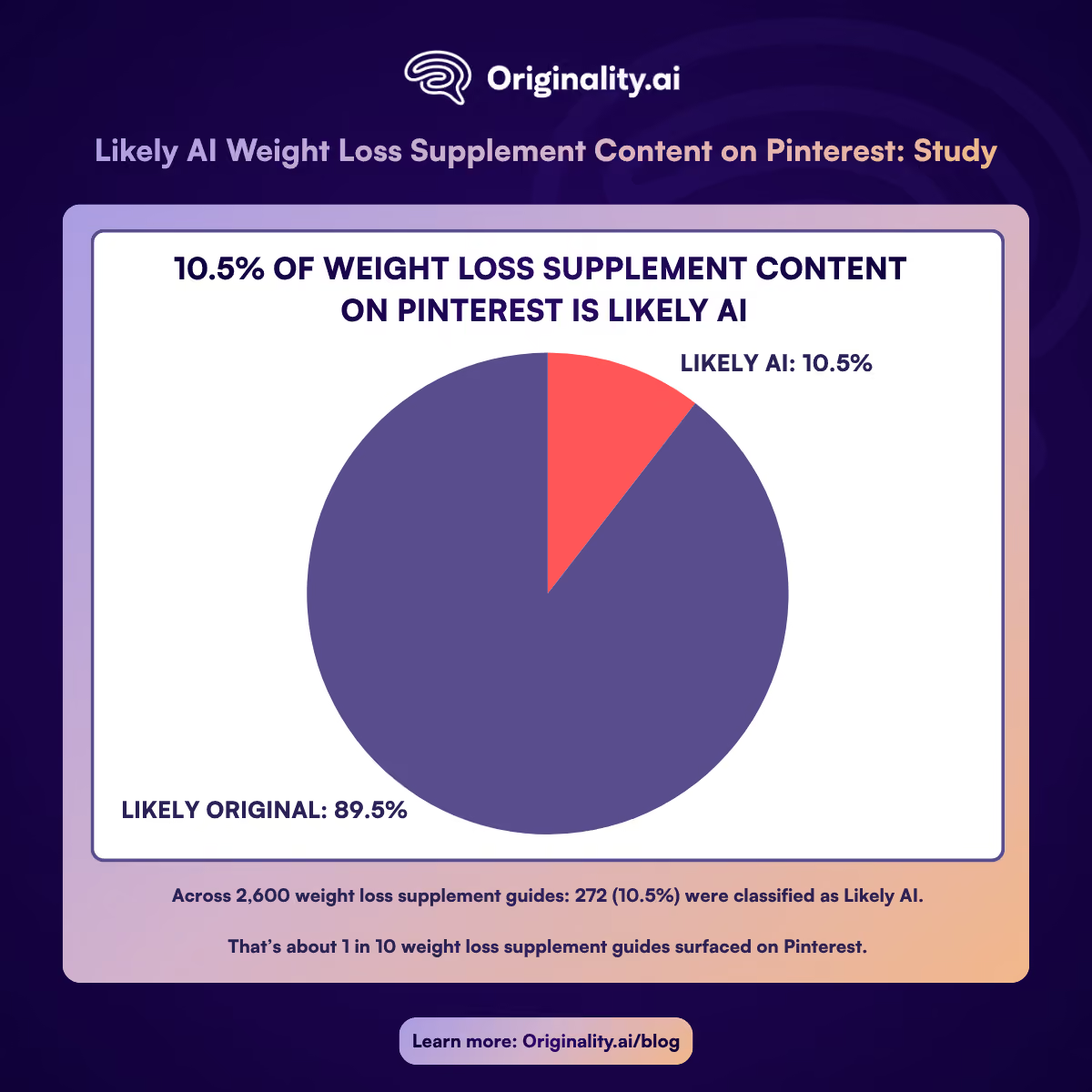
Of the 2,600 URLs scored, 272 (10.5%) were classified as Likely AI, roughly 1 in 10 supplement guides surfaced on Pinterest to people actively researching weight loss.
Broad supplement category keywords returned slightly more AI content (12%) than specific ingredient searches (9.3%), and diet-adjacent supplement content was close to the broad rate at 11.0%.
For the generic term “natural weight loss supplement,” 16 of 100 guides were flagged as Likely AI, the highest rate in the study.
"Natural weight loss supplements" is a broad, high-volume search term that attracts people at the very beginning of their supplement research journey, typically before they have developed any skepticism about specific ingredients or products.
Probable AI content targeting this keyword tends to make sweeping claims about "natural" ingredients without acknowledging that "natural" is not a regulated term and carries no guarantee of safety or efficacy.
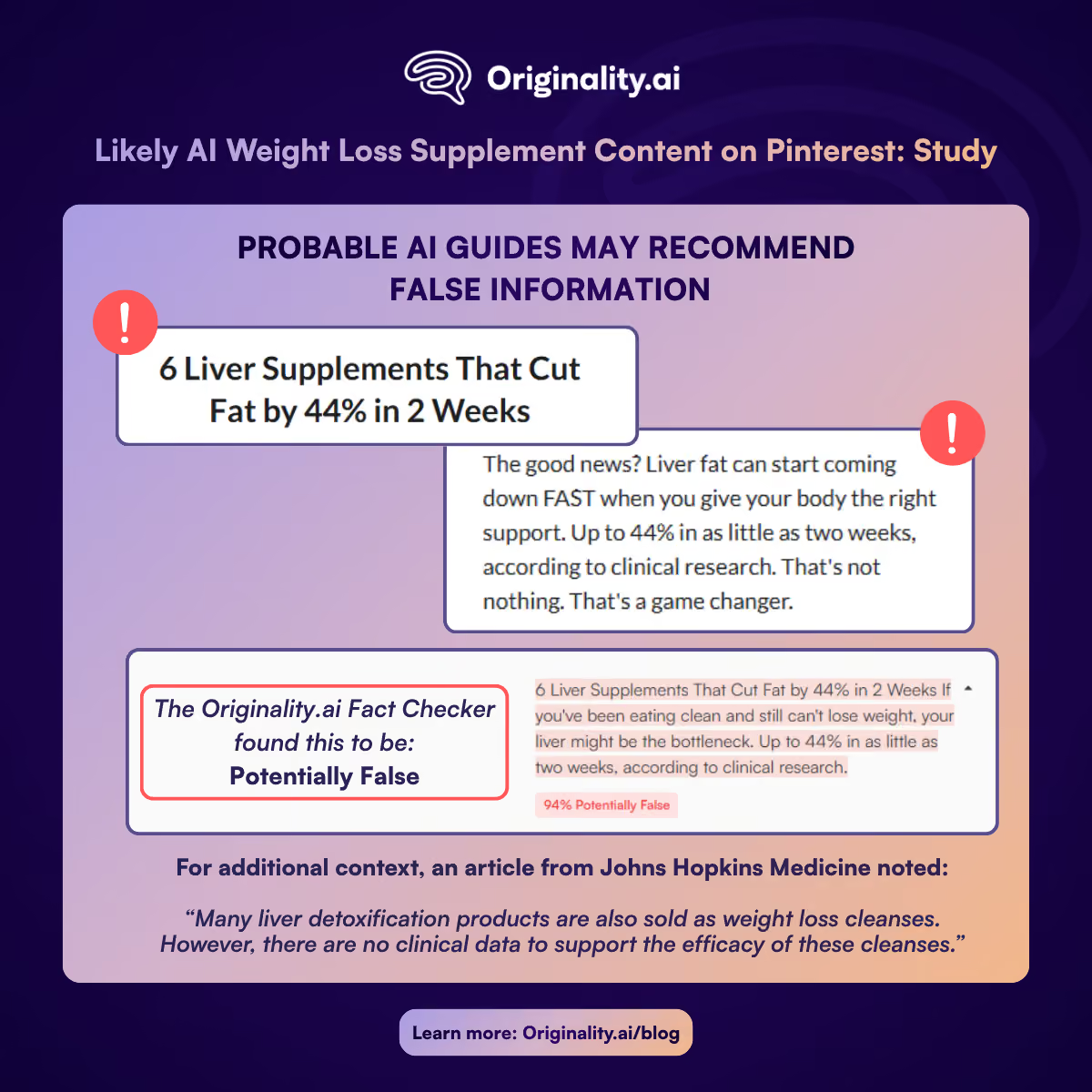
One natural weight loss supplement guide flagged as Likely AI claims that six liver supplements "cut fat by 44% in 2 weeks,” a figure with no citation and no clinical basis, representing exactly the kind of specific, authoritative-sounding statistic that LLMs may generate to make health claims appear scientifically grounded.
In fact, Johns Hopkins Medicine states, “Many liver detoxification products are also sold as weight loss cleanses. However, there are no clinical data to support the efficacy of these cleanses.”
Originality.ai’s Fact Checker also found the claim to be potentially false.
15 of 100 guides were flagged for each of these keywords.
Both are categories where the evidence base is often weak for most ingredients and where probable AI guides may make speculative or marketing-derived claims (and present them as established science).
Thermogenic supplements may include ingredients like caffeine, green tea extract, and capsaicin. Content promoting thermogenic supplements may exaggerate the fat-burning effects of the ingredients.
However, a 2021 study accessible via the National Library of Medicine describes the benefits of thermogenic supplements as limited: “There appears to be limited benefit that may be derived from the inclusion of thermogenic dietary supplements to reduce body mass...”
13 of 100 berberine guides were flagged. According to UCLA Health, Berberine is currently widely hyped as "nature's Ozempic" or a natural alternative to GLP-1 weight loss drugs.
The comparison is often related to the effect that berberine may lower blood sugar, according to verywellhealth.
When it comes to evidence for weight loss specifically, UCLA Health states, “Most experts agree that the amount of weight you can lose with berberine is unclear, and evidence is inconclusive.”
More importantly, berberine has significant drug interactions that probable AI guides may fail to mention. According to Cleveland Clinic, it interacts with metformin and several other common medications.
A guide that describes berberine as a natural, safe weight loss supplement without these caveats is not just incomplete, it’s a potential safety hazard for a large portion of the people who would be searching for it.
One guide flagged as Likely AI describes berberine as "not only safer but also sustainable in the long term" compared to GLP-1 medications like Ozempic.
While the guide did include a disclaimer at the bottom and mentioned readers should speak to a medical professional, the fact that it makes a claim that it’s “safer” and does not clearly state the supplement's known drug interactions, alongside that, is concerning.
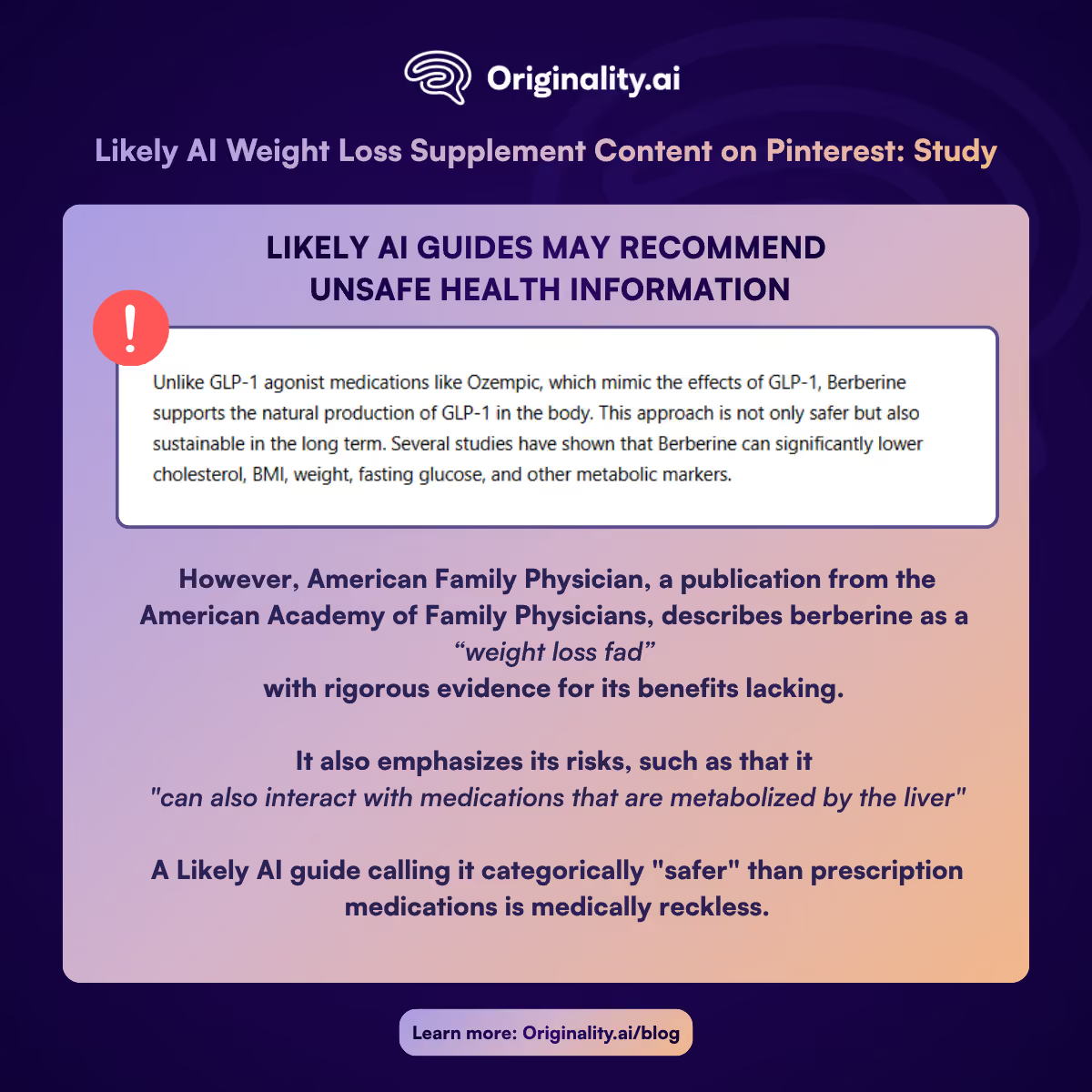
Additionally, American Family Physician, a publication from the American Academy of Family Physicians, has also described berberine as a “weight loss fad” with rigorous evidence for its benefits lacking. It also emphasizes its risks, such as that it "can also interact with medications that are metabolized by the liver".
A Likely AI guide calling it categorically "safer" than prescription medications is medically reckless.
12 of 100 guides were flagged for each. Both categories share a structural problem: the premise of most content in these spaces is not supported by mainstream medicine.
The National Center for Complementary and Integrative Health notes that ““detoxification” or “cleansing” programs can be unsafe and falsely advertised” as well as that, “A 2015 review concluded that there was no compelling research to support the use of “detox” diets for weight management…”
Similarly, the weight loss claims attached to apple cider vinegar are largely unsupported by clinical evidence.
For instance, UChicagoMedicine notes that while apple cider vinegar may have a “modest effect” according to a study, the participants in that study were also on calorie-restricted diets and exercising.
Yet, Pinterest is saturated with confident guides on apple cider vinegar’s health properties.
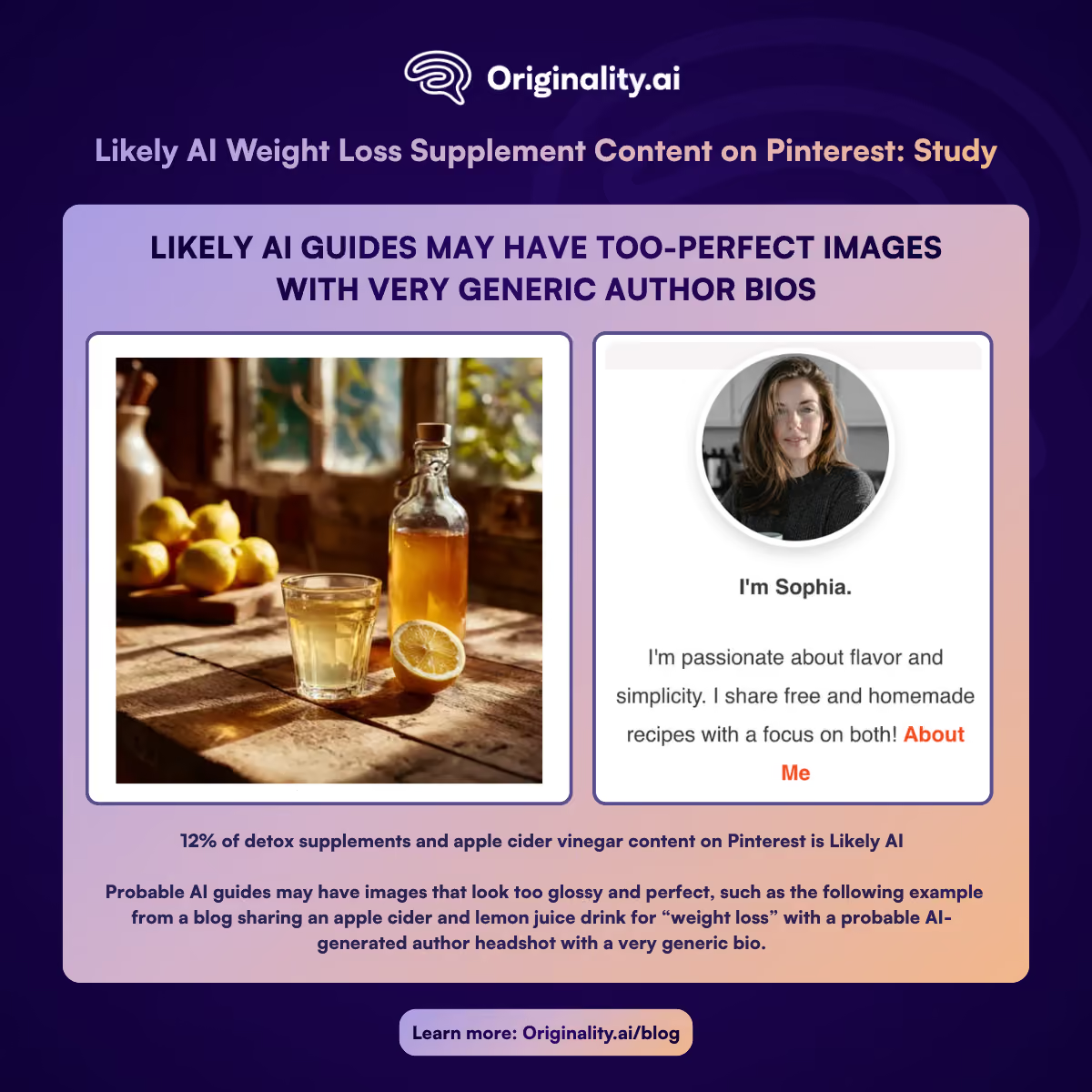
Another telltale sign of probable AI content is images that look too glossy and perfect, such as the following example from a likely AI blog post sharing an apple cider and lemon juice drink for “weight loss” with a probable AI-generated author headshot with a very generic bio.
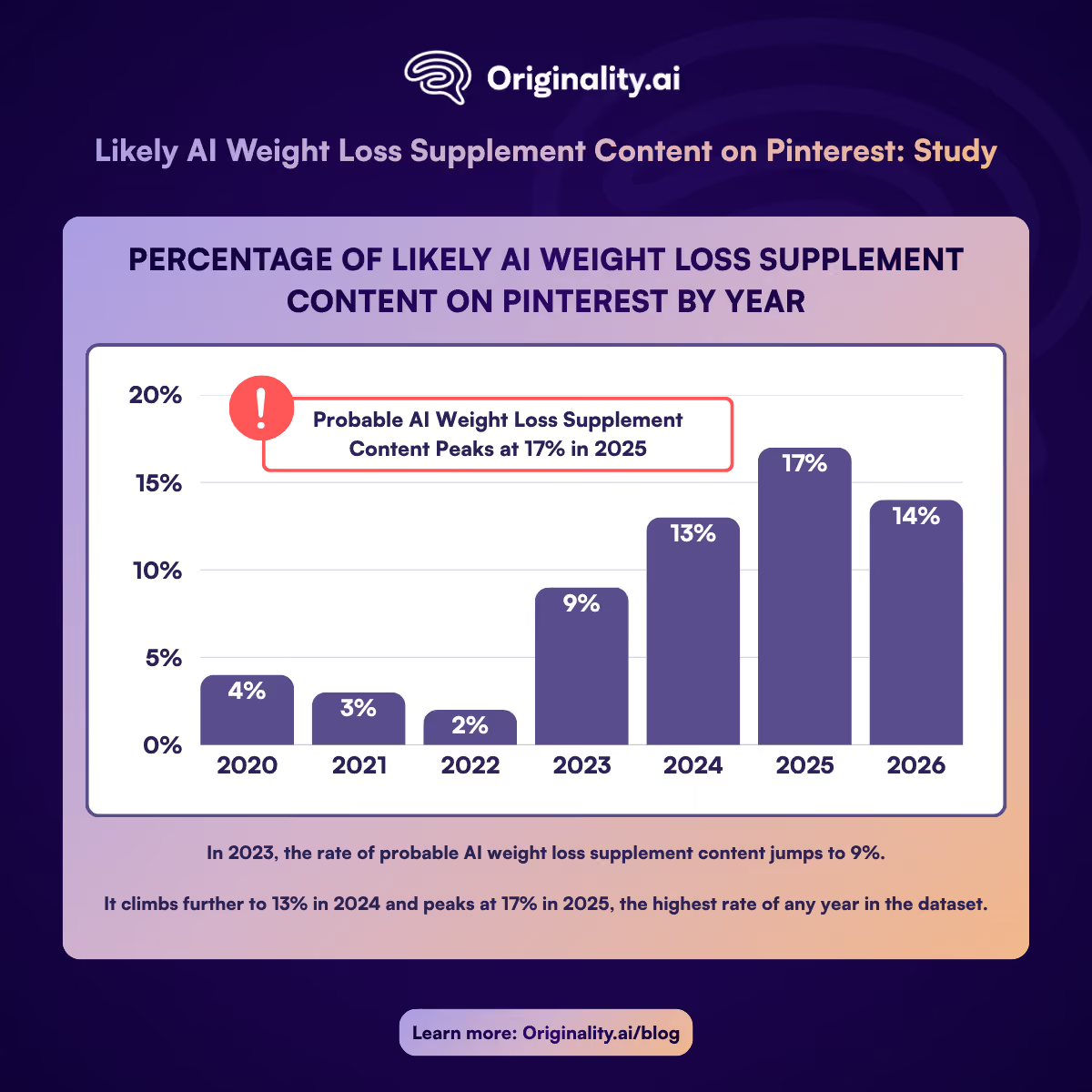
One of the clearest findings in previous studies has been the relationship between publication year and AI detection rate, with content published after ChatGPT's launch in November 2022 showing significantly higher AI rates than older content.
Among total probable AI weight loss supplement guides with a valid date (208/272), a sub-dataset of all guides studied with a valid publication date (73.5% of the dataset, or 1,911 of 2,600 URLs), the year-by-year AI rate tells a clear story.
From 2013 through 2022, the rate of Likely AI content stayed flat and low, ranging between 0% and 5% in any given year.
The inflection point arrives in 2023, where the rate jumps to 9%. It climbs further to 13% in 2024 and peaks at 17% in 2025, the highest rate of any year in the dataset.
Publication dates were available for 73.5% of URLs (1,911 of 2,600). The remaining 26.5% returned no detectable date metadata and are excluded from year-based analysis.
The people searching for weight loss supplement guides on Pinterest are often dealing with real health concerns: metabolic conditions, hormonal changes, obesity, and making real decisions about what to put into their bodies.
When they find an authoritative-sounding guide that confidently recommends berberine without mentioning its medication interactions, or endorses a detox supplement as a safe and effective weight loss tool, they are being given health guidance by a system that has no clinical training, no liability, and no way to know their individual circumstances.
Supplements are a multi-billion-dollar industry. A 2023 study valued the dietary supplement market as being globally worth 152 billion in 2021, with projections to reach 300 billion USD by 2028.
Then, the line between an independent blog and affiliate marketing is often invisible or at least difficult to spot for a casual reader.
Consider, for instance, a scenario where a reader might come across a Likely AI "best supplements for weight loss" roundup that happens to include affiliate links for every product it recommends. In many cases, this is not designed as a health guide; it’s an advertisement.
An investigation by UK charity Full Fact found AI-generated deepfake videos of real doctors and academics being used to promote supplement products on social media, with one impersonated physician's video accumulating more than 365,000 views before removal.
Red flags:
What to do instead:
Roughly 1 in 10 weight loss supplement guides on Pinterest is likely AI-generated. The rate is highest for broad keyword searches and for trending supplement categories like berberine, natural weight loss, thermogenics, and appetite suppressants, exactly the searches that attract people who are early in their research and most likely to trust what they find.
A person who takes a weight loss supplement based on a probable AI-generated guide may face a genuine medical risk.
Probable AI-generated health content delivered via an algorithm that can confidently provide health information (even when it’s incorrect or omits key drug interactions) is a problem.
While the FTC has taken action against supplement companies for unsubstantiated weight loss claims and Health Canada maintains a list of unsafe natural health products, more frameworks designed to protect people from the risks of unverified probable AI health content need to be created.
Not sure if a blog post you’re reading is human-written or Likely AI? Use Originality.ai to find out.
Before making any medical or supplement decisions, always contact a medical professional.
Further Reading:
We collected weight loss supplement guide URLs by automating a Pinterest search session using the Playwright browser automation library, the same system developed for our medical diet and hiking Pinterest studies.
For each of the 26 target keywords, the scraper logged into Pinterest, navigated to the search results page, collected pins in relevance order (most relevant first), and extracted the outbound destination URL from each pin along with the publication date where available.
URLs were then passed to the Originality.ai API for AI detection scoring. Each URL received a probability score between 0 and 1 and was classified as Likely AI if the score was 0.5 or above. All 2,600 URLs returned a valid score.
Publication dates were available for 73.5% of URLs in the dataset (1,911 of 2,600). The remaining 26.5% could not be assigned to a time period and were excluded from the pre/post-2022 analysis and chart.
Keywords were selected across three tiers: 8 broad supplement category keywords, 13 specific ingredient keywords chosen for safety risk or inconclusive health benefits, and 5 diet-adjacent supplement keywords. All data collection was completed in May 2026.

AI & Plagiarism Detector for Serious Content Publishers
Originality.ai
64 Hurontario St
Collingwood, Ontario
L9Y 2L6