AI Checker
Plagiarism Checker
Grammar Checker
Content Quality
Guideline Checker
Readability Checker
Fact & AI Hallucination Checker

Extensions
MCP

How do you spell lieutenant? Does fuchsia have both a c and an h in it? If you still find yourself scratching your head over the occasional word, having one of the best spell-checking tools at your fingertips can certainly come in handy.
With so many to choose from, though, how are you supposed to know which one is right for you?
Well, that’s exactly what this guide is for. From basic typo checkers to AI-powered tools that can catch contextual errors and offer writing improvements, here are 10 of the best spell checkers worth a look.
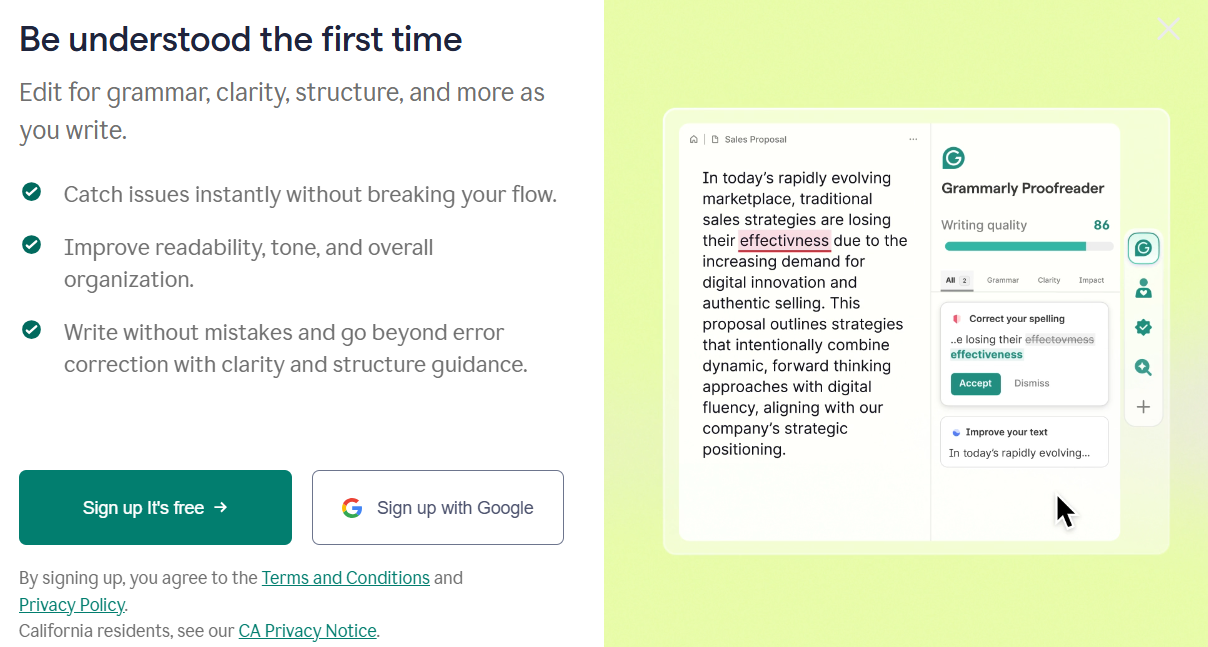
Although it’s now more of a general AI writing assistant than its name suggests, Grammarly remains a popular option for catching and correcting spelling, grammar, and punctuation mistakes in all kinds of writing.
Pros:
Cons:
How to try: Grammarly offers a free plan with no credit card required. It lets you correct basic writing mistakes and offers insights into your writing’s tone.
Learn more about Grammarly: Grammarly AI Review, Grammarly Plagiarism Checker Review, and Grammarly AI Content Detector Review.
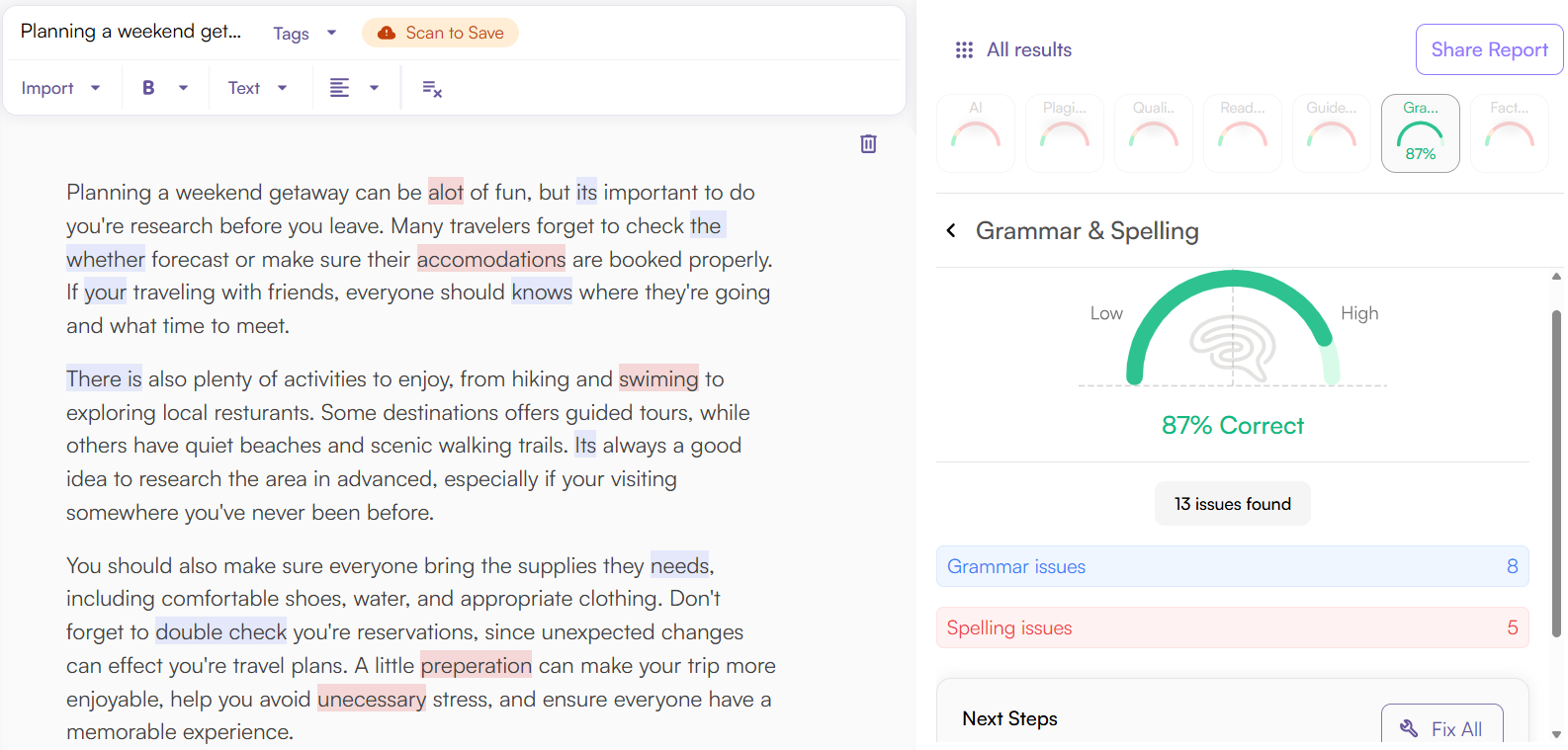
Originality.ai offers a spelling and grammar checker as part of its all-in-one text analysis and verification system. The free Grammar Checker gives you an overall correctness score and highlights common grammar, spelling, and punctuation errors, as well as subject-verb agreement and capitalization issues.
And if you upgrade to a Premium plan, you can save time on making individual corrections by applying them all at once.
Pros:
Cons:
How to try: Try Originality.ai’s grammar and spelling checker here.
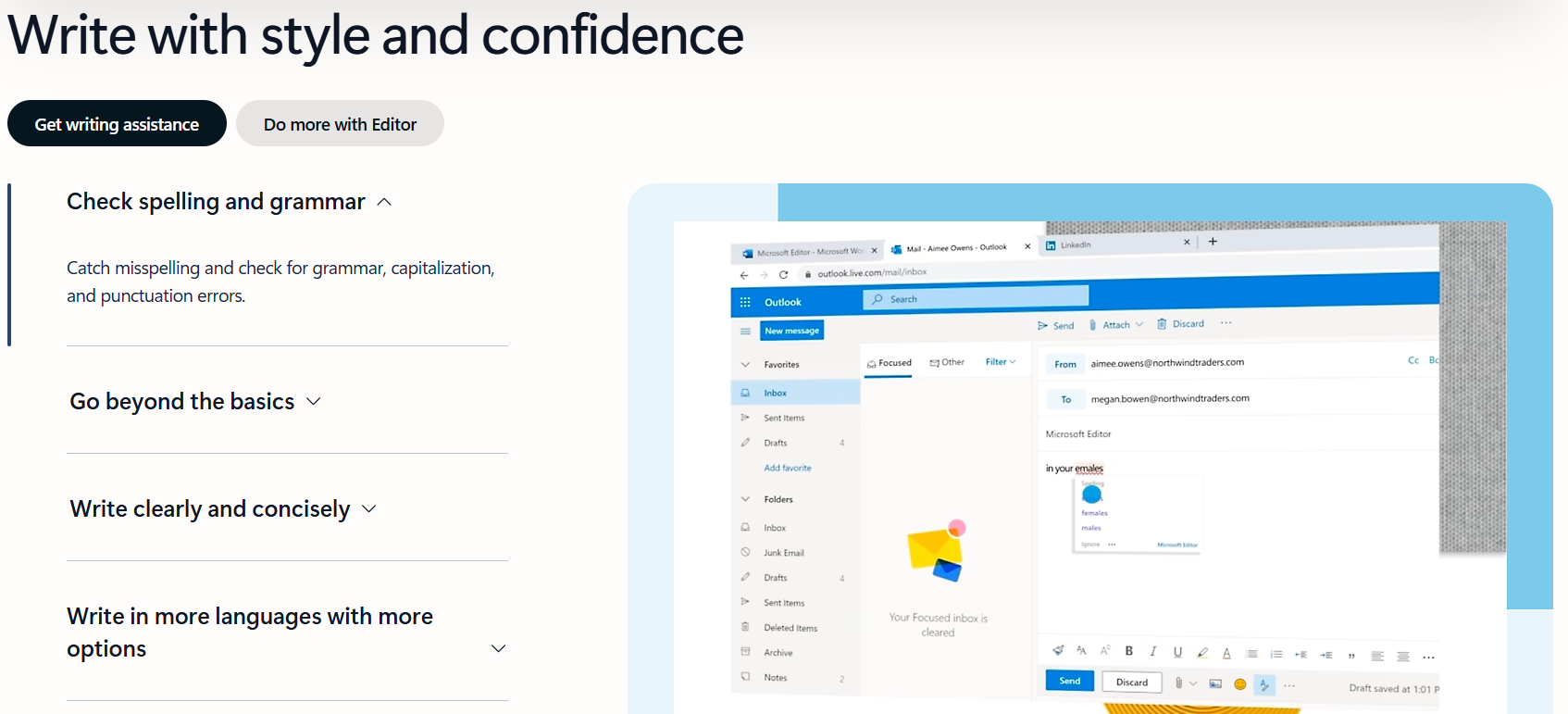
Built directly into Microsoft Word, Outlook, and Edge, Microsoft Editor is a helpful tool for anyone accustomed to using Microsoft’s suite of products. Multilingual users may find it particularly helpful, as it provides spelling and grammar suggestions in 20+ languages and can spell-check up to three languages simultaneously.
Pros:
Cons:
How to try: Free, basic spelling and grammar checks are available in Word on the web with a Microsoft account, or by toggling the Microsoft Editor option in Edge.
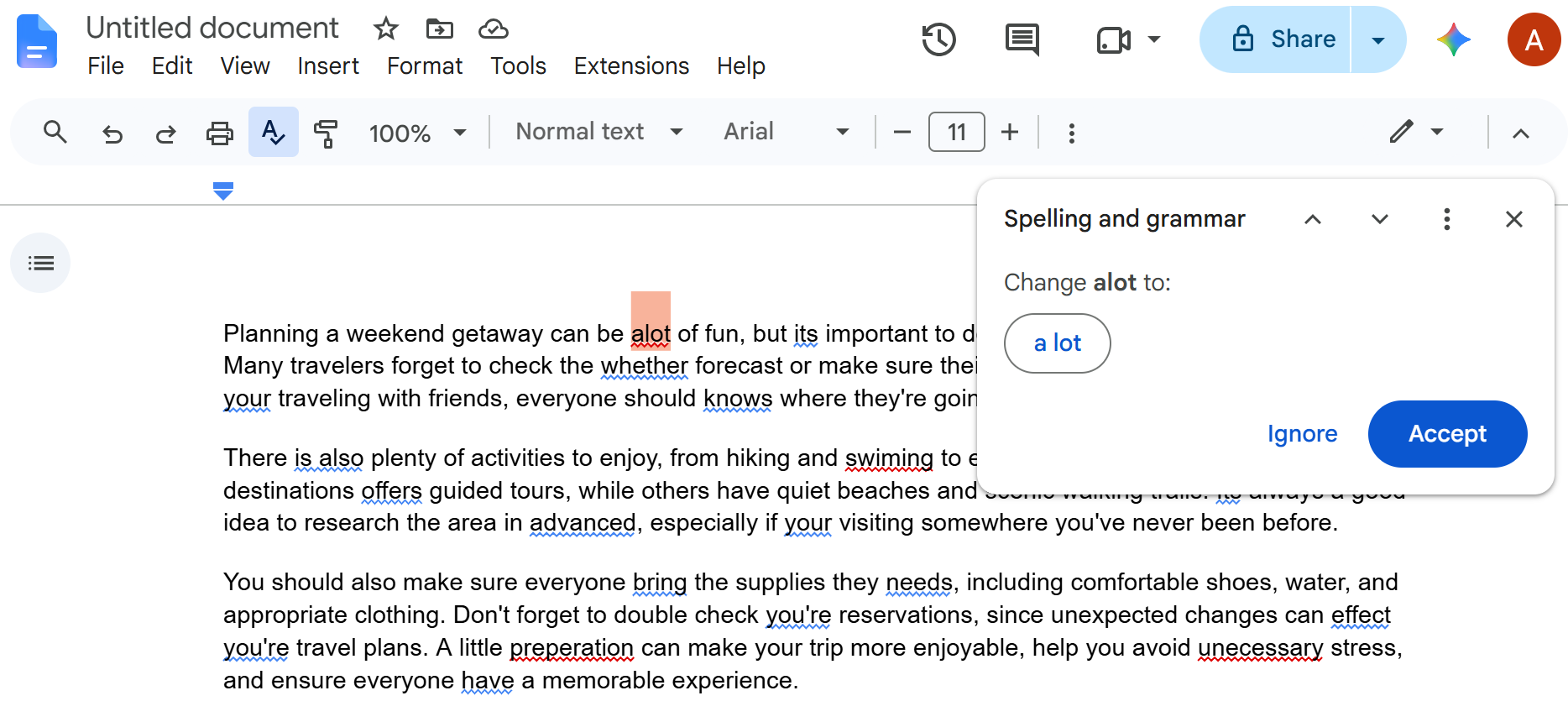
If you’re more of a fan of Google’s suite of tools, you’ll be glad to know that Google Docs also features a built-in spelling and grammar checker. It provides real-time suggestions as you write, and even lets you toggle automatic spelling corrections.
Pros:
Cons:
How to try: Google Docs’ built-in spelling and grammar checker is free with a Google account. Simply start a new document and go to Tools > Spelling and grammar to use it. You can toggle automatic corrections in the same dropdown by going to Preferences.
Learn more about Google Docs: How to Check Grammar in Google Docs
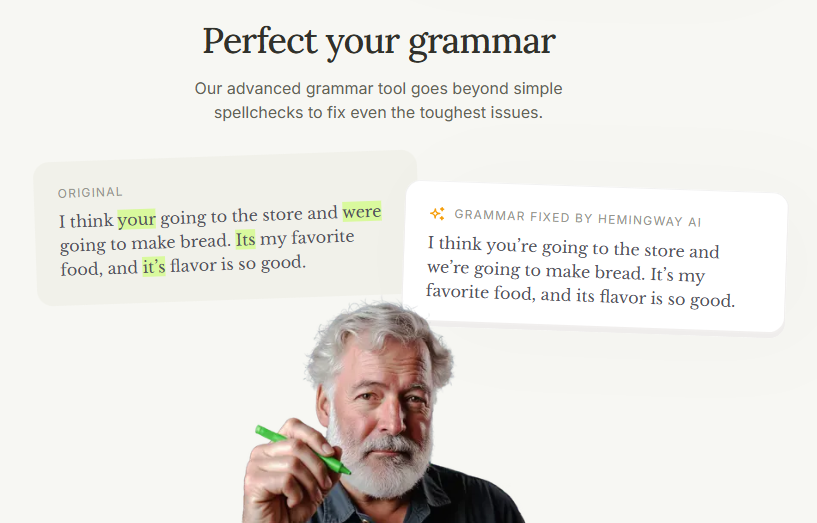
Although the free Hemingway Editor is best known for helping writers improve readability, Hemingway Editor Plus adds AI-powered spelling, grammar, and punctuation features that it claims can catch even the most complex issues. Its AI can also help you simplify sentences, adjust writing style, and find context-appropriate synonyms.
Pros:
Cons:
How to try: Hemingway Editor offers a free standalone grammar and spelling tool for basic checks. You can also get a free trial of Editor Plus to try its more advanced features.
Learn more about Hemingway Editor Plus: Hemingway Editor Plus Readability Review
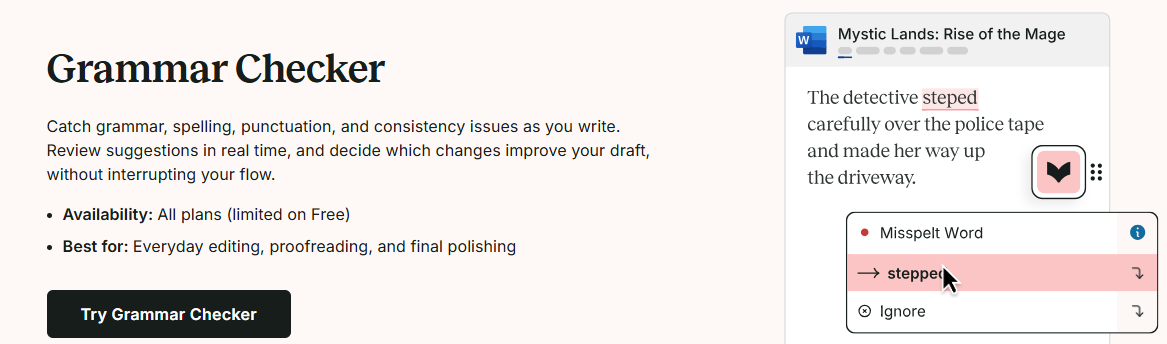
Built for novelists and long-form writers, ProWritingAid includes an in-depth grammar, spelling, and readability checker that provides real-time corrections as you write. It doesn’t stop there, though. You can get more detailed feedback from 25+ writing reports that analyze everything from sentence length and overused words to writing style and consistency.
Pros:
Cons:
How to try: You can sign up for a free ProWritingAid account to try out its spelling and grammar checker and writing reports. If you want to use it with longer documents or get unlimited reports, you can upgrade to one of its paid plans, Premium or Premium Pro.
Learn more about ProWritingAid: ProWritingAid Review
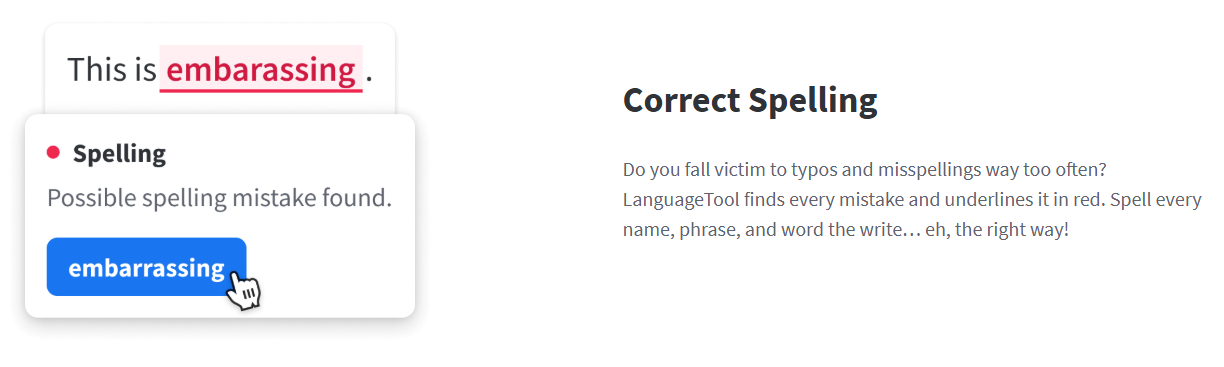
If you want to check spelling and grammar across different languages, LanguageTool likely has you covered. It supports 30+ languages, including regional variations, so it won’t underline color when you clearly mean colour or vice versa.
With a free account, LanguageTool takes its multilingual capabilities a step further with its “false friend” feature, which flags words in different languages that look or sound similar but have different meanings.
Pros:
Cons:
How to try: LanguageTool has a free spelling and grammar checker directly on its homepage. You can also create a free account with limitations.
Learn more about LanguageTool: LanguageTool AI Grammar Review
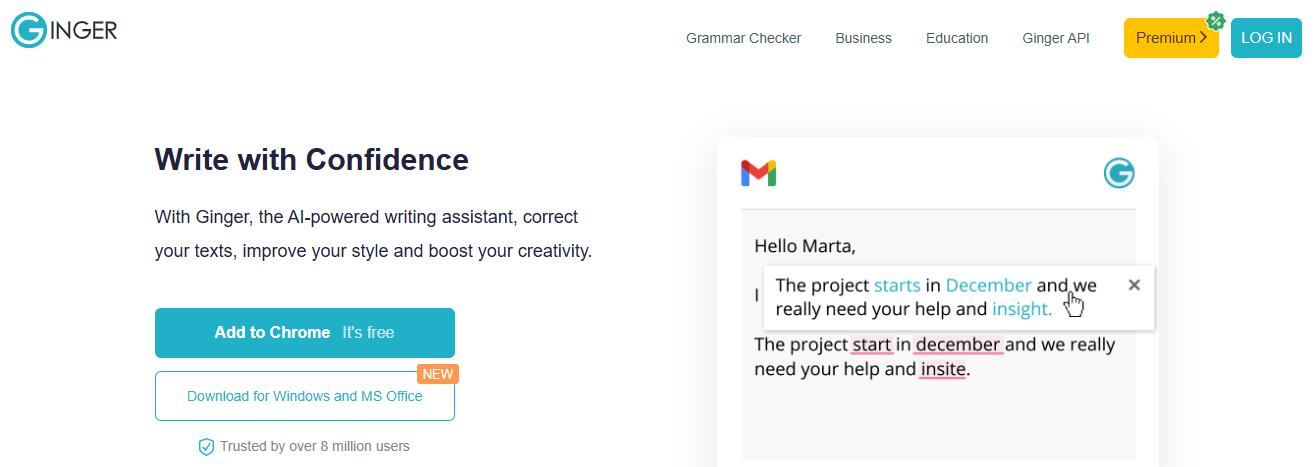
Instead of clicking on errors one by one, Ginger Software's AI-driven writing assistant, Ginger, lets you correct multiple grammar, spelling, and punctuation errors in a single sentence. Since it makes its suggestions based on sentence context, it also offers support for writing with Dyslexia.
Pros:
Cons:
How to try: A free version with basic spelling and grammar checks is available on the website, or you can register for a free account to create a personal profile.
Learn more about Ginger: Ginger Software AI Grammar Review
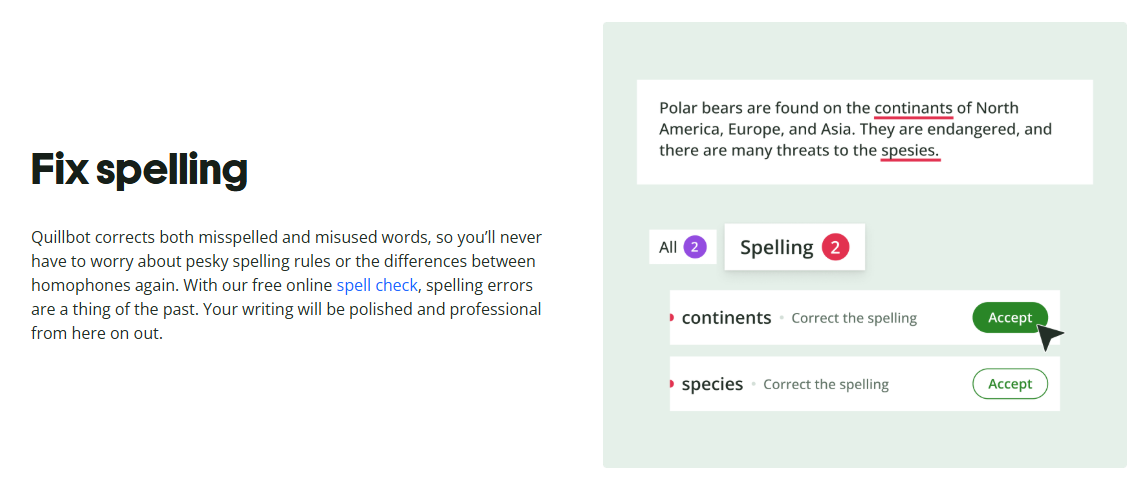
It may be known for its AI-powered paraphrasing tool, but QuillBot also includes a spelling and grammar checker that highlights errors in real time. And if you still want help with your phrasing, you can use the “Improve” or “Rewrite” features directly within the writing assistant.
Pros:
Cons:
How to try: You can get basic grammar recommendations from QuillBot for free by pasting or uploading your text into the tool on its website.
Learn more about QuillBot: QuillBot AI Content Detector Review
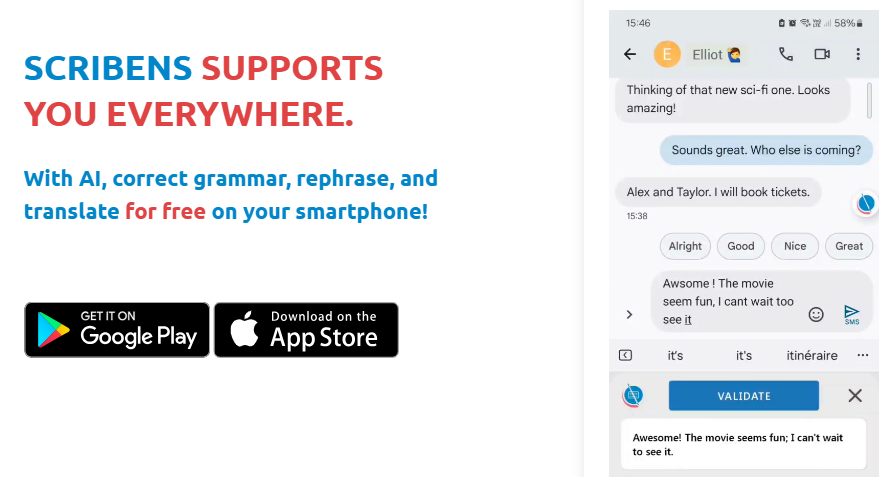
One of the things that Scribens emphasizes about its spelling and grammar checker is its focus on explaining the rules behind your errors. If you’re genuinely trying to improve your writing or you’re learning English as a second language, knowing why something doesn’t make sense can be more helpful than a tool that simply cleans up your document.
So, if you want clear, detailed explanations about conjugations, punctuation mistakes, and more, Scribens may be a great fit.
Pros:
Cons:
How to try: Visit the Scribens website and type or paste in your text to try the free version.
Choosing the best spell checker means sitting down and figuring out what you actually plan to use it for. Are you looking for a simple tool that works right where you write? Something like Microsoft Editor or Google Docs could get the job done. Or do you need something to help you learn why the grammar is wrong? A tool like Scribens could make more sense.
If you’re looking for a more comprehensive editorial toolkit that goes beyond spelling and grammar checks, though, consider Originality.ai. We offer a full content verification suite that lets you analyze content not just for typos but also AI-generated text, plagiarism, readability, factual accuracy, and more.
You can try our free tools, including the Grammar Checker, or explore our Premium plans for more comprehensive content checks.
Get more insight into grammar and spell-checking tools:
Grammarly is generally better than ChatGPT for proofreading because it’s specifically designed to identify spelling, grammar, and punctuation mistakes as you write. ChatGPT can proofread text and even explain its changes, but you need to provide a clear prompt, and it may make unnecessary revisions.
Yes, you can use AI to check spelling and grammar. AI is now built into many writing assistants, such as the Originality.ai Grammar Checker, to help check for errors and suggest corrections based on the context of your sentences.
The best software for spell checking largely depends on your needs. Originality.ai is a good option if you want spell checking alongside AI detection, plagiarism checks, and other content verification tools, while Grammarly is a popular option for everyday proofreading.

AI & Plagiarism Detector for Serious Content Publishers
Originality.ai
64 Hurontario St
Collingwood, Ontario
L9Y 2L6