AI Checker
Plagiarism Checker
Grammar Checker
Content Quality
Guideline Checker
Readability Checker
Fact & AI Hallucination Checker

Extensions
MCP

We scanned nearly 5,000 bestselling books about diseases, disorders, and medical conditions on Amazon. Here’s what we found.
After Richard Wordsworth was diagnosed with ADHD as an adult, his father bought him a book from Amazon to help him understand the condition.
But the book’s contents didn’t seem right. It opened with a quote from controversial psychologist Jordan Peterson before moving into strange anecdotes and historical inaccuracies, even including a bizarre warning that ADHD was “catastrophic” and that he was “four times more likely to die significantly earlier”.
When the Guardian covered this in May 2025, they reached out to Originality.ai to confirm whether or not eight book samples were likely AI-generated.
Unfortunately, there are far more medical books on Amazon likely written by AI.
In February 2026, we turned to Amazon’s wide-ranging health literature category to examine nearly 5,000 bestselling books relating to diseases, physical ailments, mental disorders, disabilities and related medical subjects.
Of the 4,984 books we scanned, 1,407—or 28.2%—were flagged as likely AI-written. This figure is based on samples of the books that were scanned.
The proportions varied wildly between categories. Among headache books, 67% were flagged as likely AI; for books about anxiety, the rate was just 7%. But clear trends emerged, with categories relating to digestive issues and children ranking higher, compared with complex psychological disorders, which ranked lower.
We began with a wide net, looking at the entirety of Amazon’s Health, Fitness & Dieting book category, which encompasses a vast swath of book types: personal memoirs, exercise routines, weight-loss cookbooks, self-help books, medical textbooks, mental health journals, and adult colouring books are all in the mix.
For this study, we narrowed our focus to categories concerning diagnosable diseases, disorders, disabilities, and medical conditions, using diseases and ailments specified by the Diagnostic and Statistical Manual of Mental Disorders (DSM) as a reference point for mental health issues.
Translated into Amazon subcategories, we scanned all the bestsellers in the following areas:
We chose to exclude several fuzzier subcategories, including Alternative Medicine, which we’ve covered in another study; weight-loss subcategories such as Nutrition and Diets & Weight Loss (even though many books we ended up scanning include nutritional information and advice for disease prevention); Sports Health & Safety, due to those health issues often being separate injuries unrelated to disease; and Beauty, Grooming & Style.
Many titles were found within multiple subcategories: Sexual Health, as a category, had significant overlap with both Men’s and Women’s Health. Teen Health’s contents were largely duplicated in Sexual Health, Mental Health, and Children & Adolescent’s Heath. Categories were selectively chosen to avoid prominent duplication.
Once we had the categories set, we began collecting data from Amazon. Amazon lists its bestsellers on a standalone page, called Amazon Best Sellers, for each subcategory. There are 100 bestsellers at any given time, though the books listed change rapidly—day to day, even hourly—depending on customer activity, taking into account both recent and historical sales, with greater weight given to recent activity, according to Amazon’s own explanation. The rankings are therefore relative: a book can rise or fall even when its own sales haven’t changed.
It’s therefore important to clarify that the books we scanned are not the 100 most popular books of all time in each category. Rather, they’re the bestselling books according to Amazon’s algorithm at the time of collection, which, for this study, was early February 2026.
We then removed duplicates, non-qualifying books (e.g., colouring books and journals), and books whose contents fell below Originality.ai’s 100-word minimum threshold. We were left with 4,984 titles across 116 subcategories.
For all titles, we scanned three elements where available: product descriptions, author biographies, and samples of the actual books—the latter we used as the primary indicator of a book’s AI content in this study.
For a visual look at the proportion of Likely AI vs. Likely Human books across all 116 categories, see the graphic at the end of this article.
The difference between medical subjects varied significantly, but trends emerged quickly.
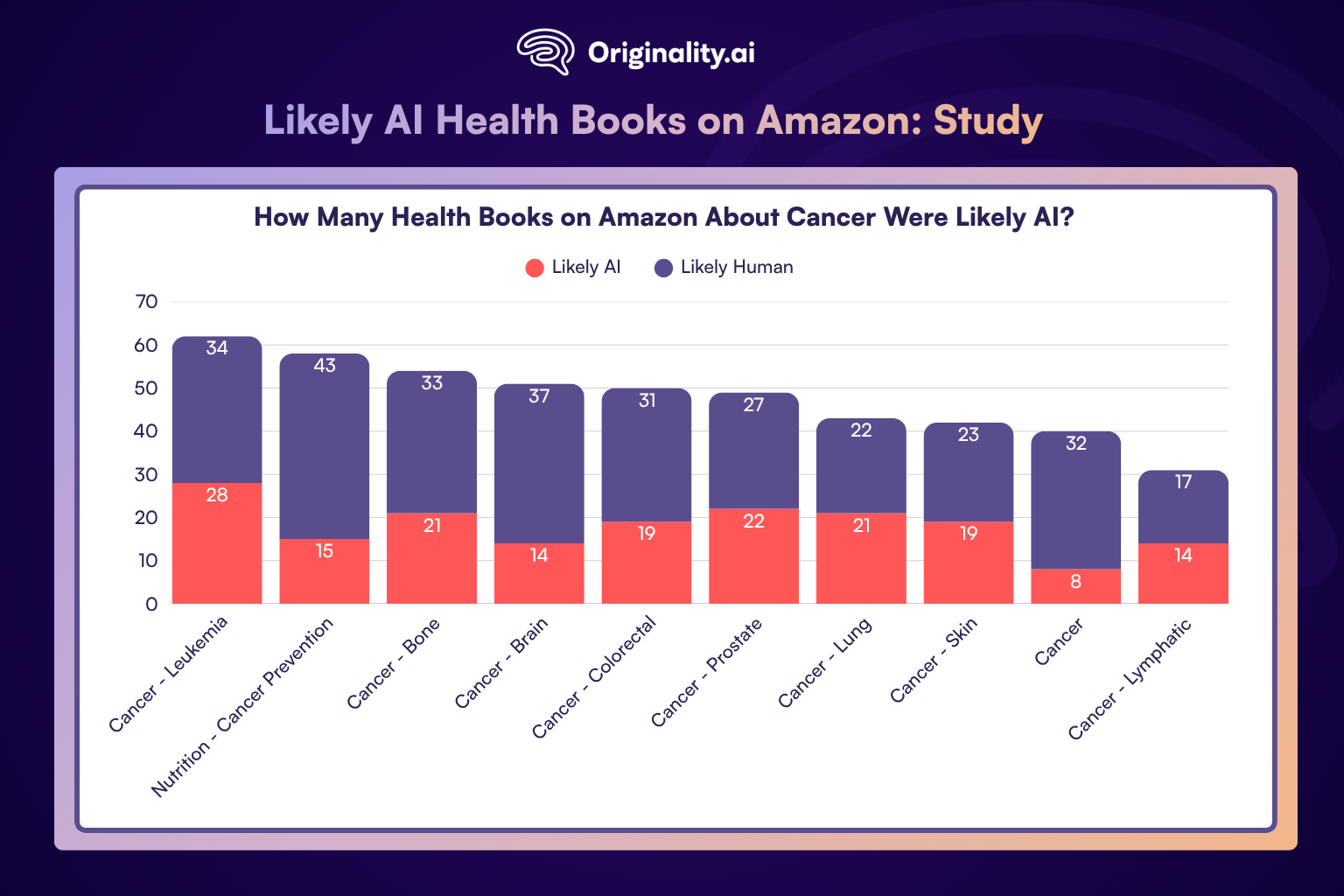
More than one-third of all bestsellers about cancer were flagged as likely AI-written: 37.7% total. The highest rates of AI likelihood were detected in bestsellers about lung cancer (48.8%); leukemia, skin cancer and lymphatic cancer (all tied at 45.2%), and prostate cancer (44.9%).
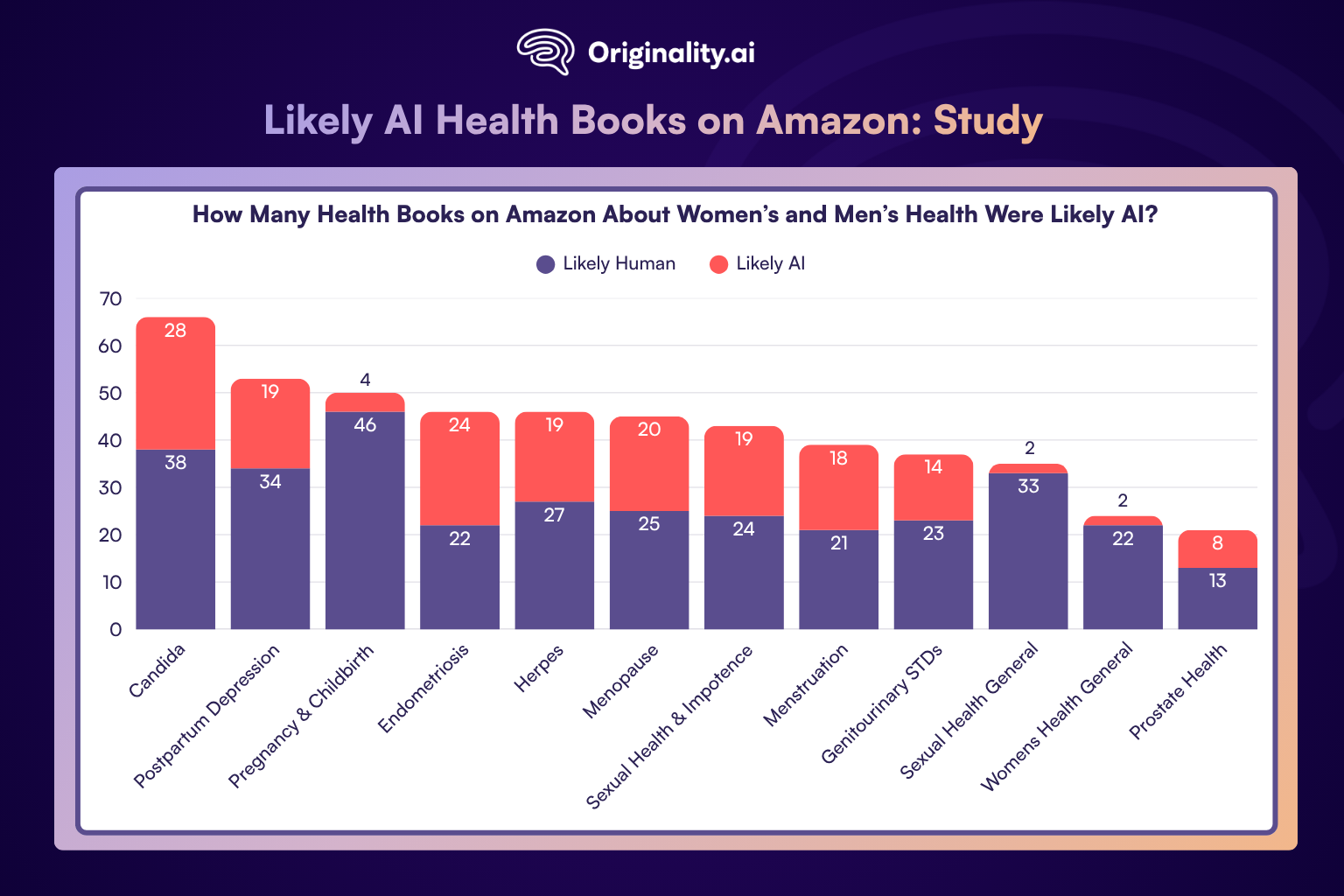
We also detected more than one-third AI likelihood in women’s and men’s health categories, which cumulatively averaged 35%. Bestsellers on the topics of candida, endometriosis, menopause, herpes, menstruation and impotence all came in higher than 40%.
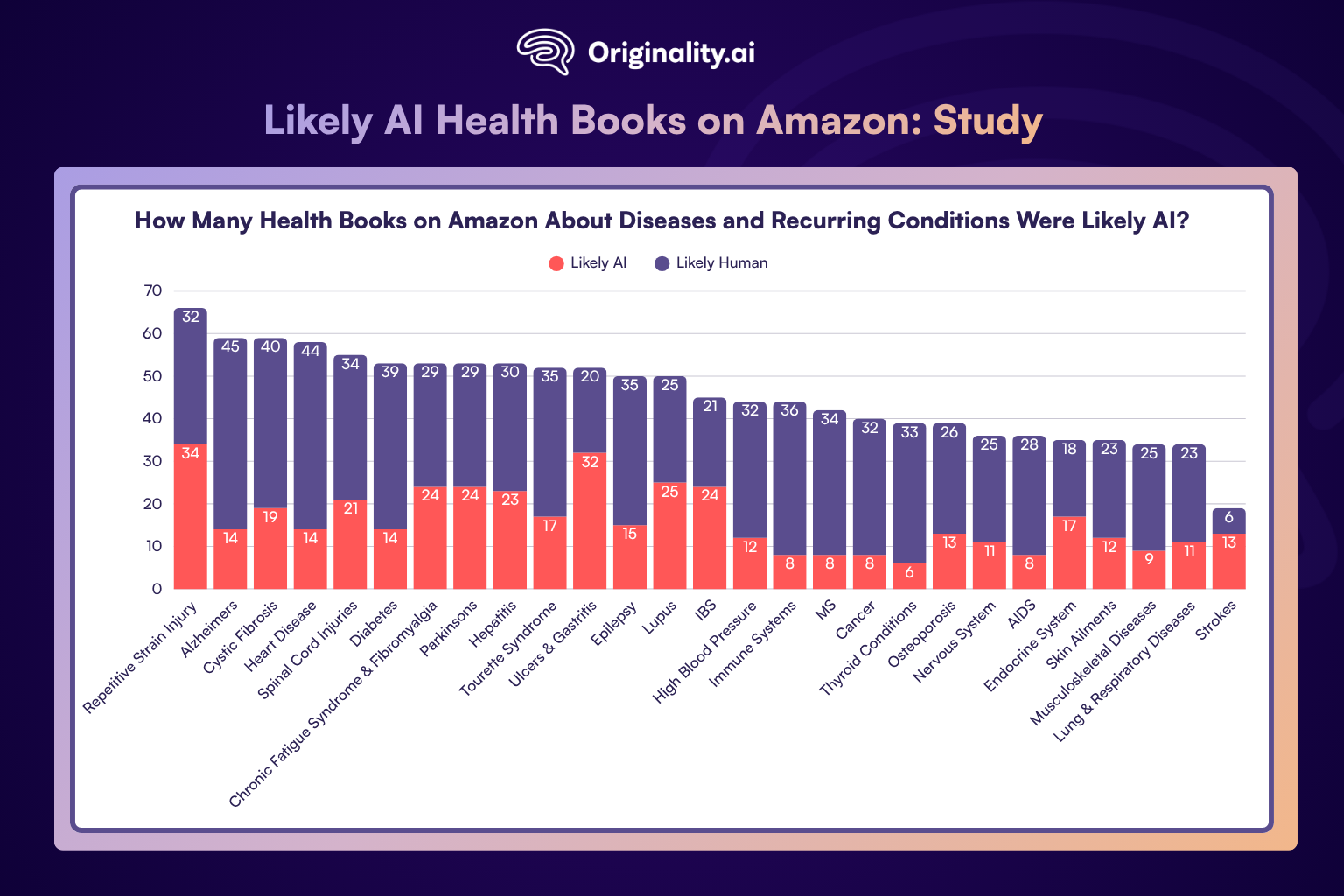
When looking at a broad collection of diseases and recurring conditions, we detected especially high rates of AI likelihood in several categories. Repetitive Strain Injury, Lupus, and Irritable Bowel Syndrome all scored 50% or higher; two subcategories, Strokes and Ulcers & Gastritis, scored higher than 60%.
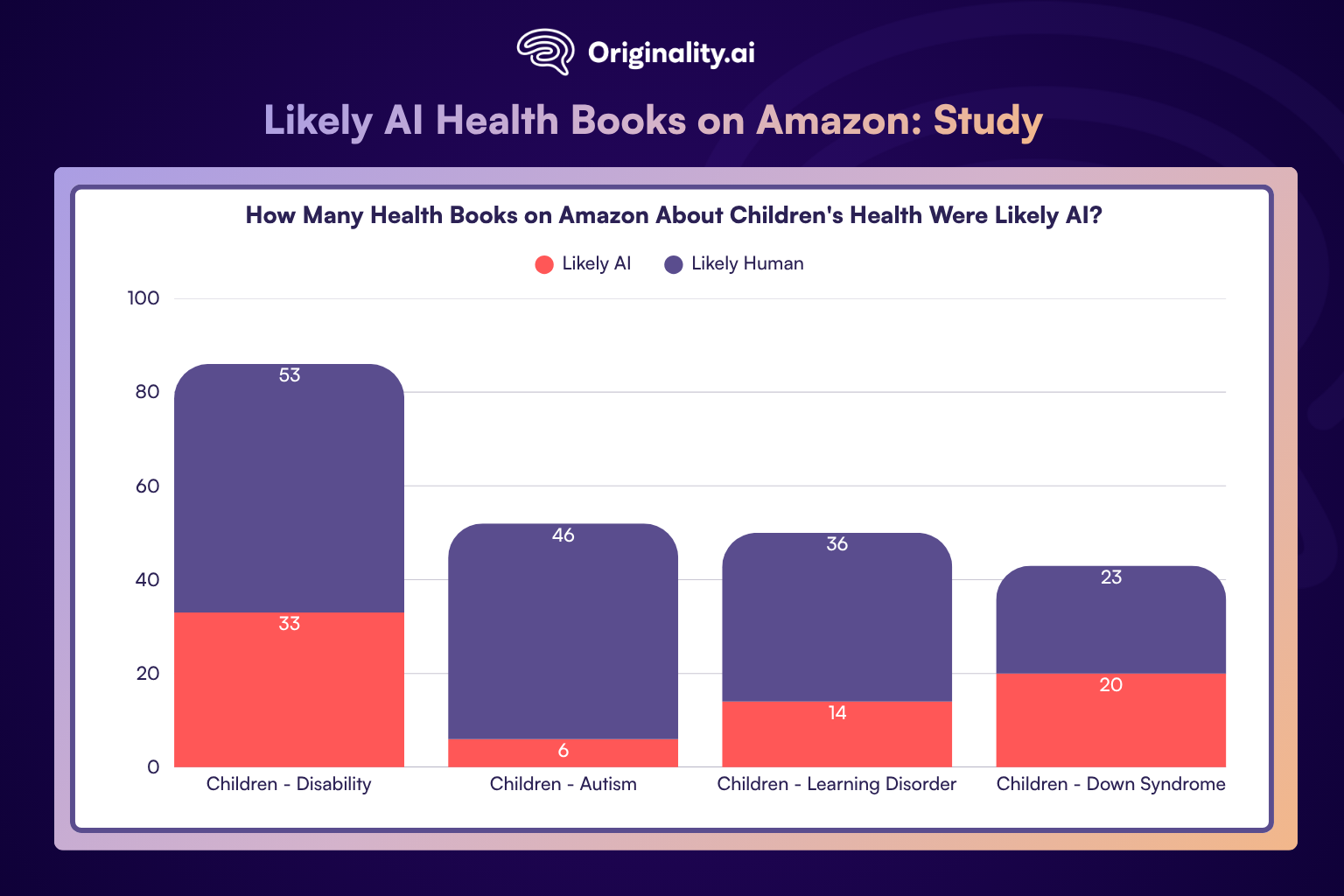
Another major trend category was Children & Adolescents’ Health, which saw 31.6% of all titles flagged as likely AI. This category included four scanned subcategories: general disabilities, autism, learning disorders, and Down Syndrome.
Interestingly, the subcategory with the smallest AI rate within this subcategory was Autism—a subject that is broadly misunderstood in the mainstream media, with links to vaccination status and a wide spectrum of diagnoses. Only 11.5% of books in that subcategory (six out of 52) were flagged as likely AI-written.
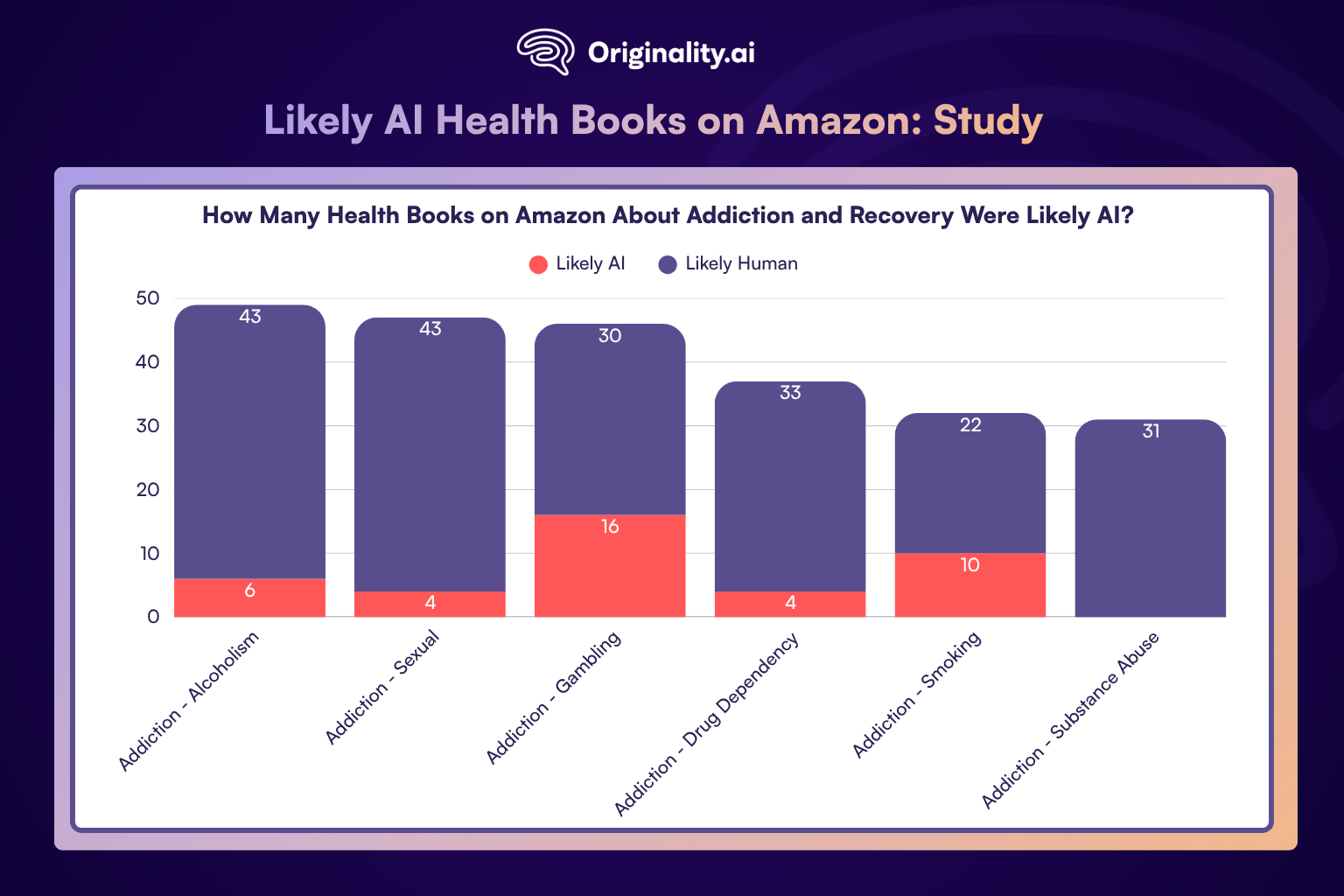
The broad category of Addiction & Recovery (encompassing subcategories of alcoholism, sexual addiction, gambling addiction, drug dependency, smoking and substance abuse) saw a relatively low overall percentage of 16.5%.
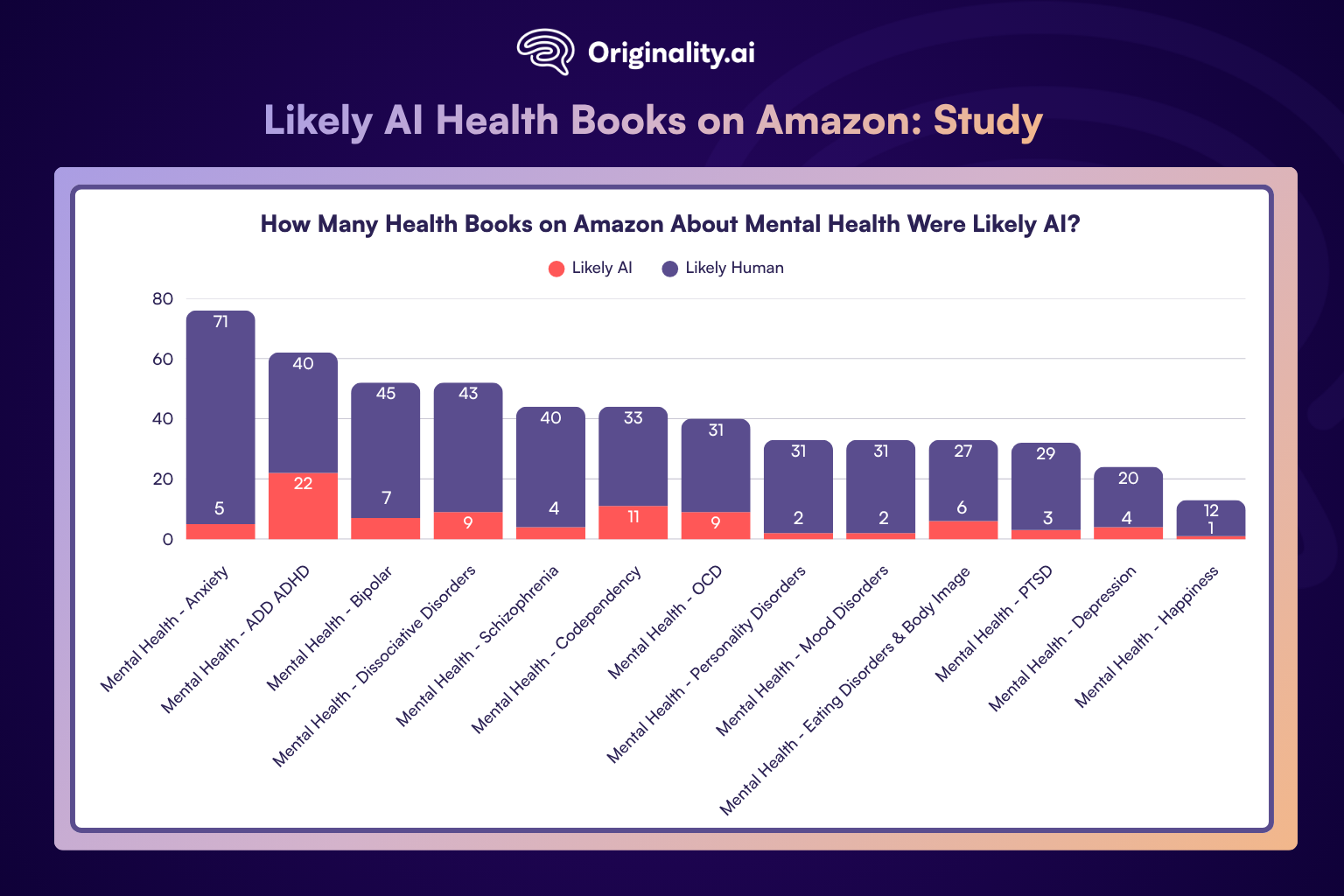
Mental health subcategories—including anxiety, OCD, bipolar disorder, and PTSD—averaged a relatively low 15.8%, with ADD/ADHD leading the group with an exceptional 35.5% of bestsellers flagged as likely AI.
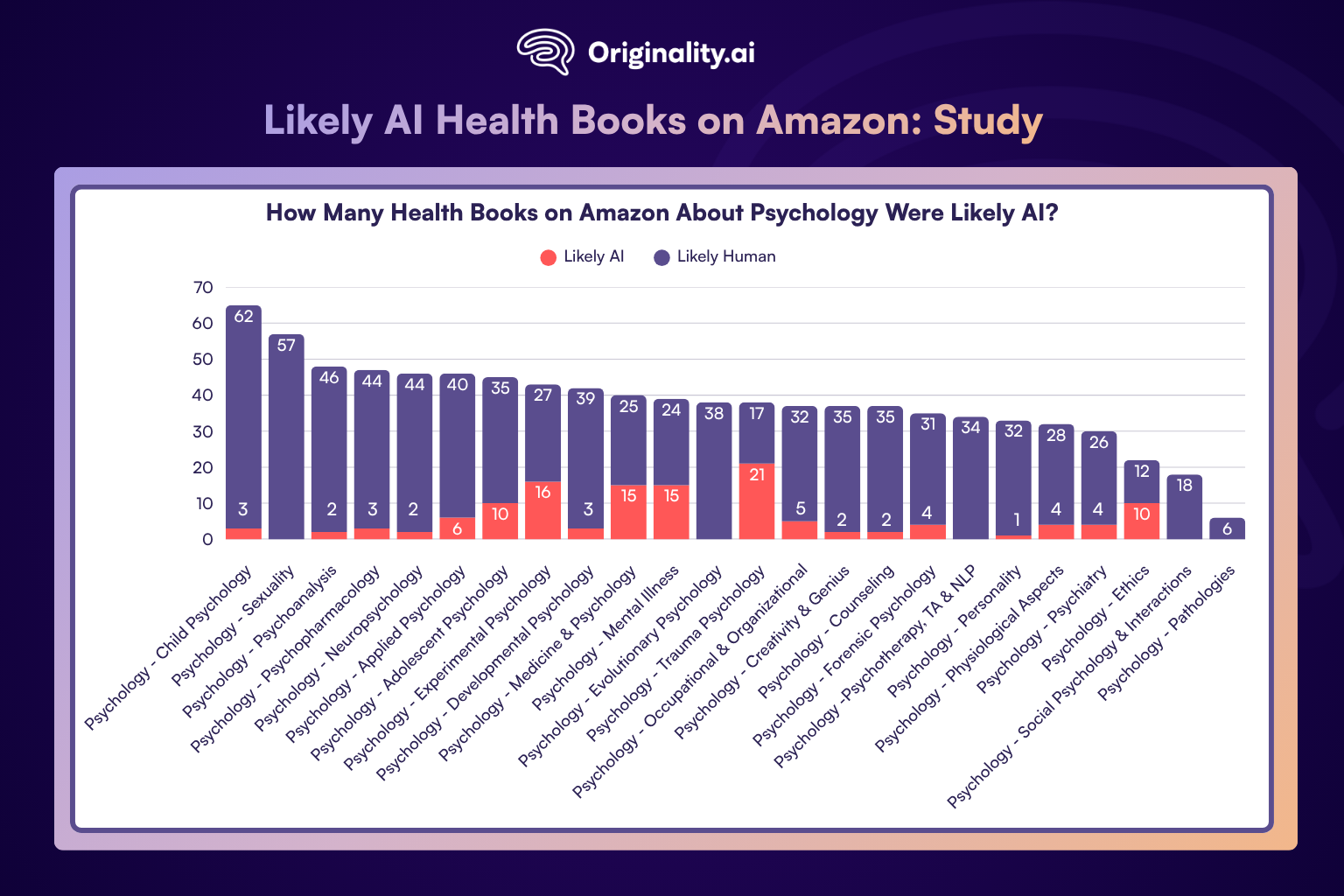
Similarly, bestsellers in the Psychology & Counseling category came in at a fairly low 14%. These lists skewed toward older, traditionally published books; for example, Evolutionary Psychology had a median publication year of 2019, with just two of its 38 books independently published.
Below are the top 10 subcategories whose bestsellers were most likely to be AI-written. Common themes include digestive conditions (ulcers, IBS) and pain management (RSI, chronic pain, headaches)—more quotidian issues that people struggle with every day, providing an opening for authors using AI to take advantage of.
Of the 46 headache bestsellers, 34 were independently published, and the median publication year was 2025. Among the 76 anxiety books, just four were independently published, and the median publication year was 2020. That’s a significant difference in the kinds of books appearing on each bestseller list.
Certain categories, therefore, seem to attract newer, independently published authors, which are themselves much more likely to be flagged as AI-written. We cannot say decisively why this is the case, but frequently, self-published authors creating AI-generated books on a quick turnaround will create “copycat” versions of pre-existing bestsellers, with similar cover pages and titles, creating a self-propelling loop.
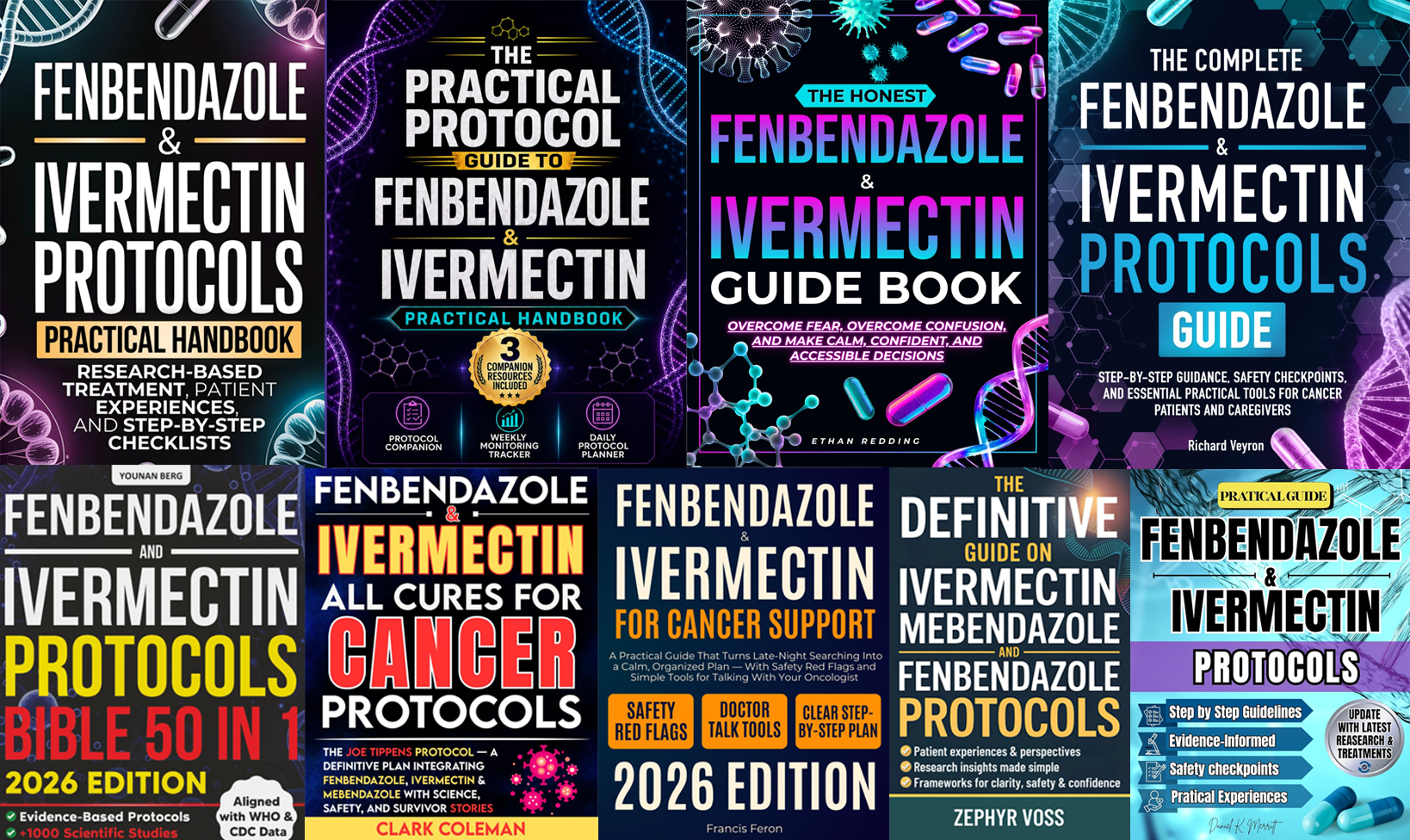
A good example of this is a slew of bestsellers with “Fenbendazole and Ivermectin” in the title. Both are anti-parasitic drugs; the BBC notes that “Ivermectin is an anti-parasitic drug used to treat conditions like scabies, while fenbendazole is an animal dewormer.”
Some influencers have pushed these drugs, claiming they effectively combat cancer. Medical professionals and organizations strongly urge against using both, due to the fact that there haven’t been large-scale, randomized clinical trials on humans, and the drugs can be unsafe.
In the BBC’s report, one oncologist warned, “the drugs could interact with proven cancer medication and either make treatment more toxic or less effective” and further stated that, “There's also the risk that the drugs themselves could cause side effects and make the patient unwell.” Read more about concerns surrounding these medications in this BBC investigation.
The single largest disparity in our dataset was between publishing models, whether the book was published independently or by any kind of publisher (e.g. professional, small print, or indie).
Of the 4,984 bestsellers in the working dataset, 1,736 were listed as independently published, while 3,248 were grouped together under other publishers. Approximately 61% of independently published bestsellers were flagged as likely AI-written.
Among other publishers, that rate fell to just 10.6%—nearly a sixfold difference.
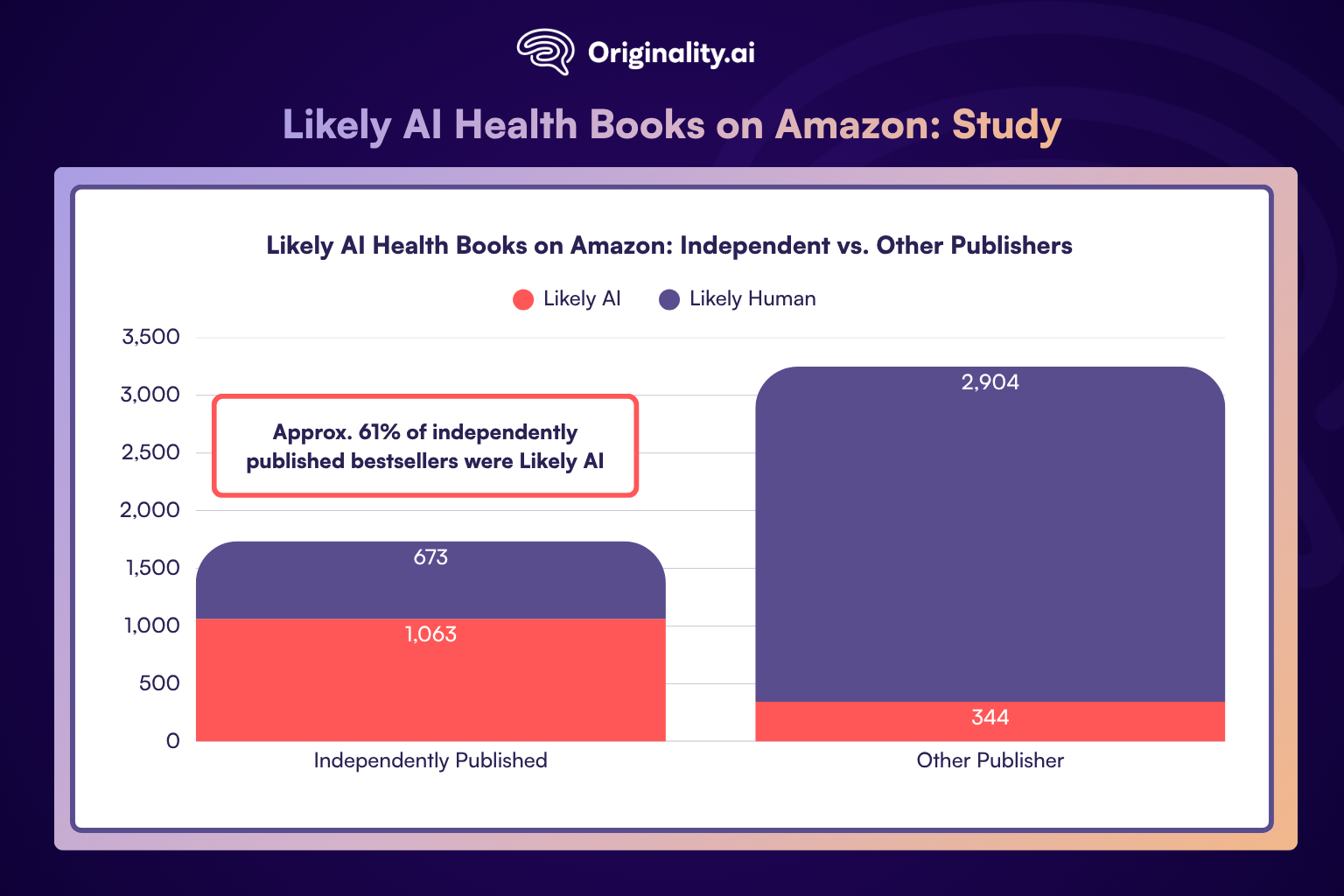
We wondered if this could be a result of each book’s publication year. Independently published books were disproportionately represented among newer titles, rising at a similar pace to AI publishing. It could be a matter of correlation versus causation.
But when we restricted the comparison to books published in 2025, the gap remained substantial: 75% of independently published books were flagged as likely AI, compared with 42% of books from other publishers. A similar difference appeared in 2024, with rates of 54% and 26%, respectively.
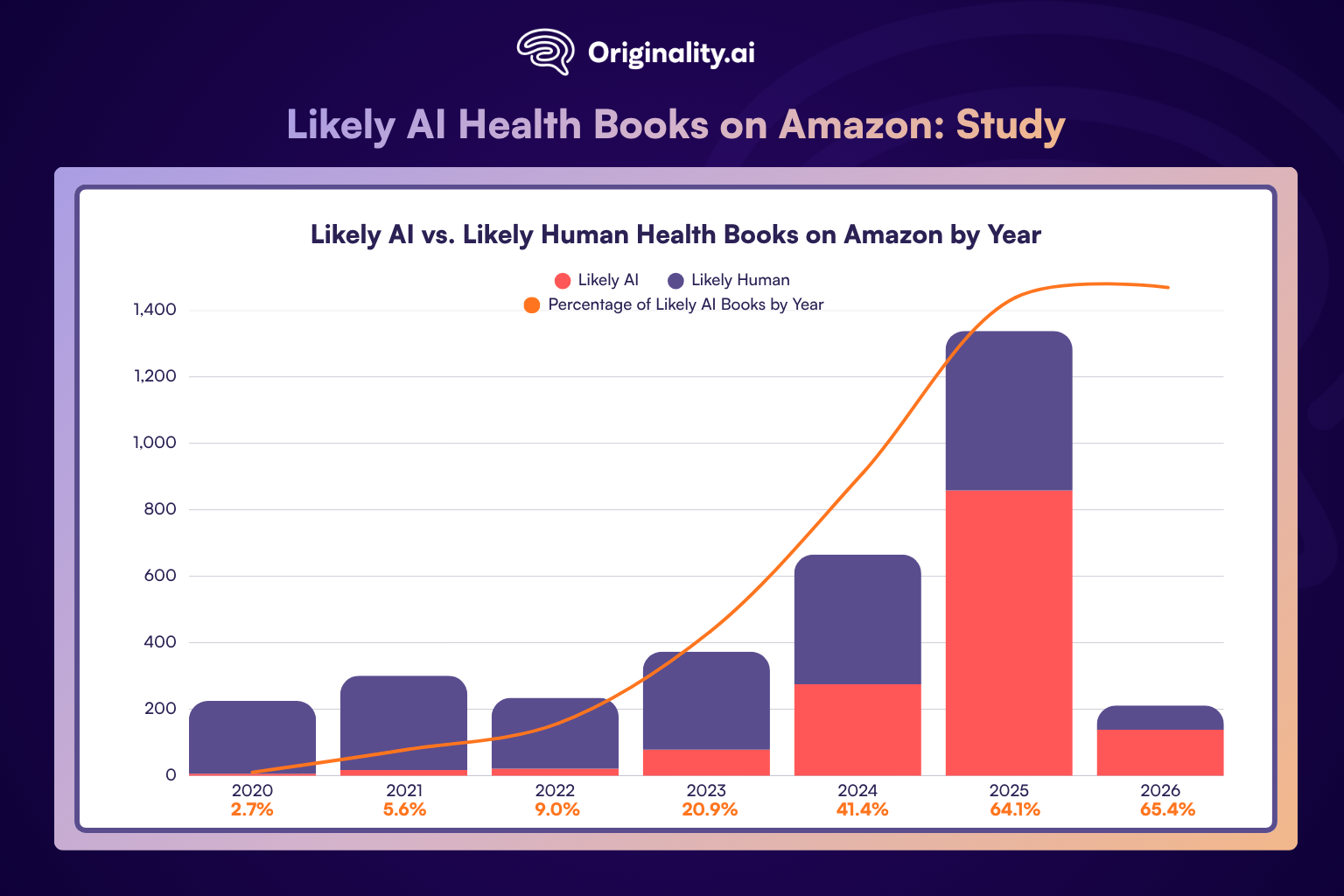
It’s clear that the rise in independent publishing and AI publishing has grown in tandem. You can see the dramatic spike in independent publications since 2022 in the chart below:
Amazon’s Kindle Direct Publishing guidelines require publishers to disclose AI-generated content, including text and images, to Amazon. However, while spot-checking the data, we rarely encountered appropriate disclosures when reviewing suspected AI content.
When looking exclusively at bestsellers published before the launch of ChatGPT in November 2022, only 2% were flagged as likely AI-written. This falls within Originality.ai’s false positive rate. (Read more about false positives here.)
Among books published after ChatGPT’s release, however, the rate jumped to 52%.
Zooming into just the most recent few years, we can see AI likelihood rates climbing every single year since ChatGPT launched.
Bestsellers flagged as AI-generated remained in single digits until 2023, the first full year after ChatGPT launched, when about one in five books were flagged as likely AI-written. That doubled to more than two in five by 2024, then climbed to nearly two-thirds in 2025.
Our 2026 data is limited to what appeared on the bestseller lists in January and February, but so far, the trend is continuing: 2026 is the highest year on record, with 65.4% of all bestsellers published this year being flagged as likely AI-written.
In our previous investigations into AI-written content on Amazon, we’ve consistently found that likely AI-written books are shorter and less expensive than their human-written counterparts. The same pattern appears in Amazon’s health categories.
Books whose samples were flagged as likely AI averaged 152 pages, compared with 253 pages for likely human-written books. That’s roughly 100 pages less of content when it’s likely AI.
We also decided to count the number of words in each book’s sample—the text we were able to scan. Human-written bestsellers offered samples averaging 3,338 words, while likely AI-written books had samples just 1,985 words long. So, not only are the books themselves shorter, but authors who likely used AI want to give prospective buyers a smaller glimpse inside their book’s contents. That can be interpreted as a red flag when evaluating whether a book seems possibly AI-generated.
Looking at price tags, likely AI-written books averaged US$18.98, compared with $26.12 for likely human-written books. However, the human-written category is likely raised due to expensive outliers, such as medical textbooks.
We also noticed the return of another cost-related trend in Amazon publishing: humans understand the value of a sale. In our momentary snapshot from February 2026, human-written books on sale averaged a 16% discount off their retail price, whereas likely AI-written books—which don’t go on sale for as much, or as often—only saw a 1% average markdown.
The difference in customer reviews was the most extreme. Likely human-written books averaged 1,025 Amazon reviews, compared with just 60 for likely AI-written books. This is unsurprising, given that the dataset inherently sees established bestsellers competing with more recent AI-generated content, but the number of user reviews are yet another steady benchmark for prospective buyers wary of purchasing AI-generated medical books.
Ultimately, the numbers are consistent: likely AI-written bestsellers tend to be newer, shorter, independently published, and have fewer customer reviews, with smaller samples to preview.
Medical misinformation long predates ChatGPT, but the rise of AI publishing has made it easier than ever for everyday people with no medical background to take advantage of customers eager for knowledge, clarity, and solutions for complex medical situations.
In the kindest interpretation, the vendors behind these LLMs are simply random folks around the world who’ve discovered a viable, low-effort business model, generating entire books on subjects they don’t have the qualifications to fact-check.
The worst-case scenario, however, is more nefarious: that bad-faith actors are shilling for dangerous snake oil under the guise of medical expertise.
Take, for example, The LifeWave Patch Bible, an independently published, 86-page book retailing for $16.99. The book extols the benefits of LifeWave patches, pseudoscientific patches whose purpose aren’t entirely clear, but which The LifeWave Patch Bible claims have “revolutionized the way we approach health and wellness by leveraging the therapeutic properties of light to promote healing, enhance vitality, and improve overall quality of life.”
The LifeWave Patch Bible scored as Likely AI for its contents and description; as of the time of writing in November 2026, it ranked #85 on Amazon’s bestselling books on headaches (although this ranking may shift in time).
One might be inclined to shrug off gullible customers for turning to Amazon for desperate solutions to their ongoing health problems. Or maybe you want to blame the circumstances that have led to such medical desperation in the first place: overburdened health care systems and unhealthy modern lifestyles, with too much sitting and excessive processed food.
But casting blame won’t solve the deception and profiteering happening every hour on the world’s largest book reseller. Ultimately, AI transparency must become an enforced standard in publishing—especially when people’s health is at stake.
Read more about the impact of AI on publishing in our studies:
Likely AI vs. Likely Human Books Across All 116 Categories (Visual Graphic):
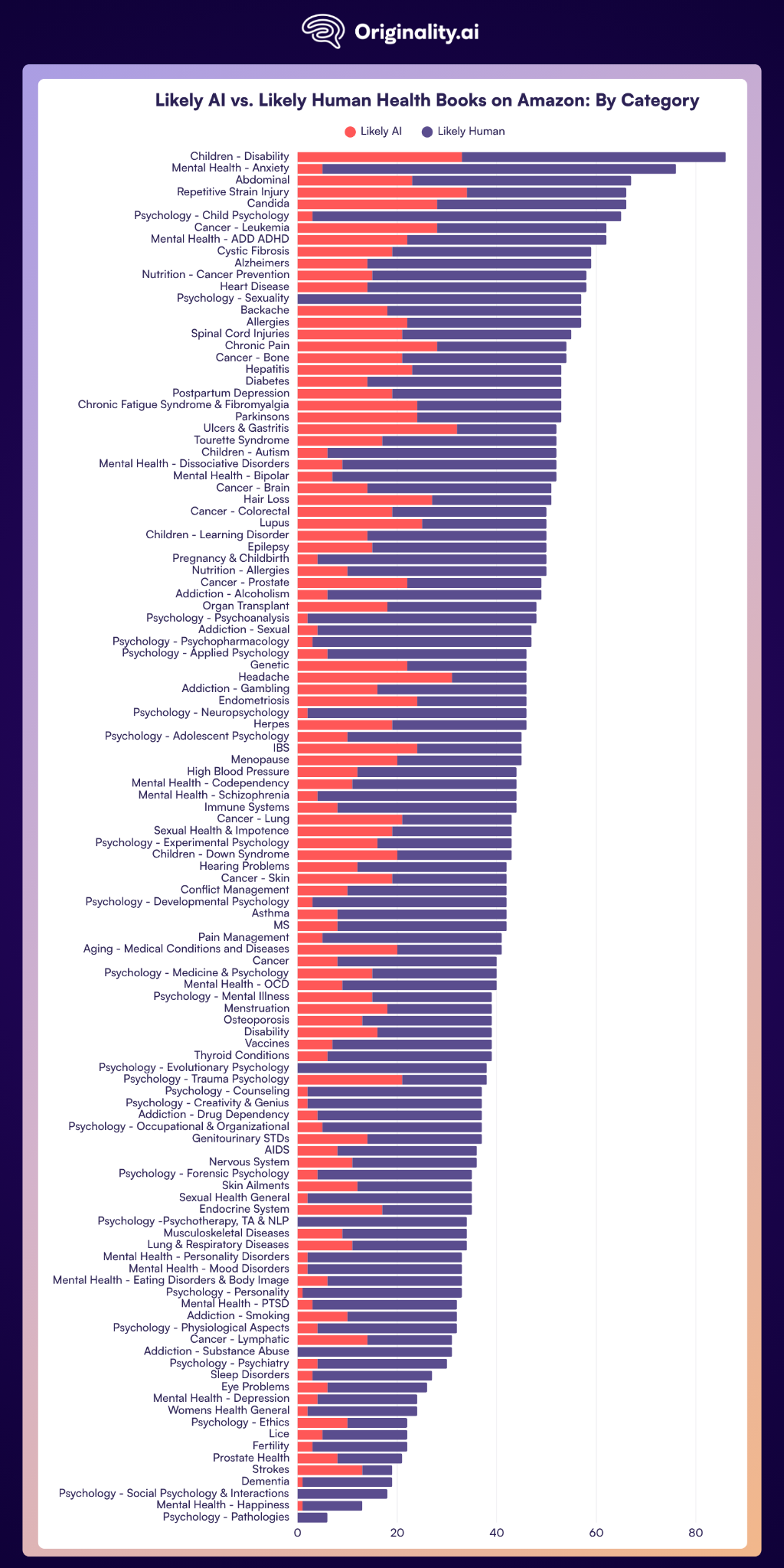
In February 2026, we collected approximately 12,000 book listings from Amazon.com’s Health, Fitness & Dieting book department category, drawing from the Top 100 Best Sellers in 116 selected categories and subcategories.
Our focus was on books focused on diagnosable diseases, disorders, disabilities and medical conditions. We included all of Amazon’s Diseases & Physical Ailments and Mental Health categories, as well as most of Psychology & Counseling, Addiction & Recovery, and Children’s & Adolescent Health. We also included Men’s Health, Women’s Health, relevant medical conditions associated with aging, and Vaccinations.
After collecting the listings, we removed duplicate books from distinct categories, books whose texts fell below Originality.ai’s 100-word minimum scanning requirement, titles that couldn’t be scanned for technical or language-related reasons, and books with “activity book”, “coloring book” or “journal” in their titles. The final dataset comprised 4,985 books published from 1955 to 2026.
For each eligible book, we used Originality.ai to scan three available elements: the Amazon product description, author biography and a sample of the book's actual text. Each scan returned an AI-likelihood score and a classification of either “Likely AI” or “Likely Human”.
For the purposes of this report, we focused primarily on book samples to determine the AI likelihood of the books’ true contents.
In addition to the sample text, we also collected titles, author names, URLs, publication dates, publishers paperback price, applicable discounts, number of reviews, page counts, and fact-checks for each book. We also scanned book descriptions and, when available, author biographies.
We analyzed the results in Microsoft Word using Amazon’s determined subcategories, publication year and publisher type, alongside available data on book length, price and Amazon customer reviews.
The bestseller lists represent a snapshot from February 2026, rather than a ranking of the most popular health books over an entire year. Amazon’s rankings fluctuate according to sales activity, weighting recent sales more heavily than historical sales. The results should therefore not be interpreted as representative of every health book sold on Amazon.
Math Papers on arXiv are rapidly increasing. In our latest update, Originality.ai found: from October 2025 to October 2026, there was a 115.5% surge in new papers. Further, nearly 1 in 4 sampled abstracts showed signs of probable AI writing.

AI & Plagiarism Detector for Serious Content Publishers
Originality.ai
64 Hurontario St
Collingwood, Ontario
L9Y 2L6