AI Checker
Plagiarism Checker
Grammar Checker
Content Quality
Guideline Checker
Readability Checker
Fact & AI Hallucination Checker

Extensions
MCP

From August 2025 to August 2026, the number of math papers posted on arXiv rose 75%, while the share of sampled abstracts classified as Likely AI saw a 68% increase over the same time period.
Mathematicians are concerned about this rise and what it will mean for the field.
This study's findings arrive during ongoing disputes about the role AI should play within Mathematics.
Mathathon is a planned AI-assisted Mathematics research competition at Caltech with OpenAI and Anthropic initially as sponsors.
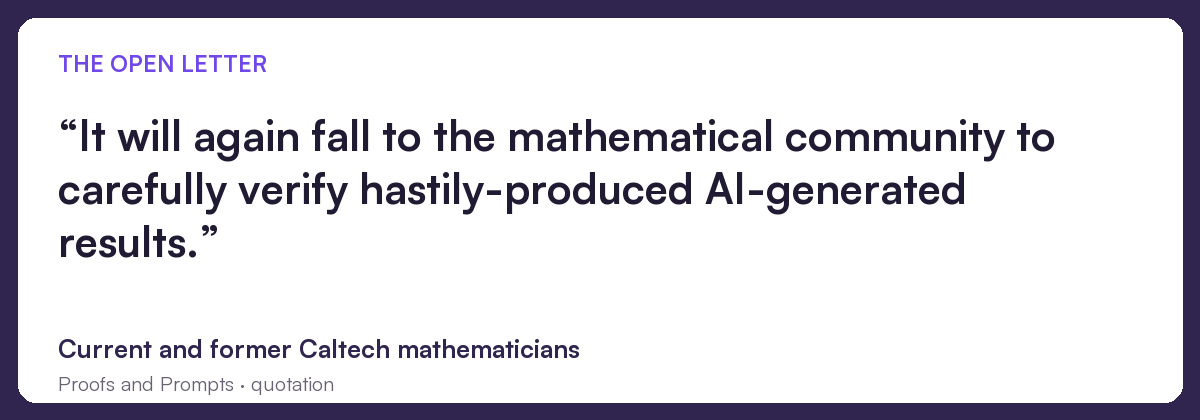
Current and former Caltech mathematicians called for the event to be suspended, warning of a flood of poorly checked results:

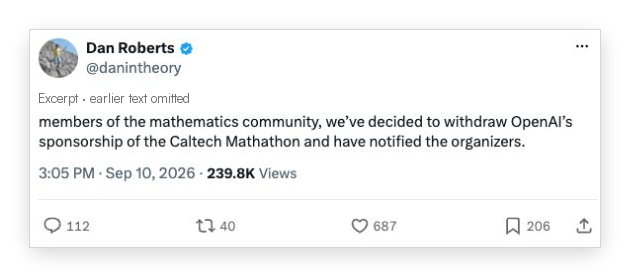
Business Insider reported that OpenAI had withdrawn its sponsorship.
Dan Roberts announced the decision on X:
The organizers acknowledged shortcomings in their initial plan and added an arXiv publication requirement.
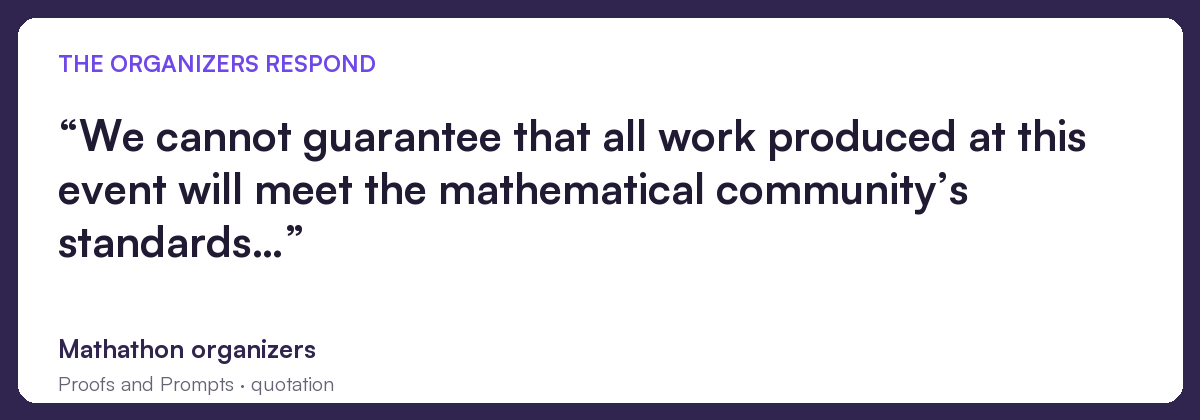
Read the organizers’ response.
In another ongoing dispute OpenAI’s claimed Navier–Stokes solution prompted questions about credit and access to unpublished work. Mathematician Tristan Buckmaster raised concerns; OpenAI responded and public reaction has been strong.
Public reaction from Mehdi (@BetterCallMedhi). Opening excerpt; profanity blurred.
Originality.ai counted new arXiv math papers by month and scanned 1000 abstracts from each month using our AI detector to try and understand the role AI is playing in the boom.
August 2026 had the highest monthly posting count in the full January 2020–August 2026 dataset.
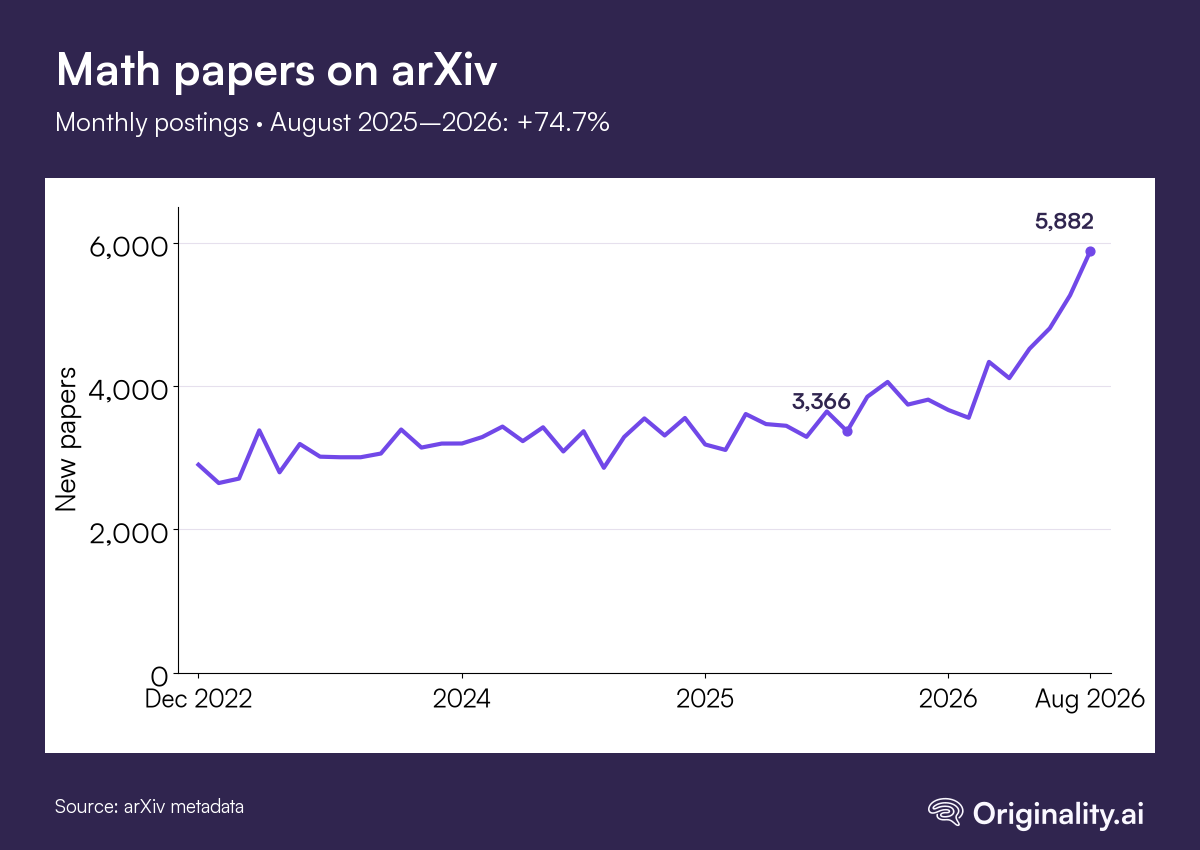
Each point represents one month, starting in December 2022. These are arXiv preprints, not peer-reviewed journal publication counts.
Nearly one in four sampled abstracts was classified as Likely AI in August 2026. In the pre-ChatGPT baseline, one of 3,400 was flagged.
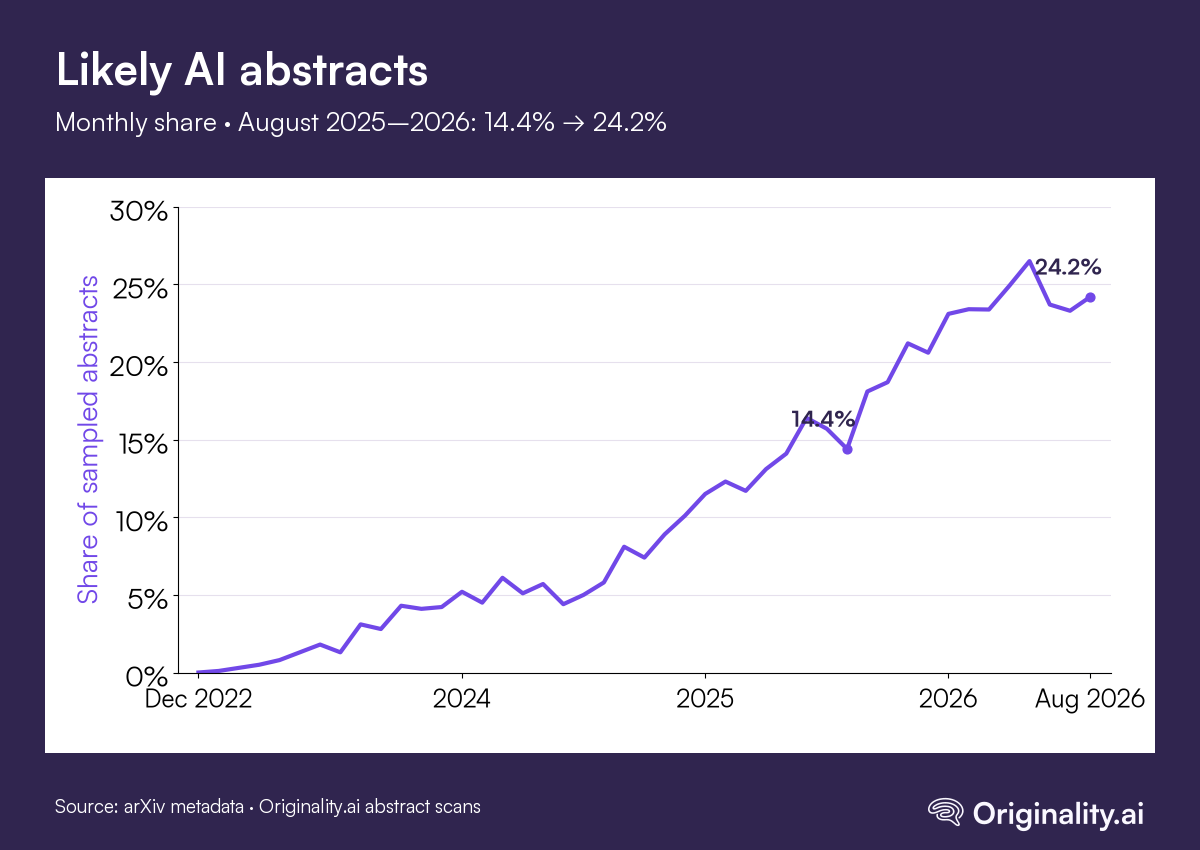
August 2025: 144 of 1,000 abstracts flagged. August 2026: 242 of 1,000. The increase is 9.8 percentage points, or 68.1% relative growth.
Mathematicians are raising concerns about the work needed to check AI-assisted research and understand its results.
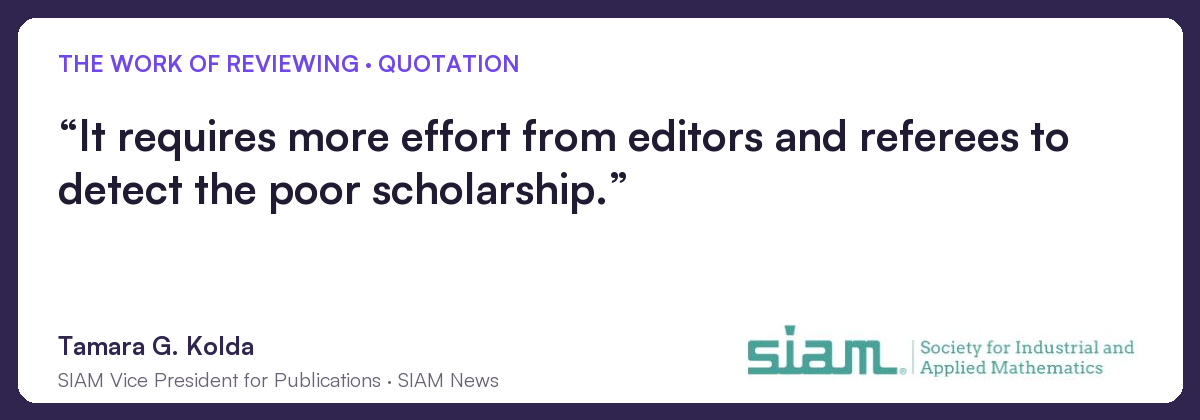
Tamara G. Kolda · SIAM News essay

Daniel Litt · original X post
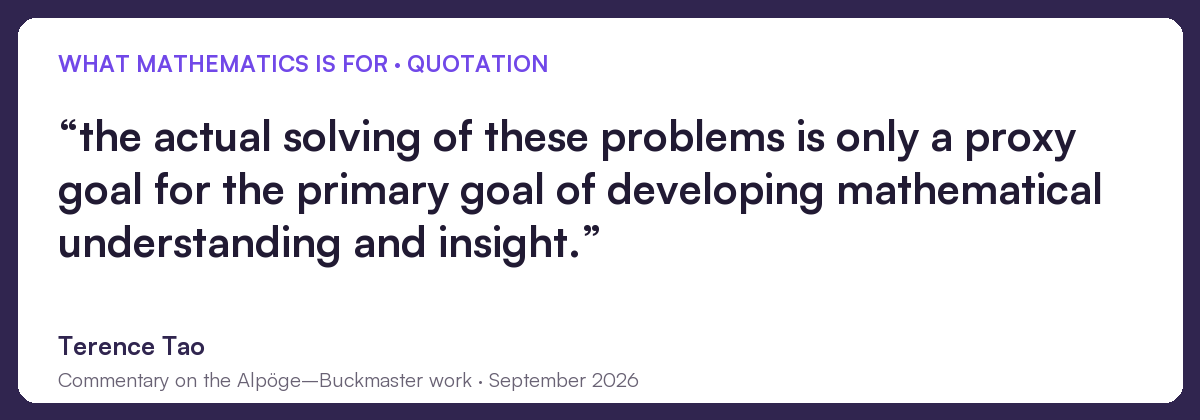
Terence Tao · commentary on the Alpöge–Buckmaster work, before OpenAI’s announcement
Published in June 2026, before these disputes, the Leiden Declaration calls for disclosure of AI use and keeps responsibility for correctness with human authors.
The Leiden Declaration turns these concerns into a shared set of recommendations. Its website listed 3,889 signatories when checked on September 11, 2026. The International Mathematical Union has endorsed it, alongside public endorsements from mathematicians including Terence Tao and Peter Scholze.
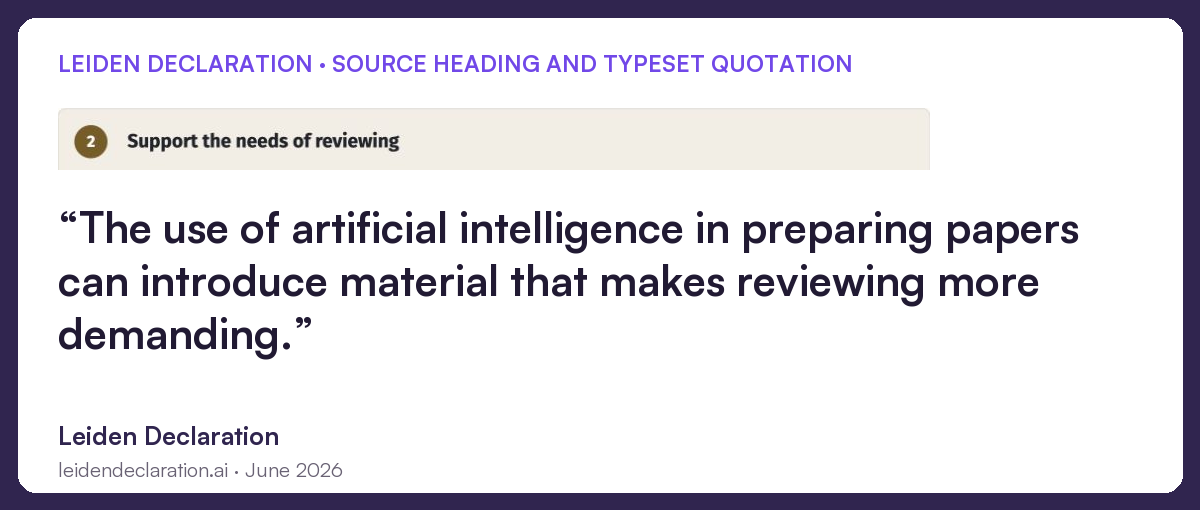
The Mathathon organizers say they have all signed the declaration.
Its main recommendations summarized:
Signups peaked around the June launch, with a smaller pickup in September.
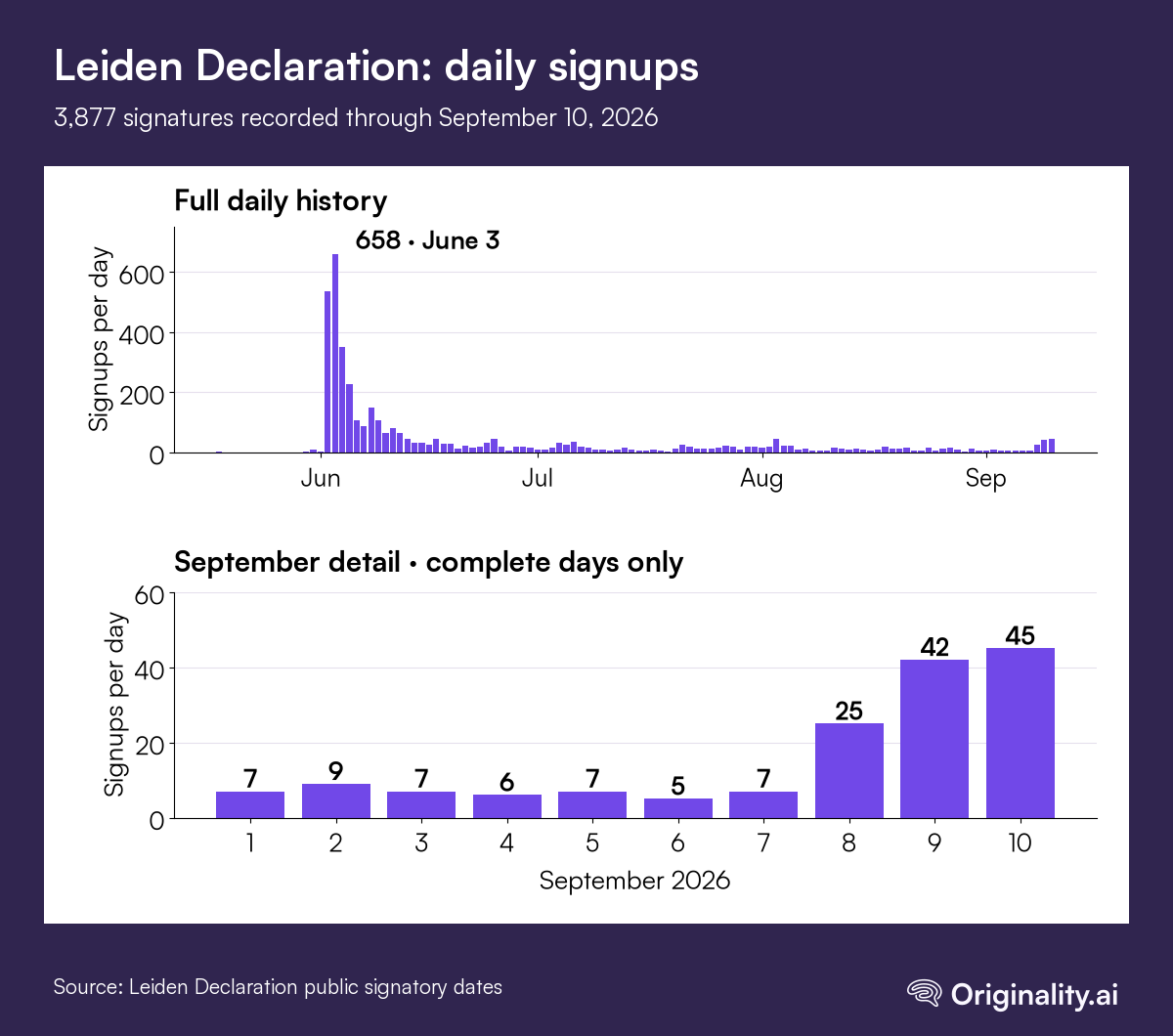
Source: Leiden Declaration public signatory dates. Chart includes complete days only; the partial final day is excluded.
Data available upon request

AI & Plagiarism Detector for Serious Content Publishers
Originality.ai
64 Hurontario St
Collingwood, Ontario
L9Y 2L6