AI Checker
Plagiarism Checker
Grammar Checker
Content Quality
Guideline Checker
Readability Checker
Fact & AI Hallucination Checker

Extensions

In the opening paragraph of You Can't Serve Two Masters: Undivided Allegiance to Christ in an Age of Cultural Compromise, the author uses contrasting negatives in virtually every single sentence. (Bolded for emphasis.)
The crisis of the American church did not arrive like a sudden storm. It emerged like a slow leak beneath the floorboards, unnoticed at first, tolerated next, and eventually treated as normal. The landscape of modern Christianity is now littered not with the fruit of repentance but with the debris of compromise, shaped less by persecution pressing in from without than by corrosion rising from within. This is not chiefly the age of open rebellion against God but of gradual drift, quiet accommodation, and dignified apostasy. The tragedy is not that the world has rejected truth; the tragedy is that the Church has grown comfortable without it.
This sentence structure, a hallmark of large language models, gives insight into why You Can’t Serve Two Masters was flagged as likely AI-written in a recent scan of more than 2,000 religious books published to Amazon.com within the last 12 months—one of 1,272 titles (63%) flagged as likely written by LLMs.
And if there was any doubt about the author’s use of AI, a quick scan of their social media videos proves they are a fan.
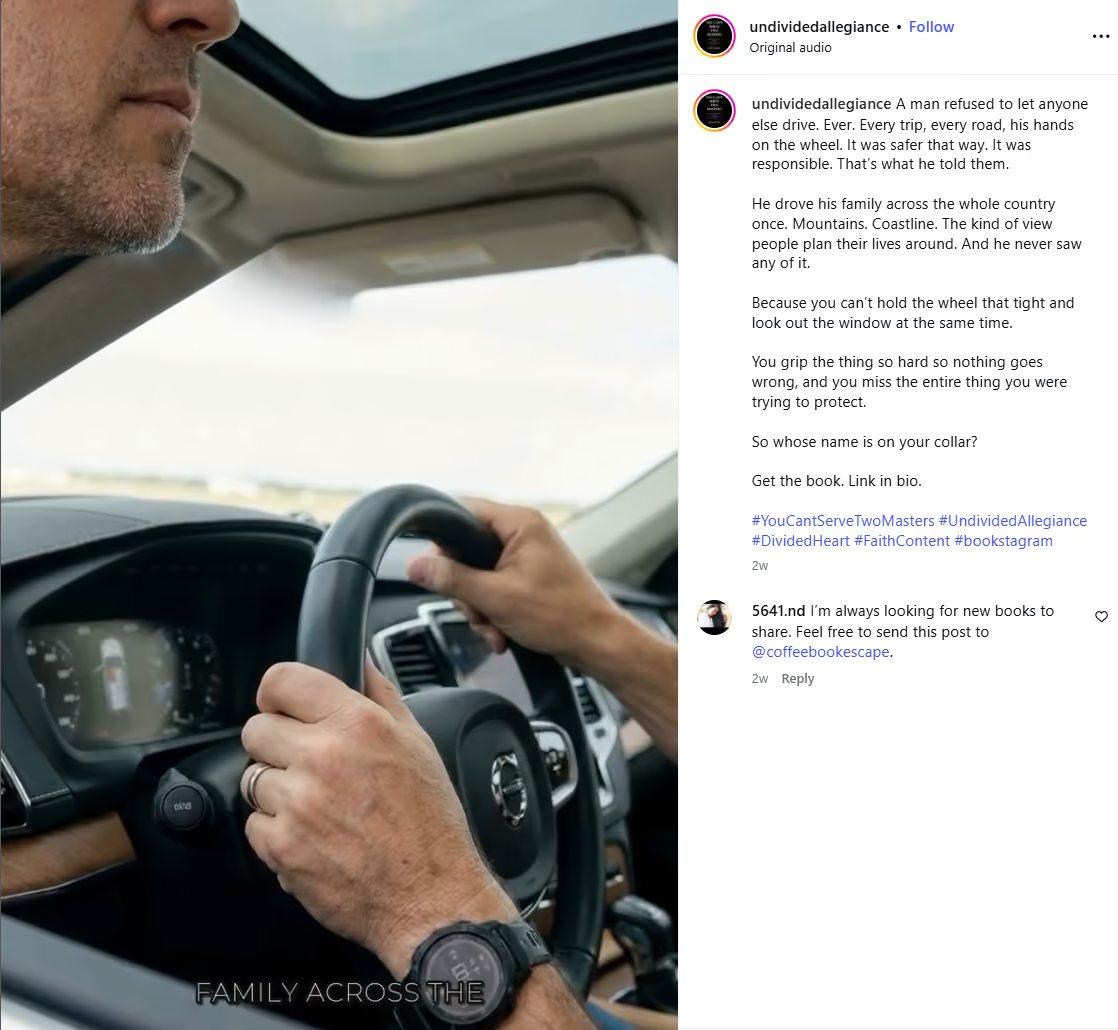
Religious digital content has been particularly fertile ground for AI slop ever since the earliest AI-generated memes. (Remember Shrimp Jesus?) This is perhaps linked to the longstanding tradition of “affinity fraud”, which more often takes the form of investment or political fraud, taking advantage of innocent people’s faith and kindness. Multilevel-marketing scammers proliferate within American Christian communities by using biblical language and taking advantage of charitable sensibilities. Observant Muslim and Jewish communities are equally susceptible to financial scams within their tight-knit communities.
AI-written books and social media posts thrive because of those same vulnerabilities. They pull at the heart of a religious person’s beliefs, confirming what they believe to be true while, in the case of Amazon books for sale, exploiting them for profit.
For this project, we scanned 2,034 religious books published to Amazon’s Religion & Spirituality category, mostly published between January and June 2026. We avoided concept-based subgenres like “Religious Art” and “Creation” and focused strictly on commonly practiced world religions and belief systems. The final list included agnosticism, atheism, Buddhism, Catholicism, Hinduism, Islam, Judaism, Mormonism, Orthodox Christianity, Protestantism, Satanism, Sikhism, Taoism, and witchcraft.
One issue with the dataset worth noting is how different the sample sizes are. There are, unsurprisingly, significantly more authors writing about Catholicism than Satanism. Because we limited our scan to books published in English, Western religions are also disproportionately included; the smallest group is Sikhism (15 titles), but we ultimately decided to include it due to the global popularity of the Sikh religion.
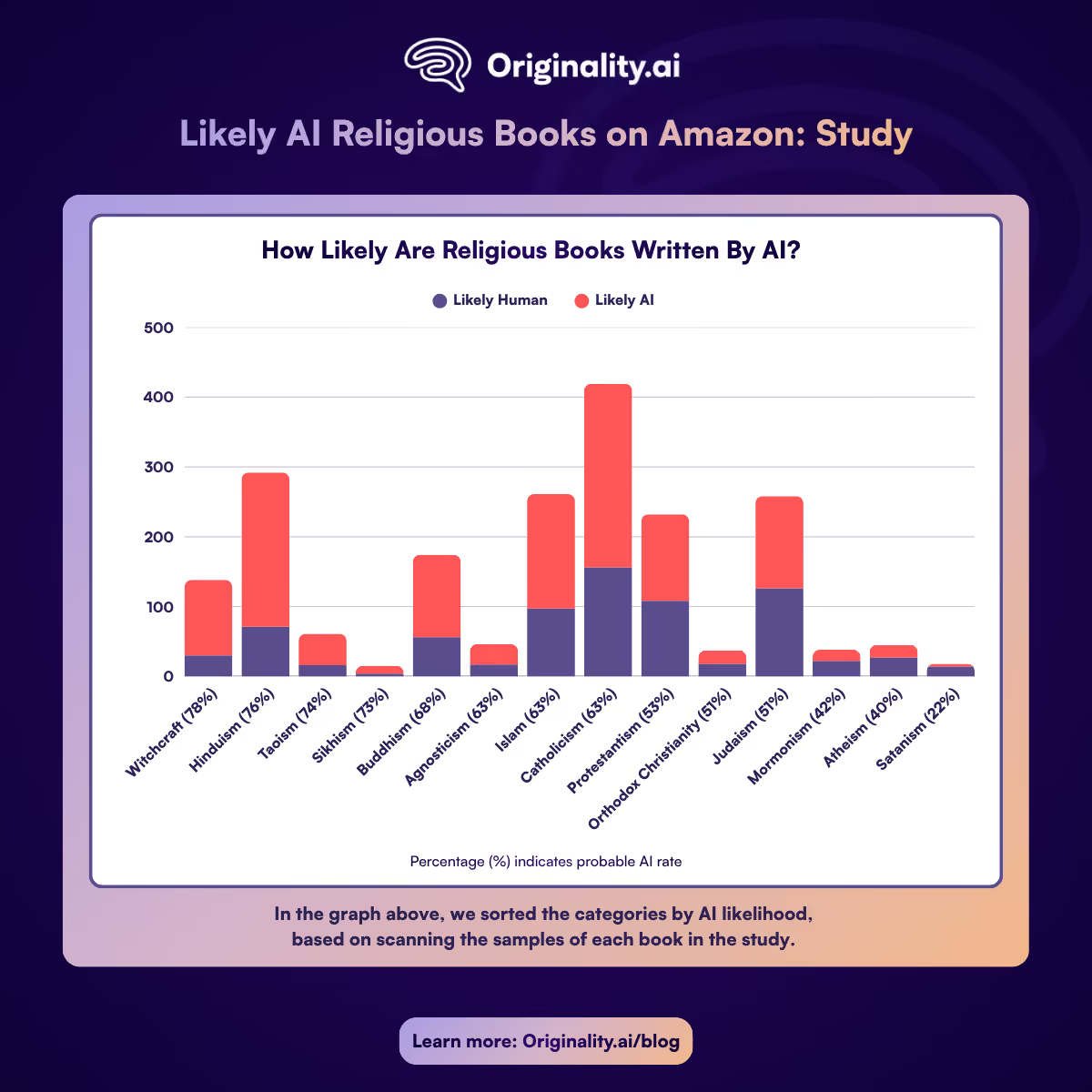
In the graph above, we sorted the categories by AI likelihood, based on scanning the samples of each book in the study.
The highest percentage is witchcraft (“Wicca, Witchcraft & Paganism” is the full official subgenre on Amazon). These witchcraft titles focus on cleansing negative energies, healing crystals and herbal apothecaries, the latter of which we at Originality.ai have covered in a separate study. As noted then, the fields of naturalism and pseudoscience appear ripe for AI infiltration.
Behind witchcraft, the next four subgenres most likely to use AI are all Eastern religions: Hinduism, Taoism, Sikhism, and Buddhism.
In the middle of the chart we have the Abrahamic religions clustered together. AI likelihood rates for Islam, Catholicism, Protestantism, Orthodox Christianity, and Judaism are all in the same ballpark, anywhere from 51%-63%. This is a striking similarity given the differences in sample size and target audience. Christians, Jews and Muslims share significant theological roots, but they probably aren’t reading each other’s books. Yet the rate of AI likelihood between all three major Abrahamic religions remains relatively close.
Trailing at the end are the less popular categories of Mormonism, atheism, and Satanism. There are fewer than 50 titles in each of those subgenres; we find authors who use AI to quickly write and sell books tend to target more popular categories, which could explain their lower percentages.
For this study, we scanned three elements of books available on Amazon: the summary, author bio, and sample. A minority of books have author bios, while summaries—even for likely human-written content—are more likely to be AI-written, being sales copy. Samples are the most telling piece of evidence, being published inside the book itself.
However, for a comprehensive number, we also look at which books are flagged as having likely used AI for all three pieces of text—author bios, summaries, and samples.
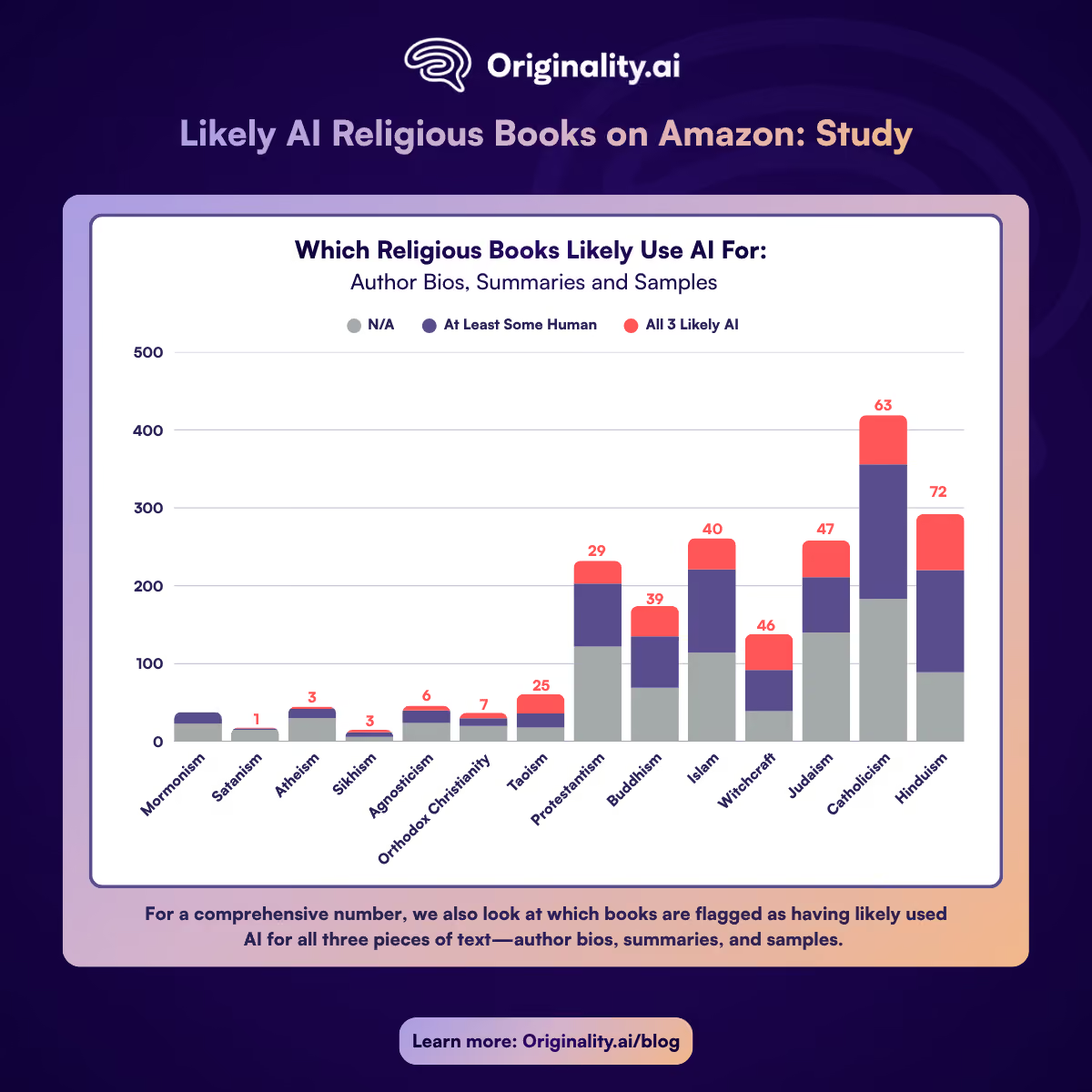
As the above chart shows, Hinduism leads the empirical count, with 72 books (25% of all Hindu books sampled) likely using AI for all available text. As a percentage of the total, Taoism wins, with 41% entirely likely AI (25 out of 61 books), followed by witchcraft with 33% (46 out of 138 books). No Mormon books surveyed used AI for all three areas of text.
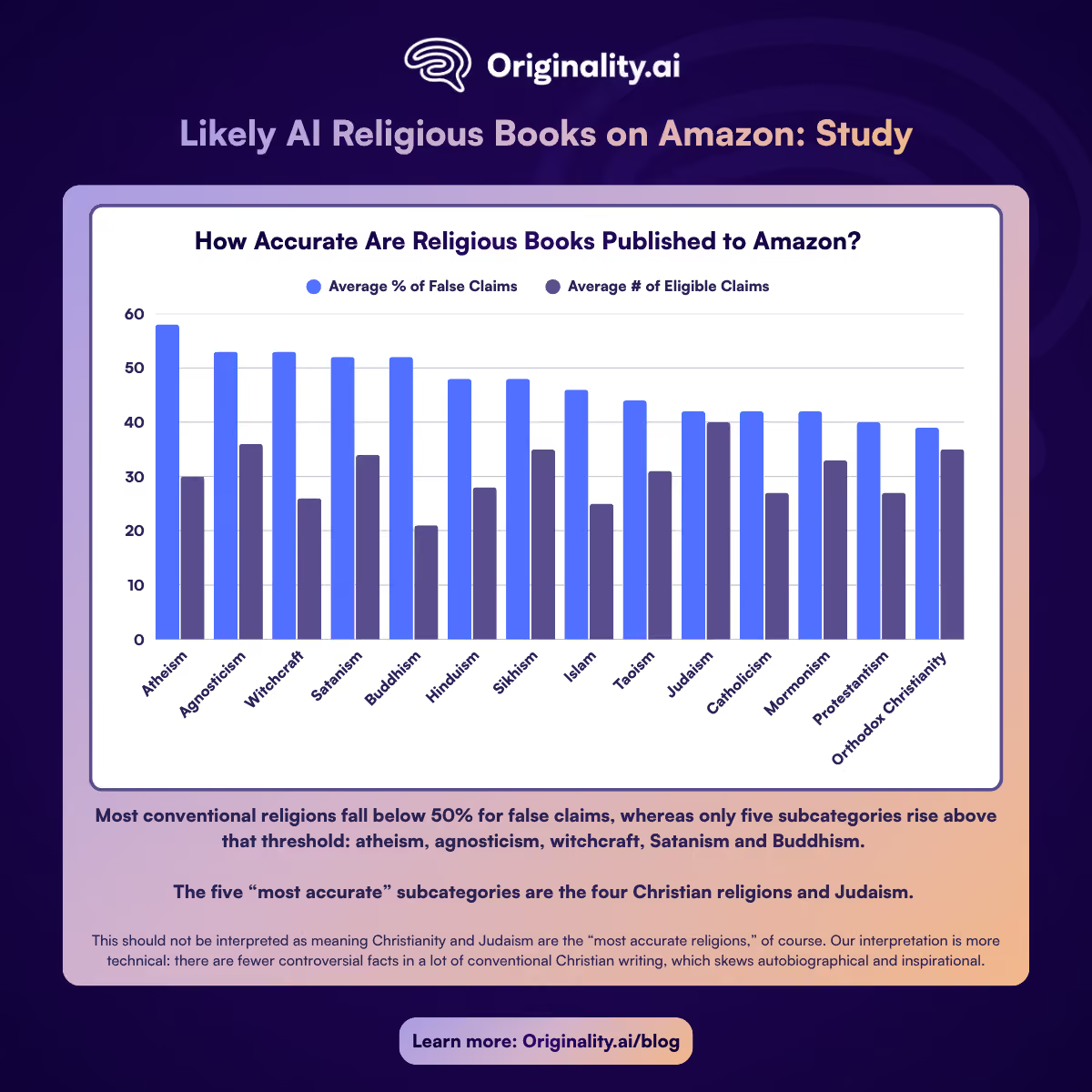
In addition to a scan for AI likelihood, we also leveraged Originality.ai’s fact-checking tool for every book scanned. The fact-checking tool is by no means definitive, but it gives a general sense of false or questionable claims, especially when a confirmable fact is searchable online.
The results found that most conventional religions fall below 50% for false claims, whereas only five subcategories rise above that threshold: atheism, agnosticism, witchcraft, Satanism and Buddhism.
The five “most accurate” subcategories are the four Christian religions and Judaism.
This should not be interpreted as meaning Christianity and Judaism are the “most accurate religions,” of course. Our interpretation is more technical: there are fewer controversial facts in a lot of conventional Christian writing, which skews autobiographical and inspirational.
Scroll up and re-read the opening paragraph of You Can’t Serve Two Masters, which has telltale signs of AI generation. There aren’t many conventional facts one could check. A lot of Christian writing sounds like that. There are theological arguments—especially in Jewish texts—but those tend to be based on interpreting the bible. These subgenres, more than Taoism and Sikhism, are likely to comprise autobiography and self-help advice, which is not exactly ripe content for fact-checking.
Compare that with simply the kinds of titles we sampled in the atheism subcategory:
The atheism subcategory is, more often than in other religious subcategories, packed with argumentative polemics. So while the empirical number of eligible claims isn’t necessarily higher, the density of provable claims—which may or may not be accurate when checked—is higher.
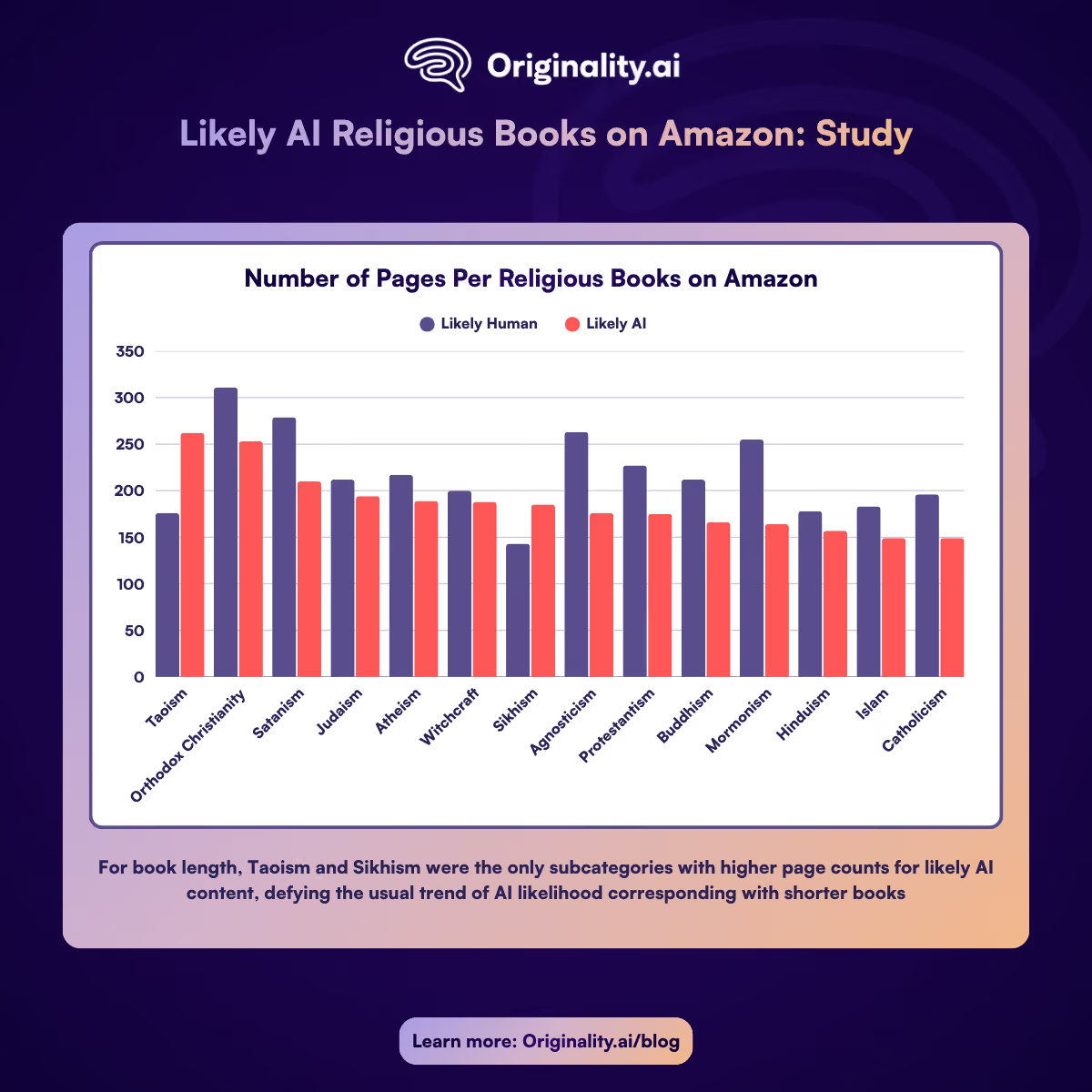
In our investigations into AI likelihood on Amazon books, we have found that likely AI-written books are typically cheaper and shorter. This holds true in the Religion category, where likely AI-written books averaged $16.84 (USD) and 170 pages, compared to likely human-written books, which averaged $18.96 and 208 pages.
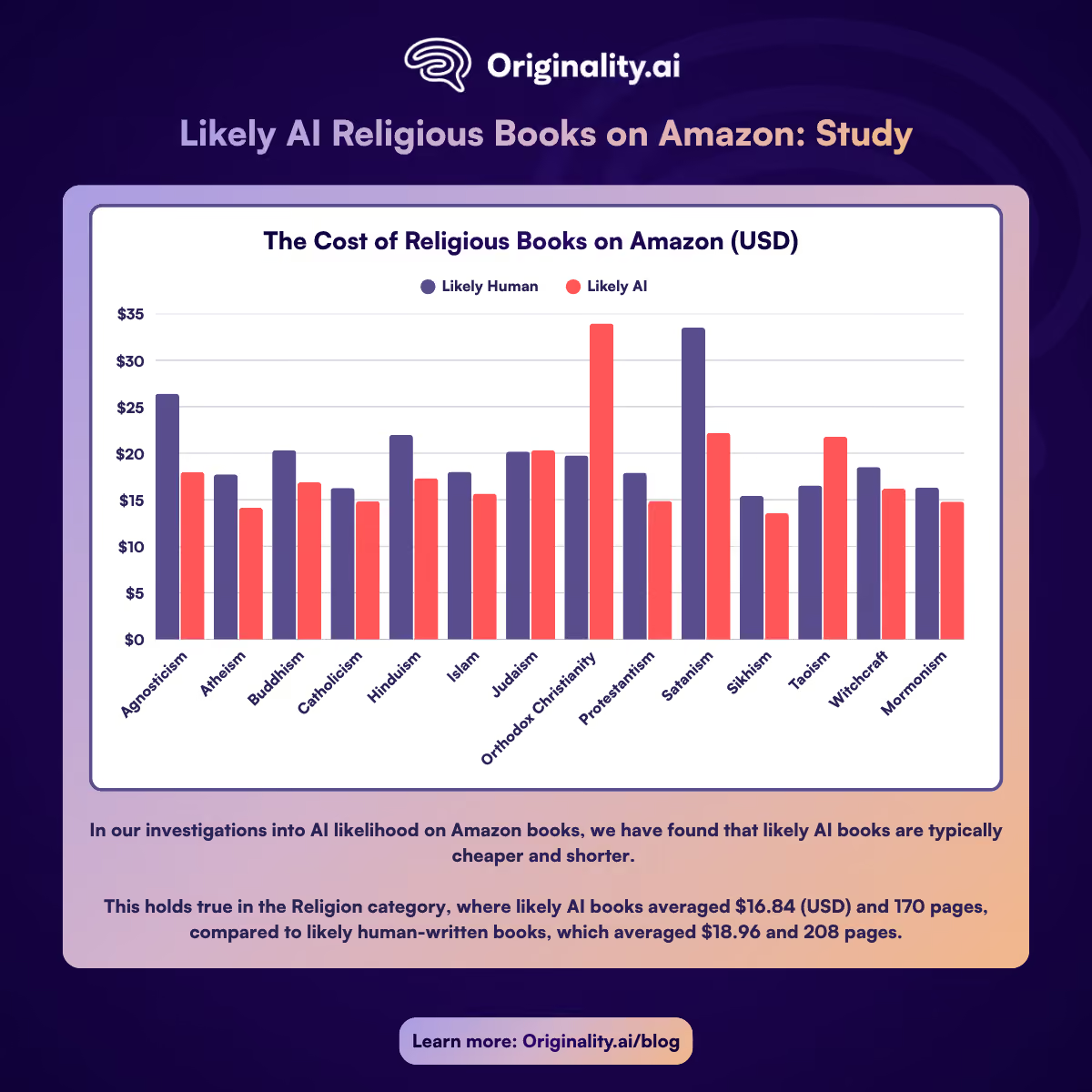
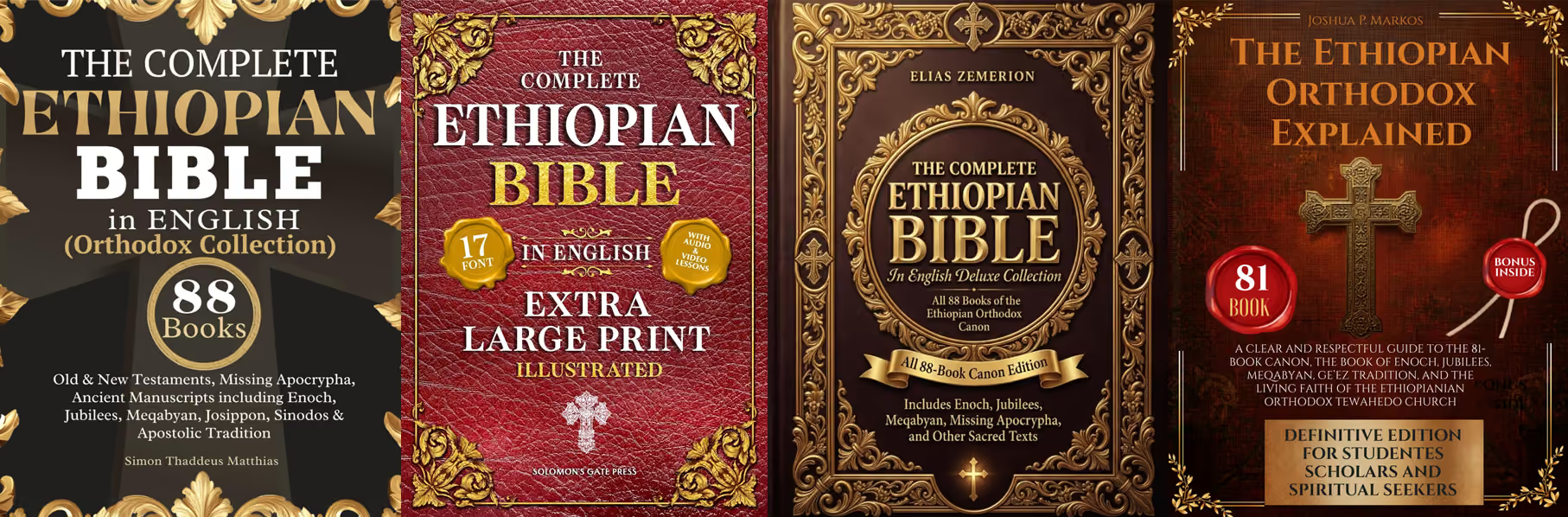
This rule—that likely AI-written content is cheaper—held true in almost all categories, except most notably for Orthodox Christianity, whose books averaged $33.93, significantly more than the subcategory’s human-written books ($19.75 average). This outlying category is due to a small sample size skewed by a series of copycat publications of “Ethiopian bibles”, most flagged as using AI, priced anywhere from $34.99 to $189.46.
Taoism also saw more expensive content likely written by AI than humans, as did Judaism—but only by 13 cents.
For book length, Taoism and Sikhism were the only subcategories with higher page counts for likely AI content.
Sikhism is the smallest category by sample size, and also averages the shortest books—even written by humans.
Religion, like self-care and medicinal decisions, is deeply personal. People make life decisions based on faith. And Amazon authors, by publishing books targeting people of certain faiths, explicitly aim to profit off those personal beliefs and emotions.
The tension between faith and finances has always existed, and religious institutions have lately struggled with declining memberships and fewer funds. Church buildings are being repurposed into performance venues and private housing; synagogues have been torn down or consolidated. Communities are retreating from physical gathering spaces.
At the same time that religious institutions are shuttering bricks-and-mortar buildings, digital profiteering has been on the rise, with Amazon selling an estimated hundreds of millions of books per year. There is no causation between these two, but the fall of in-person communities has coincided with the rise of digital content consumption.
To be clear, no one is replacing going to church with reading an AI-generated book about the life of Jesus. But we can plainly see authors using AI to capitalize on this trend in virtually every category of religious publishing.
The question of whether AI is capable of delivering spiritual wisdom is another matter. If a reader feels closer to God after reading something written by AI, is that bad? If a leader reads an AI-generated sermon based on their past sermons, is it any less authoritative? These are issues religious leaders are no doubt already debating—and will continue debating for years to come, as technology continues to rise while religious involvement falls wayside.
This study analyzed newly published books across major religious categories on Amazon to determine the prevalence of AI-generated content in religious publishing. Book data was collected via automated scraping of Amazon’s search results, text samples were scanned using Originality.ai, and results were analyzed in Microsoft Excel.
Book data was sourced between January 1 and June 30, 2026 (although a small portion of books fell outside this timeframe), from Amazon.com, the world’s largest English-language book retail platform. Titles needed to meet certain criteria to be scanned: availability in paperback and a minimum four-star review average.
A custom Python 3 scraping pipeline was developed to collect books published within the target date range across 14 religious subcategories. Subcategories were selected from Amazon’s Religion & Spirituality category based on two criteria: sufficient Amazon publishing volume to yield a meaningful sample size, and recognition as a distinct religious tradition rather than a practice, concept, or catch-all grouping. The final category set comprised: Agnosticism, Atheism, Buddhism, Catholicism, Hinduism, Islam, Judaism, Mormonism, Orthodox Christianity, Protestantism, Satanism, Sikhism, Taoism, and Wicca, Witchcraft & Paganism.
For each book, the pipeline collected three distinct text fields where available: the book description, the author biography, and the in-book sample (a preview excerpt provided by Amazon). In addition, details about each title were collected, including book title, URL, publication date, publisher, full paperback cost, sale price, number of reviews, number of pages, and subcategory taxonomy. Sample text was also passed through Originality.ai’s fact-checker tool, which separately totalled the number of eligible claims and the number of false claims. All data was written incrementally to a SQLite database file, with each record committed immediately upon retrieval to prevent data loss in the event of interruption.
A total of 2034 books were collected across all 14 categories, representing all eligible new releases published during the study period.
All three text fields were scanned independently using Originality.ai. Each scannable text field received a probability score from 0 to 100, with results classified as “Likely AI” (score ≥ 50) or “Likely Human” (score < 50). The in-book sample was designated the primary metric for this study, as it most directly reflects the content consumed by readers. Description and author biography scores were retained as secondary metrics. Text fields below Originality.ai’s minimum word threshold (100 words) were classified as N/A and excluded from rate calculations for that field.
AI prevalence rates were calculated as the percentage of “Likely AI” classifications within each category and text field.

AI & Plagiarism Detector for Serious Content Publishers
Originality.ai
64 Hurontario St
Collingwood, Ontario
L9Y 2L6