AI Checker
Plagiarism Checker
Grammar Checker
Content Quality
Guideline Checker
Readability Checker
Fact & AI Hallucination Checker

Extensions
MCP

Losing a pet can be devastating. The impact can affect people as deeply as the death of a family member, and anyone seeking solace during this emotional time might understandably look for expert guidance. Maybe they’ll find books to walk them through their grief—those books could even be tailored to their specific type of pet, dealing with the loss of a dog, cat, or fish; maybe they’ll stumble upon a therapeutic journal or colouring book.
Unfortunately, anyone in that situation could be easily fooled into buying a book that was likely written by artificial intelligence—without them being aware of it.
We at Originality.ai investigated books published to Amazon.com in the “pet loss” subgenre (time frame noted below). (For consistency, we held a minimum criteria of a four-star review average, written in English, and available in paperback.)
We scanned a total of 1,097 titles published between April 2010 and December 2025. The earliest we found was Facing Farewell: A Guide for Making End of Life Decisions for Your Pet, published on April 13, 2010, by a veterinarian. The latest within our dataset—which we capped at the end of 2025—was Echo: A Therapy Dog’s Journey was published Dec. 28, 2025.
Not all of the 1,097 books satisfied our AI detector’s threshold for a minimum amount of text, including a viewable sample inside each book (minimum 100 words). Ultimately, we successfully analyzed 882 books, and our findings focus primarily on the contents found within the book itself (known as the “sample”, found underneath the book cover on Amazon listings pages).
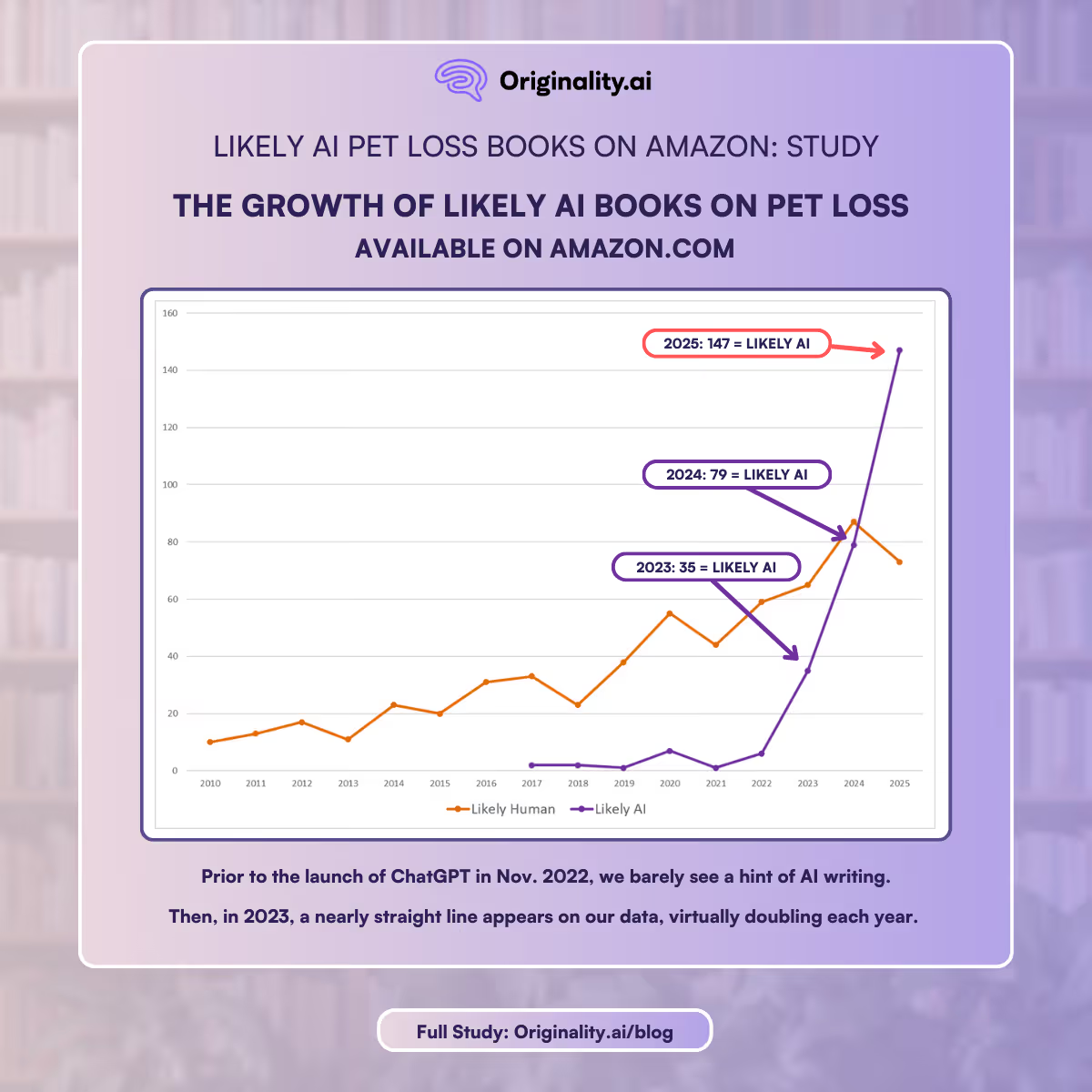
Pet loss is a niche subcategory, which means it’s escaped much of the prevalence of AI content that has plagued other corners of Amazon publishing (see: herbal remedies). This is exemplified by the fact that there were only 882 titles since 2010 that met our parameters.
Prior to the launch of ChatGPT in Nov. 2022, we barely see a hint of AI writing. Single-digit aberrations appear between 2017 and 2022, within our AI-detection model’s margin of error for this type of content. We’re transparent about our low false positive rates; you can read more in our accuracy study.
Then, in 2023, a nearly straight line appears on our data, virtually doubling each year. Here’s how many likely AI books were detected in each of the last three years:
Human output has steadily grown on the platform as well, but not at nearly such a rapid rate.
2025 was the first year that likely AI-written content overtook likely human content—by a ratio of nearly 2:1. Those 147 books that were likely written by robots in 2025 dwarf the 73 likely penned by humans in that same calendar year.
While the majority of the category’s contents are still very much human-written—and include many best sellers that predate the existence of ChatGPT—the last three years have seen an unmistakable influx of AI content that has flooded the market.
In the last three years, more books were found to be likely AI-written than human-written: 261 to 225.
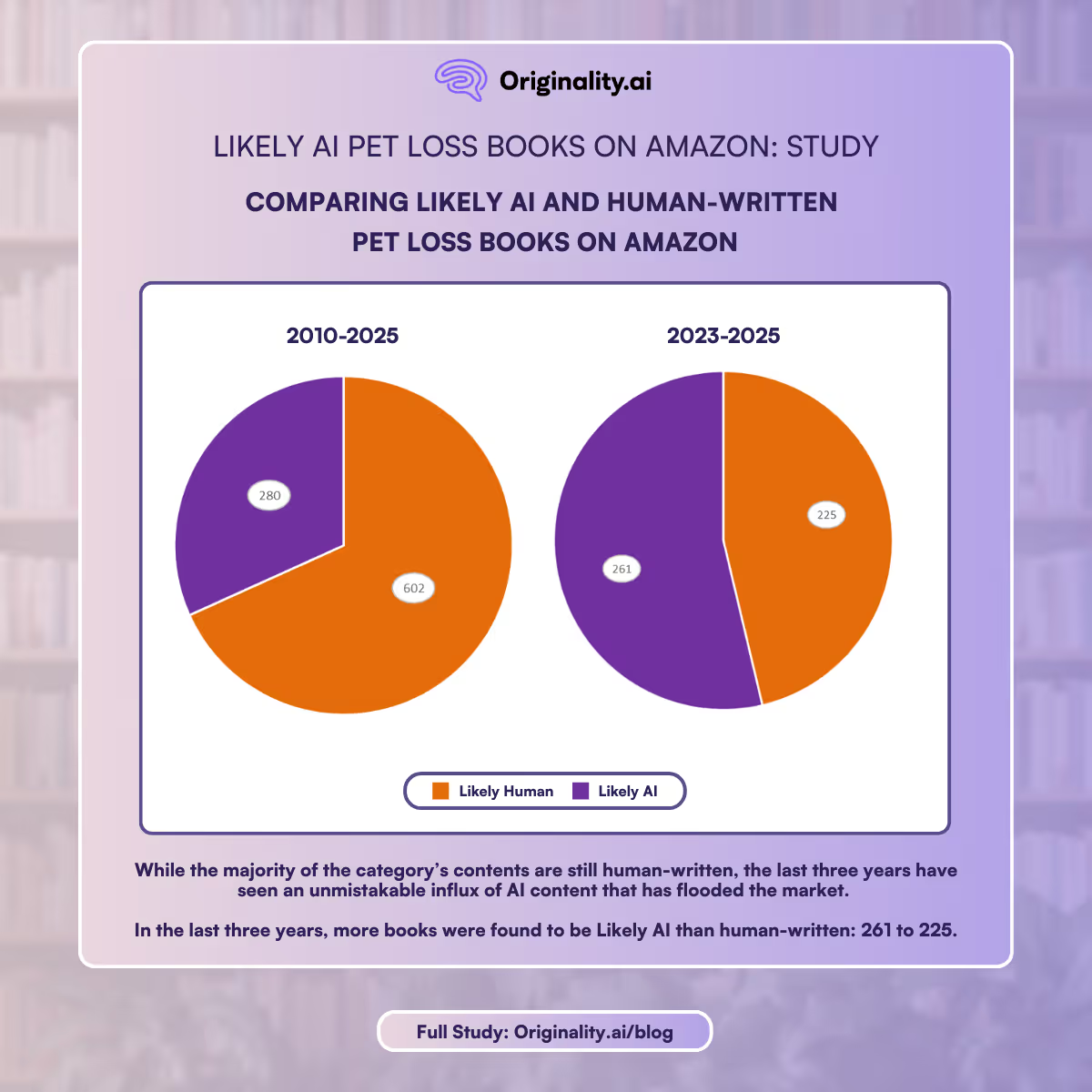
So while humans still dominate the subgenre, if these trends continue, there is a very real risk that undisclosed AI-written content could overwhelm the field within a few years.
In past investigations, we at Originality.ai have found that authors who write numerous books likely use AI to create content so prolifically.
However, the expansive 15-year breadth of this dataset bucks that trend entirely.
Only 13 Amazon authors published three or more titles on pet loss—and likely all of them were real humans. A few likely used AI to write a minority of their titles.
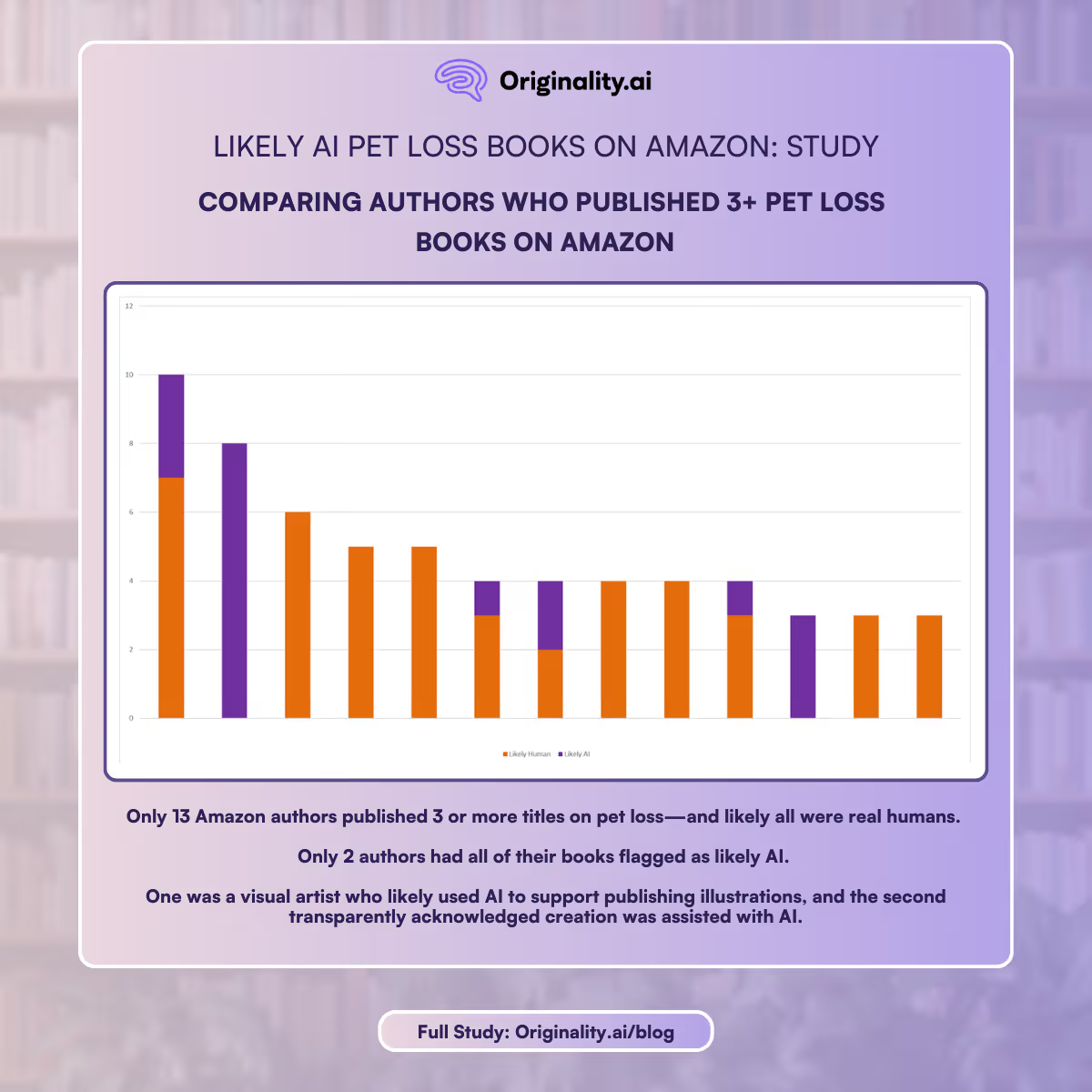
Only two authors had all of their books flagged as likely written using AI.
A visual artist likely used AI to help publish illustrations, a defensible use of AI.
The second author, whose works were flagged as AI-generated, offers another justifiable example of AI publishing because they were transparent about it and acknowledged the use of AI.
There is cause for optimism when the most prolific authors in the subgenre are humans—or humans using AI with transparency and honesty.
Given that the last three years have seen an influx of likely AI-written books, the question remains: does it matter? Is anyone actually buying these books?
Yes, they are.
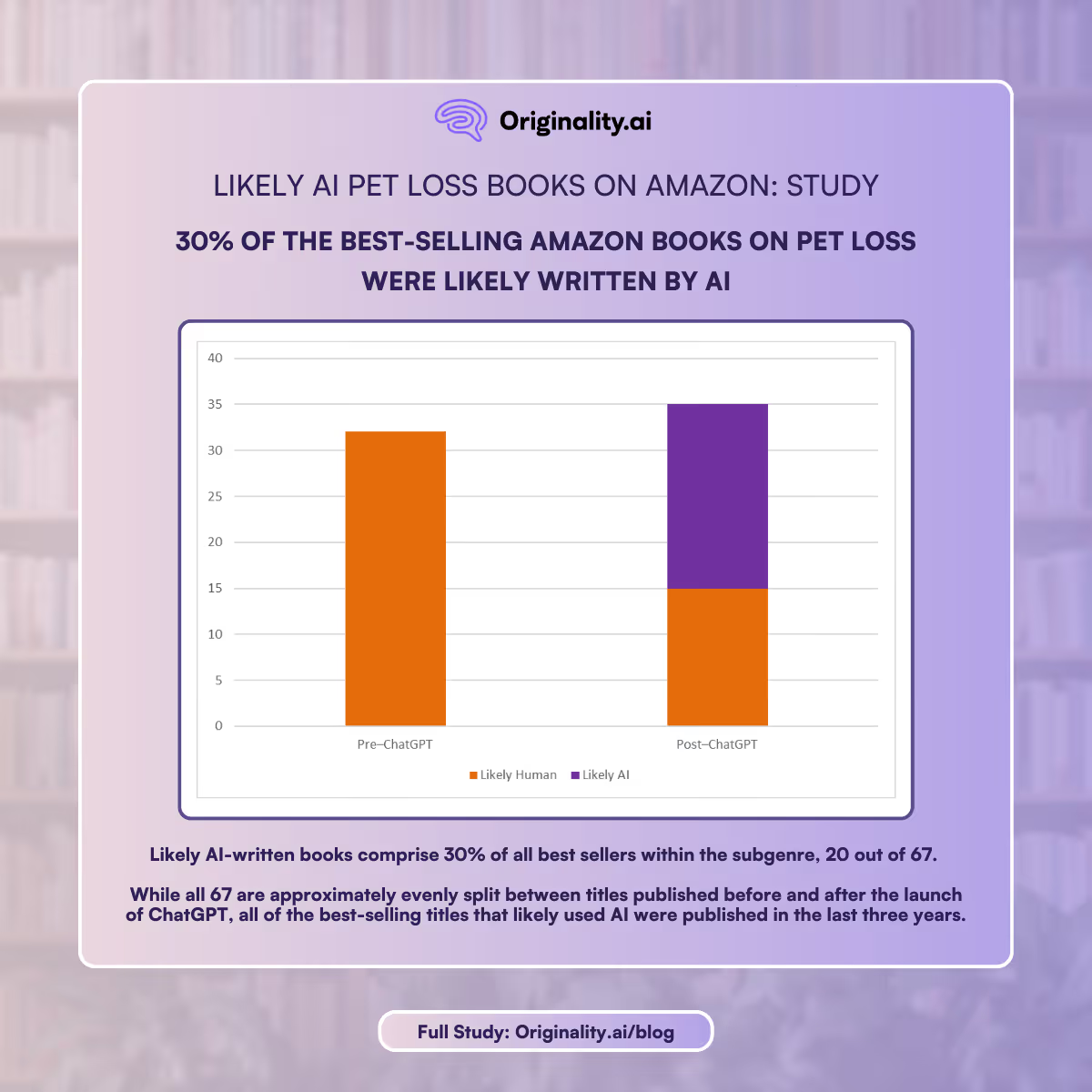
We ran a separate analysis of only the best sellers in the “pet loss” subcategory, per Amazon’s own definition. We analyzed the top 100 books that made the cut, of which 67 met our threshold for analysis. Amazon’s specific list of best sellers changes hourly, based on up-to-the-minute sales and reviews. Our scan was completed in a single day in early January 2026.
Likely AI-written books comprise 30% of all best sellers within the subgenre, 20 out of 67. While all 67 are approximately evenly split between titles published before and after the launch of ChatGPT, all of the best-selling titles that likely used AI were published in the last three years.
We scanned all available text from all 882 books for animal keywords, and looked for the most commonly referenced animals to gauge which topics were most common—and which were most prone to commentary by LLMs.
Unsurprisingly, dogs are the number-one subject in this subcategory, distantly followed by cats, then birds, fish, and horses, respectively. (We decided to only search for animals that were featured in at least 20 books; there was, unfortunately, insufficient gerbil and guinea pig representation to meet the cut-off.)
While dogs and cats rule the subgenre, they are not the subjects most prone to likely AI writing. Hamsters win that distinction, with 11 out of 26 titles flagged as likely AI-written—in other words, 42.3% of all books mentioning hamsters were likely written by AI.
Turtles (31.8%), birds (27.3%), and rabbits (25.8%) are the next most likely animals to be written about by probable robots.
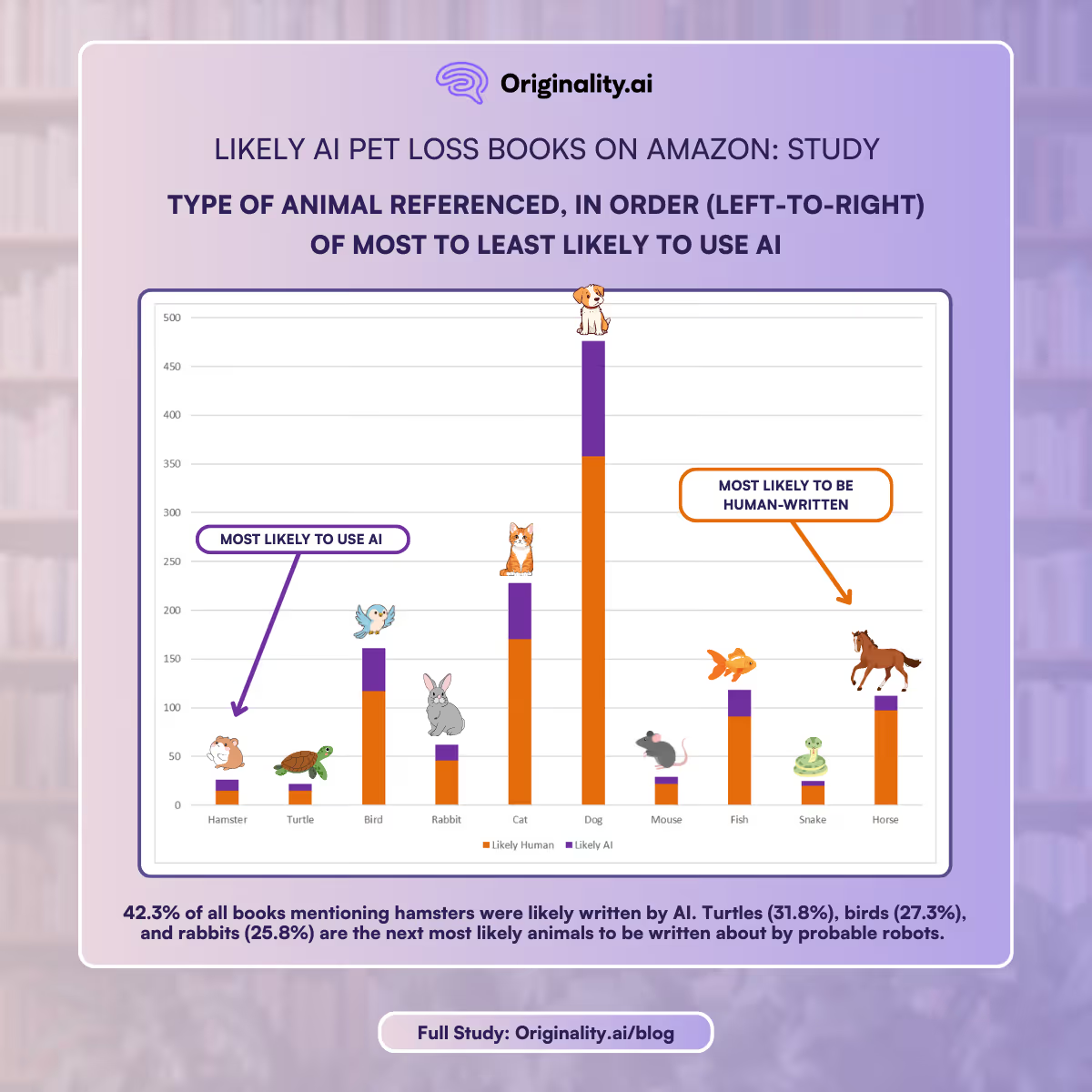
At the bottom of the pack were horses—just 15 out of 112 books mentioning horses (13.4%) were likely written by AI. Perhaps equestrianism is too complex for artificial intelligence.
An analysis of all 882 book titles revealed no clear preference by probable LLMs toward certain language: indeed, they seem to be repeating what humans have already written.
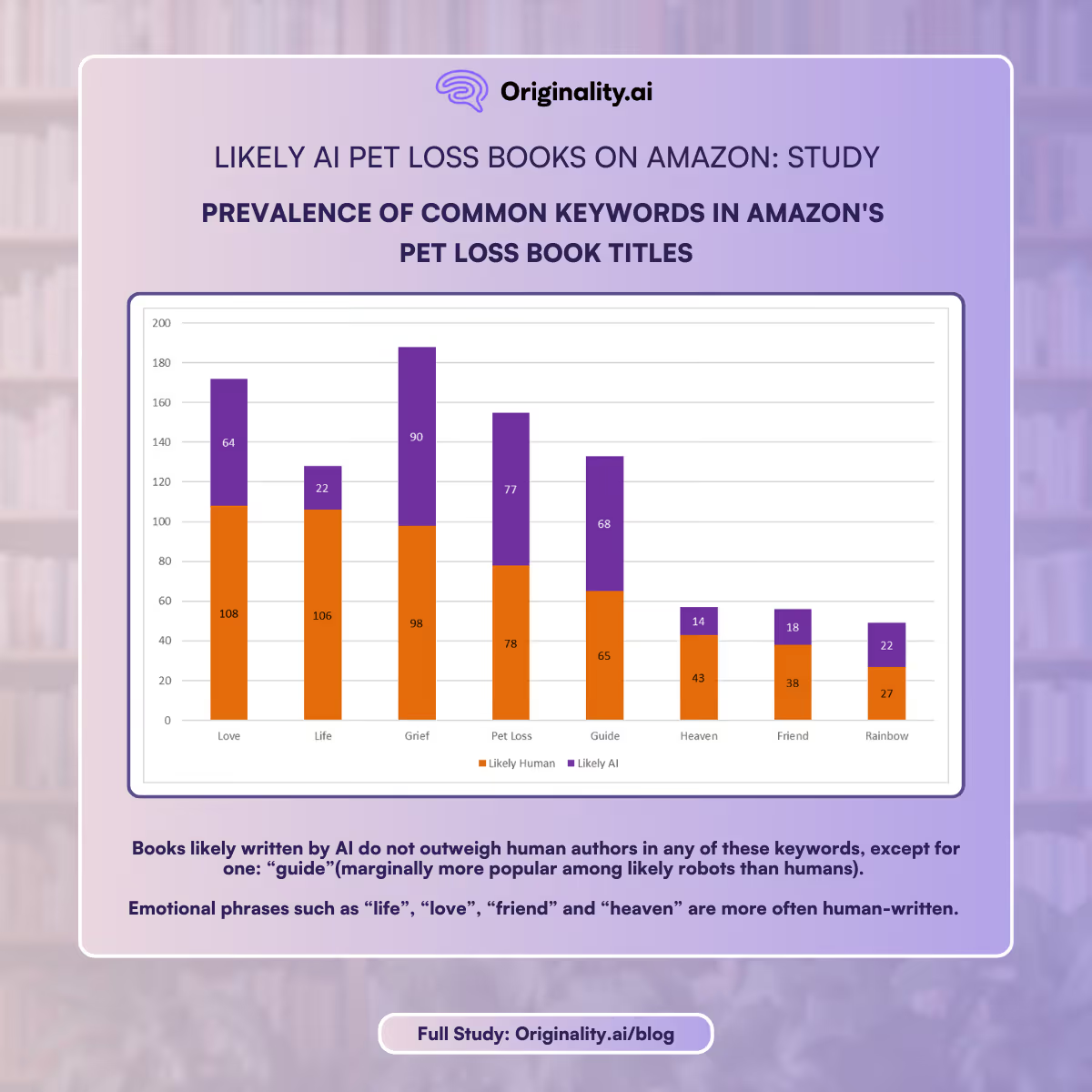
Some of the most common title keywords are “grief”, “love”, “pet loss”, “guide” and “life”, followed by a few more literary phrases: “heaven”, “friend” and “rainbow”. The latter refers to the Rainbow Bridge, a mythical meadow where owners meet their beloved pets after both have passed away.
Notably, books likely written by AI do not outweigh human authors in any of these keywords, except for one: “guide”, the most practical and unemotional keyword in this list, is marginally more popular among likely robots than humans. Conversely, emotional phrases such as “life”, “love”, “friend” and “heaven” are overwhelmingly more often human-written.
As we have noticed previously, books flagged as likely AI-written are, on average, cheaper and shorter than their human counterparts. This trend continues in the pet loss subgenre.
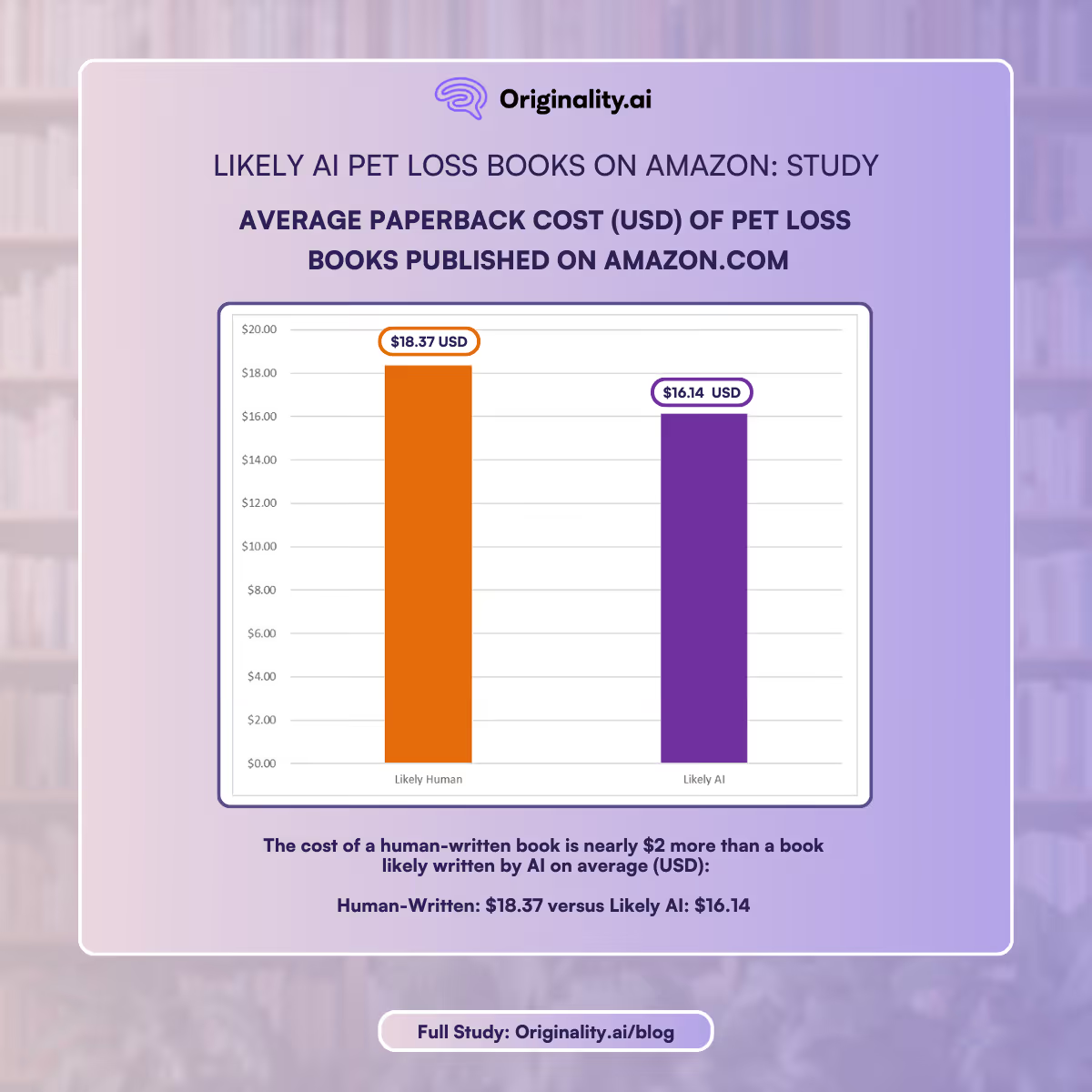
Let’s start with pricing. The cost of a human-written book is nearly $2 more than a book likely written by AI—US$18.37 versus $16.14, on average.
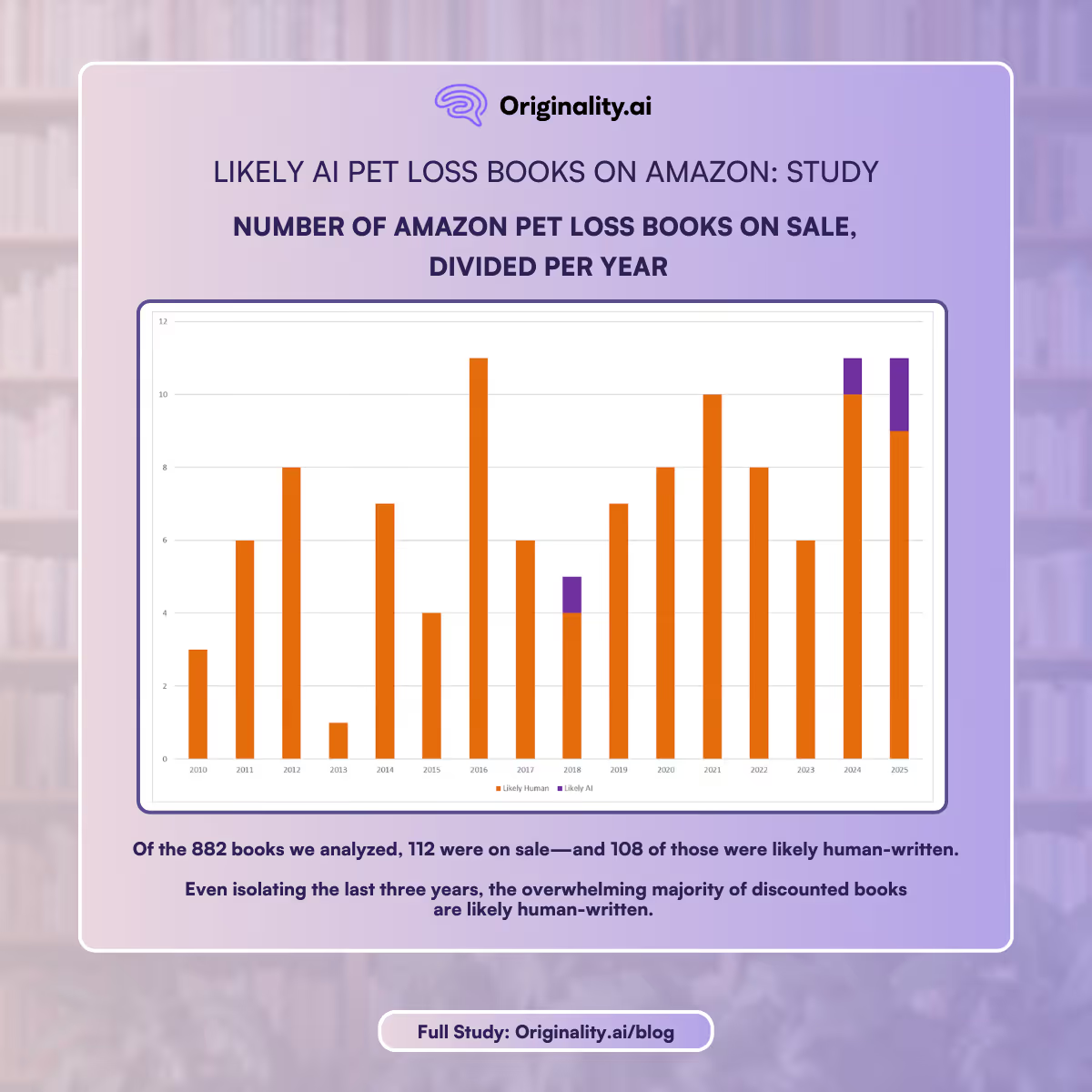
Those prices exclude discounts. Sale pricing fluctuates rapidly—but the results are concrete.
Of the 882 books we analyzed, 112 were on sale—and 108 of those were likely human-written. Even isolating for the last three years alone, the overwhelming majority of discounted books are likely human-written.
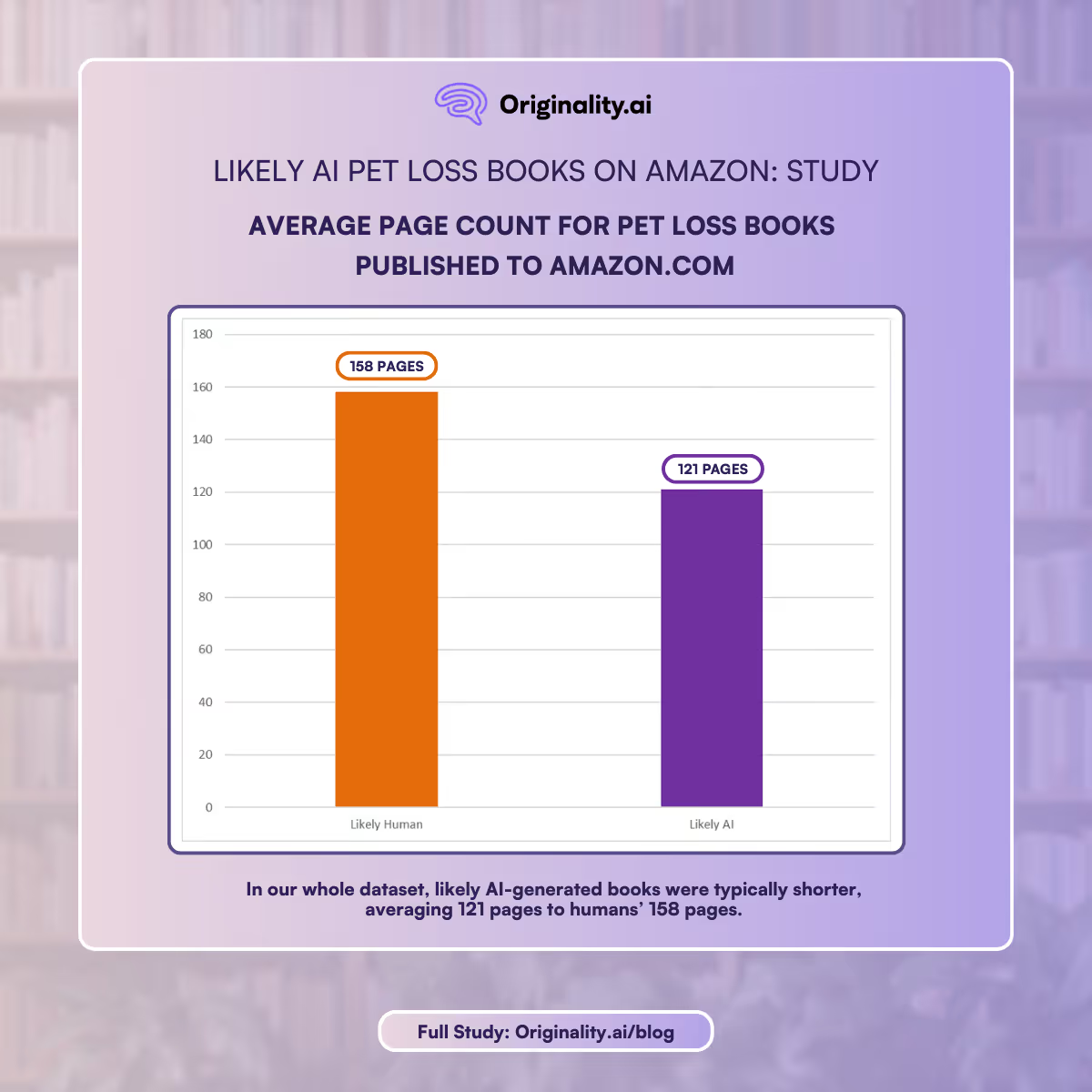
Page counts correspond with AI content undercutting human pricing. In our whole dataset, likely AI-generated books were typically shorter, averaging 121 pages to humans’ 158 pages.
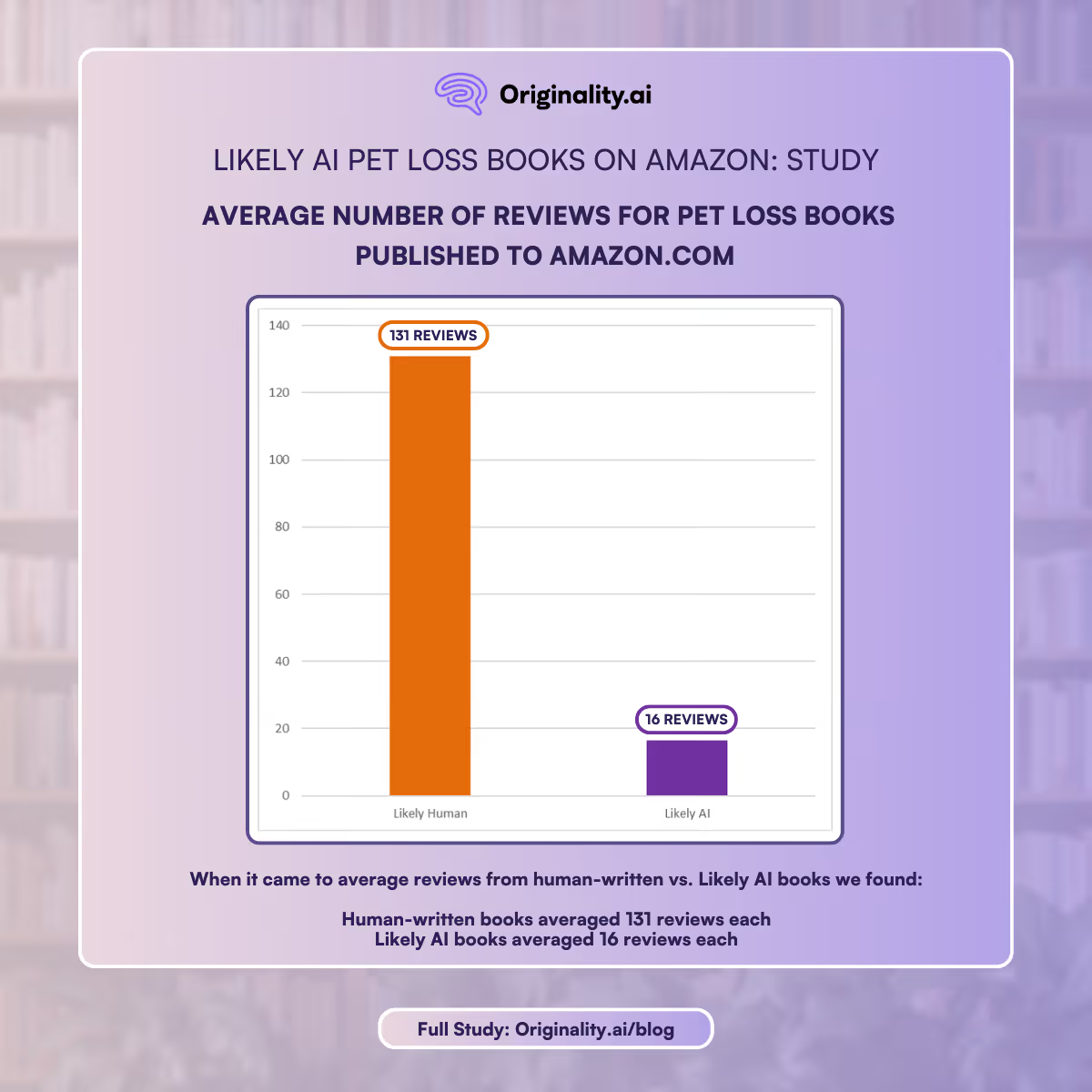
The last aspect we scan for is the number of reviews—here, the comparison is jarring.
Due to the 15-year breadth of our dataset, combined with the overwhelming presence of human-written content on the best-seller list, we found human-written books averaged 131 reviews each, compared to just 16 for books likely written by AI.
There are logical reasons for this. The existing popular titles, which almost entirely predate ChatGPT, have raked up so many reviews that market penetration is a challenge for anyone—robot and human alike.
Out of the top 50 most-reviewed pet loss books available on Amazon, only one was flagged as being likely AI-written.
Those top 50 most-reviewed books collectively feature 61,679 reviews—that’s 74% of the entire dataset, which altogether combines for 83,301 reviews.
Based on this data, we can recommend that anyone looking to buy a book on pet loss that a real human being likely wrote, should look for:
There are signs all across Amazon that AI content is overwhelming traditional human publishing. This has a tangible negative impact on human writers, who face more challenges than ever—more competition, more undisclosed AI slop—in making a living off their work.
This influx of likely AI-written content also does significant reputational damage to Amazon, which continues to allow writers to publish AI content without proper disclosures. (Some do so voluntarily, but an honour system is unreliable at scale.)
Meanwhile, consumers themselves have a right to know whether they’re buying something written by a real human or not. Pet loss is a sensitive and personal subject, and people looking for books to help ease their transition are vulnerable.
Wondering if a book you’re considering is human-written or Likely AI? Use Originality.ai to find out!
Read more AI studies:
We looked at every available book ever published in the “Pet Loss” subcategory on Amazon.com, filtering with certain criteria:
This produced 1,097 results published between April 13, 2010, and Dec. 28, 2025. Of those results, 882 books met the criteria for analysis. Rejection implied an insufficient word count (under 100 words) or an unavailable book sample.
In addition, we separately scanned all 100 books on Amazon’s self-defined “Best Sellers” page within the pet loss subcategory.
We collected all data between January 11-13, 2026.
We scanned for consistent data points in each book page, including:
In addition, we reviewed three publicly available sections of text: the book’s summaries (also known as descriptions), author biographies, and sample pages. All three text segments were bulk scanned by the latest Originality.ai model, Lite 1.0.2.
The resulting .xlsx file included columns for AI scores for each segment of text, and a TRUE/FALSE grade for whether that segment was likely written by AI. We used Microsoft Excel to parse and visualize all data.

AI & Plagiarism Detector for Serious Content Publishers
Originality.ai
64 Hurontario St
Collingwood, Ontario
L9Y 2L6