AI Checker
Plagiarism Checker
Grammar Checker
Content Quality
Guideline Checker
Readability Checker
Fact & AI Hallucination Checker

Extensions
MCP

Whether you’re a student, teacher, administrator, or parent, keeping up to date on the latest AI in education statistics can help make sense of just how quickly classrooms are changing.
Although popular generative AI tools like ChatGPT only launched in 2022, they have already made waves in all kinds of industries, and education is no exception.
It has made its way into both student and teacher workflows and is likely to make an even more significant impact on learning and teaching in years to come.
To help you stay up-to-date with the latest, we’ve collected 70+ AI in education statistics that cover the following categories:
We’ve also noticed some key trends and patterns emerge from these statistics, which we’ve highlighted below.
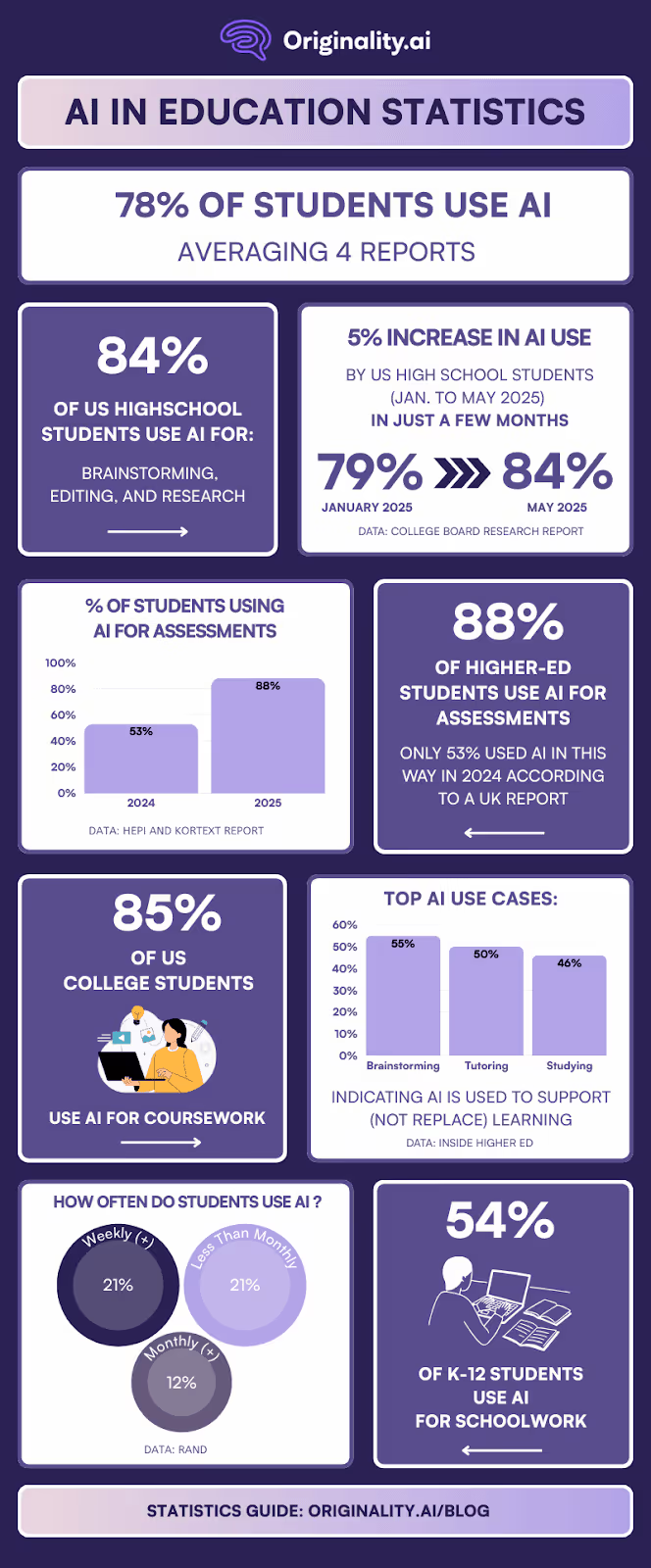
Averaging the results of four large-scale studies across the U.S. and U.K., roughly seven in ten students now use generative AI tools like ChatGPT in their schoolwork.
AI is quickly becoming a normal or even expected part of student life.
Here’s a breakdown of the stats:
We’re already at the point where most students are using AI for schoolwork, so it’s time to shift the focus from adoption to impact.
The real question now is what this all means for how they learn — is AI actually helping them understand and apply material better, or is it just making it easier to get work done faster?
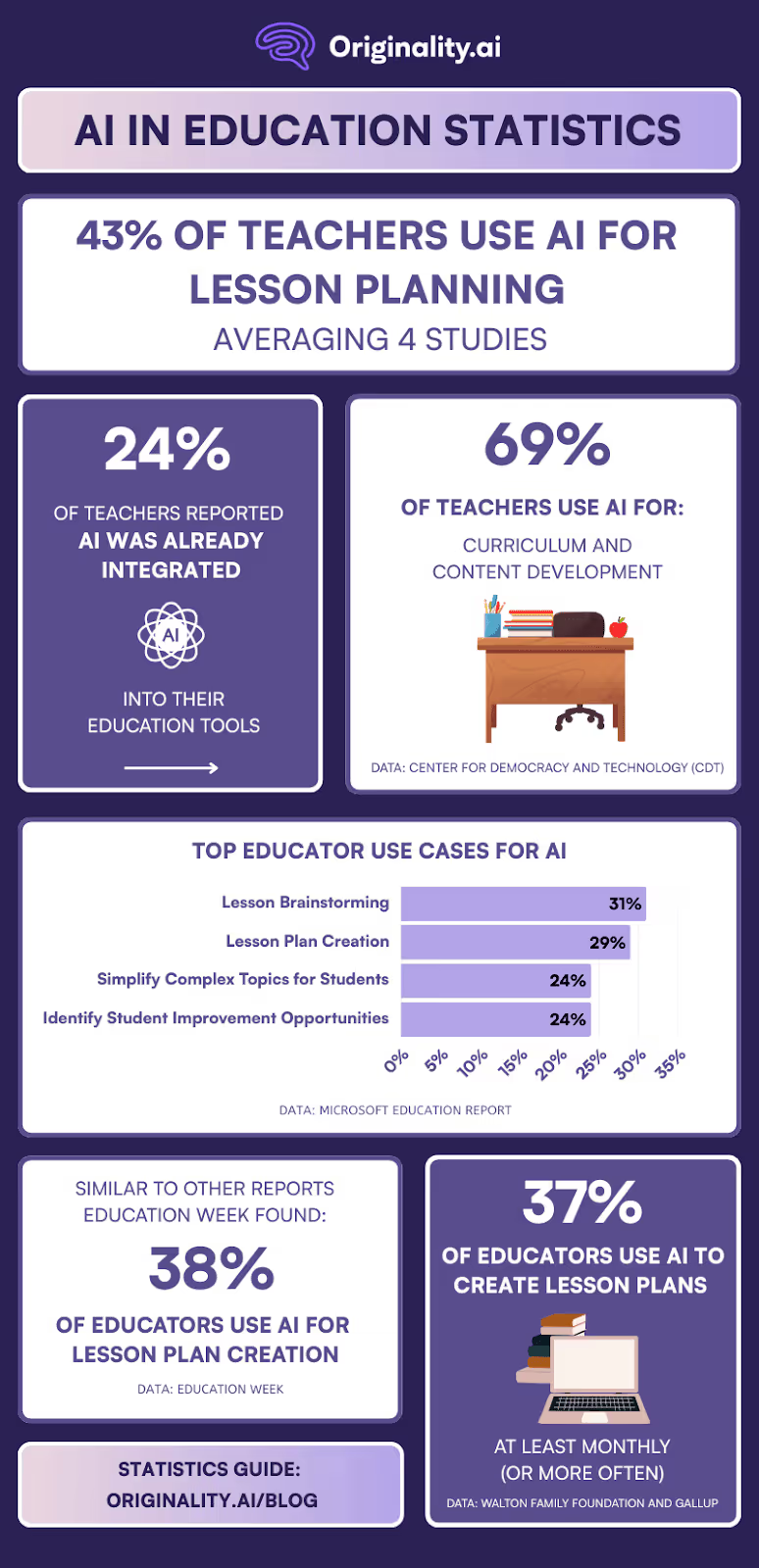
Teachers are embracing AI pretty quickly, perhaps even more than many expected. Across four separate studies, about 43% of educators report using AI in teaching or lesson planning.
Here’s a breakdown of the stats:
What’s most interesting about these numbers is that they could offer a real glimpse into the future of how teachers approach their work.
Remember, AI tech is still only a few years old at this point, yet 43% of educators are already using it to support one of the most important areas of their job — lesson planning.
If this kind of integration continues, it could change how teachers spend their time in the classroom. With AI handling more of the prep, they could focus less on paperwork and free up more time for teaching and connecting with students.
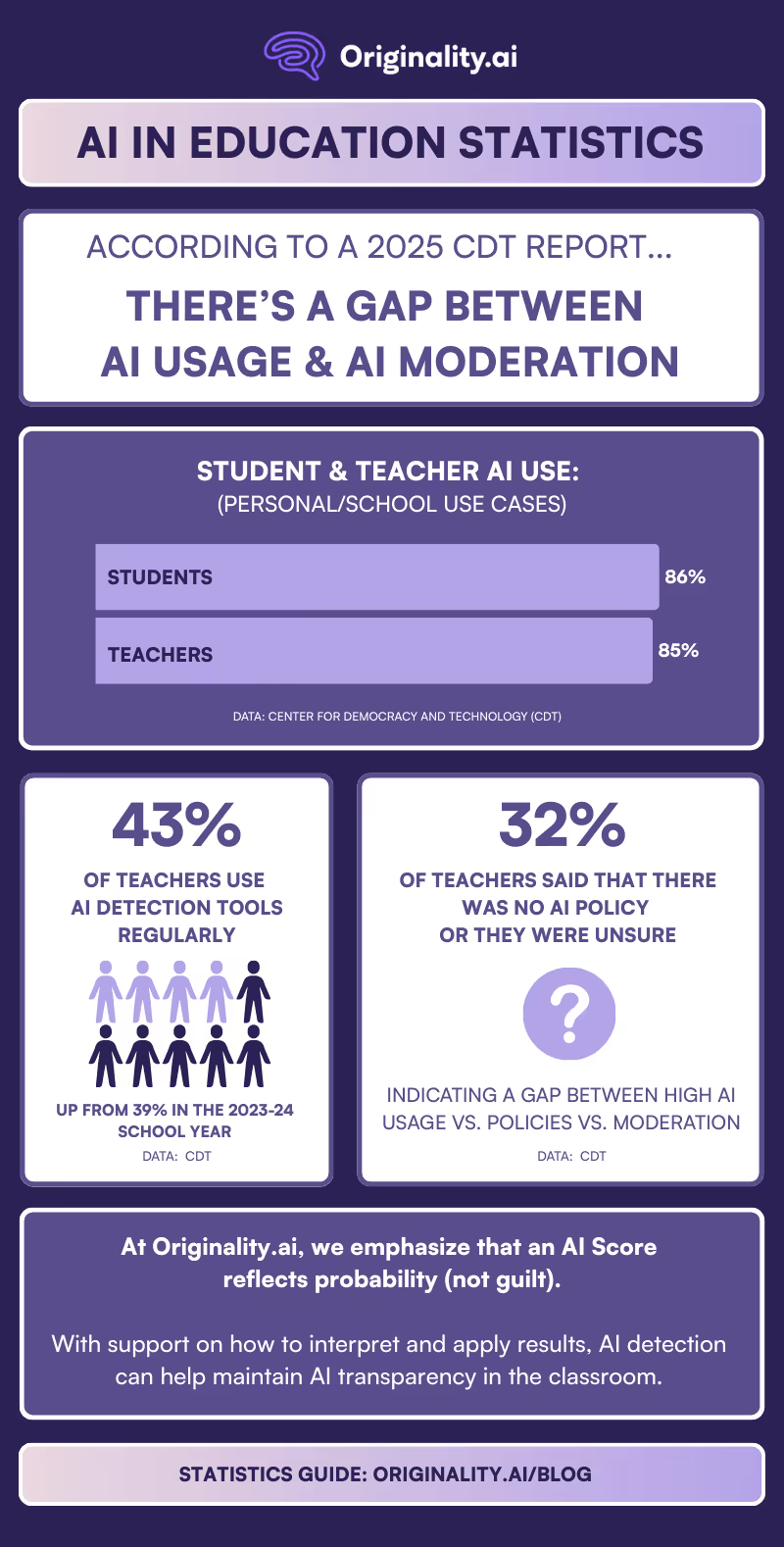
The CDT’s 2025 report indicates that there is a gap between AI usage and AI moderation.
Some reports note an even higher lack of clear school AI policies, with only 19% of teachers indicating a clear AI policy in schools in one report. This further demonstrates the inconsistency in clear AI policies for educators.
Overall, this finding highlights a clear gap in the education system between the high prevalence of AI use, the moderation of AI content, and the presence of consistent or clear policies around the use of AI in the classroom.
This is problematic as research shows that humans (including teachers) struggle to distinguish AI text from student writing.
That said, the fact that 43% (up from 39% previously) of teachers used AI detection tools in the 2024-25 school year is a beginning. At Originality.ai, we emphasize that an AI score reflects probability, not guilt, as false positives can occur in AI detection.
With support on how to interpret and apply results, AI detection can help maintain AI transparency in the classroom.
Learn more about Originality.ai for Education, as well as our Academic Model, Moodle Plugin, and Chrome Extension.
Want a quick look at the full list of AI in education statistics below? Check out the AirTable we’ve put together:
AI is now part of how students study, write, and manage their workload. They’re using it to summarize readings, brainstorm ideas, and get feedback faster than ever.
For most, it’s not about cutting corners as much as it is just part of learning now. These stats show how that shift is playing out in real classrooms.
Source: CDT report, October 2025
Why it matters: AI isn’t a side project for students anymore — it’s just part of life.
Source: Inside Higher Ed survey, August 2025
Why it matters: AI isn’t some kind of niche study tool anymore. Most students already rely on it for help with research, writing, or brainstorming.
Source: College Board, October 2025
Why it matters: No, it’s not just tech-savvy college students using AI. High school students are now using AI tools for everyday assignments.
Source: RAND research report, September 2025
Why it matters: Considering the stats above, the mix of K-12 students may be what pulls this number down a bit. But it still shows how early most students start using AI for school.
Source: National Literacy Trust survey, 2025
Why it matters: Fewer UK teens are using AI than they did last year. Does this mean the hype is wearing off a bit?
Source: KPMG in Canada research, October 2024
Why it matters: A lot of students may like using AI, but they are also finding that it can make learning feel a bit too easy.
Source: Education Sciences article, March 2025
Why it matters: Most students see AI as a genuine help for studying, saying it saves them time and makes tough material easier to grasp.
Source: Pew Research Center analysis, January 2025
Why it matters: The big jump in ChatGPT use shows this tool’s popularity isn’t slowing down anytime soon. Teens recognize it by name and choose it for schoolwork.
Source: Cengage Group press release, April 2025
Why it matters: Students aren’t just using AI — they think they get it better than their teachers. That confidence gap says a lot about how fast classrooms are changing and how slow training has been to keep up.
Source: CDT report, October 2025
Why it matters: Most students see at least some of the risks of AI in education, worrying that it might make it easier to skip the kind of work that actually builds real skills.
Source: Education Sciences article, March 2025
Why it matters: Students might trust AI to help them study, but they still know it can be wrong. They understand that accuracy matters as much as convenience.
Read more about the AI book list scandal and Deloitte’s AI mistake.
Source: Ofcom report, May 2025
Why it matters: Schoolwork or not, AI’s turning into a go-to sidekick for many students. It seems students may find it just as useful for homework as it is for fun, creative projects.
Source: HEPI and Kortext survey, February 2025
Why it matters: It seems like some students think AI could improve grading assessment, with 34% indicating they’d put in more effort to complete assignments if AI were helping with grading.
Source: Inside Higher Ed survey, August 2025
Why it matters: Students are using AI the same way they’d use Google to think faster and learn on their own terms.
AI isn’t just slowly creeping its way into classrooms anymore. Many teachers are now using the tech to plan, grade, and just generally think about their jobs.
Some see it as a support and opportunity, others as one more thing to learn, but either way, it’s impacting how education actually happens day to day.
The following stats show how teachers are using AI, what inspires them, and what still worries them.
Source: Michigan Virtual study, September 2025
Why it matters: Teacher adoption didn’t just grow — it jumped (from 22.4%). That kind of shift means schools are trying AI fast, even if they’re still figuring out how to use it well.
Source: Digital Education Council survey via University of Kansas, 2025
Why it matters: Most educators are using AI to streamline administration or planning. It helps them save time without overhauling everything.
Source: Gallup and Walton Family Foundation study, 2025
Why it matters: That’s a lot of time back in teachers’ schedules. When a tool gives people hours back, it often sticks.
Source: Walton Family Foundation and Impact Research survey, March 2023
Why it matters: Many teachers are finding ways to integrate AI into learning instead of preventing its use.
Source: Quizlet report, 2025
Why it matters: Most teachers see AI as real help, not hype, and many feel positive about how much time it could save them.
Source: Alberta Teachers’ Association survey, 2023
Why it matters: Many educators seem to trust that teaching isn’t something AI can replace. They may see that it depends more on relationships, not just information.
Source: Actua report, June 2025
Why it matters: If teachers don’t think students already know how to use AI well, it may be time for schools to start building real AI skills into the curriculum (especially considering many students are already using it anyway, whether for personal or studying use cases).
Source: CDT report, October 2025
Why it matters: Most teachers see AI as a way to grow professionally, not just to save time or handle routine tasks.
Source: Cengage Group press release, April 2025
Why it matters: K–12 teachers adopting AI at a higher rate than those in higher-ed poses questions about why this kind of innovation in the classroom is starting earlier than in universities.
Source: Microsoft Education survey details, 2025
Why it matters: Although most teachers feel at least somewhat confident in their AI skills, there are still plenty who are unsure about what effective and responsible use really looks like in practice.
Source: RAND report, February 2025
Why it matters: AI use in classrooms isn’t spread evenly. Teachers in subjects that rely more on writing and analysis seem to be adopting it faster than others.
Source: Twinkl survey, 2025
Why it matters: Less busywork means more time and energy for teaching students.
Source: Digital Education Council survey, 2025
Why it matters: Most faculty see AI in teaching as something that will significantly change their jobs.
Source: Microsoft Education report, 2025
Why it matters: With 29% of educators worldwide using AI for lesson planning and materials, it’s clear this shift isn’t limited to one region. It’s happening across classrooms everywhere.
Source: Youngstown State University questionnaire, 2025
Why it matters: Using prompt libraries every week means teachers aren’t starting from scratch anymore. They’re finding smarter, faster ways to get useful results from AI.
Source: Walton Family Foundation and Gallup, 2025
Why it matters: Planning lessons with AI shows the job itself is shifting. Prep time isn’t just about content anymore; it’s about prompting and editing.
Source: EdWeek Research Center survey, October 2024
Why it matters: When teachers use AI to plan lessons, it can change how classrooms run, as that extra time often goes back to teaching instead of paperwork.
AI has made it easier to write and summarize, which has brought with it concerns around academic integrity and potential misuse.
Educators must find a balance between encouraging exploration and protecting academic honesty.
These stats show how schools, teachers, and students are grappling with that balance — and where policies are still catching up.
Source: CDT report, 2025
Why it matters: While there is a gap between AI use and AI moderation in schools, the use of AI detection tools is increasing. In 2024-25, 43% of teachers routinely use AI detection tools, which is up from 39% in the 2023-24 school year.
Learn more about Originality.ai for education and our Moodle Plugin.
Source: National Literacy Trust report, 2025
Why it matters: Blind trust in AI is the new copy-paste problem. With 25.1% of young people copy and pasting AI's results, establishing transparency about what is and is not AI is more important than ever.
Source: OECD report, October 2025
Why it matters: 7 in 10 teachers think AI makes plagiarism easier, highlighting the concerns and challenges that the misuse of AI could bring to education, as well as the importance of maintaining transparency.
Check for potential plagiarism with the best-in-class Originality.ai plagiarism checker and Moodle Plugin.
Source: KPMG in Canada press release, October 2024
Why it matters: The high usage rates of AI, and in this case, student acknowledgment that they’ve submitted AI assignments without citing AI use, highlight the importance of establishing clear AI policies in the education system and maintaining transparency with AI checkers for education.
Source: CDT Report, 2025
Why it matters: The lack of clear AI school policies is a gap that education institutions must close quickly to ensure that everyone, students, teachers, and school administrators, are all on the same page.
Source: RAND report, September 2025
Why it matters: Most teachers are working in gray areas around what is or is not acceptable AI use. Schools and educational institutions must set clear policies to prevent confusion between students and teachers.
This is essential considering that the same report found 80% of students noted that teachers didn’t provide guidance on AI use for schoolwork.
Source: Inside Higher Ed survey, August 2025
Why it matters: Grade pressure is leading to AI misuse, showing that the problem isn’t just about technology — it also opens up a conversation about academic stress, pushing students to cut corners.
Source: Hopelab, Common Sense Media, and Center for Digital Thriving report, June 2024
Why it matters: The fact that a quarter of students avoid AI because they see it as cheating shows how tightly the technology is linked to misconduct, even for those who might have used it responsibly
Source: HEPI and Kortext survey, February 2025
Why it matters: About 6% of students in 2025 indicated they’d used AI content without editing for assessment-related coursework, emphasizing the need for moderation steps and clear policies around the extent to which AI is acceptable in a given project, course, or institution.
Source: Inside Higher Ed survey, August 2025
Why it matters: Nearly one in five students using AI to write full assignments shows how quickly generative tools are moving from quick help to complete replacement. This shift challenges how schools define original work.
Source: Qualitative Research Journal for Social Studies article, October 2025
Why it matters: Use isn’t rare anymore. For most students, running their work through AI plagiarism detectors has become a normal part of finishing an assignment.
Source: Digital Education Council survey, 2025
Why it matters: AI isn’t just helping teachers teach — it’s also becoming part of how they identify academic dishonesty.
Access to AI tools isn’t just about who wants to use them — it’s about who can.
These stats show where the gaps are, what kind of support teachers and students actually have, and why the “AI divide” is becoming the new digital divide.
Source: RAND report, April 2025
Why it matters: Training on AI is finally starting to catch up, showing that many districts are moving from early discussion to real implementation in just a year.
Source: EdWeek Research Center survey, February 2024
Why it matters: Even as AI becomes central to learning, most teachers simply don’t have the bandwidth to teach it. Adoption isn’t just about access to tools, but about time and competing demands.
Source: RAND report, September 2025
Why it matters: With so few schools offering AI training, most students aren’t being formally taught how to use the technology in productive ways.
Source: GoStudent report, 2025
Why it matters: The demand for AI training far outweighs the support teachers are getting, leaving most to figure out new technology on their own.
Source: Chegg survey, 2025
Why it matters: Most students see AI skills as career essentials, not extras, and they want their courses to reflect that reality.
Source: Alberta Teachers’ Association survey, December 2023
Why it matters: Teachers worry that if some students have easier access to AI than others, it’ll deepen the same achievement gaps schools have been trying to close for years.
Source: HEPI and Kortext survey, February 2025
Why it matters: Students can see that there’s a good chance AI matters for their future, but most aren’t getting the training they need, leaving a gap between what they value and what schools are teaching.
Source: Microsoft Education report, June 2025
Why it matters: Even as AI becomes part of everyday learning, some students feel they may get left behind. If they don’t get proper AI training, the gap between those who can use these tools confidently and those who can’t will only keep growing.
Source: EdWeek Research Center survey, March 2025
Why it matters: AI training is starting to reach classrooms, but most teachers still haven’t had the chance to take part. The uneven access to training could shape how confidently they use these tools in their own work.
Source: OECD report, October 2025
Why it matters: Many educators are still figuring out AI, and they need the support and training to use AI effectively to improve classroom learning.
Source: Gallup and Walton Family Foundation study, 2025
Why it matters: When most teachers have to figure out AI on their own, the quality of learning — and confidence in using it — can vary wildly. Support from schools isn’t yet keeping pace with teachers’ willingness to adapt.
Source: Actua report, June 2025
Why it matters: Most youth know they’re only scratching the surface of what AI can do. That awareness could drive curiosity and learning, but it also highlights how far education still has to go to close the knowledge gap.
Policies are trying to catch up with classroom reality. Some schools are setting clear guardrails, others are still deliberating, and plenty of teachers are waiting for guidance that actually helps in practice.
These AI in education stats about institutional policy and governance show where institutions stand on rules, training, and leadership signals.
Source: Chegg survey, 2025
Why it matters: Many students see AI tools as part of what their schools should provide. How institutions respond will help determine whether AI becomes an equal learning tool.
Source: Digital Education Council report, January 2025
Why it matters: Despite AI’s rising popularity, the majority of faculty in this report indicated they didn’t have clear AI policies for teaching to refer to.
Source: Michigan Virtual study, September 2025
Why it matters: Schools are finally starting to catch up on AI policy, though there’s still a long way to go.
Source: UNESCO survey, September 2025
Why it matters: AI funding in education is growing, but the fact that most of it still targets research rather than classroom use shows that adoption at the teaching level remains secondary.
Source: Hanwha Vision America survey, July 2025
Why it matters: Many would like to see consistent standards for how schools handle AI. Without consistency, students could face very different expectations depending on where they study.
Source: Microsoft Education report, June 2025
Why it matters: Many school leaders now view AI literacy as basic knowledge, like reading or math. Whether that turns into real policy is yet to be seen.
Source: HEPI and Kortext survey, February 2025
Why it matters: Students are looking to learn AI and for clear guidance on how and to what extent AI use is acceptable.
Source: Gallup and the Walton Family Foundation via Youngstown State University, 2025
Why it matters: Clear policies are essential to keep students, faculty, and school administrators on the same page for AI use.
AI is starting to make a real mark on how students learn and perform. These AI in education stats on learning outcomes and impact highlight where students and educators feel it’s helping most — raising scores, improving engagement, and making study time more efficient for both students and teachers.
Source: Microsoft article, March 2025
Why it matters: One university’s experience hints at AI’s potential to improve academic performance. If similar results hold elsewhere, it could impact how schools measure and support student learning.
Source: Cengage Group press release, April 2025
Why it matters: Educators largely agree that AI can make learning more interactive and inclusive. Their optimism shows that AI is shifting from theory to practice and affecting how schools think about improving student outcomes.
Source: E-Learning Quality Network research, October 2025
Why it matters: The improvement suggests AI-driven adaptive systems can help close performance gaps and create more equitable learning for all students. When lessons adjust to individual needs, more learners stay engaged and finish what they start.
Source: Forbes Advisor survey, June 2024
Why it matters: Most teachers feel AI is helping students learn better, not getting in the way. It’s a good sign that AI can actually support real learning when used the right way.
Source: KPMG press release, October 2024
Why it matters: Most students think AI is improving the quality of what they hand in. For them, it’s not necessarily a shortcut — it’s a tool that helps them complete more polished work.
Source: AAC&U and Elon University survey, January 2025
Why it matters: Most education leaders expect AI to boost learning results over time. They see it not as a passing trend, but as a real driver of better teaching and stronger student performance.
Source: Education Sciences article, March 2025
Why it matters: Students see AI as a way to work smarter, not just a study aid. When tools cut down on busywork, learners can spend more time actually understanding the material.
AI is changing education faster than most schools can adapt.
AI tools are just too accessible at this point, and despite some hesitation, their benefits are clear to both those learning and teaching.
The real test now is whether schools can balance the benefits of AI with the concerns around it, while supporting students in maintaining academic integrity — turning AI from just another thing to manage into something that can genuinely help improve education for the better.
Discover Originality.ai for Education, our Academic Model, Moodle Plugin, and Chrome Extension.
Further Reading:

AI & Plagiarism Detector for Serious Content Publishers
Originality.ai
64 Hurontario St
Collingwood, Ontario
L9Y 2L6