AI Checker
Plagiarism Checker
Grammar Checker
Content Quality
Guideline Checker
Readability Checker
Fact & AI Hallucination Checker

Extensions
MCP

During a 34-minute speech on June 9, 2026, Bill Oliver, a New Brunswick politician, appeared to read AI Residue left in his printed speech aloud in the Legislative Assembly.
We examined the transcript and began investigating how often political speeches are classified as Likely AI.
This video includes clips from June 9, 2026 at the Legislative Assembly of New Brunswick
where politician Bill Oliver was debating Bill 46 in a 34-minute speech.
There were multiple examples of AI Residue in the speech:
“Here’s a more natural flowing version of that section that reads like legislative speech rather than a series of short points.” — Bill Oliver, official video, Jun 9, 2026, 01:28:20.
“Here is a more developed and flowing version of the section.” — Bill Oliver, official video, Jun 9, 2026, 01:34:16.62.
“This section adds roughly—excuse me—” — Bill Oliver, official video, Jun 9, 2026, 01:41:20.
“AI Residue” The fingerprints AI leaves behind. Unintended traces of AI assistance that survive into finished content.
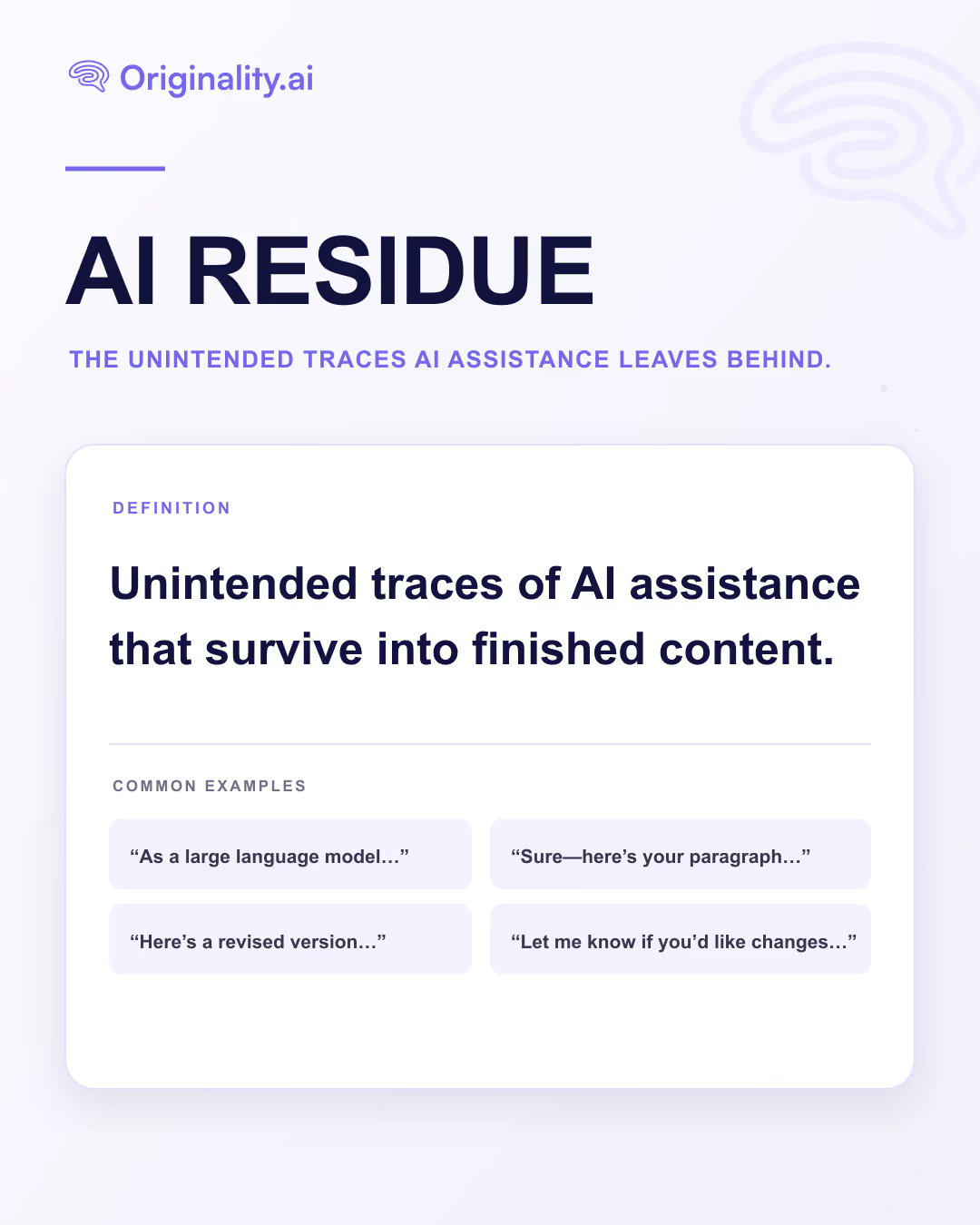
The AI Residue prompted us to investigate further and transcribe the entire 34-minute speech.
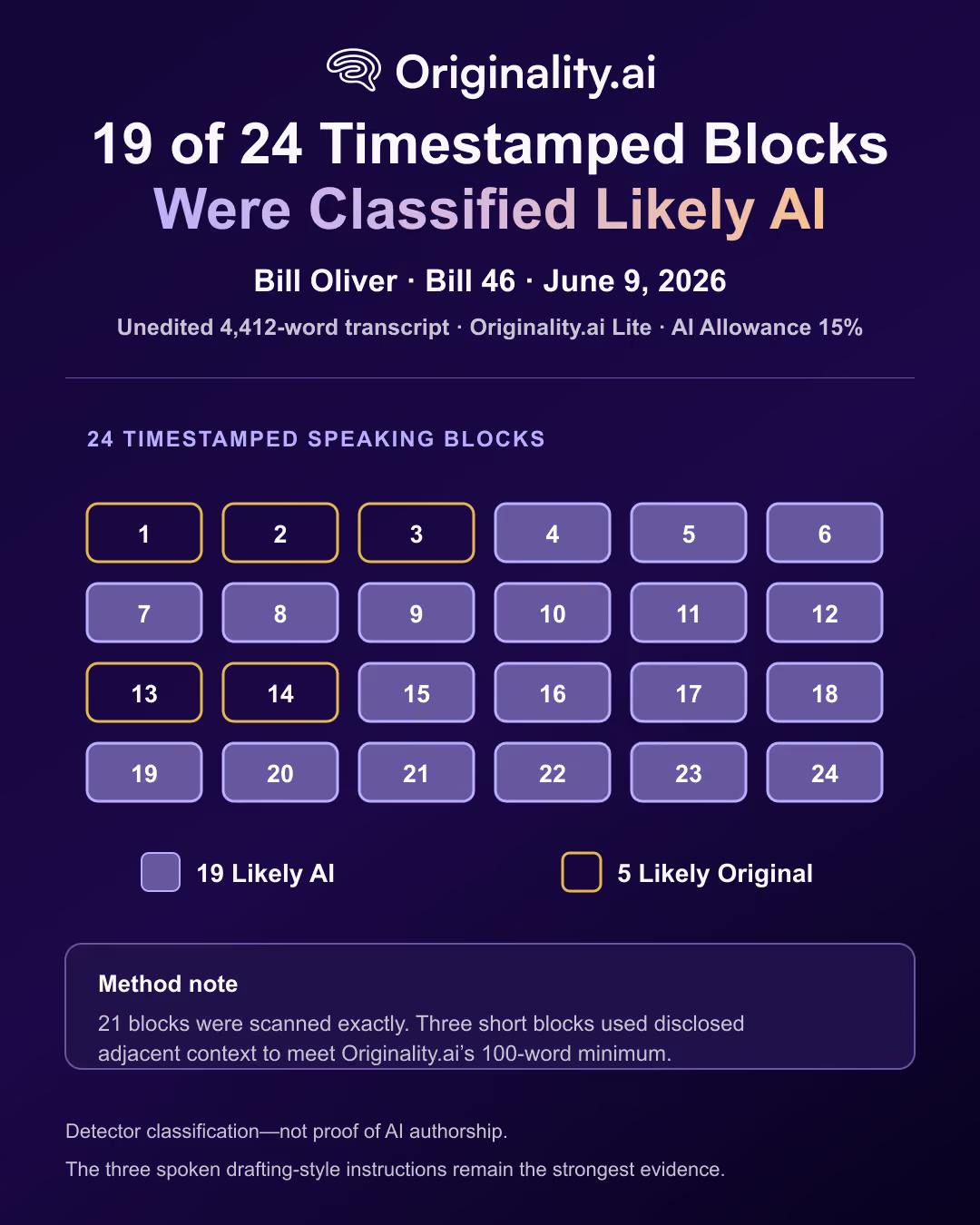
We analyzed the full transcript, then divided it into 24 timestamped speech blocks and tested each with Originality.ai.
Full transcript: classified Likely AI using 15% AI Allowance
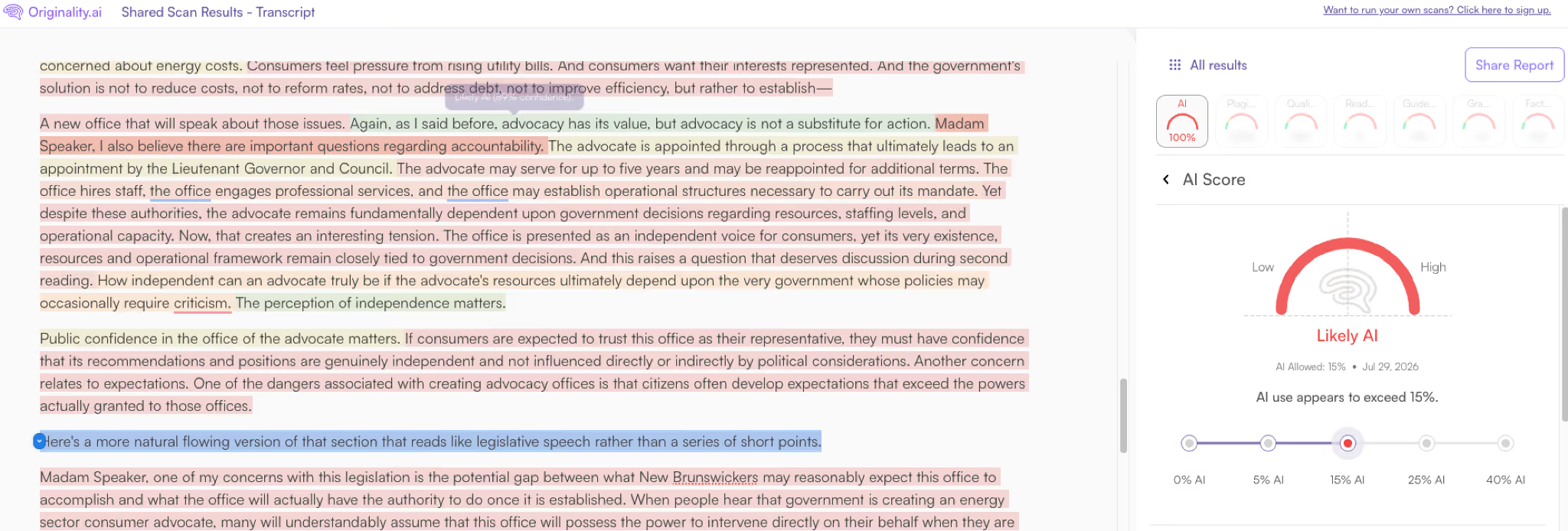
See Report - https://app.originality.ai/share/xiwzrdp6jmgl3y05
19 of 24 timestamped speech blocks were classified as Likely AI.
Sources:
We expanded the investigation to measure how often legislative speaking turns were classified as Likely AI.
We examined official New Brunswick Hansard transcripts from 2022 to 2026.
We scanned each complete eligible turn once with Originality.ai Lite using 15% AI Allowance. Each turn counted equally. Scores of 50% or higher were classified as Likely AI.
A Likely AI classification is not proof that AI wrote a speech, and its confidence score is not the percentage of words written by AI. Hansard is an edited official record, not a verbatim transcript.
For detector accuracy, see these 3rd party studies or our own accuracy study.
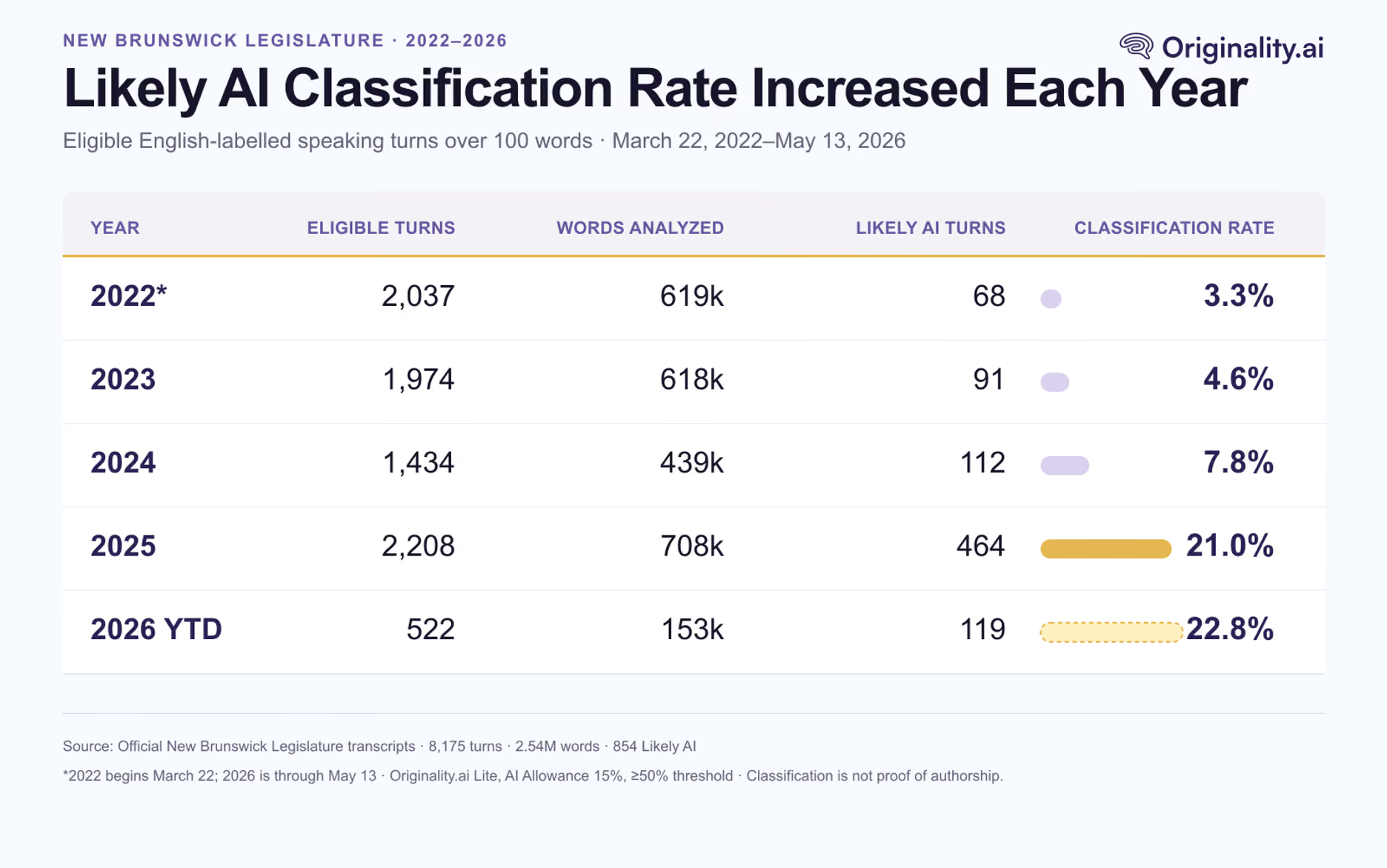
The monthly Likely AI classification rate rose sharply, peaking at 25.0%. Across the latest 12 months, 499 of 2,181 eligible turns, 22.9%, were classified Likely AI.
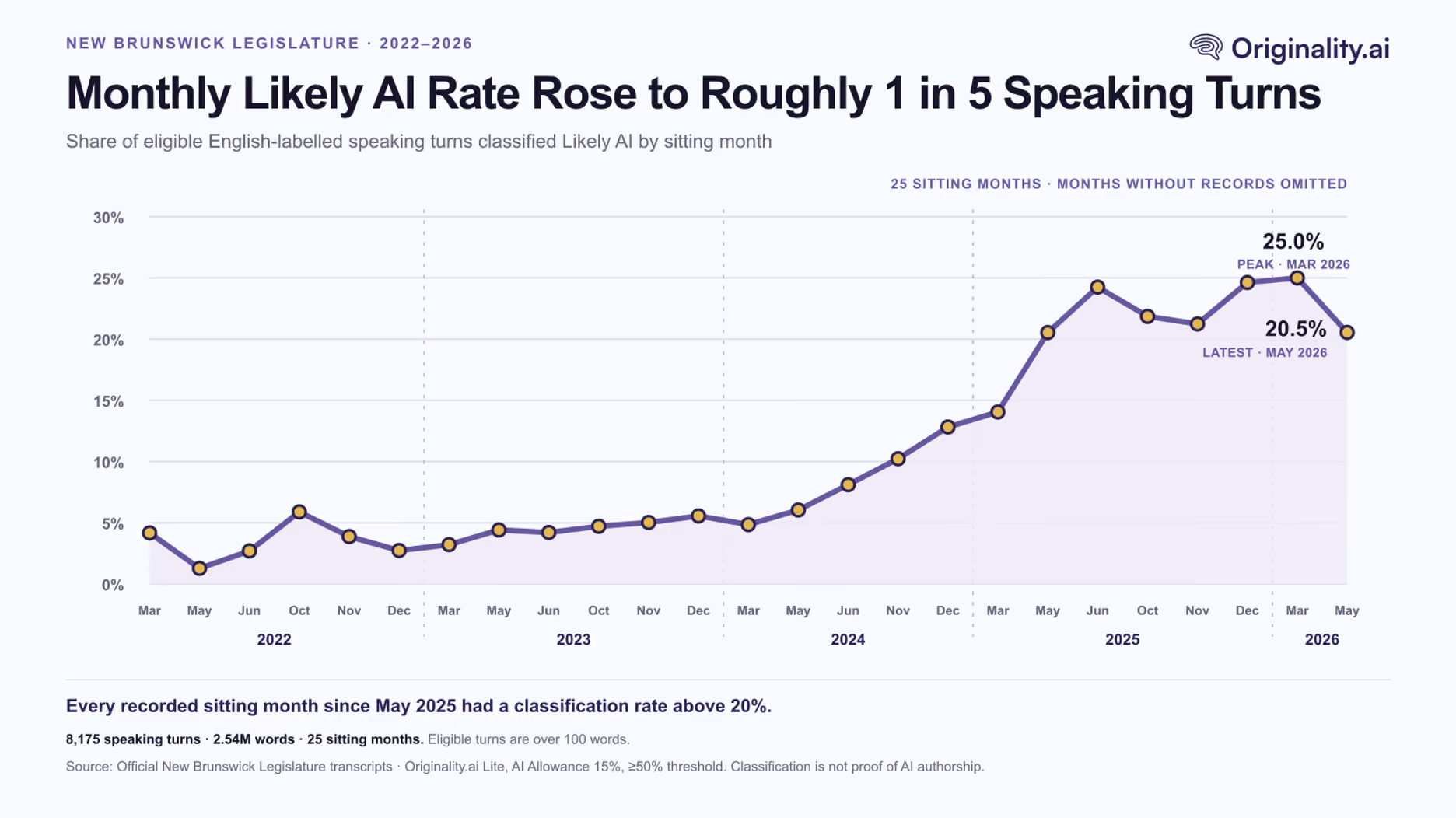
Every year the % of speaking turns that were classified as likely AI has increased.
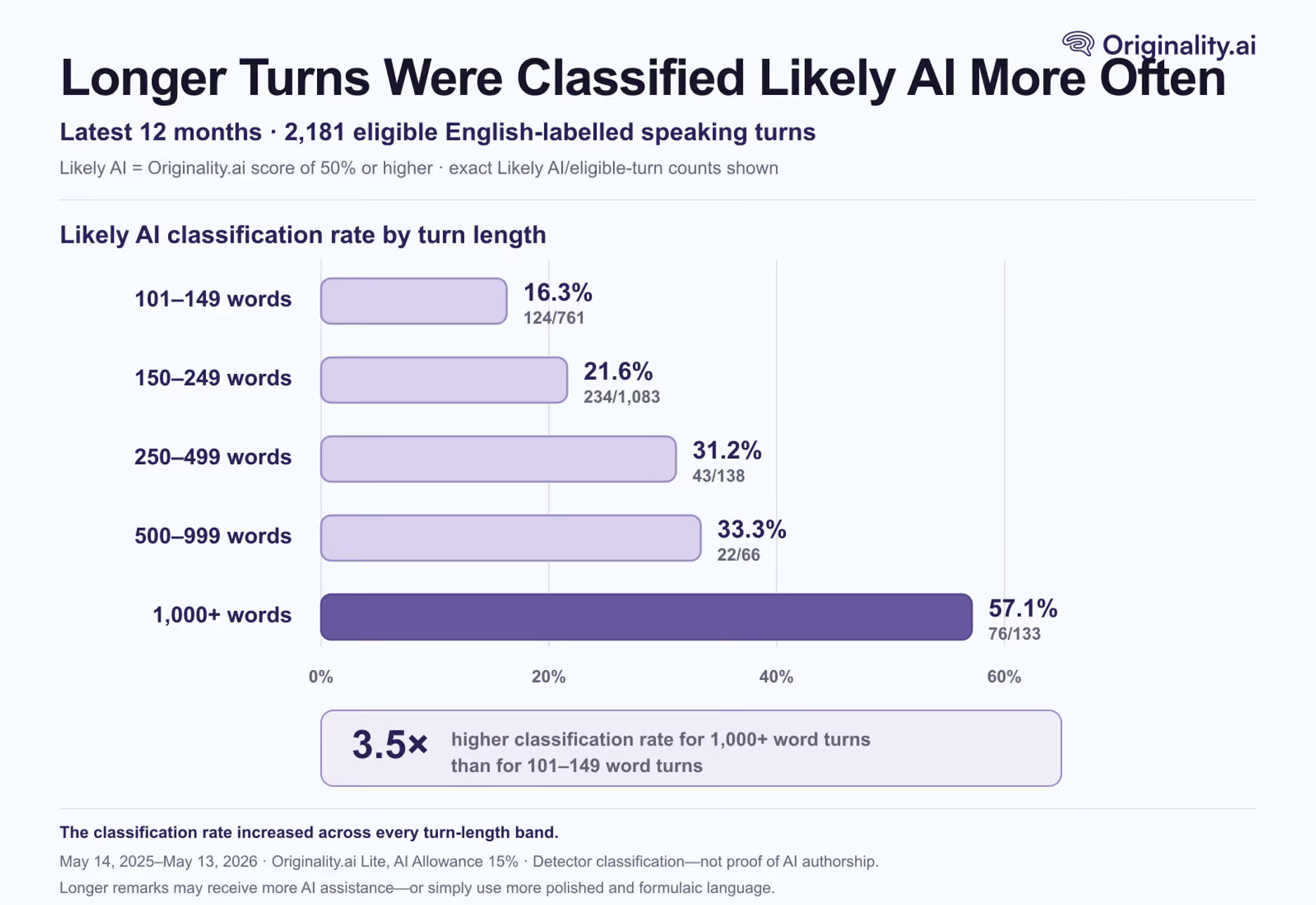
The longer the text the higher the chance that it would receive a Likely AI label based on the last 12 month study.
We examined the 12 months of legislative speaking turns ending May 13, 2026.
Across that period, we analyzed 2,181 eligible English-language speaking turns of more than 100 words.
To compare politicians fairly, we limited the ranking to the 28 who made at least 30 eligible speaking turns. Likely AI classifications were widespread: 14 of 28 had classification rates of 25% or higher, including five at or above 50%.
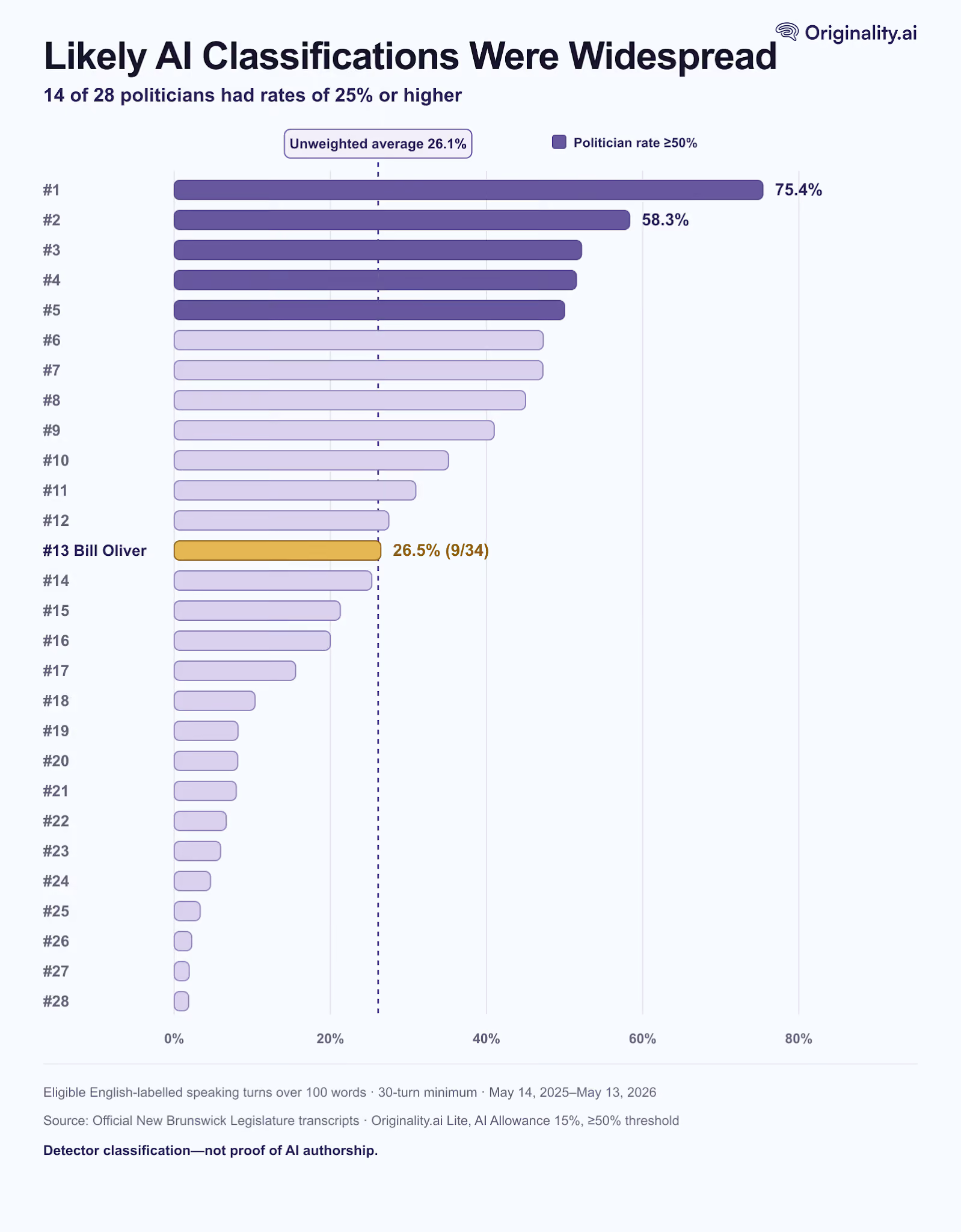
Bill Oliver’s rate was almost exactly average. Nine of his 34 eligible speaking turns were classified as Likely AI, a rate of 26.5%, compared with 26.1% across the 28 qualifying politicians.
He ranked 13th of 28: 12 politicians had higher Likely AI classification rates and 15 had lower.
His June 9 AI Residue speech falls outside this analysis window because its official transcript was not yet available.
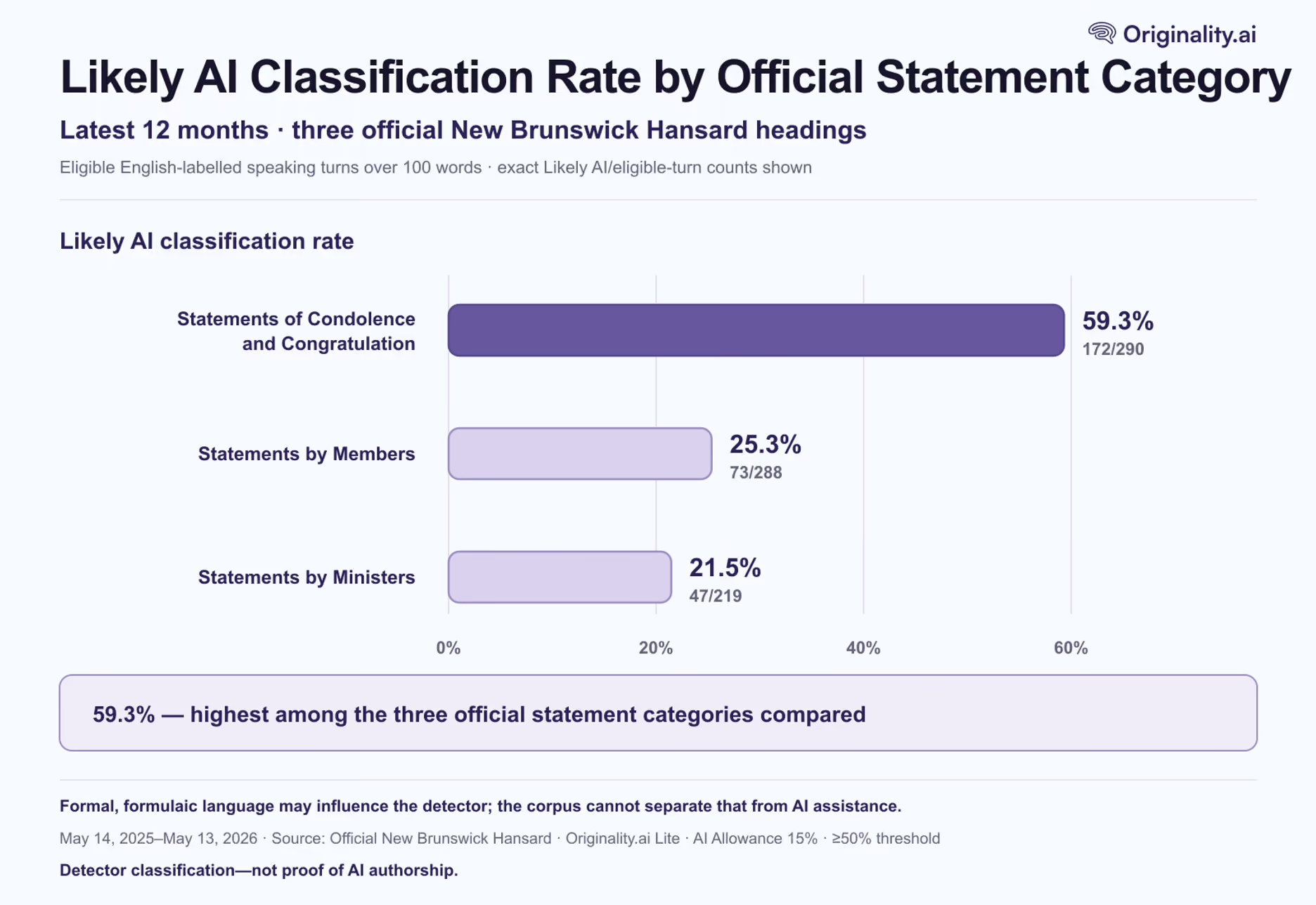
Hansard organizes legislative remarks under official procedural headings. One of the 3 official categories stood far above the others: Statements of Condolence and Congratulations.
Based on the last 12 months among eligible speeches, 59.3% were classified Likely AI, compared with 25.3% of Statements by Members and 21.5% of Statements by Ministers. In other words, ceremonial remarks were more than twice as likely to be flagged.
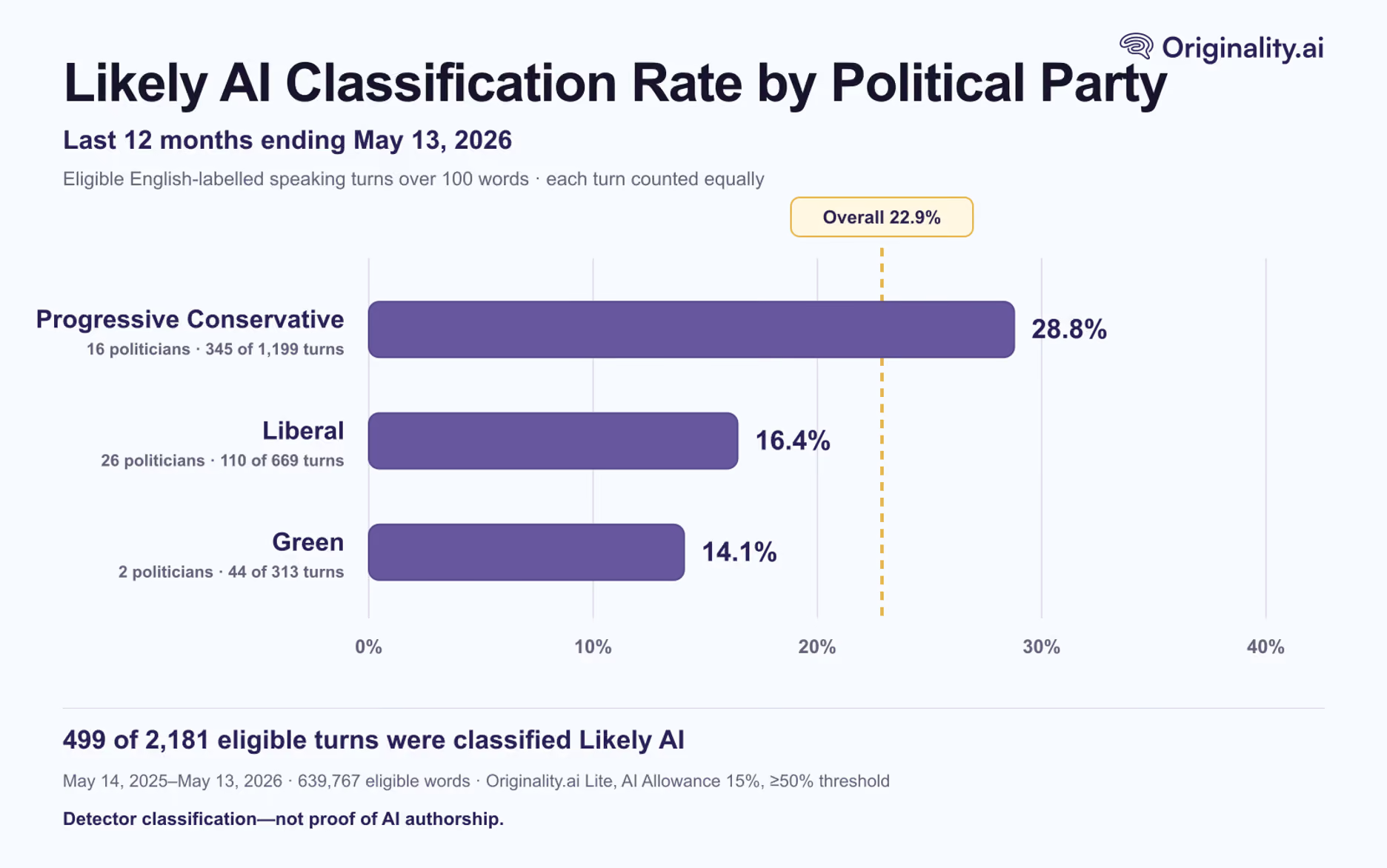
Over the latest 12 months, eligible Progressive Conservative speaking turns were classified Likely AI at nearly twice the rate of Liberal and Green turns.
We found three politicians who openly referred to using AI in four separate exchanges. None said AI wrote their speeches.
“With the power and magic of AI and a little research, I looked through some of the provinces that have a rent cap.” — Michelle Conroy, Hansard, Nov 27, 2024, p. 46.
“I was wondering whether AI would actually mean the end of call centres, so I asked AI.” — David Coon, Hansard, Nov 20, 2025, p. 28.
“Artificial intelligence says that revenge is a personal, often emotional, act of retaliation for being wronged…” — Mary E. Wilson, Hansard, May 8, 2026, p. 10.
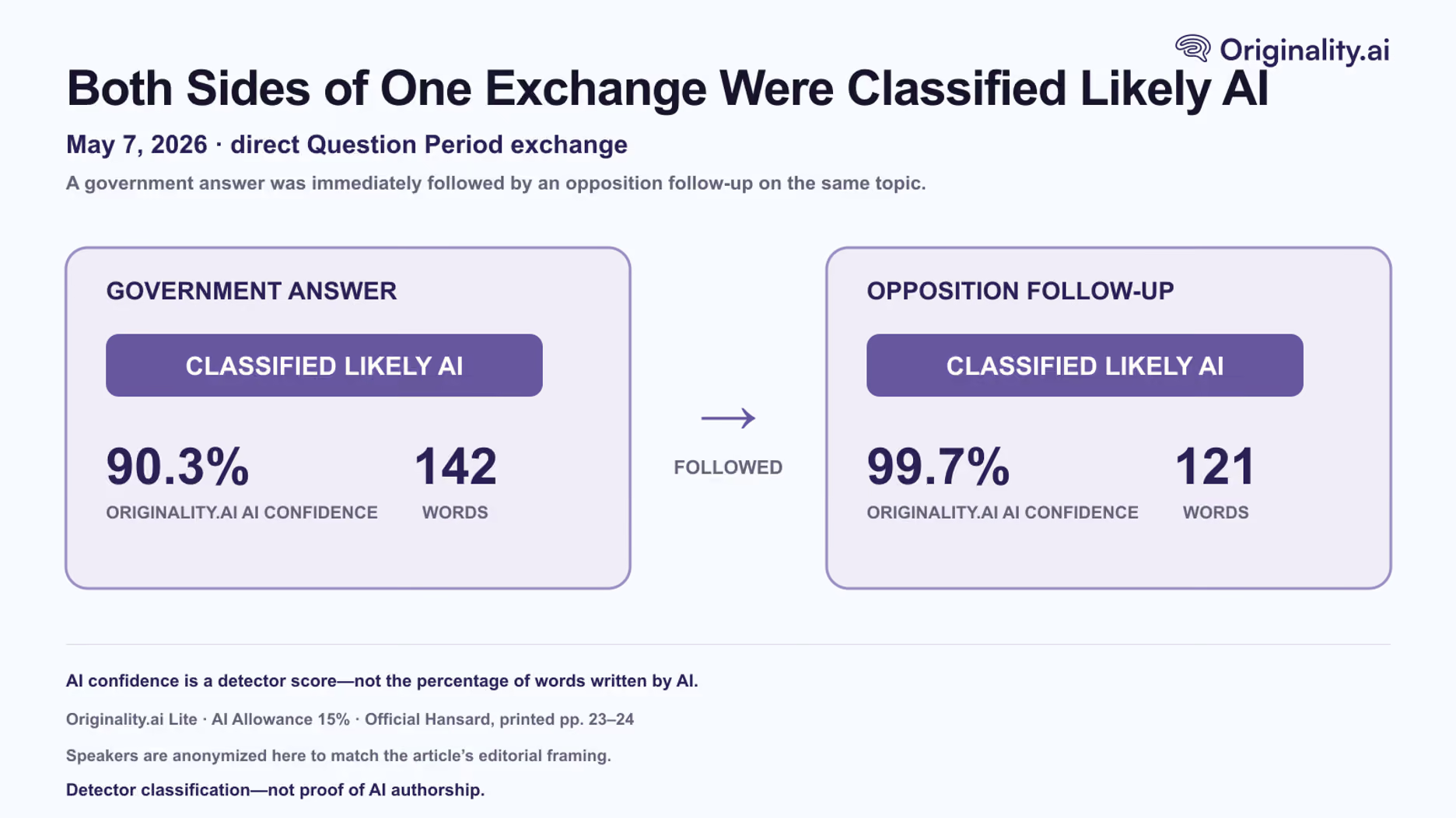
On a couple of occasions, a statement classified as Likely AI was immediately followed by another statement that was also classified as Likely AI in direct response to the first and as a prepared statement.
This does not prove that either statement was written by AI. But it shows the potential problem: government answers and opposition responses could both be shaped by AI, while the public is left watching what looks like a human debate.
Likely! They were not talking about AI in the abstract. They described a government chatbot making things up, challenged AI tools already being offered to students and asked whether AI had been used to process public feedback. These are just two examples...
When Government AI Makes Things Up
David Coon tested New Brunswick’s tourism chatbot. It confidently recommended a bus route that did not exist:
“The chatbot suggested taking the Maritime Bus route that runs along the Fundy coast, a route that does not exist.” — David Coon, Hansard, Mar 25, 2026, p. 8.
Could AI Have Shaped Public Feedback?
Ian Lee asked whether AI had been used to sort or summarize feedback on the government’s 10-year education plan:
“Can the minister guarantee that no AI system, generative or analytical, was used to summarize, filter, or interpret public feedback?” — Ian Lee, Question Period, May 14, 2026, p. 9.
From August 2, 2026, the EU AI Act will require disclosure when AI-generated text is published to inform the public on matters of public interest.
If a European politician published a speech similar to Bill Oliver’s, the rule would be difficult to ignore. There is an exception for content that receives real human review and editorial control. But reading an AI drafting instruction aloud hardly suggests a careful editing process. European Commission guidance
There has been a large rise in AI transparency laws, tracked here.
Bill Oliver’s mistake left AI Residue in plain sight. That one embarrassing moment led to a wider study and found that Likely AI classifications for political speeches are rising across New Brunswick’s legislature.

AI & Plagiarism Detector for Serious Content Publishers
Originality.ai
64 Hurontario St
Collingwood, Ontario
L9Y 2L6