AI Checker
Plagiarism Checker
Grammar Checker
Content Quality
Guideline Checker
Readability Checker
Fact & AI Hallucination Checker

Extensions

Picture this scenario: it’s 10:00 pm on a Monday night, you’re struggling to come up with an argumentative essay for your English class, and the due date is rapidly approaching.
You know you need to get it done, but the blank screen and flashing cursor are classic images of writer’s block.
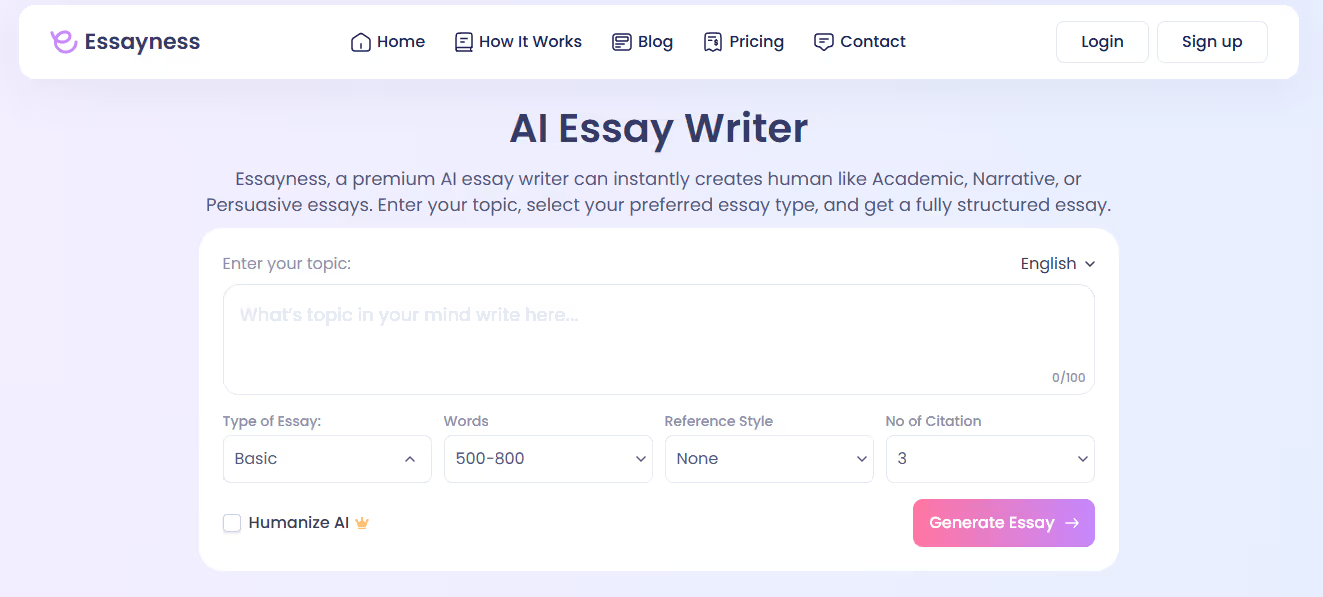
One solution that’s becoming more popular? An AI essay generator like Essayness. Even though many assignments, projects, or courses may specify that AI use is not permitted, or only for certain use cases, like grammar checking.
Even Essayness itself notes on its essay generator page that completely relying on generated outputs without adding your own efforts to essay preparation isn’t typically acceptable. Instead, it recommends using the tool for “brainstorming ideas or practising.”
Essayness will write an essay quickly, and it will even provide references and citations in the required style (APA, MLA, Chicago, etc.)
However, are Essayness AI-written essays still detectable by AI detectors?
Take a closer look below in our in-depth Essayness AI Writer review to see if Essayness is still detectable by popular AI detection tools like Originality.ai, Writer, and ZeroGPT.
Essayness is an online AI essay generator that creates a variety of essay styles (academic, persuasive, narrative, etc.).
The free version of its tool lets users select the type of essay, the word count range, the number of references to include (up to 10), and the citation style. From there, it quickly formats an essay on the prompted topic.
Tools like Essayness AI writer are designed to help students quickly and thoroughly generate different types of essays.
Given how prevalent AI writing is in schools and campuses these days (just check out these AI in education statistics), essay generators are rising in popularity as well, whether for generating, brainstorming, or even practising essay structures; the use cases vary.
The tool is free to use. However, it does have usage limits (such as for word count), so for additional features or longer essays, premium tiers are required.
However, keep in mind that the tool, like any AI essay generator, is best used only as a guide to illustrate the structure of the type of essay (which Essayness recommends as a key use case, too), not as a way to complete an assignment in minutes and hand it in.
It’s best practice to check assignment and course guidelines around AI use before using AI tools.
The test was designed to see if three popular AI detectors, including the Originality.ai AI content detector, Writer, and ZeroGPT, could detect an AI-generated essay from Essayness AI Writer.
Step 1: First, we entered a random topic using the Essayness AI Writer tool. This was done to make sure that all tools would be analyzing the same original Essayness AI-written essay.
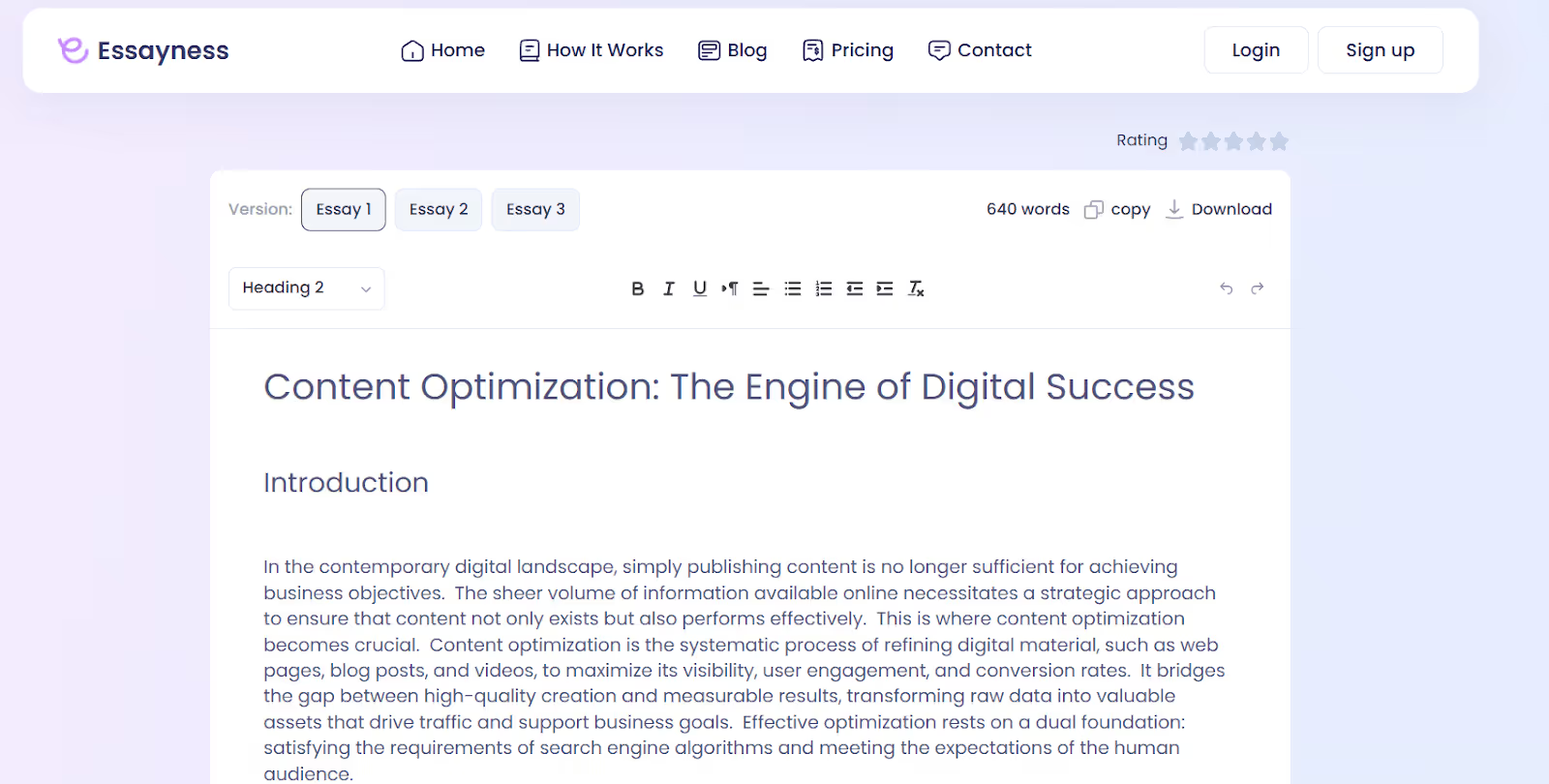
Step 2: We then ran the AI-generated text through Originality.ai, ZeroGPT, and Writer AI to see if it was detectable.
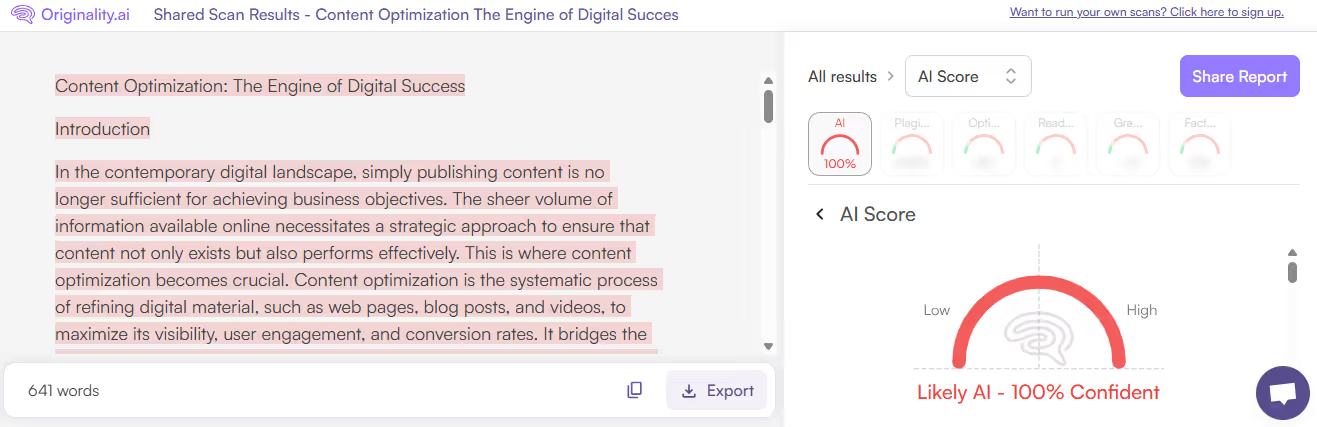
Originality.ai AI Detector: 100% Likely AI
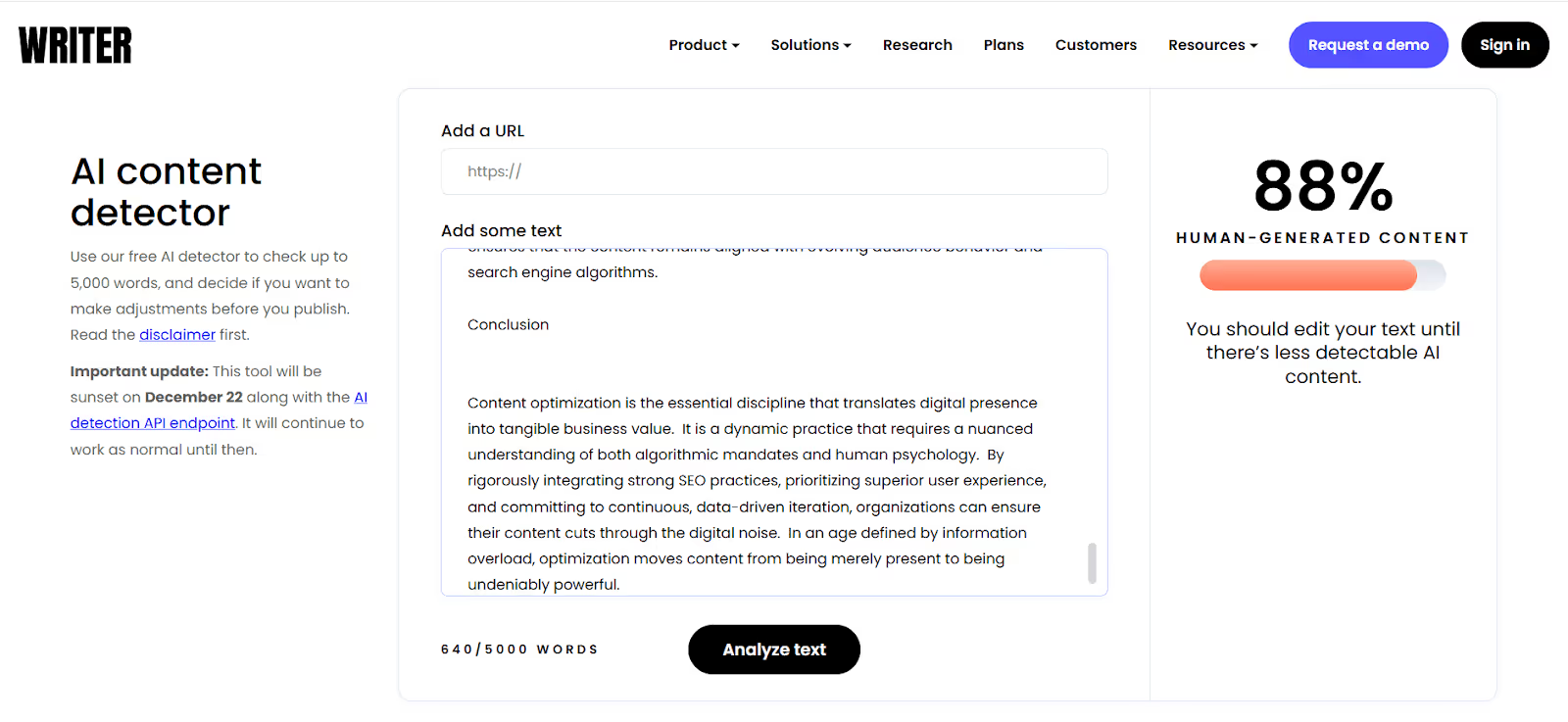
Writer AI Detector Score: 88% Human-Generated Content (12% Likely AI)
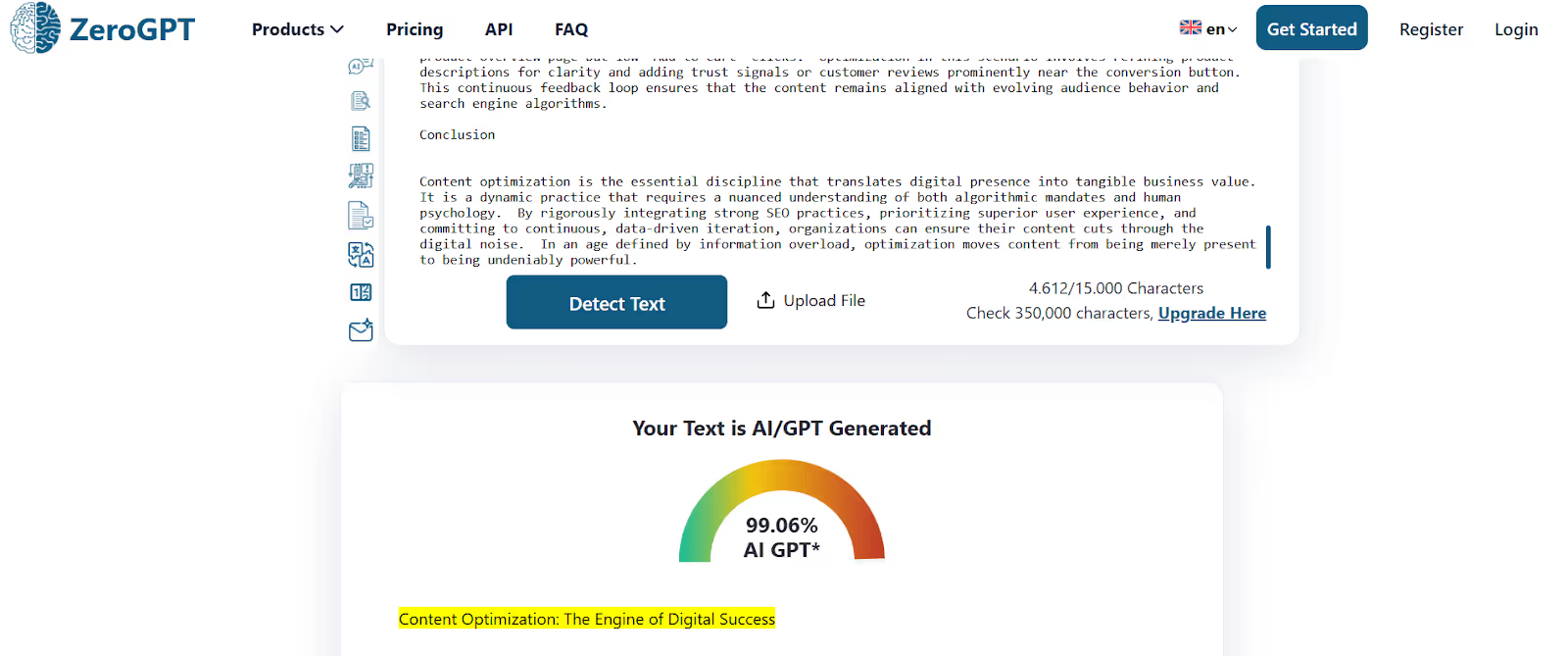
ZeroGPT Score AI Detector Score: 99.06% AI GPT
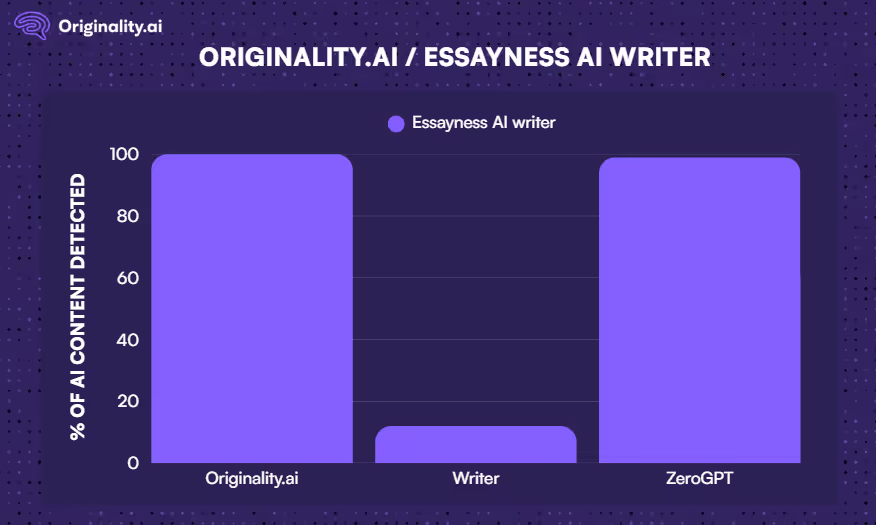
Among the AI detectors tested:
If you’re looking for an AI detector that’s both reliable and accurate, Originality.ai is an industry leader.
Further, the results of our test demonstrated that Essayness AI-written essays were detectable as Likely AI content by the best-in-class Originality.ai AI Checker.
Read more about AI and AI reviews:
Essayness AI writer is designed to be used for essays of different types. As of writing this review, it does not generate other types of content (like blogs). However, if you needed a narrative-style or persuasive blog post, you could potentially use it as a starting point to brainstorm the structure.
Yes, with the industry-leading Originality.ai AI Checker, based on the tests with the AI-written essay content generated by Essayness, Essayness AI-written essays are detectable as Likely AI.
Even our own AI detector is not perfect, and can produce false positives. These false positives can be very painful for anyone who creates original content — whether you’re a student wrongly accused of using ChatGPT by TurnItIn or GPTZero or a writer who received a false positive from Originality.ai.

AI & Plagiarism Detector for Serious Content Publishers
Originality.ai
64 Hurontario St
Collingwood, Ontario
L9Y 2L6