AI Checker
Plagiarism Checker
Grammar Checker
Content Quality
Guideline Checker
Readability Checker
Fact & AI Hallucination Checker

Extensions
MCP


Your campaign launch is days away.
Deadlines are closing in, and you’re stuck with writer’s block.
That’s the kind of creative block that GravityWrite claims to eliminate.
Marketed as an AI assistant for busy marketers, founders, and content teams, we decided to dig into what GravityWrite actually delivers, and whether its output is detectable by AI detection tools like Originality.ai.
Before we dive into the test, let’s quickly look at what GravityWrite offers users.
GravityWrite is an AI writing tool that is designed to produce marketing copy, such as blog posts, product descriptions, and social media posts.
Similar to ChatGPT, its tool generates text based on a user’s prompt.
There is considerable interest in GravityWrite as it addresses several key pain points for marketers, content teams, and even small businesses.
For starters, GravityWrite claims to help provide content generation quickly and easily.
So for small businesses, this can be a significant selling point as it could save time on content production.
It also supports several types of content, meaning users could make it their go-to tool for several content marketing requirements.

You can use GravityWrite for free, but there are limitations on what you can create.
The free plan allows users to generate as many as 1,000 words (or the equivalent of one blog post), which allows them to get a feel for the tool, but not a full look at its features.
For more credits and features, a Plus or Pro plan is required.
To see whether or not GravityWrite is a product that you should consider adding to your marketing suite, we decided to put it to the test and see whether or not the content it produced would be identified by AI detection tools.
Too much reliance on such tools can lead to mistrust from audiences and even penalties from Google.
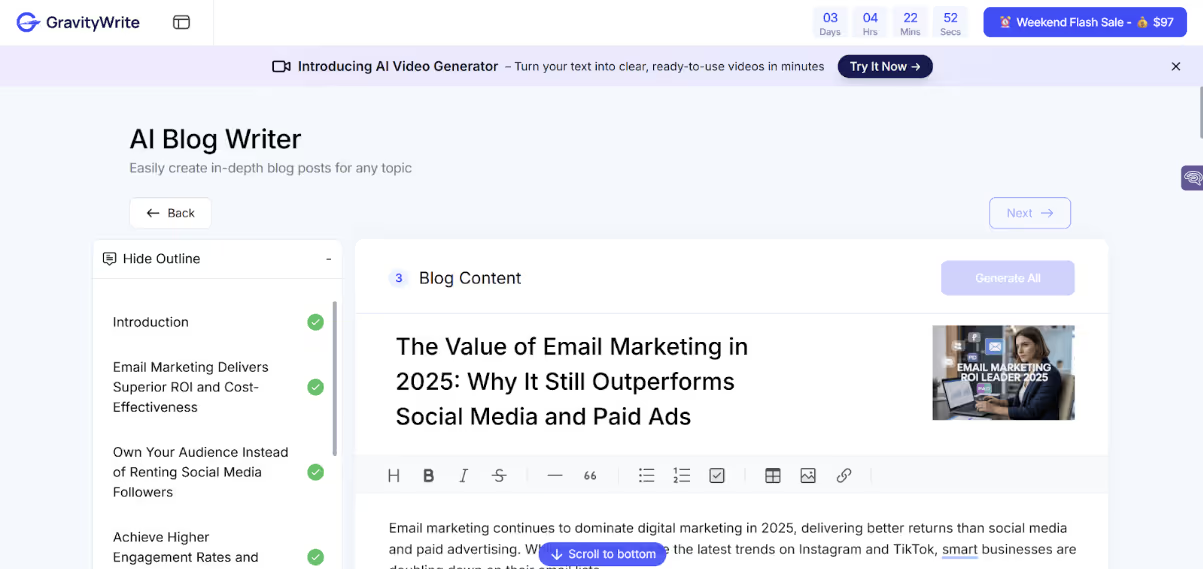
To do this, we created a blog post test using the Free Plan, covering the concept of email marketing.
We built out a detailed prompt, pasted that prompt into GravityWrite, and then pasted the content it produced into three of the most popular AI detection tools: Originality.ai, Writer, and ZeroGPT.
Write an engaging, data-backed article explaining the value of email marketing for modern businesses. Discuss how it remains one of the highest-ROI marketing channels despite the rise of social media and paid ads. Highlight its role in building customer relationships, driving repeat sales, and owning a direct communication channel free from algorithm changes. Include examples of how brands in different industries (e.g., ecommerce, SaaS, fitness) use automation, segmentation, and storytelling to achieve long-term growth. End with practical takeaways that show readers how to get more out of their email strategy.
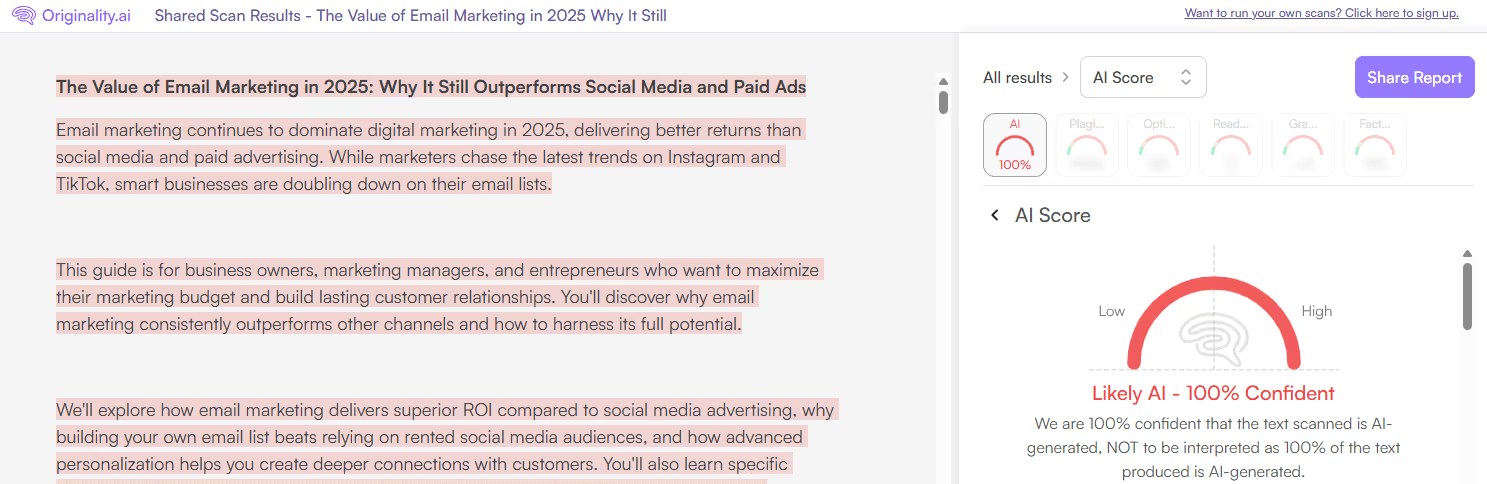
Originality.ai AI Detector: 100% Confident it’s Likely AI
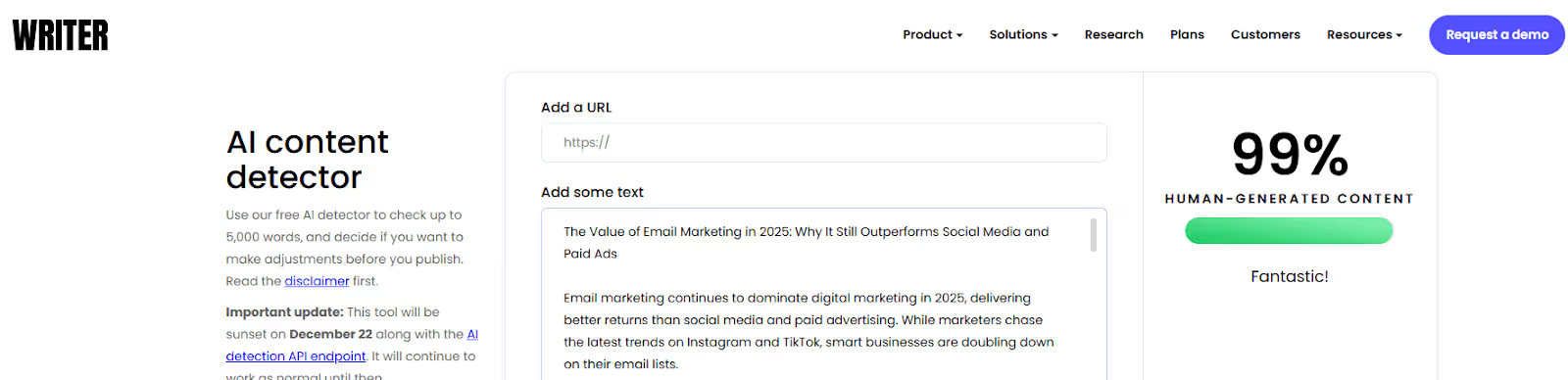
Writer AI Content Detector Score: 99% Human-written (1% Likely AI)
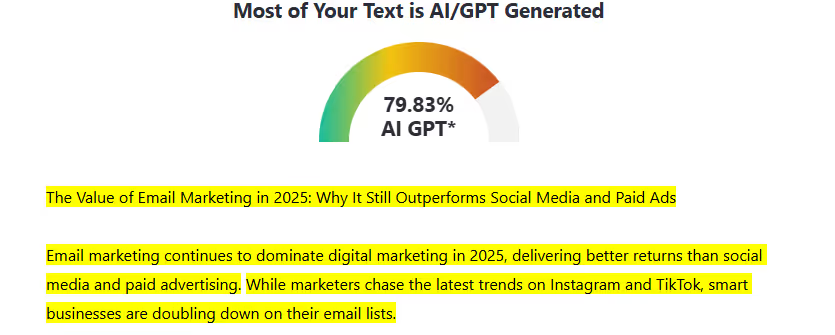
ZeroGPT AI Detection Score: 79.83% Likely AI
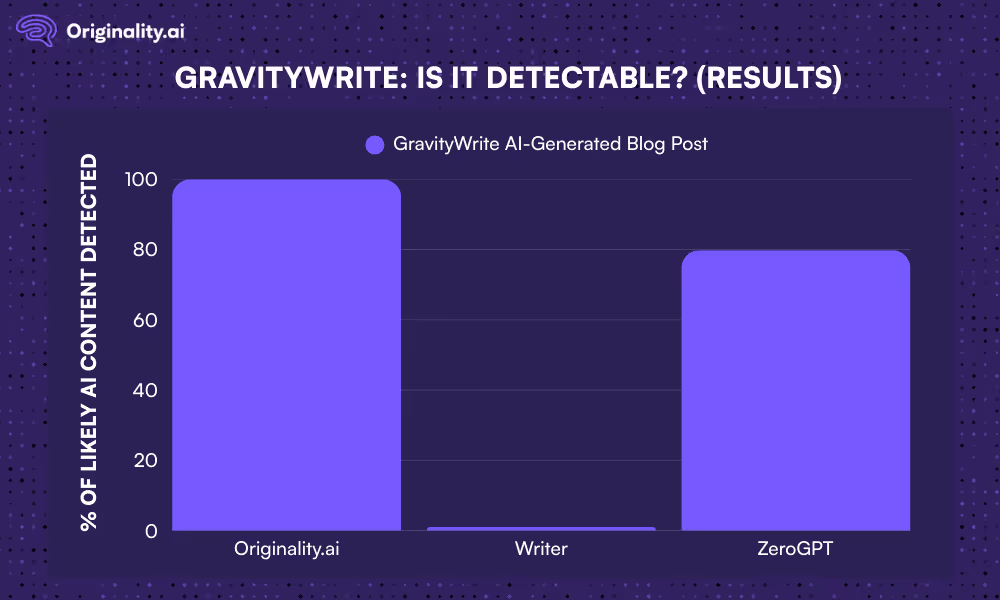
As the results in the above graph show, GravityWrite-generated blogs are still detectable by the industry-leading tools like Originality.ai.
Originality.ai was able to confidently identify the content as 100% Likely AI, whereas ZeroGPT had only 79.83% confidence it was AI/GPT, and Writer AI was 99% confident the content was human-written.
Read more AI reviews:
GravityWrite is an AI writing tool that claims to help users generate a wide range of content, such as blog posts and social posts.
While GravityWrite claims to produce “human-like” content, tests have shown that it is still detectable as Likely AI by industry-leading AI detection tools like Originality.ai.
Even our own AI detector is not perfect, and can produce false positives. These false positives can be very painful for anyone who creates original content — whether you’re a student wrongly accused of using ChatGPT by TurnItIn or GPTZero or a writer who received a false positive from Originality.ai.

AI & Plagiarism Detector for Serious Content Publishers
Originality.ai
64 Hurontario St
Collingwood, Ontario
L9Y 2L6