AI Checker
Plagiarism Checker
Grammar Checker
Content Quality
Guideline Checker
Readability Checker
Fact Checker

Extensions

Picture this: it’s 7 p.m. on Christmas Eve, and you just opened your fridge…
There’s half of an onion, a frozen turkey, and a handful of vegetables… and you have no clue how best to cook everything for your holiday dinner.
That’s when you remember AI — and how convenient it’s made it to get a recipe in seconds.
AI tools may have made churning up recipes for dishes convenient. However, users are reportedly finding harmful instructions from AI recipes, like dangerously long cooking times.
So, with Christmas quickly approaching, at Originality.ai, we decided to study whether AI slop has also taken over holiday recipes.
Whether you’re reading an AI or human-written recipe, it’s still best practice to refer to official food safety guidelines (such as those published by the USDA or Canadian Government).
Looking for more insights into the impact of AI this holiday season? Check out our AI holiday shopping reviews study.
Then, maintain transparency around whether what you’re reading is likely AI or human-written, whether it’s a post, shopping review, or recipe with the Originality.ai AI Checker.
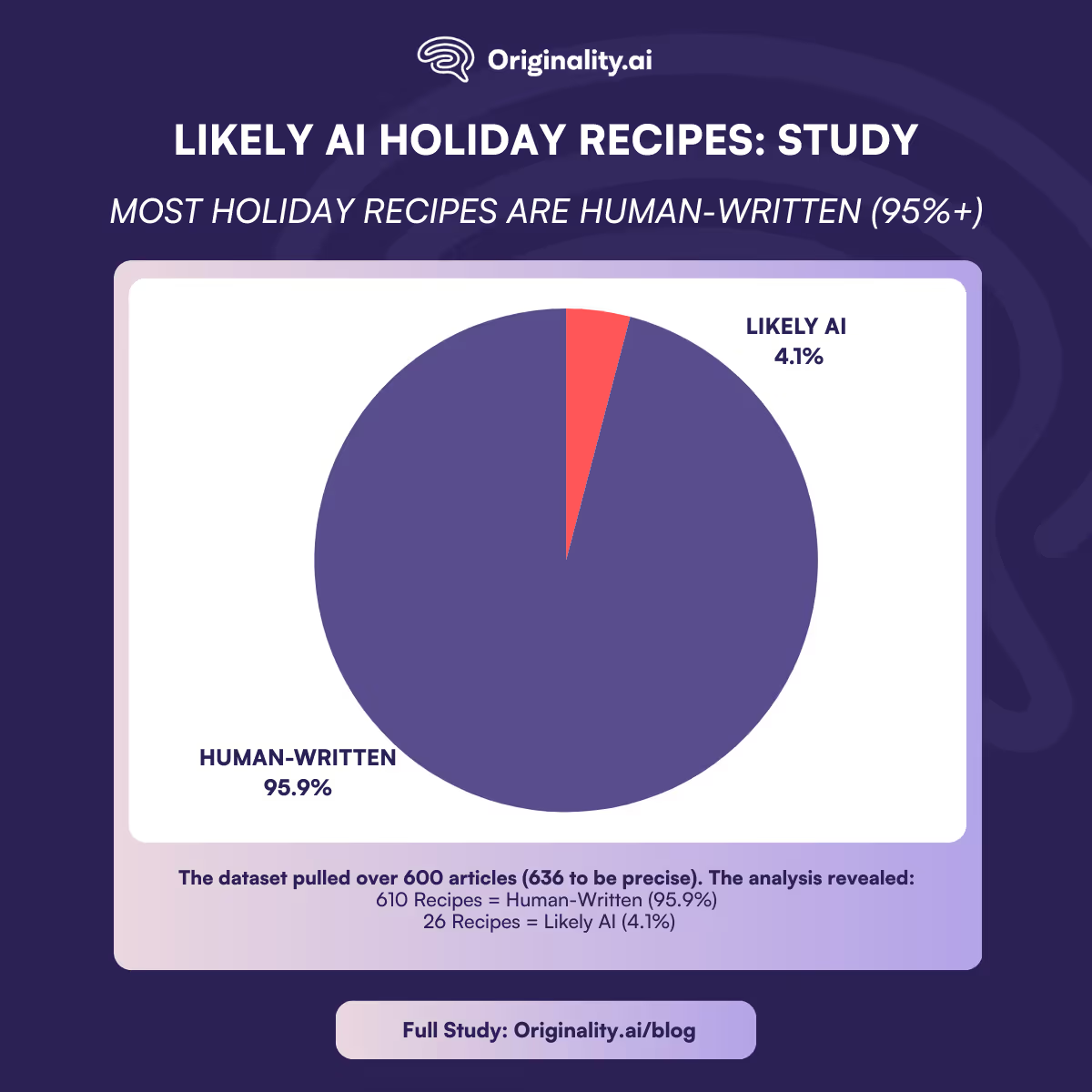
For this study, we collected recipes under keywords like “Christmas” and “holiday.”
The dataset included over 600 articles (636 to be precise).
In this sample, we found:
The recipes ranged from main courses like turkey, roast beef, and porchetta to classic desserts like Christmas pudding and cookies.
We pulled recipes from well-known recipe websites/domains like Allrecipes, Food and Wine, Martha Stewart’s recipes, and other blog posts.
Recipes were classified as Likely AI if their AI confidence score = 0.5 (or higher) with the Originality.ai AI detector.
This signaled a 50% or higher confidence that the text was likely machine-generated (learn about AI scores). Human-written texts were classified as such if they had an AI confidence score less than 0.5.
Learn more about what we think should be classified as AI writing in our AI Accuracy Study.
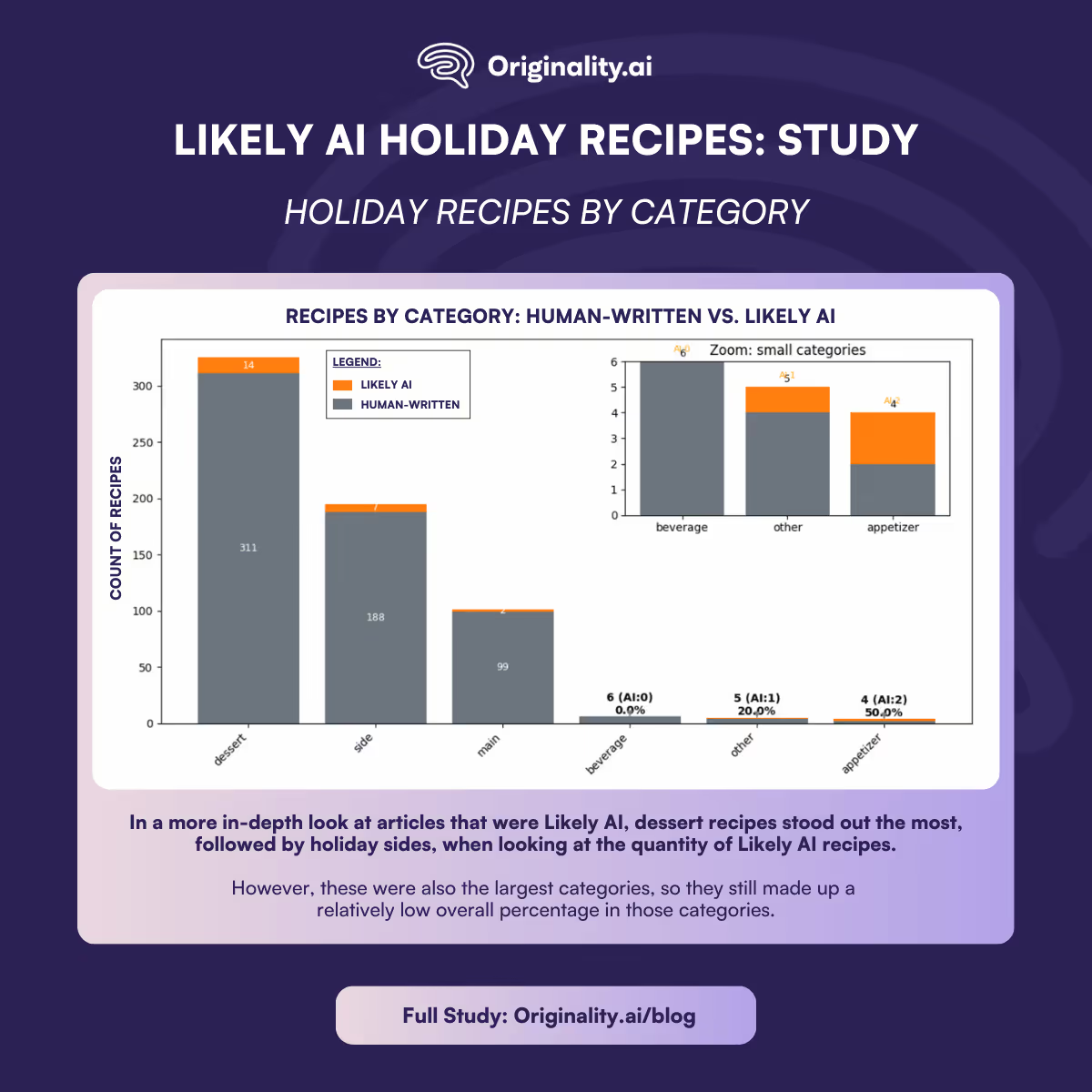
While there was only a small fraction of likely-AI-generated recipes from the overall dataset, we broke down the articles into different food categories:
In a more in-depth look at articles that were Likely AI, dessert recipes stood out the most, followed by holiday sides, when looking at the quantity of Likely AI recipes.
However, these were also the largest categories, so they still made up a relatively low percentage in those categories.
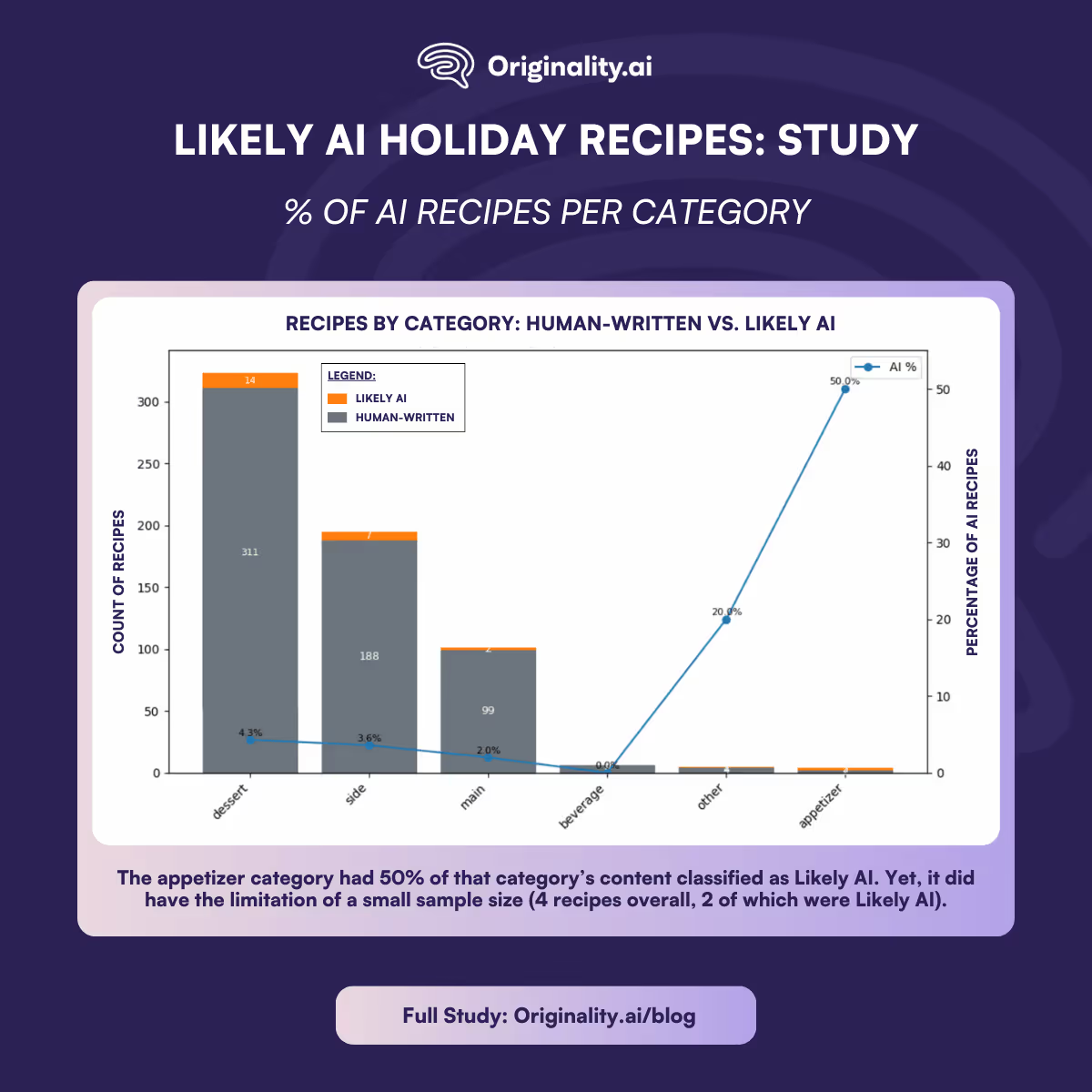
With the appetizer category, on the other hand, 50% of that category’s content was Likely AI. Yet, it did have the limitation of a small sample size of 4 recipes overall, 2 of which were Likely AI.
Additionally, the analysis revealed that Allrecipes alone had published 7 of the 26 Likely AI recipes.
Recipes likely generated by AI also typically followed a specific pattern:
This suggests that automated or templated content often yields shorter, less-detailed posts.
On the other hand, human-written recipes were longer and averaged 2,228 characters in text length.
The key takeaway here? Human-written recipes may be more thorough and in-depth than Likely AI recipes.
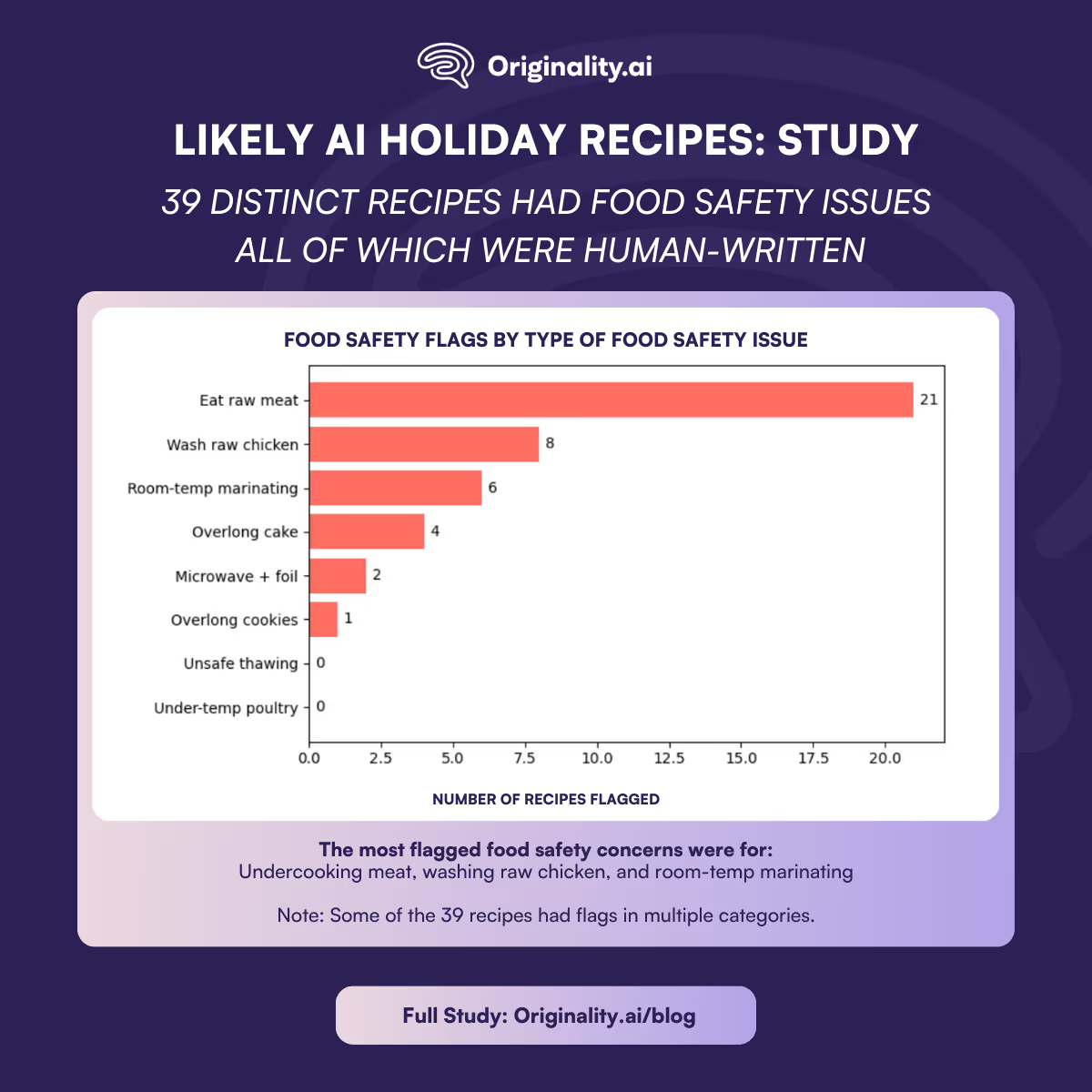
Aside from looking into whether recipes are likely AI, we also studied the cooking safety recommendations in them.
We analyzed instructions and the recipe introduction for the following food safety flags:
These flags are used as signals, not definite errors.
After scanning all 636 recipes, we flagged 39 recipes — all human-written. Some of the 39 recipes had flags in multiple categories.
The most flagged food safety concerns were for:
The key takeaway? Humans can make mistakes when it comes to food safety, too.
Whether the recipe you’re reading is Likely AI or human-written, refer to the USDA or the Government of Canada’s guidelines for food safety recommendations.
While our study offers a good news perspective on the prevalence of AI in holiday recipes in particular, AI has had an immense impact on recipe and food blogs overall.
In a recent article by Fortune about AI slop in recipes, including for Thanksgiving, one recipe/cooking blog found that 80% of their traffic (and revenue) had been lost in the last couple of years.
Yet another creator was noticing that traffic for their recipe for cooking turkey was down by 40% year-over-year.
So, it’s essential to frame these findings that over 95% of Christmas holiday recipes are human-written within the broader context of AI’s noticeably increasing impact on creators and search.
Will the Christmas recipes continue to be mostly human-written as newer LLMs (like GPT-5.2 or Gemini 3) are continuously released? That is yet to be seen.
Read more in our studies on AI-generated AI Citations, Google rankings, and AI Citations, and How AI is Reshaping the Content Economy.
Our analysis revealed that, good news! Christmas recipes are still largely human-written.
Further, human-written holiday recipes tend to be longer, possibly providing readers with more context and tips.
Yet, humans can make mistakes too, as all of the articles that were flagged for food safety issues (39) were human-written. So, remember to follow food safety best practices from trusted sources.
So for 2025? Keep your holiday spirit — AI slop recipes aren’t taking over the holidays! At least not yet.
Read more:
The study aims to follow up on recent reports, such as the article published by Fortune regarding AI slop recipes and Thanksgiving dinners.
In this finding, we analyzed recipes by inputting keywords like “Christmas,” “Holiday,” “2024,” and “2025” into Google.
After building a core list of URLs from the initial results from the searched keywords, we used an API to expand the dataset. This method ensured that the dataset included a variety of dishes from traditional Christmas cookie recipes to other regional specialties.
After grouping recipes from various popular cooking sites, we focused on analyzing recipes that had more than 200 characters.
Once all articles were gathered, we moved to scoring each recipe with our AI detector.
The recipes were classified as Likely AI if their AI confidence score = 0.5 (or higher) with the Originality.ai AI detector. This signaled a 50% or higher confidence that the text was likely machine-generated. Human-written posts had an AI confidence score less than 0.5.
A total of 636 articles were successfully scraped and scored. The analysis revealed:
Once each recipe has been scored, we analyzed the recipes for food safety checks and flagged any harmful instructions.

AI & Plagiarism Detector for Serious Content Publishers
Originality.ai
64 Hurontario St
Collingwood, Ontario
L9Y 2L6