AI Checker
Plagiarism Checker
Grammar Checker
Content Quality
Guideline Checker
Readability Checker
Fact & AI Hallucination Checker

Extensions
MCP


The Ghost AI Humanizer claims it can take AI-generated text and make it read like it was written by a human, supposedly slipping past even the most advanced detectors…but does it really deliver on that promise?
We put it to the test against three popular AI detectors, including Originality.ai, Writer, and ZeroGPT, to see whether the text rewritten and generated by the tool is still detectable.
The Ghost AI Humanizer is a tool designed to rewrite AI-generated text so it can potentially evade AI detection software (as noted by the circled text in the screenshot below).
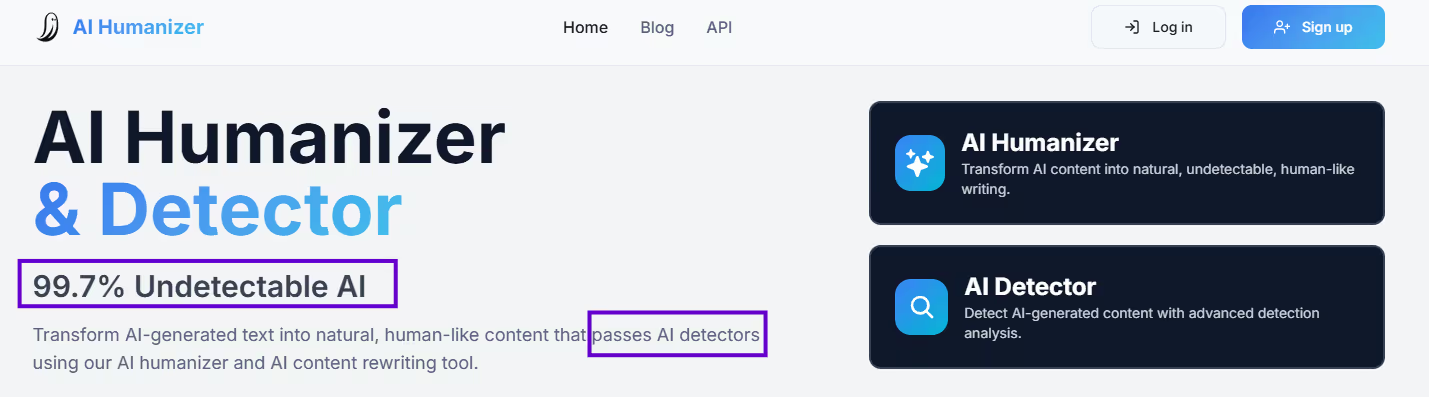
The process to modify the text is simple. Paste in your content or upload a file, and within seconds that tool produces a reworked version that claims to be indistinguishable from human writing. It’s marketed as a way to pass popular AI detectors, so we put it to the test to find out.
As AI-generated content becomes more widespread, so too have the tools designed to detect it. This has caused more demand for platforms that rewrite AI text in an attempt to slip past detection systems. The Ghost AI Humanizer is positioned as one of these solutions.
So, we wanted to see if it could actually outsmart today’s leading AI detectors (full findings below).
The Ghost AI Humanizer tool is free to use, although it is capped at a limit, before you’re required to sign up for a paid plan to access more words.
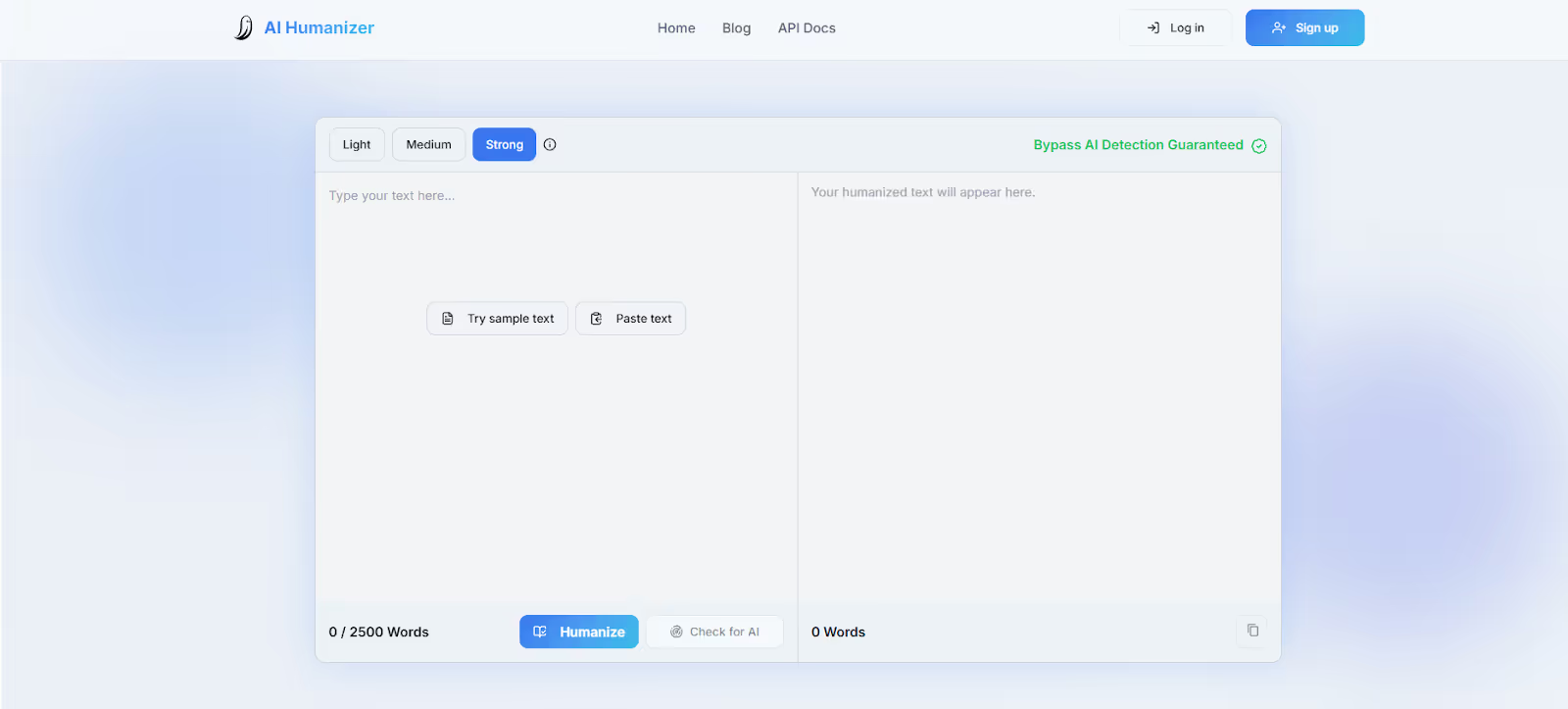
To get more credits, you can either sign up for a monthly or annual plan, as shown below.
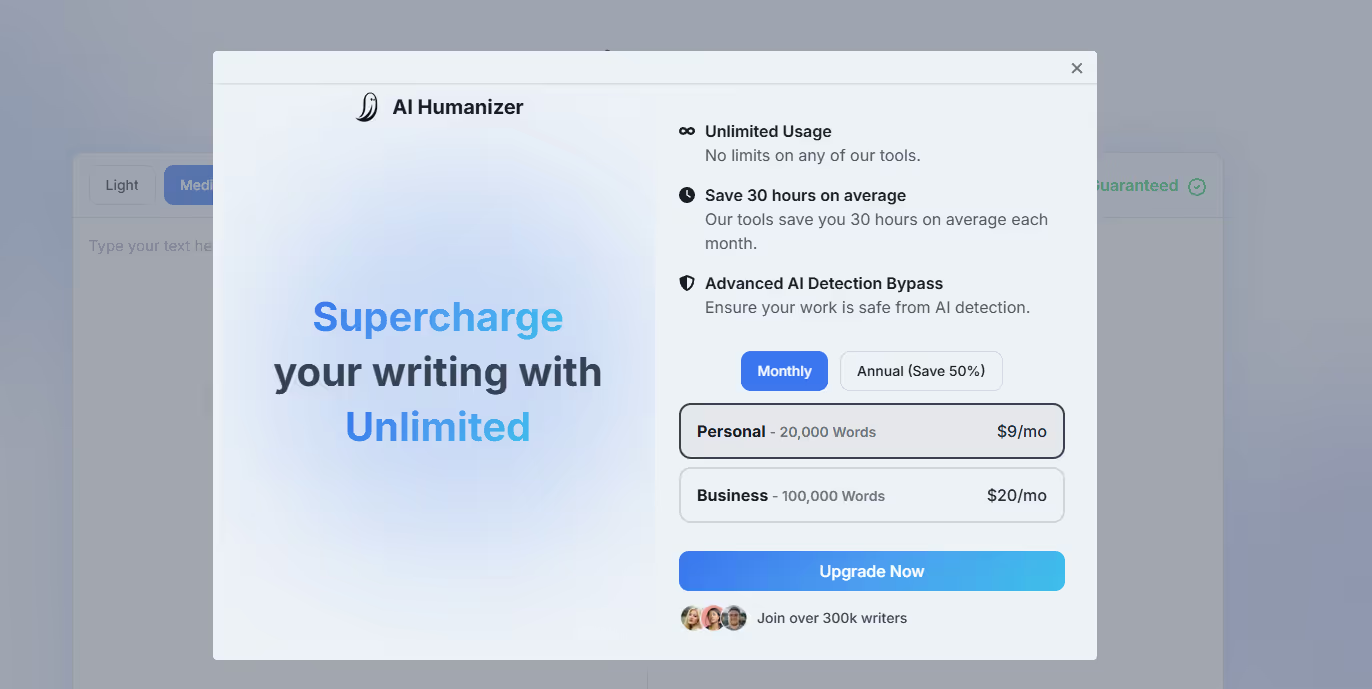
A personal monthly plan costs $9 per month for 20,000 words each month, and a business monthly plan costs $20 per month for 100,000 words.
We set out to determine whether three of the most popular AI detectors, Originality.ai, Writer, and ZeroGPT, could identify both unchanged AI-generated text and text that has been processed through the Ghost AI Humanizer.
Step 1: We began by generating a sample passage on a random topic using ChatGPT. This ensured the starting text was 100% AI-written, providing a fair and consistent baseline for all the detectors.
Step 2: Next, we ran the unedited ChatGPT text through each detector to record baseline detection scores.
Step 3: Then, we fed the same AI-generated text into the Ghost AI humanizer, allowing the tool to ‘humanize’ it.
Step 4: Lastly, we took that new content word-for-word and ran it through the same three detectors to understand whether the new text could evade detection.
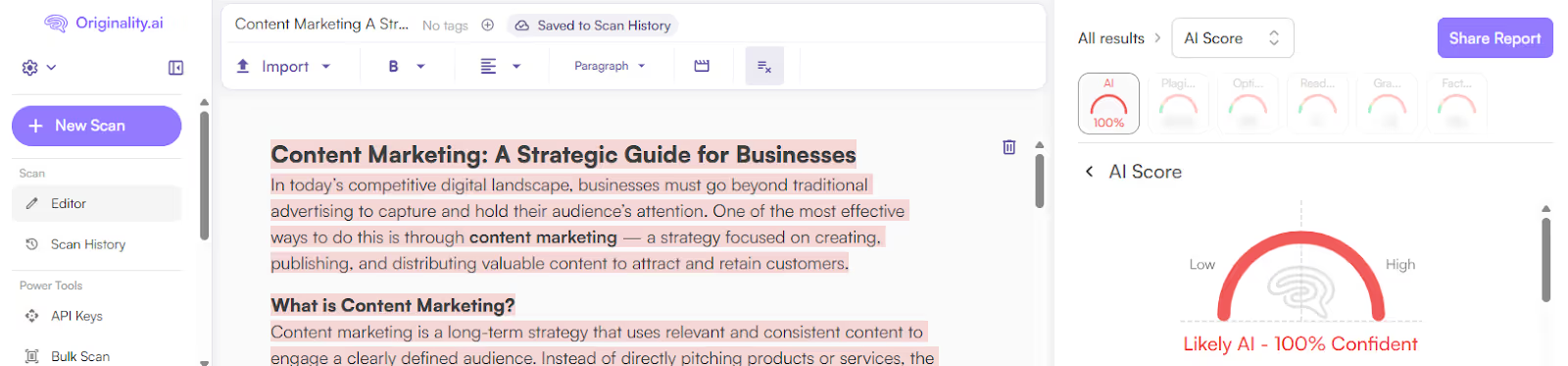
Original content (AI-generated): 100% Confidence that the text is Likely AI
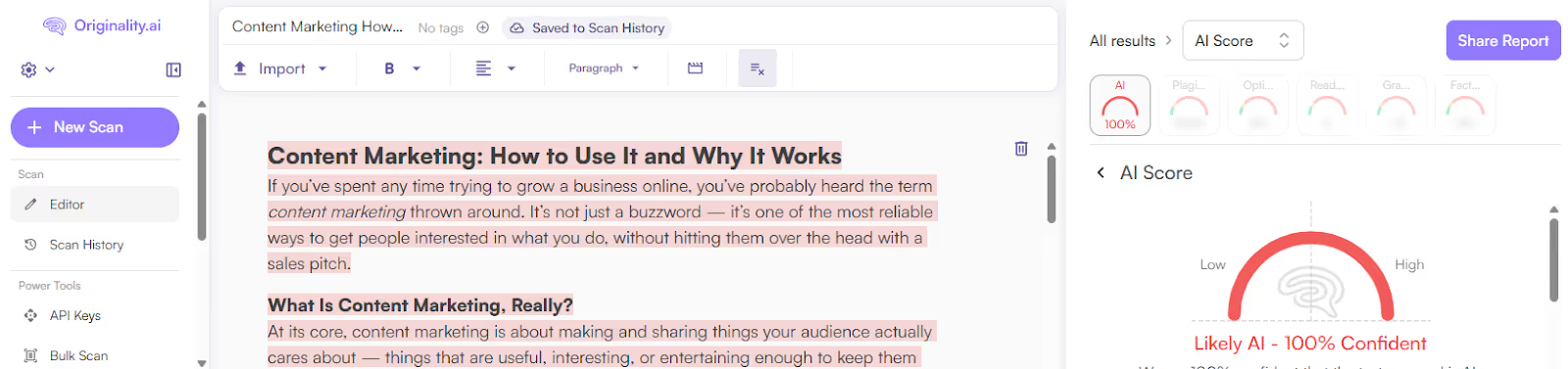
Ghost AI Humanizer Version: 100% Confidence that the text is Likely AI
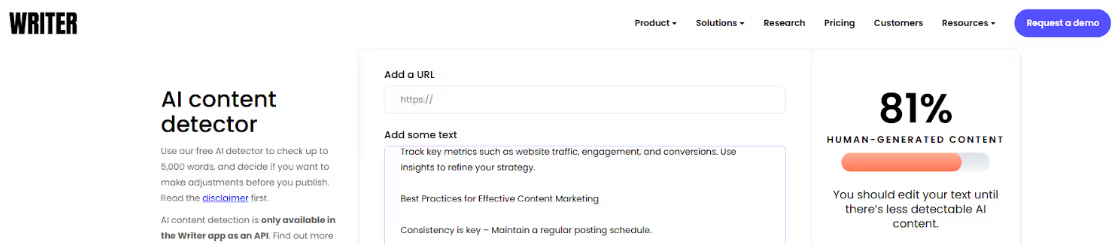
Original content (AI-generated): 81% Human-generated (19% AI-generated)
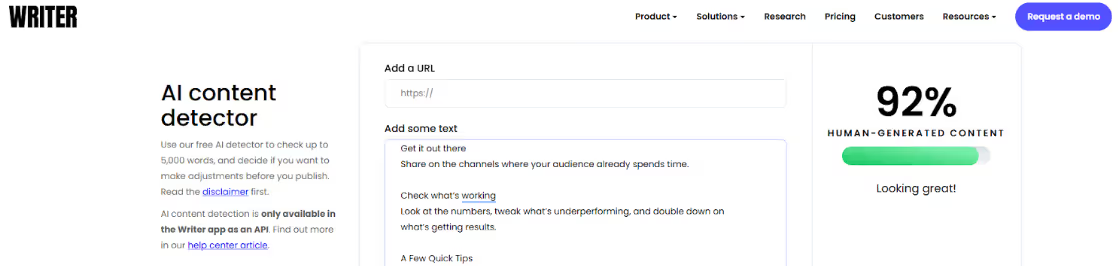
Ghost AI Humanizer Version: 92% Human-generated (8% AI-generated)

Original content (AI-generated): 96.01% AI-generated

Ghost AI Humanizer Version: 26.73% AI-Generated
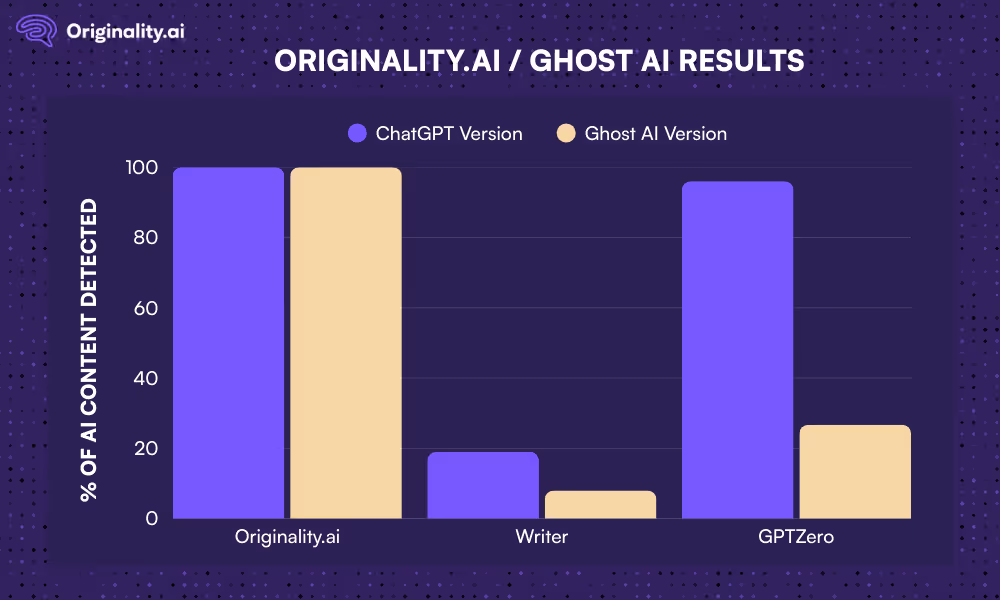
As you can see from the chart above, it’s clear that the Ghost AI Humanizer did not evade detection by the industry leading Originality.ai AI Detector, which flagged both the original ChatGPT text and The Ghost AI version with 100% Confidence as Likely AI.
In contrast, Writer labeled both versions as largely human-written. Then, GPTZero’s confidence in the origins of the text as AI dropped after processing with The Ghost AI humanizer.
The takeaway? The best-in-class Originality.ai AI detector, can confidently identify humanized text from The Ghost AI as Likely AI.
Read more about AI detection:
The aim of the Ghost AI Humanizer is to rewrite AI-generated text to help content pass AI detection tools.
Yes, with the industry-leading Originality.ai AI detector the text generated by The Ghost AI Humanizer is still detectable as Likely AI.
Some versions or trials may be free, but full functionality often requires a paid plan. Check the official site for current pricing and limits.
Even our own AI detector is not perfect, and can produce false positives. These false positives can be very painful for anyone who creates original content — whether you’re a student wrongly accused of using ChatGPT by TurnItIn or GPTZero or a writer who received a false positive from Originality.ai.

AI & Plagiarism Detector for Serious Content Publishers
Originality.ai
64 Hurontario St
Collingwood, Ontario
L9Y 2L6