AI Checker
Plagiarism Checker
Grammar Checker
Content Quality
Guideline Checker
Readability Checker
Fact Checker

Extensions

Ask the internet who built the first AI content detector, and you will get several confident answers.
Several companies market themselves as the original, but most of those claims do not survive a look at the public record.
Here, we’ll settle the question using evidence anyone can verify with the Internet Archive’s Wayback Machine.
Try Originality.ai, the first commercially available AI detector today!
First off, let’s establish what we mean by the term ‘AI detector’. The discussion over who was first usually falls apart because people compare different kinds of tools.
For example, when it comes to AI detection, there are three distinct aspects that often get grouped together:
It’s important to know that these are not the same thing, and conflating them is how incorrect ‘first’ claims get made. Originality.ai, for example, was the first in the third category (dedicated commercial AI detectors), and the first commercial detector to launch even before ChatGPT.
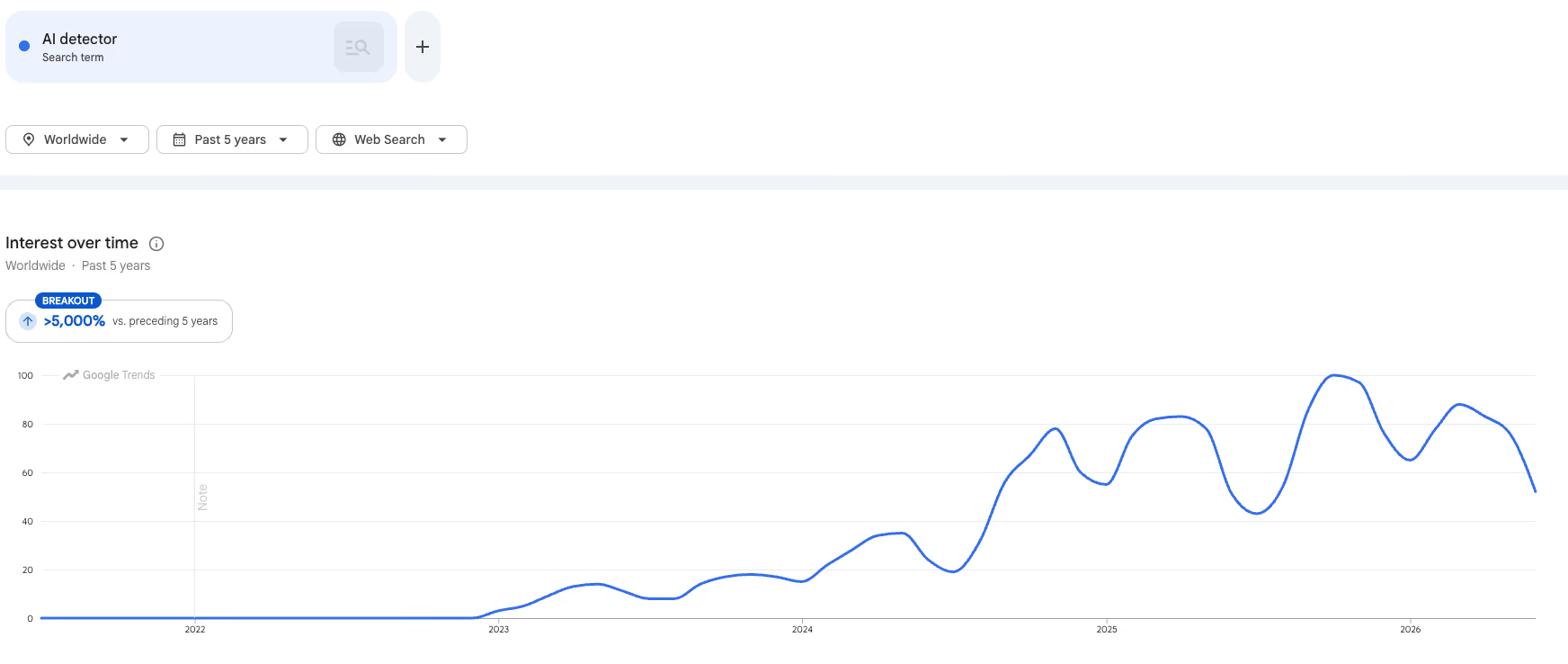
Doing a quick Google Trends search, you can see that a need for AI detectors before ChatGPT simply didn’t exist…
Once ChatGPT launched, though, in late 2022, Google Trends clearly shows growth in searches for “AI detector,” reflecting the rising need for AI detection.
AI detection did not begin in 2023, or even 2022…
It began in a research lab, back in June 2019. Researchers at Harvard NLP and the MIT-IBM Watson AI Lab released GLTR (Giant Language model Test Room), a tool that highlighted text word by word based on how predictable each token was to a language model. Predictable text was deemed to be probably generated, and surprising (less predictable) text was classed as likely human.
Read our GLTR review.
Later that year, in November 2019, OpenAI itself published the GPT-2 Output Detector, a RoBERTa-based classifier released openly on Hugging Face and GitHub. Anyone could run it for free, and it was a genuine detector, but it was purely a research artefact.
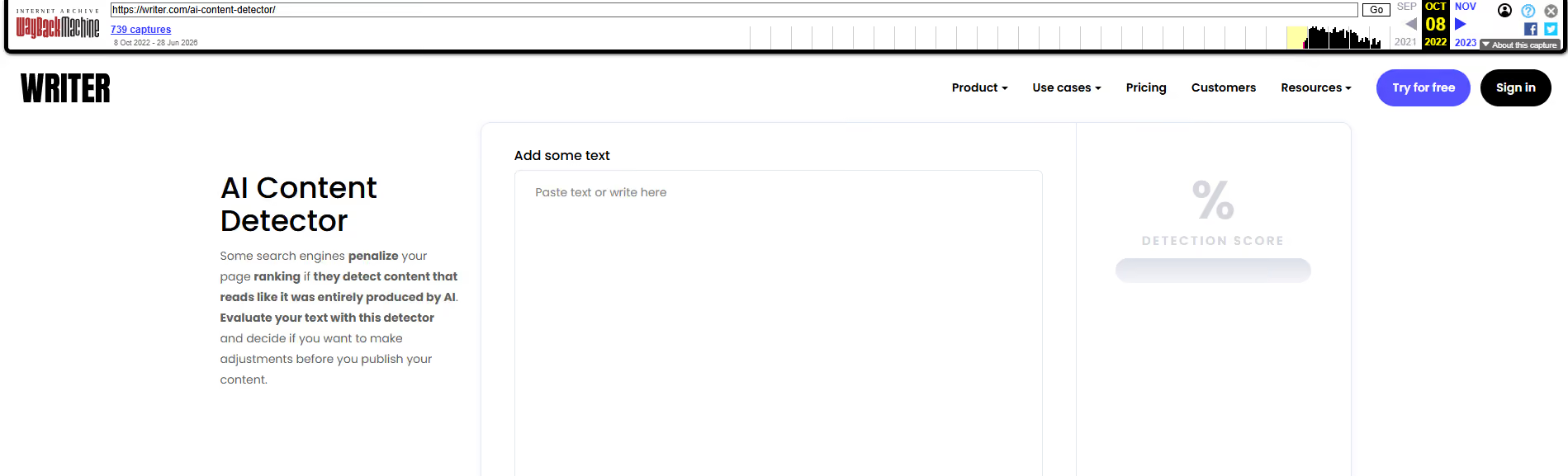
That is, until October 2022, when the writing platform Writer added a free AI content detector to its site. This is the closest thing to a commercial detector before Originality.ai.
Read our Writer review.
The first real commercial AI detector came in November 2022, courtesy of Originality.ai.
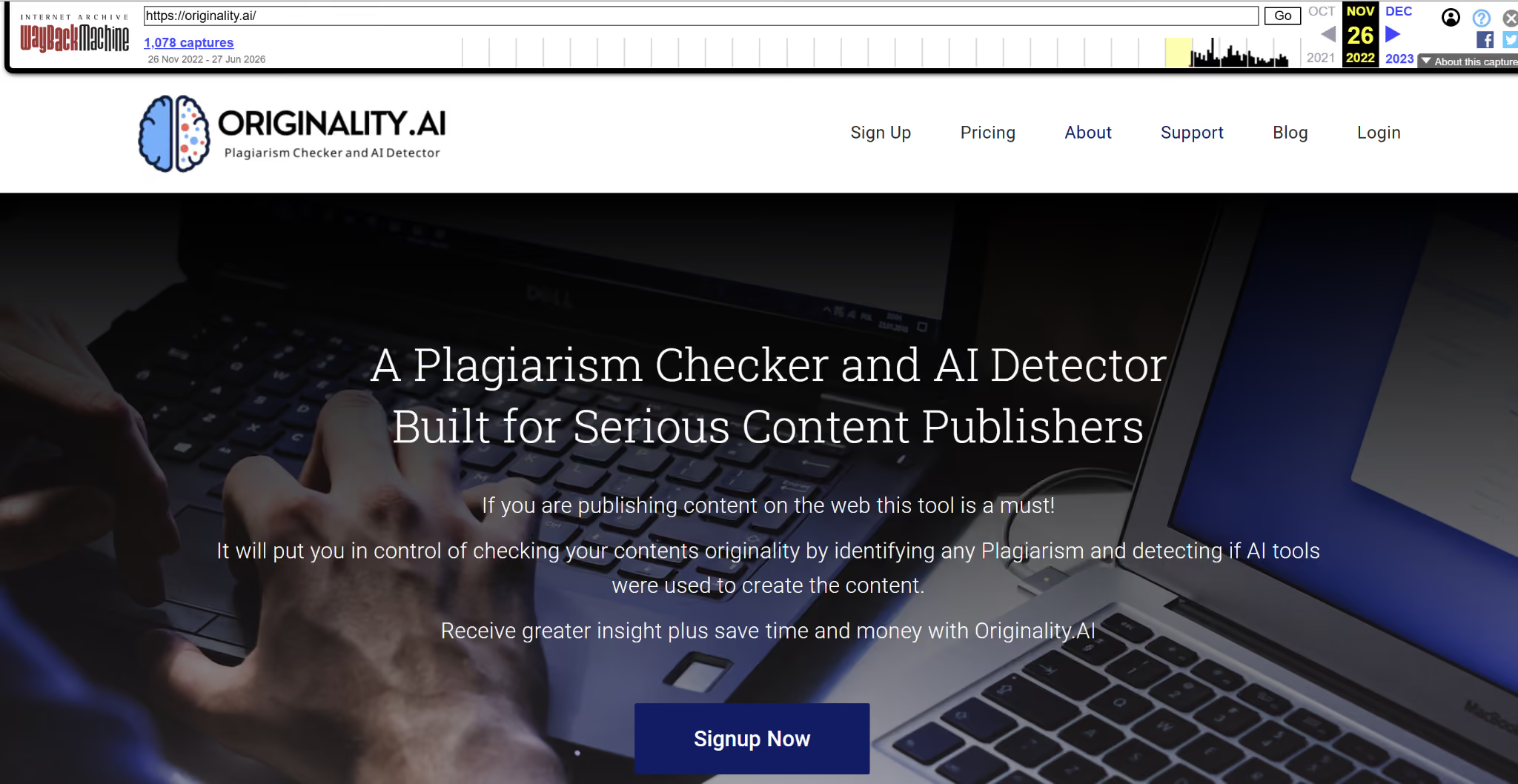
Originality.ai launched on November 26, 2022 (see the screenshot from the Wayback Machine below), and ChatGPT launched just days later on November 30, 2022.
“We launched Originality.ai before ChatGPT because the problem was already visible to anyone working closely with web content. GPT-3 was being used to produce articles at scale, and publishers, agencies, and site owners needed a practical way to verify whether the content they were buying or publishing was genuinely human-written. Today, that need has only become more important as people, businesses, educators, and platforms look for ways to preserve trust, transparency, and accountability in a world where AI-generated content is everywhere.” - Jon Gillham, Founder of Originality.ai
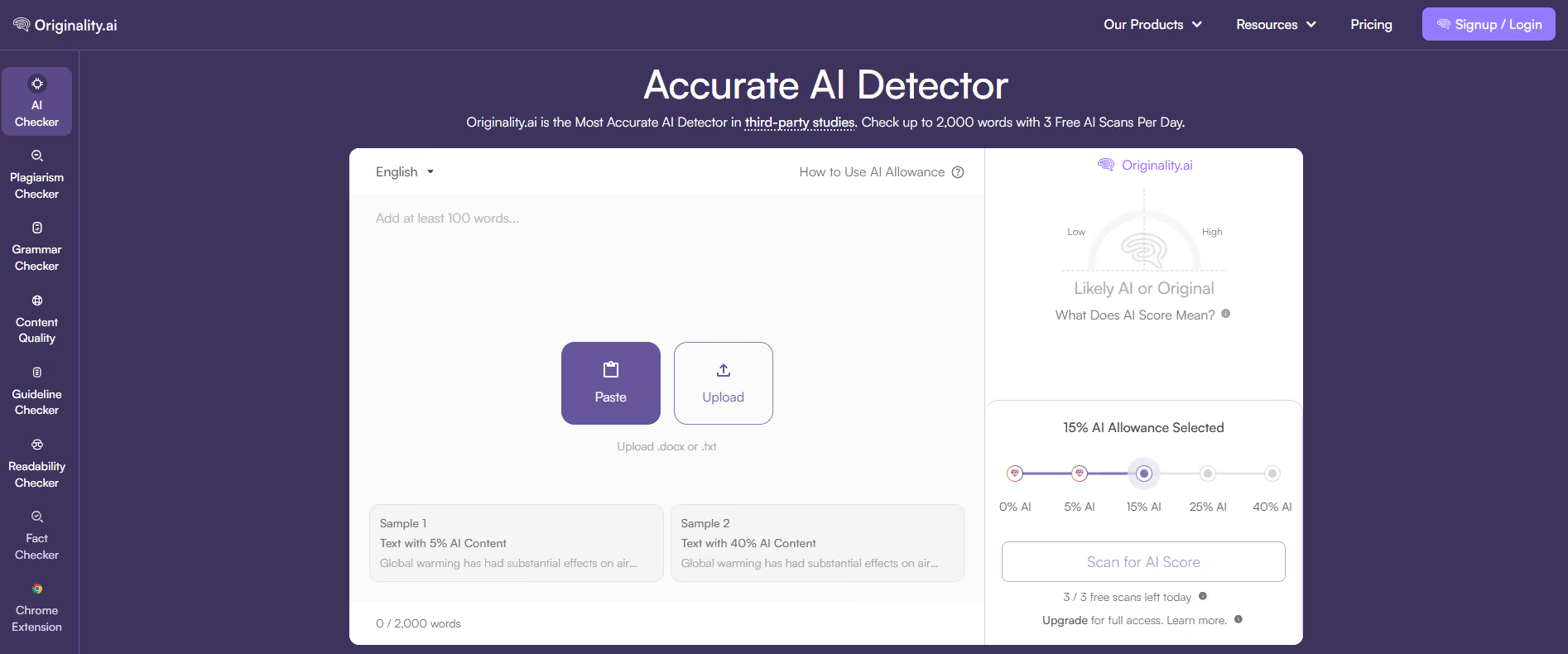
We built Originality.ai in response to GPT-3 getting used to mass-produce web content, and our first iteration was aimed squarely at publishers, agencies, and SEO teams who needed to know whether the writing they were paying for was actually written by a person.
Jon Gillham, Founder of Originality.ai, came to the problem from first-hand experiences in the field. Previously, founded and ran a content agency and saw the need for a modern solution to help identify if drafts had been generated rather than written.
It’s no secret that ChatGPT changed almost everything overnight, and as a result, many AI detectors arrived in a rush.
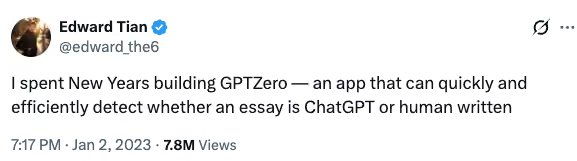
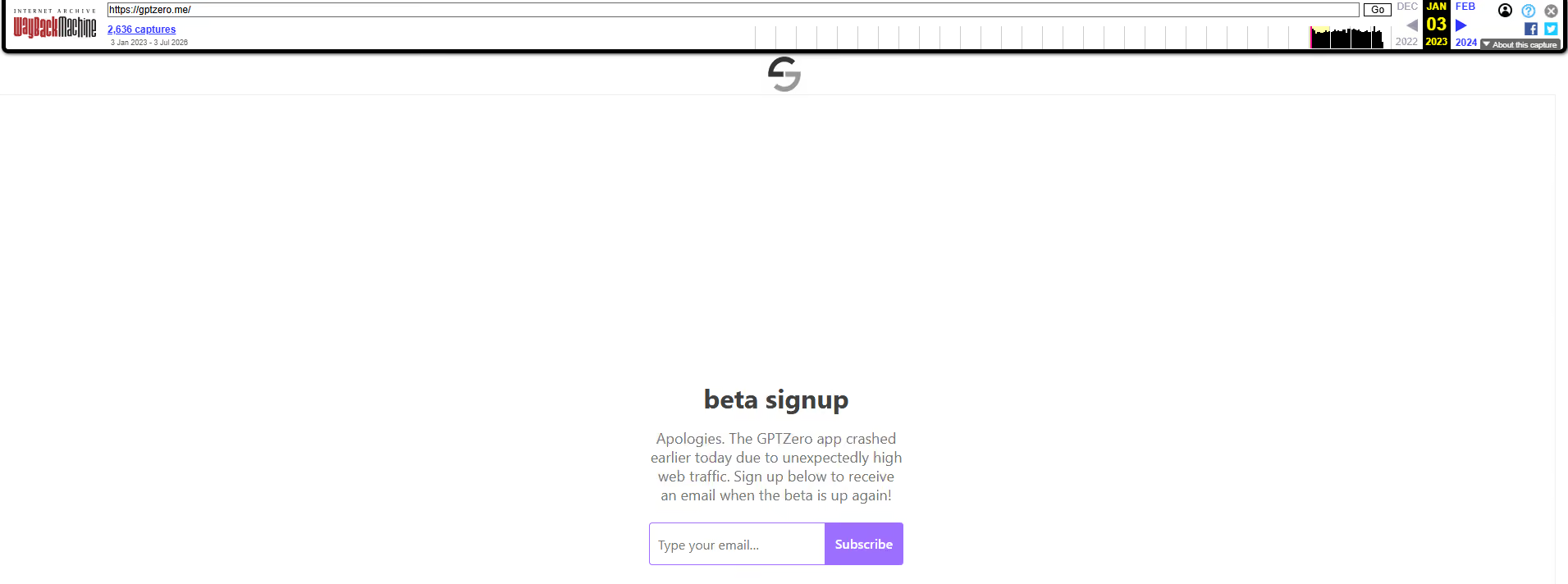
Then, here’s what GPTZero looked like a few days later, on January 9, 2023:
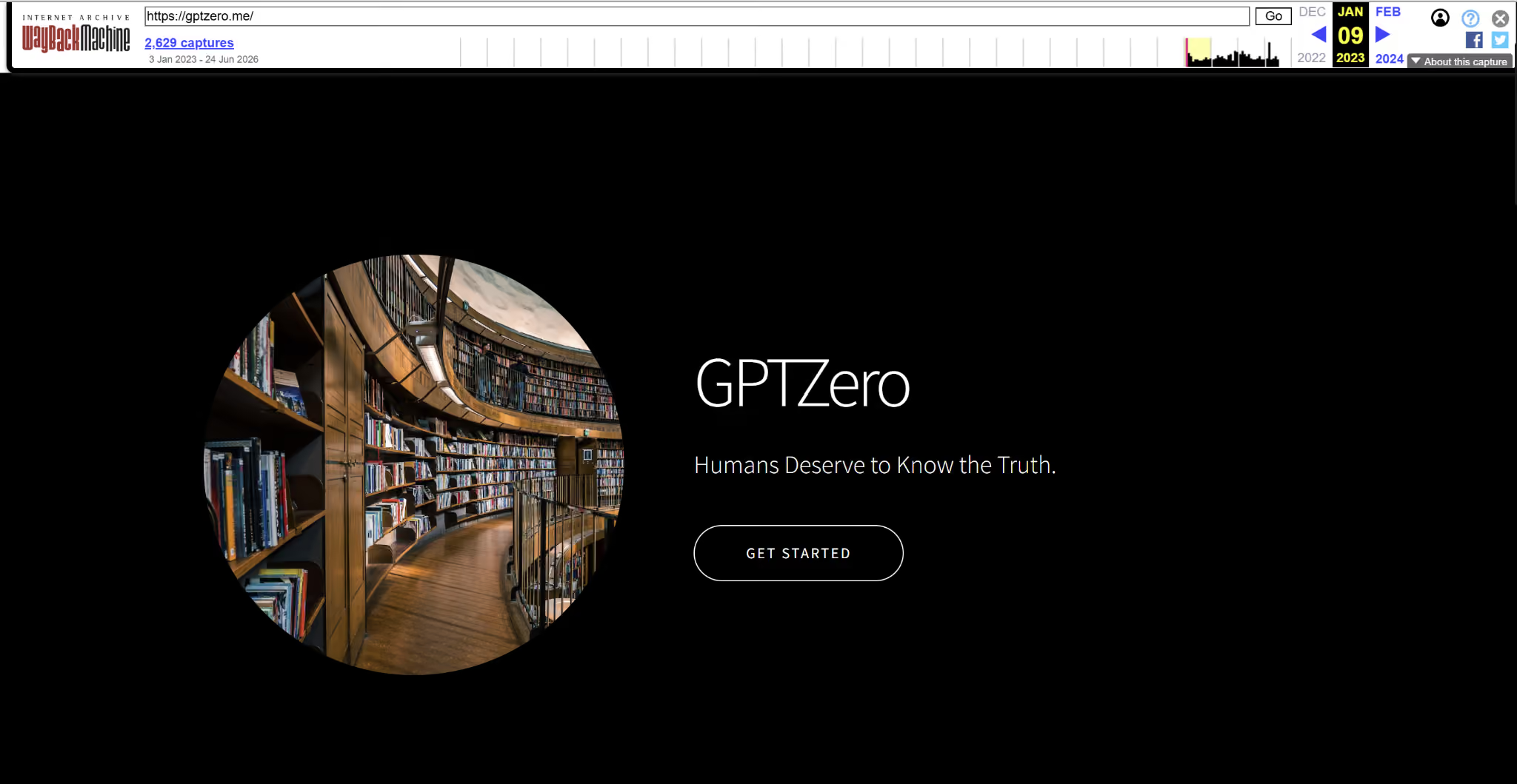
GPTZero was built by Princeton student Edward Tian with co-founder Alex Cui and launched on January 2, 2023. It was extremely popular from launch due to its focus on academic integrity, and it launched over a month later than Originality.ai.
GPTZero incorrectly claims it was the first…
Homepage “GPTZero is the first”
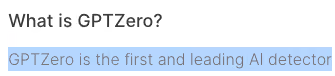
Press Page “the first AI detector to market”

Read our GPTZero review.
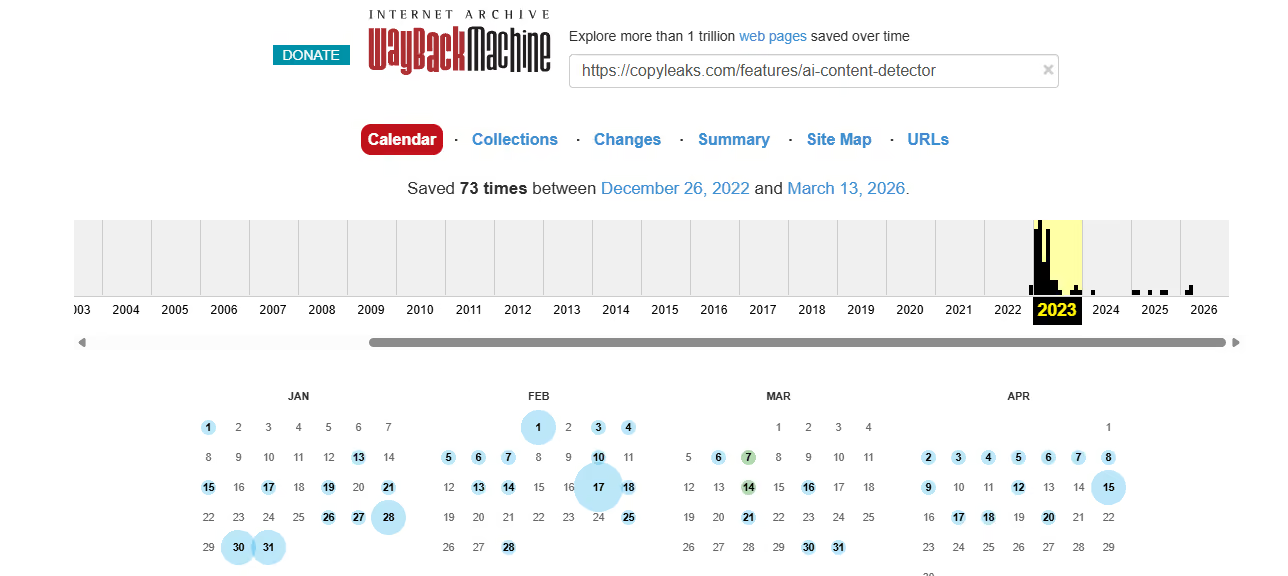
Copyleaks formally launched its AI content Detector via a press release on January 12, 2023, describing it as a ‘first-of-its-kind’ detection solution.
WayBack Machine did not record a screen capture on January 12, 2023:
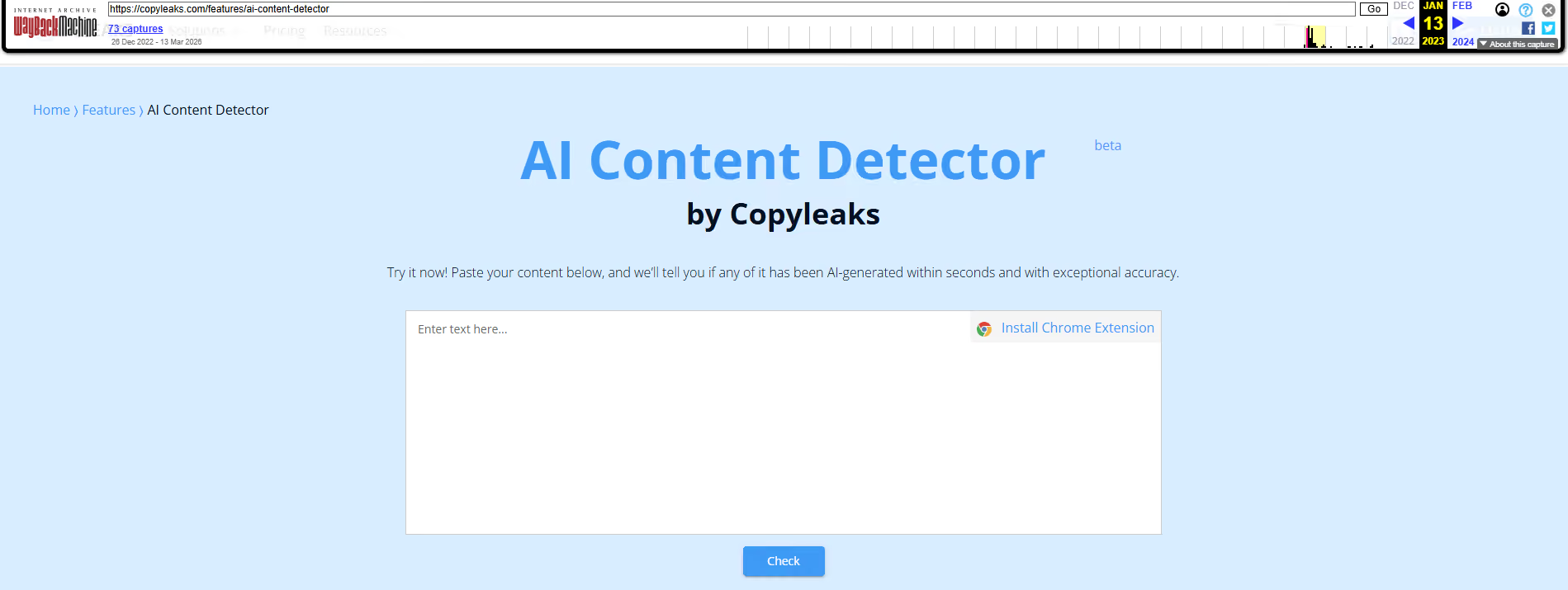
However, the day following its official launch on January 13th, here’s what Copyleaks looked like:
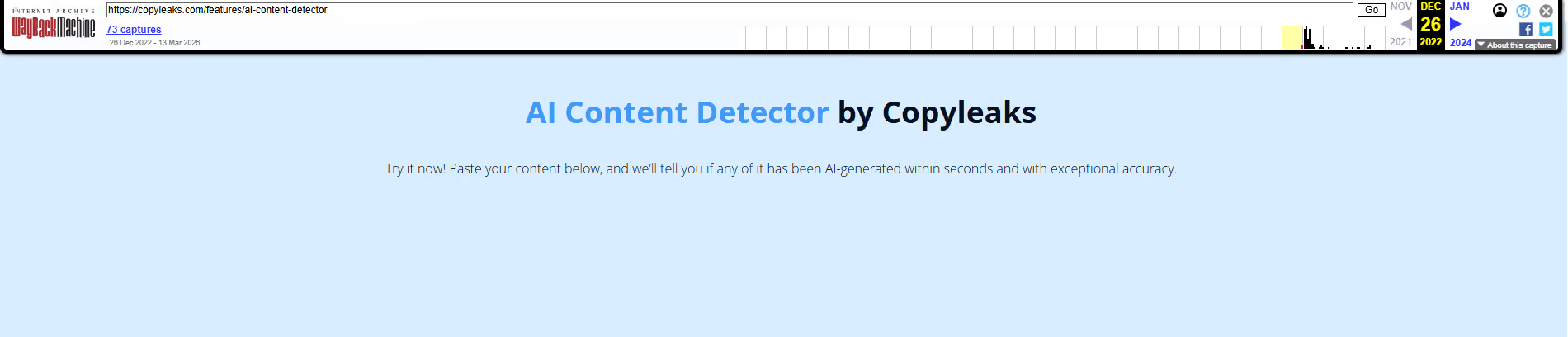
It should be noted that several weeks earlier, WayBack Machine does show screenshots of an AI detection page on the Copyleaks website (December 26, 2022).
Copyleaks incorrectly claims it was first to market on its About Us page.

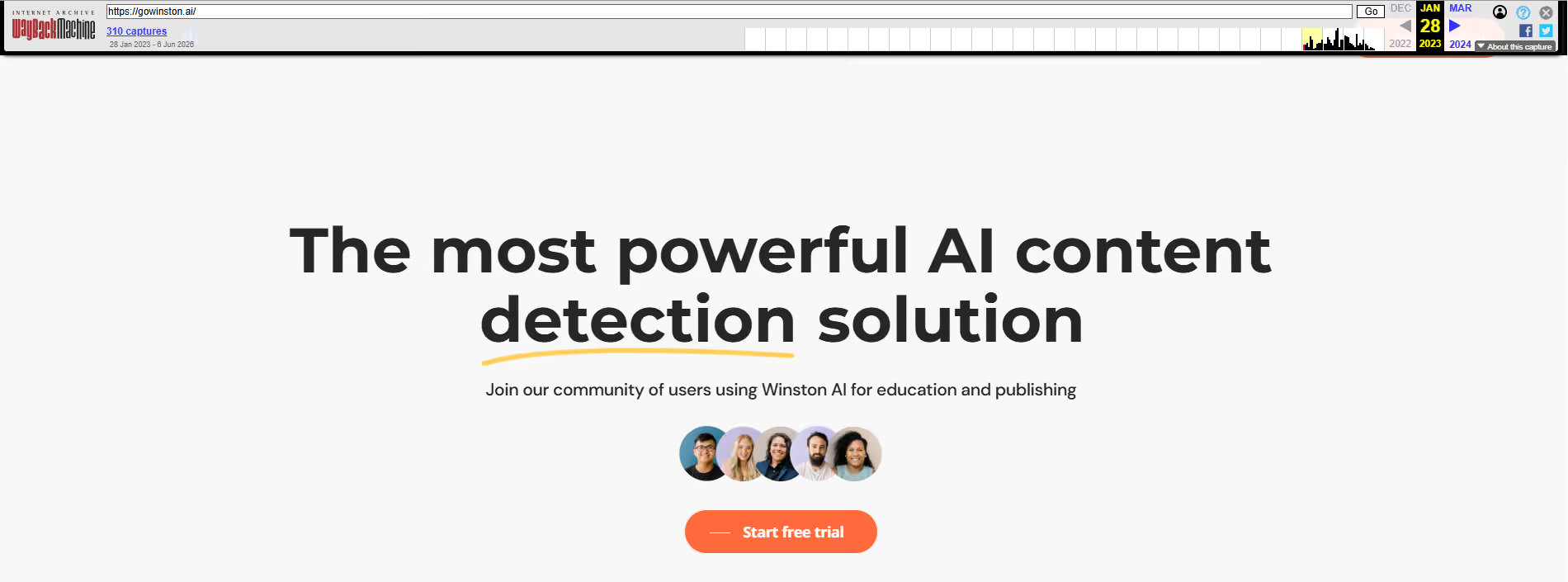
Winston AI launched in January 2023, built primarily for the education market, with sentence-level detection, plagiarism checking, and OCR for scanned text.
Winston was founded in December 2022, and its AI detection solution first appeared on the WayBack Machine in January 2023.
Yet, according to Product Hunt, it was launched to the public in February 2023 (screenshot below):
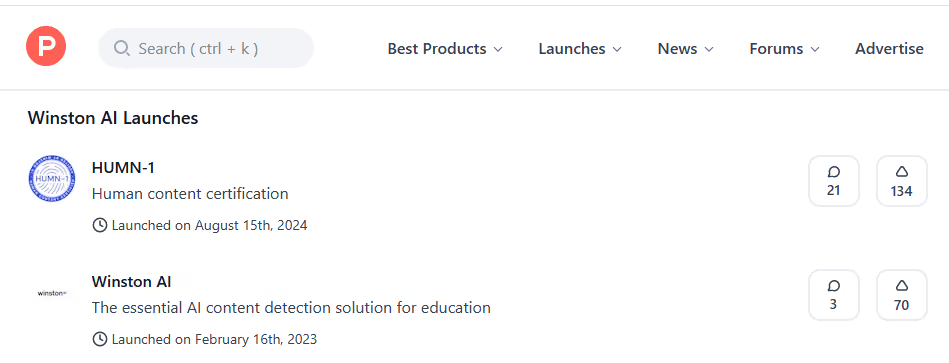
Winston AI launches its AI content detection solution, as noted on Product Hunt
Read our Winston AI review.
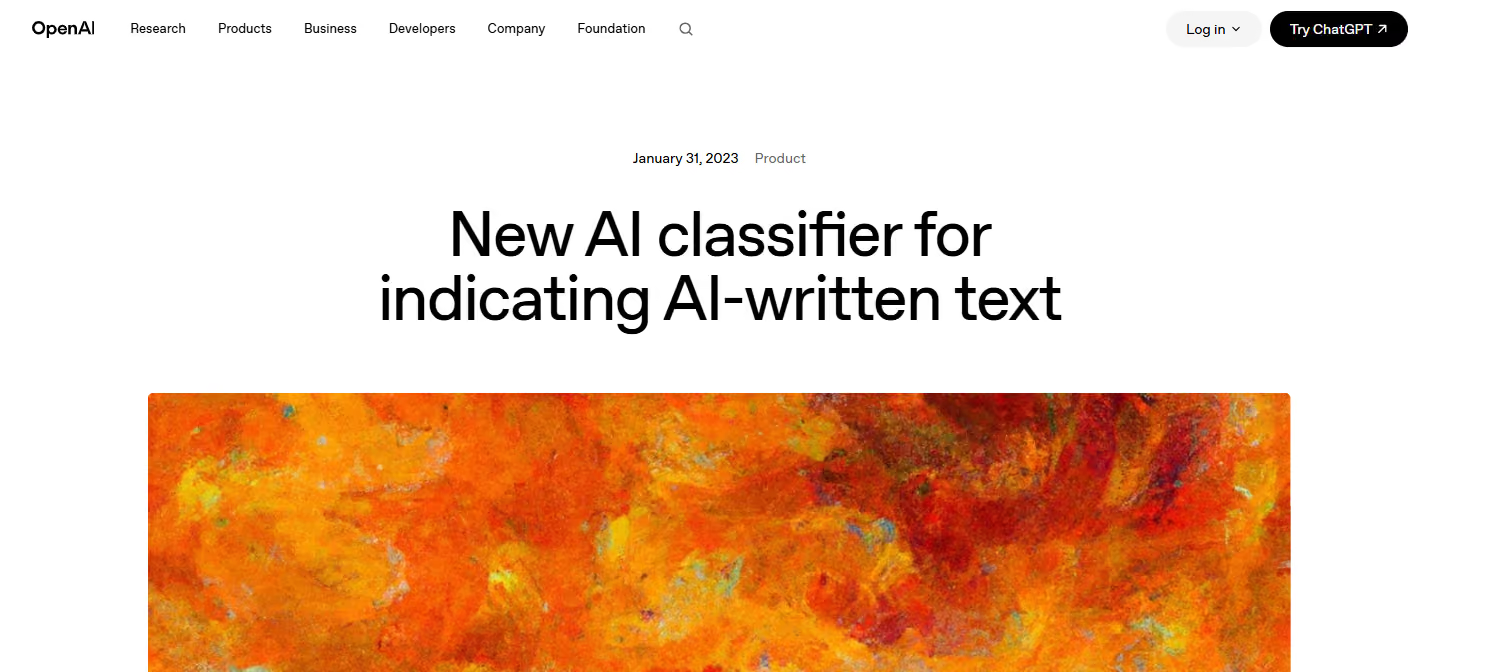
OpenAI returned to the market on January 31, 2023, with its AI Text Classifier. However, the post was updated with a notice that it had been retired. OpenAI quietly withdrew it on July 20, 2023, citing low accuracy.
Read our AI Text Classifier review.
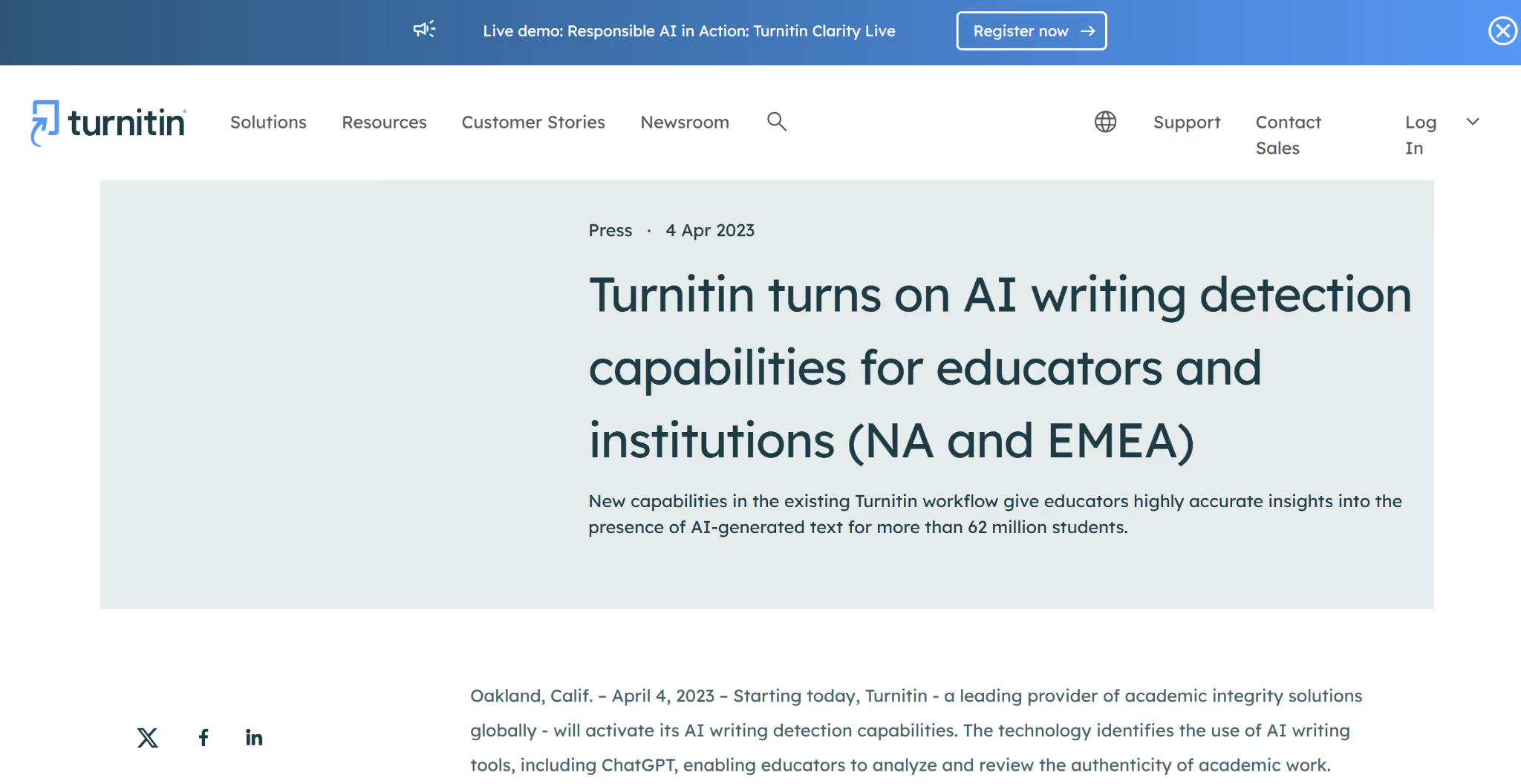
Turnitin switched on its first AI writing detector on April 4, 2023. Unlike the standalone tools, Turnitin embedded detection directly into its academic-integrity products that schools were already using.
Commercial AI detectors aren’t the only type of AI detection tool.
As discussed, there is also a wide range of open-source models that have appeared over the years. These weren’t built to be sold.
Instead, they were built to prove a method and released for anyone to test.
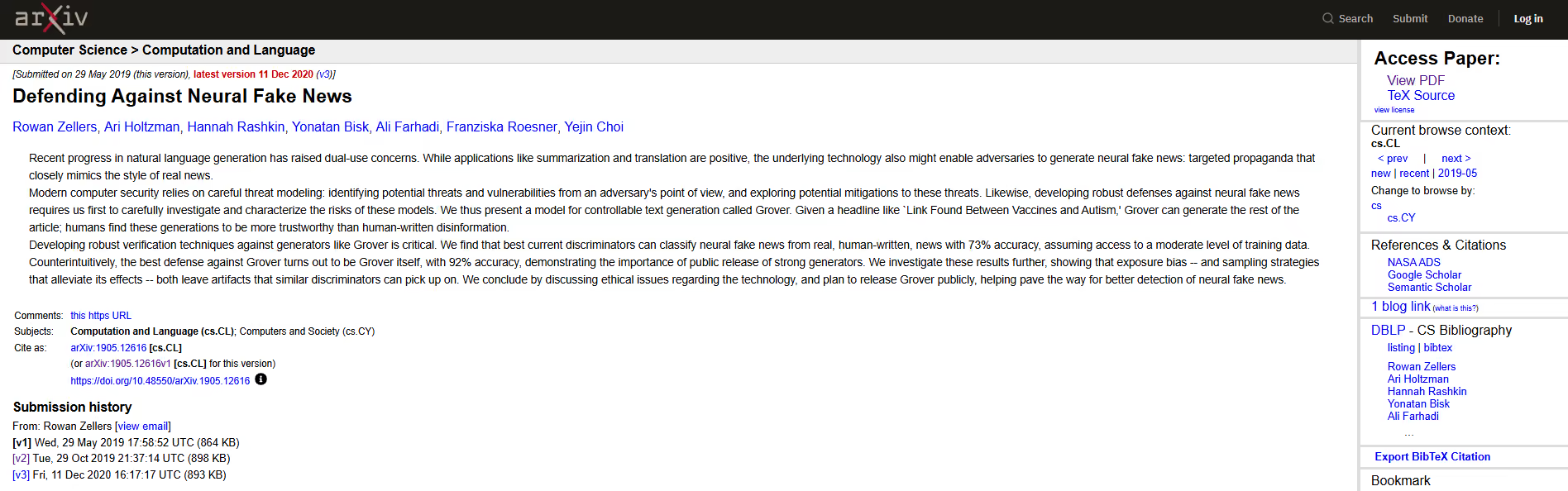
Developed by the University of Washington and the Allen Institute for AI, GROVER took an unusual approach, focusing on building a neural fake-news generator first and then detection.
The theory here was that the best way to catch machine-written text is to have a model that produces it. GROVER recognizes its own kind of output and was released in June 2019 using the same architecture as GPT-2.
This open-source solution went to preprint in May 2019.
Read our GROVER review.
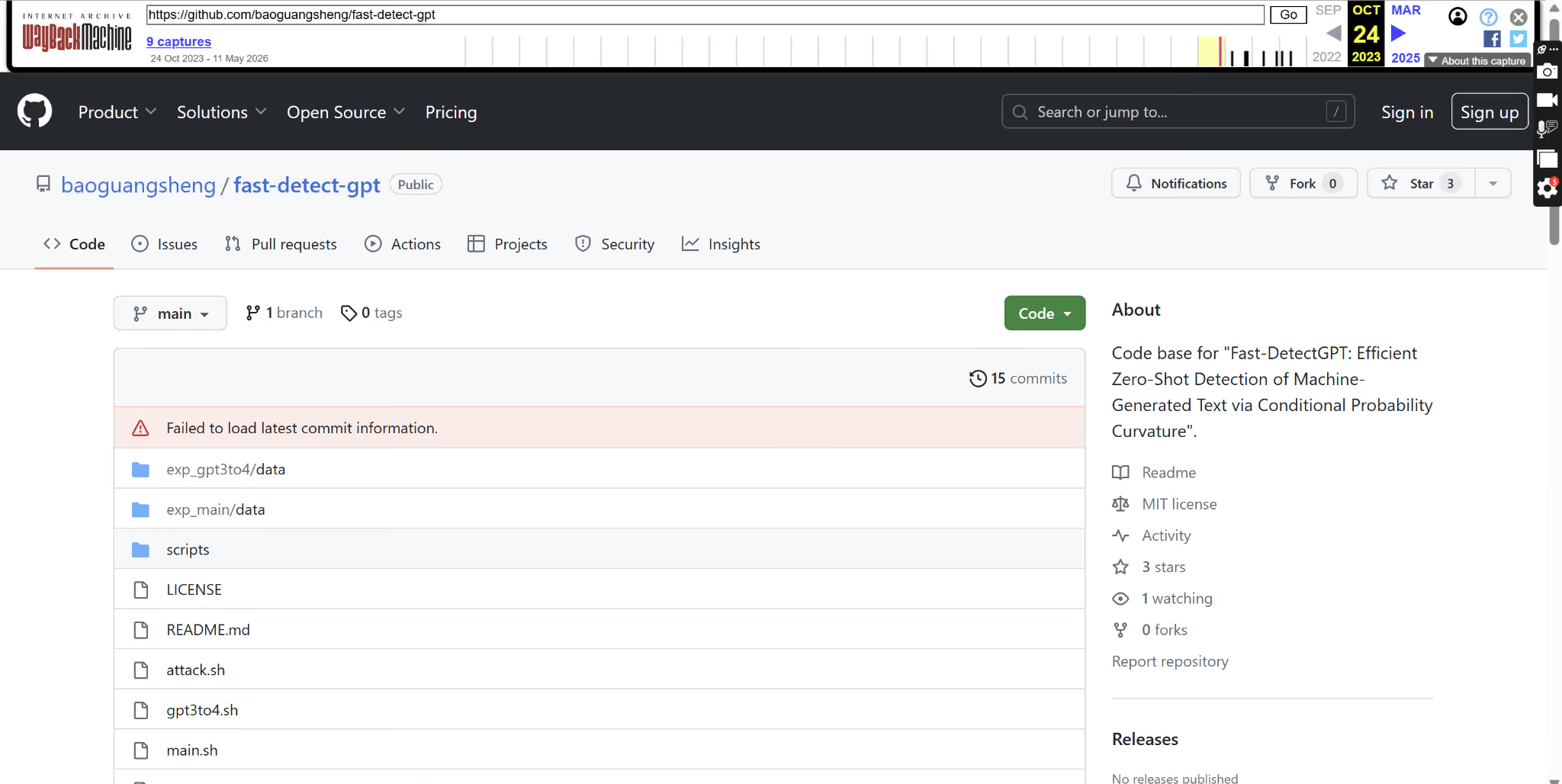
Fast-DetectGPT was submitted in pre-print to ArXiv in October 2023.
Fast-DetectGPT was built as a successor to DetectGPT and is a zero-shot detector.
According to IBM’s guide on zero-shot learning, zero-shot learning describes a type of machine learning in which examples aren’t provided to the AI before it’s asked to classify them.
The findings from the paper found it to be more accurate than DetectGPT and also much faster.
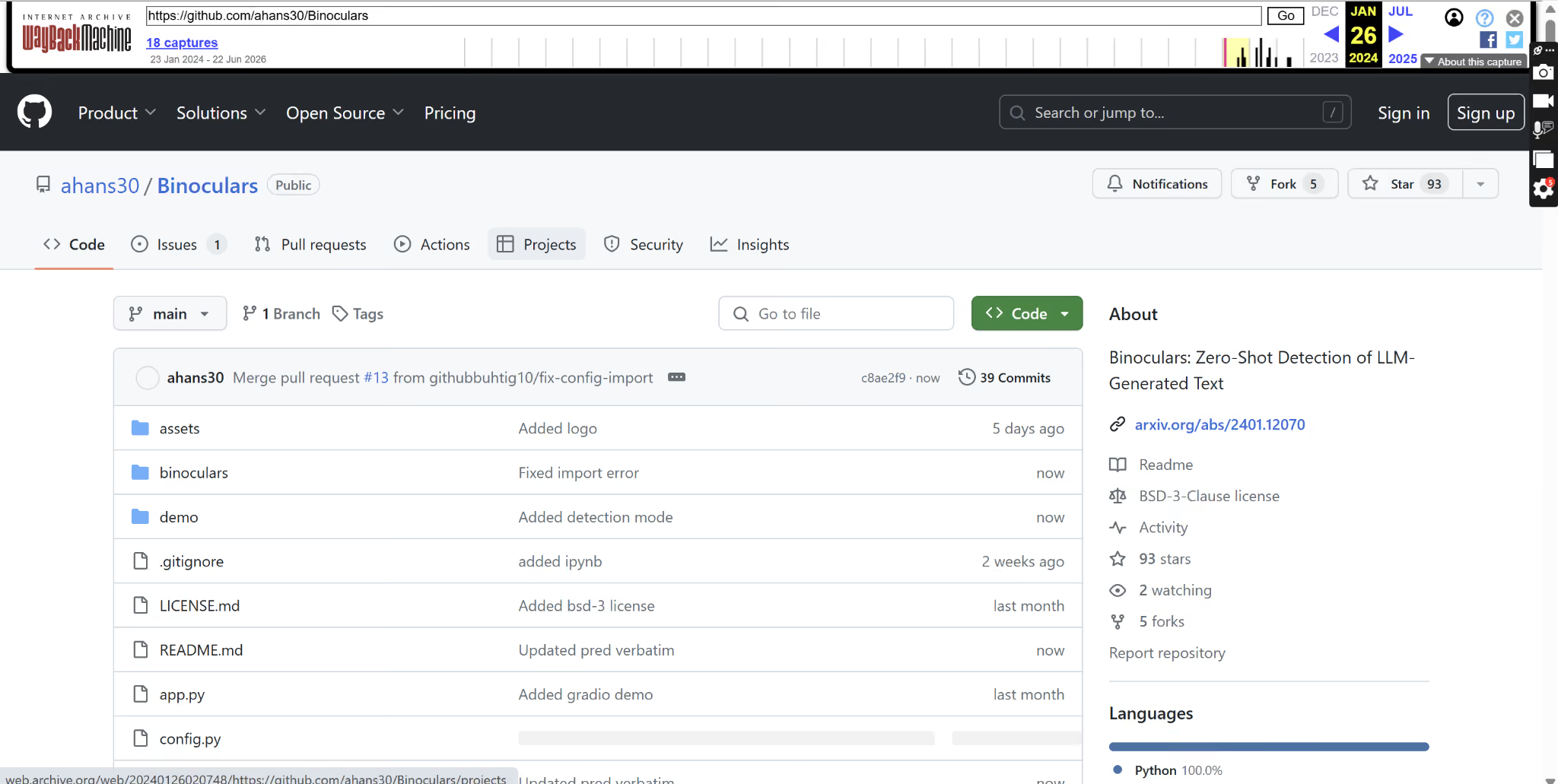
Another zero-shot model, Binoculars, reads a text via two language models, referred to as the “observer” and the “performer.” Together, they are used to evaluate perplexity/cross-perplexity as a way to identify potential machine authorship.
This open-source solution went to preprint in Jan 2024, and then was published later that year.
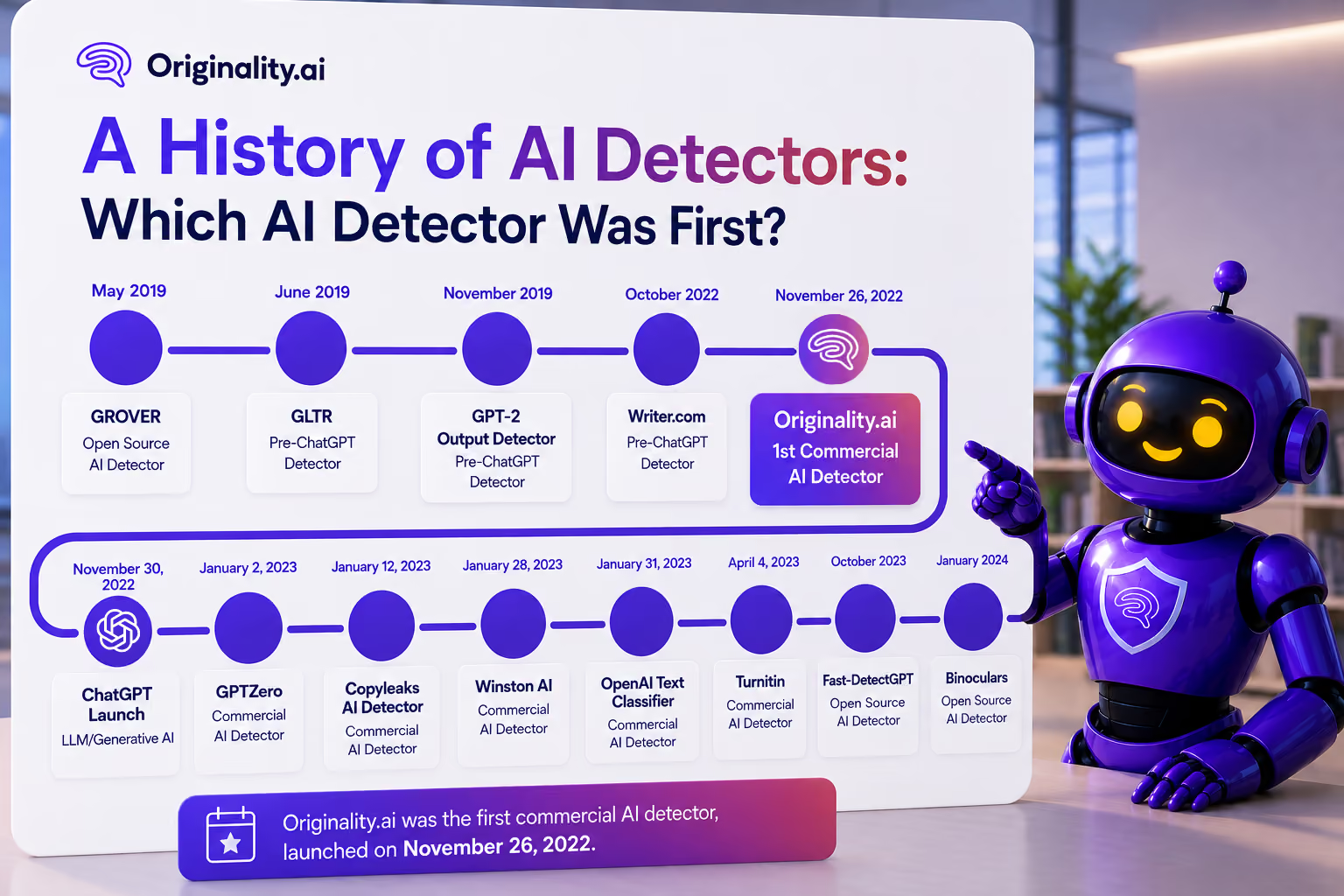
Claims about who was first are only as good as their evidence, so here is the method we used, for anyone who wants to reproduce it:
AI detection has a longer history than the marketing suggests, and an honest account of it is much more credible than a company simply claiming their AI detector came first.
The research dates back to GLTR and OpenAI’s own detector in 2019, but the commercial market started with Originality.ai in November 2022, even before the launch of ChatGPT.
Want to see where it started? Visit Originality.ai, and check your content with the industry-leading (and first) commercial AI detector.
Further Reading:
The first AI text detectors were research or open-source tools released in 2019, such as GLTR, built by Harvard NLP and the MIT-IBM Watson AI Lab, and OpenAI's own GPT-2 Output Detector. The first dedicated commercial AI detector was Originality.ai, which launched in November 2022, before ChatGPT.
Originality.ai was the first commercial AI detector, launching on Nov 26, 2022, days before ChatGPT launched.
Even our own AI detector is not perfect, and can produce false positives. These false positives can be very painful for anyone who creates original content — whether you’re a student wrongly accused of using ChatGPT by TurnItIn or GPTZero or a writer who received a false positive from Originality.ai.

AI & Plagiarism Detector for Serious Content Publishers
Originality.ai
64 Hurontario St
Collingwood, Ontario
L9Y 2L6