AI Checker
Plagiarism Checker
Grammar Checker
Content Quality
Guideline Checker
Readability Checker
Fact Checker

Extensions

With AI tools getting easier to use and produce content with, it’s becoming tougher for people to identify the line between improved productivity and over-reliance. Especially considering Google penalties for low-quality or spammy AI content.
As a result, tools like the TextGuard AI detector have risen in popularity with their aim to help users identify when AI-generated content has been used.
But is it any good?
In this review, we will test TextGuard’s AI Detector comparatively with the Originality.ai AI Detector.
Check your articles with Originality.ai today to get fast, reliable, and accurate insights into content’s originality and probable AI involvement.
TextGuard.ai describes itself as “an innovative educational web tool designed to help users verify text originality…” Additionally, it also offers paraphrasing capabilities, plagiarism checking, email generation, and more.
For the purposes of this review, we focused on TextGuard’s AI Detection tool.
There’s plenty of interest in tools that can detect AI-generated content, especially as LLMs continue to improve and evolve.
Industry-leading AI detection tools like Originality.ai have become a must-have for marketing departments, small businesses, and even academic institutions.
Yet, accuracy can vary between AI detection tools and brands.
So, we wanted to test whether TextGuard AI could effectively identify AI-generated content.
These are our findings.
Step 1: Firstly, we built three different prompts for common types of content and pasted them into GPT-5. The chatbot then created our baseline copy that would be used as part of step 2.
Step 2: Next, we took the content that ChatGPT generated (word for word) and pasted it into the TextGuard AI detection tool to see if the content was detected as AI-generated or not. We also did the same with Originality.ai to compare the two tools side-by-side.
To make sure the tests were wide-ranging and relevant, we created three separate tests with popular types of content created with ChatGPT:
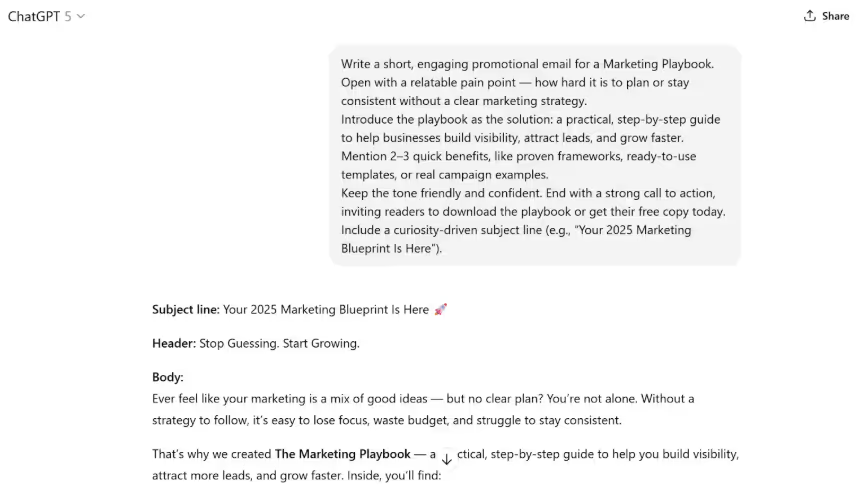
Prompt: Write a short, engaging promotional email for a Marketing Playbook. Open with a relatable pain point — how hard it is to plan or stay consistent without a clear marketing strategy.
Introduce the playbook as the solution: a practical, step-by-step guide to help businesses build visibility, attract leads, and grow faster. Mention 2–3 quick benefits, like proven frameworks, ready-to-use templates, or real campaign examples.
Keep the tone friendly and confident. End with a strong call to action, inviting readers to download the playbook or get their free copy today. Include a curiosity-driven subject line (e.g., “Your 2025 Marketing Blueprint Is Here”).
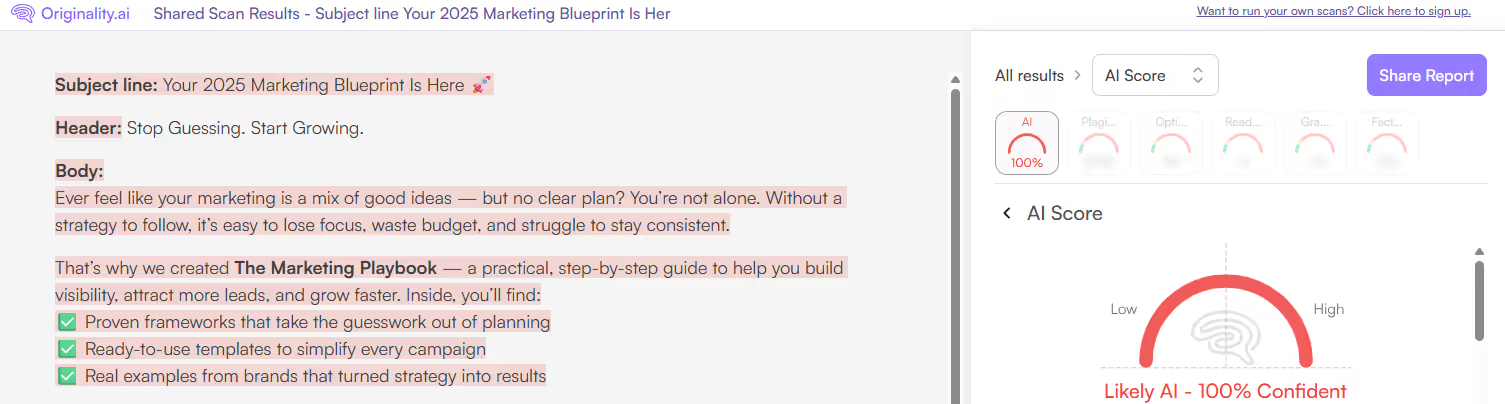
Originality.ai AI Detector: 100% Confidence that it’s Likely AI
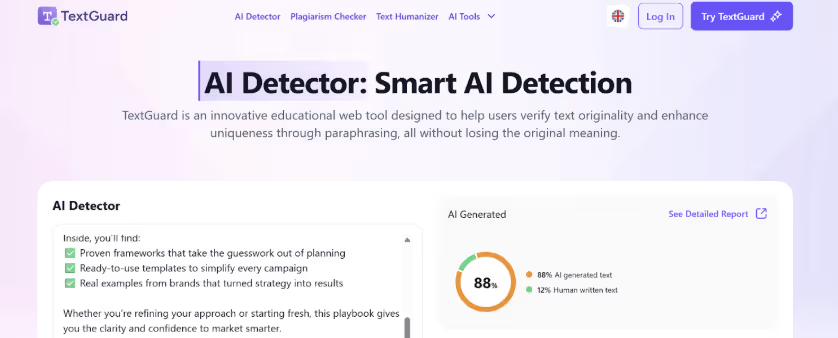
TextGuard AI Detector Score: 88% Confidence that it’s Likely AI
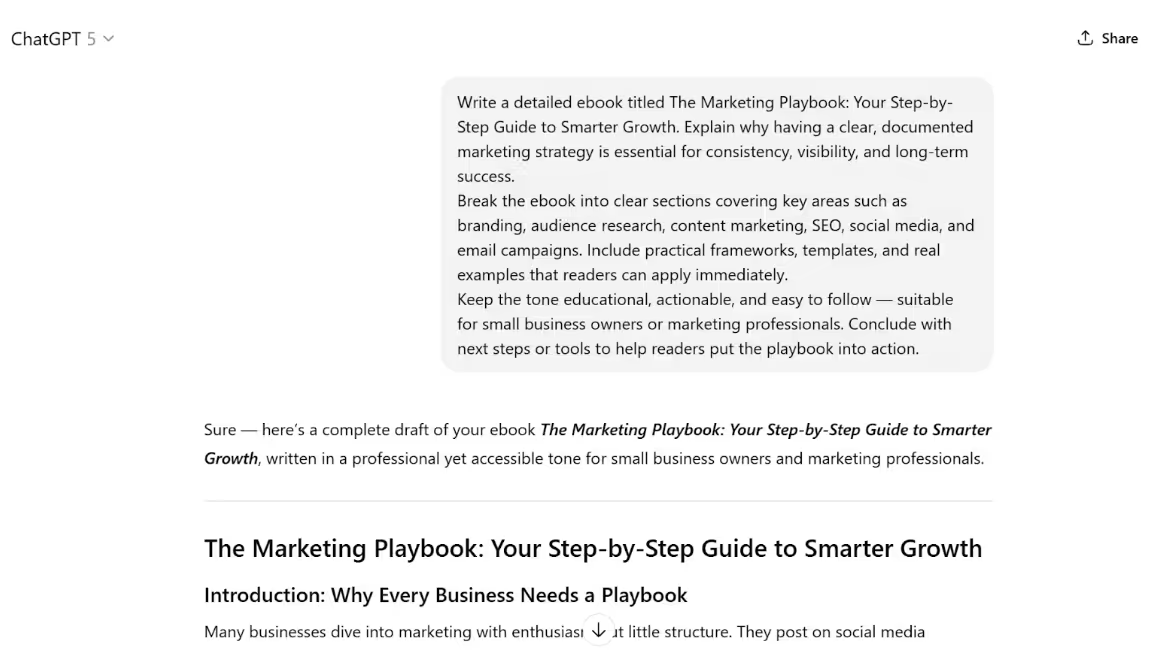
Prompt: Write a detailed ebook titled The Marketing Playbook: Your Step-by-Step Guide to Smarter Growth. Explain why having a clear, documented marketing strategy is essential for consistency, visibility, and long-term success.
Break the ebook into clear sections covering key areas such as branding, audience research, content marketing, SEO, social media, and email campaigns. Include practical frameworks, templates, and real examples that readers can apply immediately.
Keep the tone educational, actionable, and easy to follow — suitable for small business owners or marketing professionals. Conclude with next steps or tools to help readers put the playbook into action.
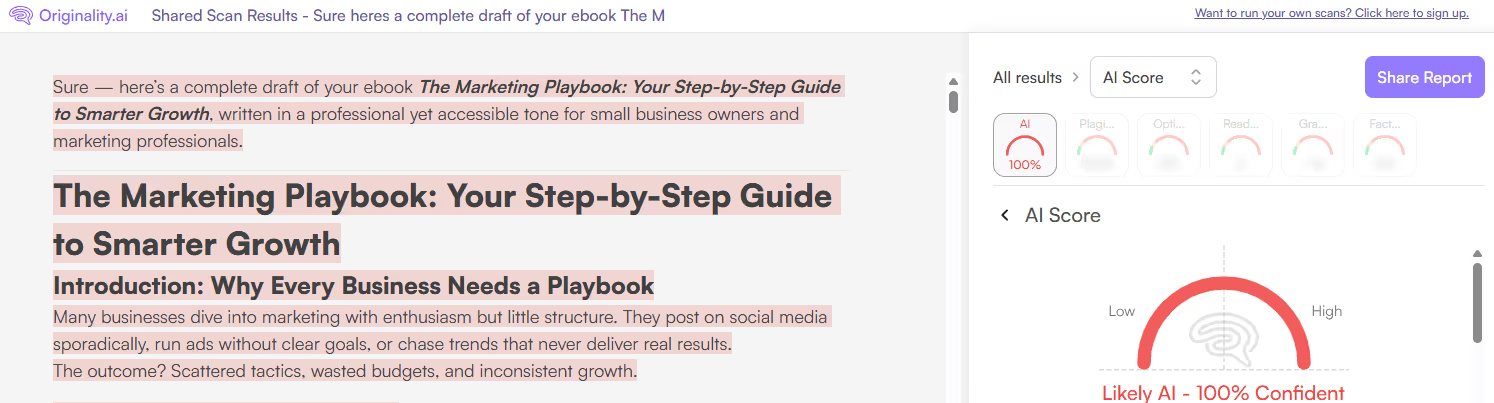
Originality.ai AI Detector: 100% Confidence that it’s Likely AI
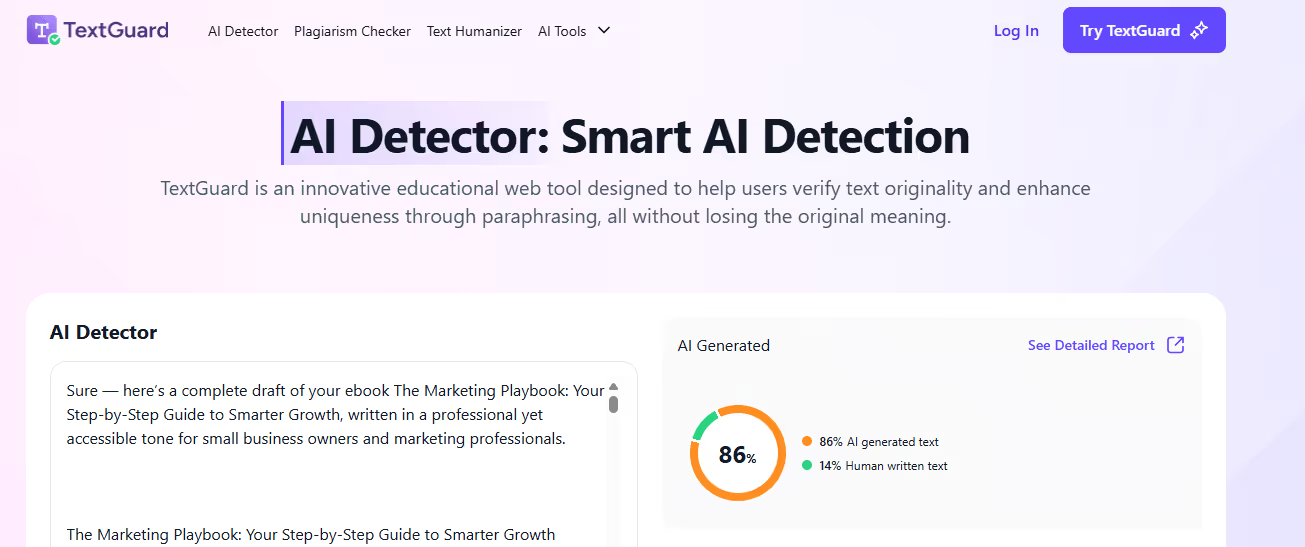
TextGuard AI Detector Score: 86% Confidence that it’s Likely AI
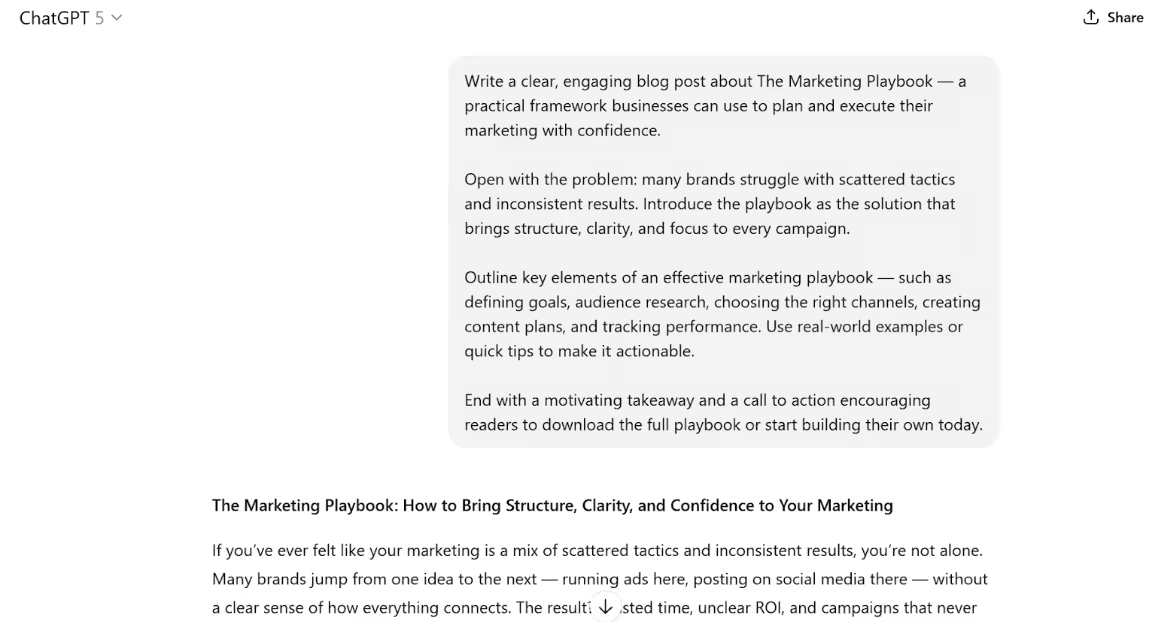
Prompt: Write a clear, engaging blog post about The Marketing Playbook — a practical framework businesses can use to plan and execute their marketing with confidence.
Open with the problem: many brands struggle with scattered tactics and inconsistent results. Introduce the playbook as the solution that brings structure, clarity, and focus to every campaign.
Outline key elements of an effective marketing playbook — such as defining goals, audience research, choosing the right channels, creating content plans, and tracking performance. Use real-world examples or quick tips to make it actionable.
End with a motivating takeaway and a call to action, encouraging readers to download the full playbook or start building their own today.
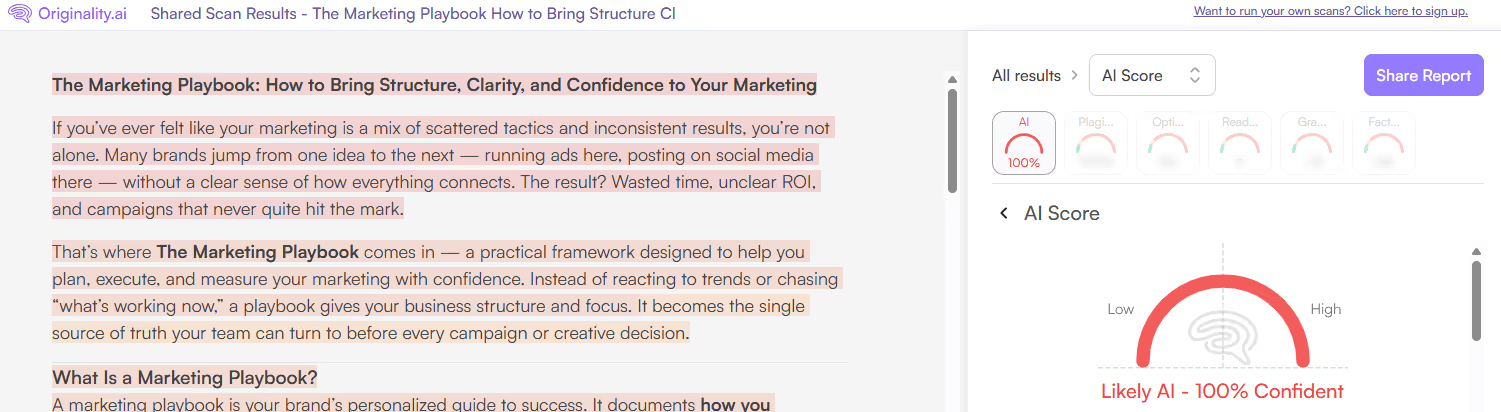
Originality.ai AI Detector: 100% Confidence that it’s Likely AI
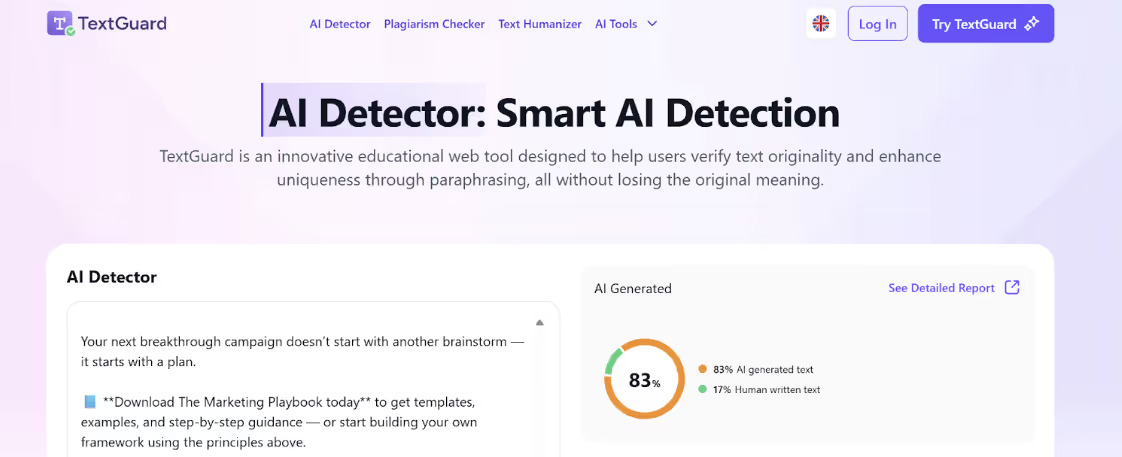
TextGuard AI Detector Score: 83% Confidence that it’s Likely AI
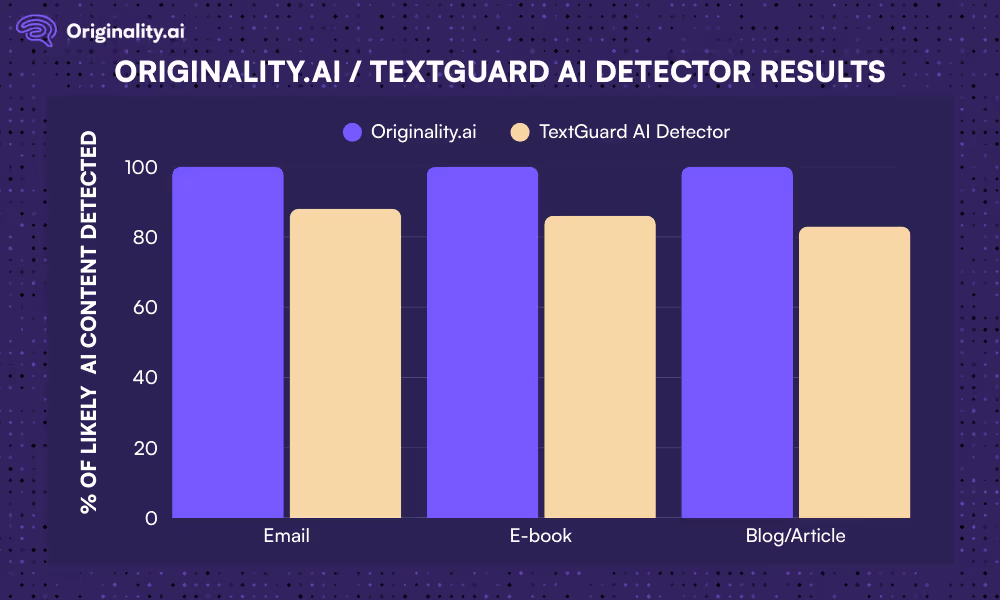
As the results show, although TextGuard’s AI detector results were consistent (ranging from 83% to 88% confidence in our tests), they weren’t as high as the most accurate Originality.ai AI Detector.
Originality.ai demonstrated its exceptional accuracy, classifying each of the GPT-5-generated samples as 100% Likely AI, providing the reliability users need when trying to spot AI content.
For anyone looking for the quality and consistency of an industry-leading AI detection tool, make sure you check out Originality.ai.
Read more about AI and AI reviews:
TextGuard AI is a platform that offers several AI tools, including an AI detector, paraphrasing features, plagiarism checking, and more.
Textguard is popular among editors, marketers, web publishers, and small businesses who need to verify content authenticity.

AI & Plagiarism Detector for Serious Content Publishers
Originality.ai
64 Hurontario St
Collingwood, Ontario
L9Y 2L6