A verified global tracker of 123 binding instruments before the EU AI Act’s and California AI Transparency Act August 2 milestone
August 2, 2026 represents a significant milestone for the AI regulatory landscape due to new transparency obligations taking effect under the EU AI Act and the California AI Transparency Act.
Specifically, certain organizations will be required to clearly label deepfakes, disclose when humans are interacting with chatbots, and identify AI-generated content.
However, the larger story is that AI transparency law is already a global regulatory category.
Note: Research cutoff date: July 21, 2026 | Originality.ai | Legal information, not legal advice
Findings at a Glance
The information below encapsulates the key findings contained in our verified global tracker:
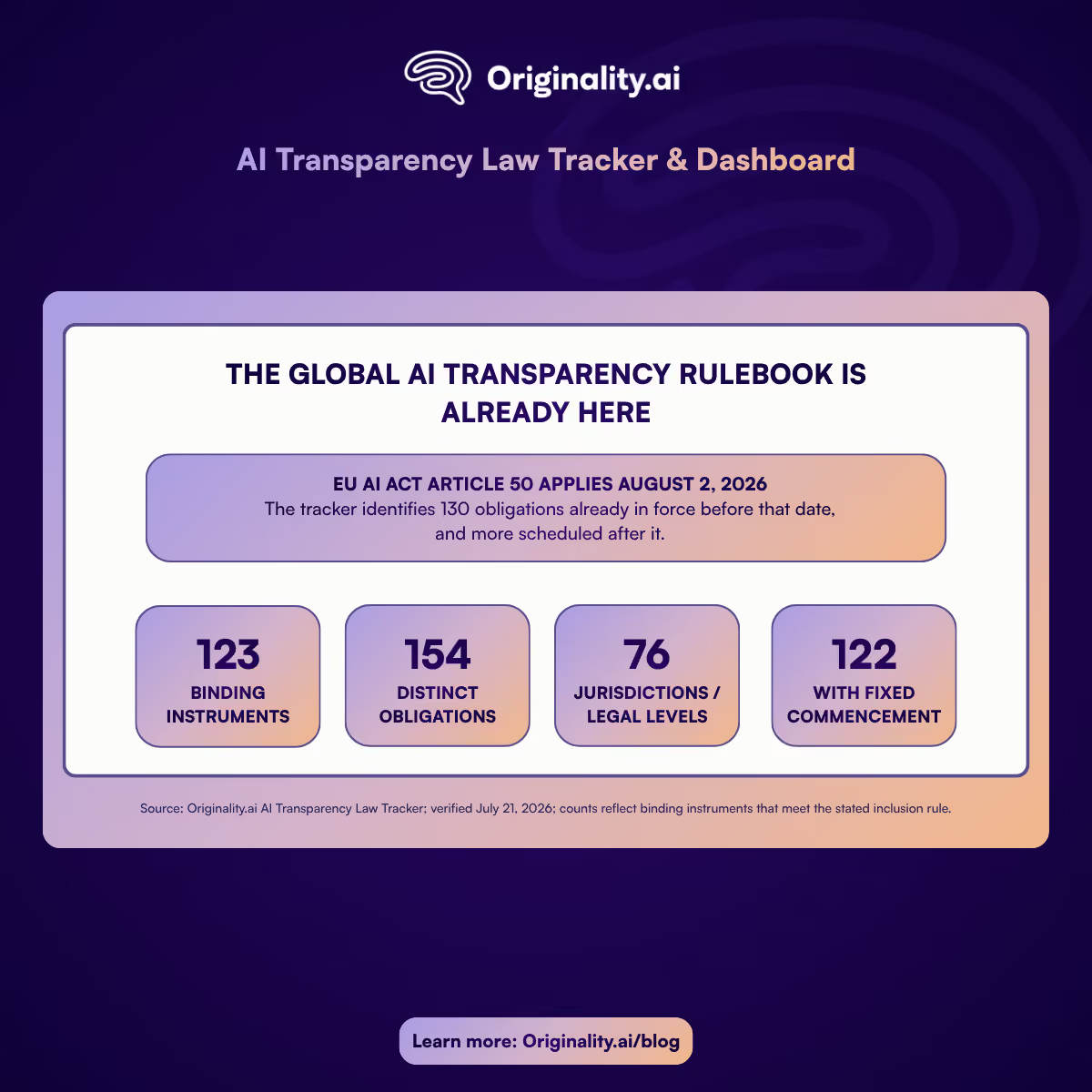
123 binding instruments meet the tracker’s transparency rule, containing 154 distinct obligations across 76 jurisdictions or legal levels.
130 obligations were already in force at the July 21, 2026 cutoff date while 24 were enacted but not yet effective.
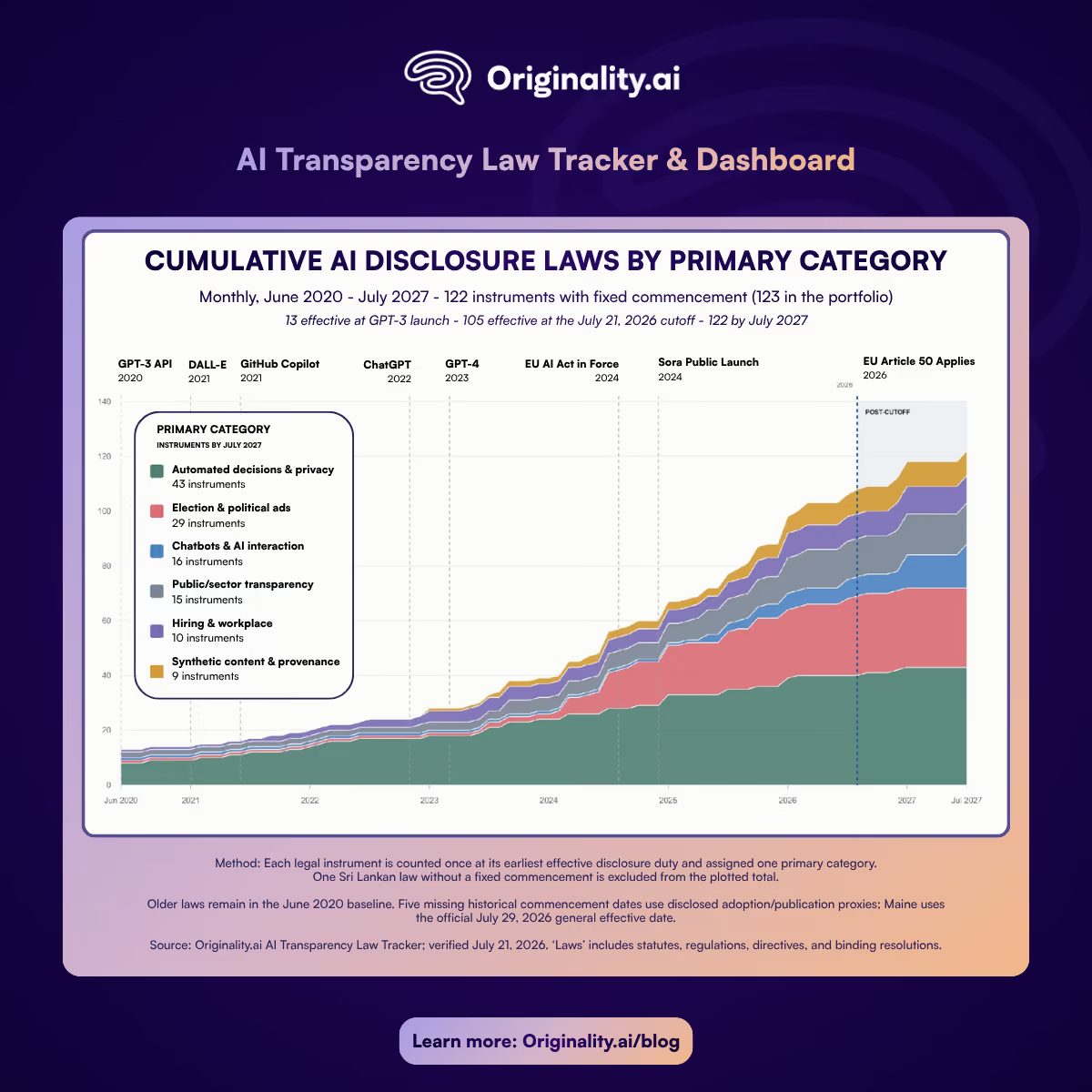
The instrument count increased from 13 at the launch of GPT-3 to 105 by the July 2026 cutoff, and will reach 122 by July 2027 among laws with fixed commencement dates.
Automated decisions and privacy constituted the largest category (44 instruments), followed by election and political advertising rules (29).
A transparency law does not always require a public label. Many duties operate inside hiring, credit, healthcare, public services, or other person-specific decisions.
Figure 1. Cumulative AI disclosure laws by primary category. Source: Originality.ai Global AI Transparency Law Tracker.
August 2 is a milestone, not the starting line
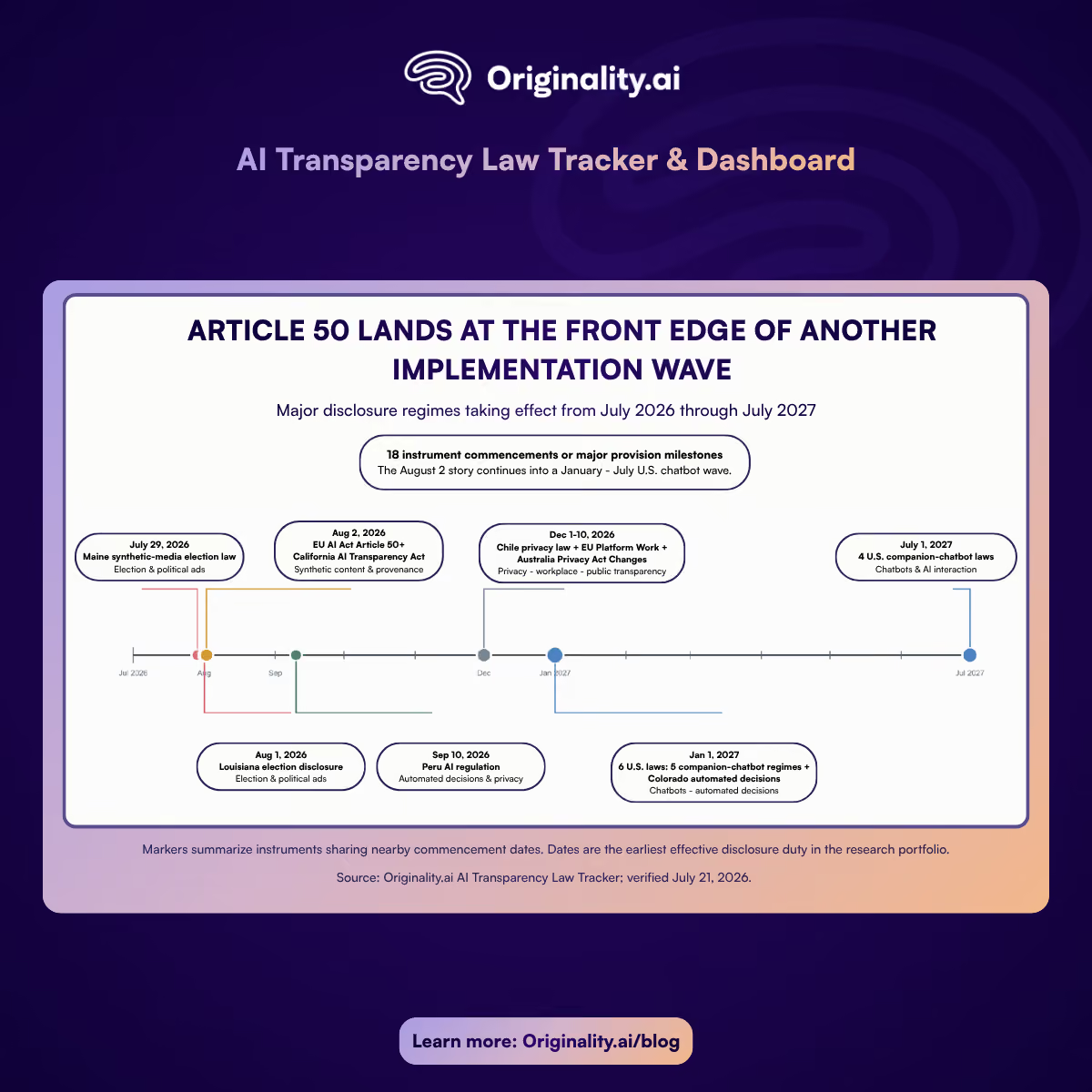
August 2, 2026 represents a new phase in AI regulation under the EU AI Act and California AI Transparency Act, but it is important to know that the EU AI Act has been around for a few years.
Specifically, the EU AI Act entered into force on August 1, 2024, while Article 50 applies on August 2, 2026. Those dates are frequently conflated when they should not be.
To clarify, August 1, 2024 is when the EU AI Act went into force. August 2, 2026 is when new transparency duties at the center of the current news cycle begin to take effect.
Though, it is important to note that under the May 2026 EU Digital Omnibus / transitional provisions, providers of generative AI systems already on the market prior to August 2, 2026, will be afforded a grace period until December 2, 2026, specifically for the provider-side machine-readable marking requirement (Article 50(2)).
All other obligations (chatbots, deepfakes, public-interest text disclosures) will take effect fully on August 2, 2026.
California’s AI Transparency Act reaches the same August 2, 2026 milestone but uses a different compliance model. Rather than primarily requiring public-interest publishers to label AI-generated text, SB 942 focuses on large, publicly accessible generative-AI providers. Covered providers must offer a free AI-detection tool and support both visible or “manifest” disclosures and latent provenance disclosures for generated or altered image, video and audio content. The latent disclosure is intended to remain permanent or extremely difficult to remove and, where technically feasible, identify the provider, system version, creation or alteration date and a unique identifier. Violations may result in civil penalties of $5,000 per violation, with each day treated as a separate violation.
Article 50 is important from a regulatory perspective because it effectively combines human-visible communication with a technical provenance obligation. Many national and state laws do only one of those things. In contrast, Article 50 applies regulatory pressure to both user-facing labeling and downstream machine-readability, even though codes of practice and technical standards will shape implementation details.
Other notable requirements under Article 50 include the following:
Interactive AI. Providers must design covered systems so people are informed that they are interacting with AI, unless that is obvious in context.
Synthetic outputs. Providers of systems that generate synthetic audio, images, video or text must make outputs machine-readable and detectable as artificially generated or manipulated, as far as technically feasible. A May 2026 provisional EU Digital Omnibus agreement would push this marking duty to December 2, 2026 for systems already on the market before August 2, 2026; the other three Article 50 duties are not impacted.
Biometric and emotion systems. Deployers must inform natural persons exposed to covered emotion-recognition or biometric-categorization systems, subject to the Act’s scope and exceptions.
Deepfakes and public-interest text. Professional deployers must disclose covered deepfakes and certain AI-generated or manipulated text published to inform the public on matters of public interest. Artistic, satirical and editorial contexts receive tailored treatment.
Figure 2. Major transparency commencements and provision milestones around Article 50. Source: Originality.ai Global AI Transparency Law Tracker.
The global rulebook extends beyond synthetic content
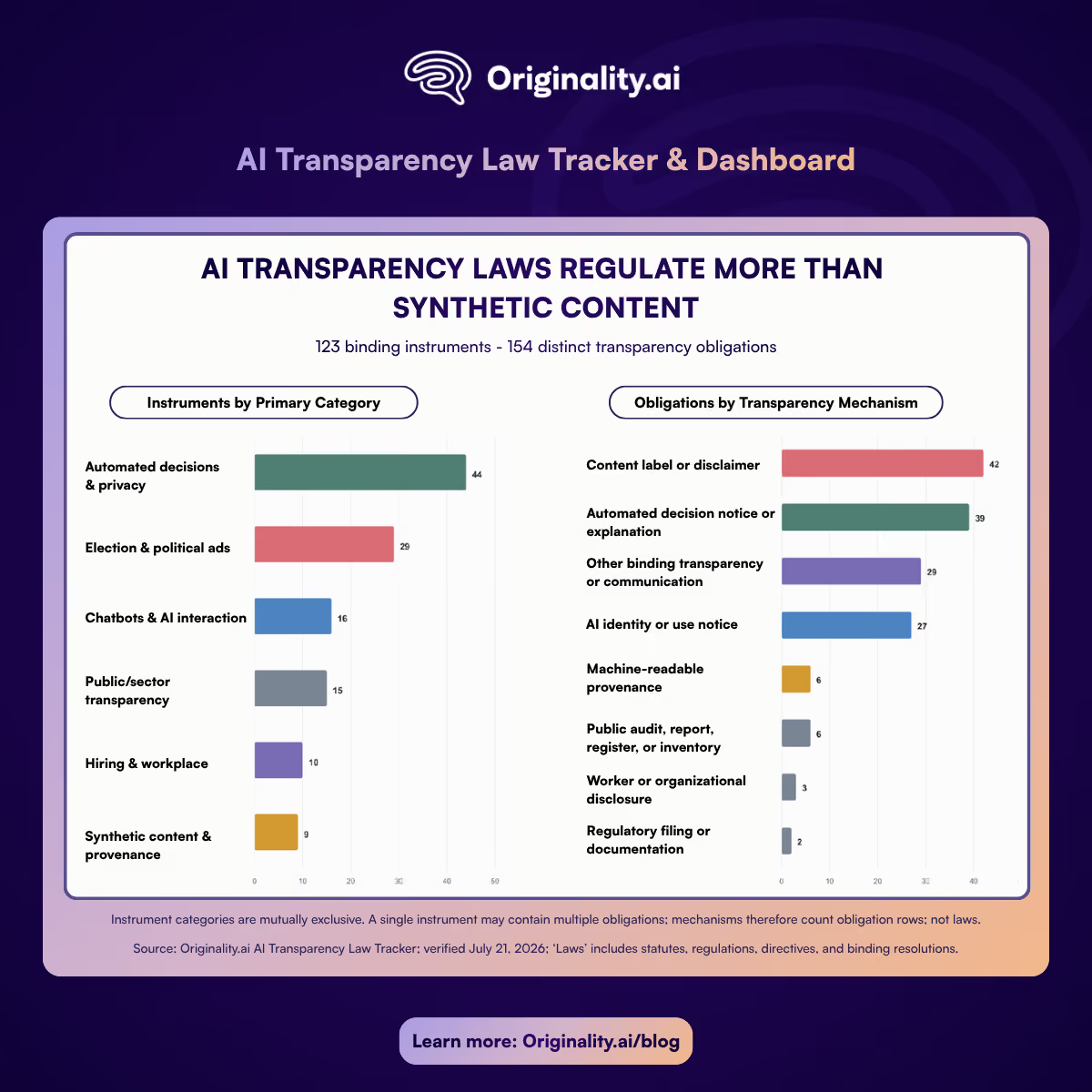
To prevent double-counting, the tracker assigns every instrument one primary category. That classification should not be confused with the law’s full scope: one instrument may contain multiple obligation types. The EU AI Act, for example, spans chatbot notice, high-risk system transparency, workplace communication and synthetic-content provenance simultaneously.
Figure 3. Instrument categories and obligation-level transparency mechanisms. Source: Originality.ai Global AI Transparency Law Tracker.
How to read and use the tracker
Below is guidance on how to effectively read, digest, and use the tracker:
Start with Instruments for one row per binding law, its jurisdiction, status, earliest effective transparency date and primary category.
Move to Obligations for provision-level duties, regulated actors, audience, timing, format, thresholds, enforcement, source quotation, confidence and open questions.
Use Sources and Verification to reach the official legal text or official translation supporting each row.
Use Excluded and Edge Cases before expanding the count. It records prohibitions, takedown systems, objection rights and other adjacent rules that do not independently require transparency communication.
Use Proposals Monitor for nonoperative measures. Bills, stayed provisions and voluntary guidance are not mixed into the binding-law total.
Use Chart Data to reproduce every published count and the cumulative timeline.
Figure 4. Headline tracker counts at the research cutoff. Source: Originality.ai Global AI Transparency Law Tracker.
Primary Regulatory Categories
The tracker focuses on specific categories where regulators have been most active in establishing guardrails around the deployment of AI. Those categories include:
Automated decisions and privacy (44). Notice, access, explanation, review or challenge rights tied to significant automated decisions and profiling.
Election and political ads (29). Labels or transparency notices for covered paid political advertising, election communications or deceptive synthetic media.
Chatbots and AI interaction (16). Notice that a person is interacting with AI, often with heightened duties for companion or mental-health contexts.
Public or sector transparency (15). Public inventories, reports, healthcare notices, professional-service communication and government transparency duties.
Hiring and workplace (10). Job-posting disclosure, candidate notice, bias-audit publication and worker/representative communication.
Synthetic content and provenance (9). Visible or audible content labels, metadata and technical provenance requirements that cut across media and platforms.
Consequential AI regulatory regimes
“Consequential” here means broad reach, precedent-setting design, large regulated populations or unusual implementation impact, not the largest maximum penalty. This means the regimes below are selected for their broad jurisdiction, novel legal mechanics, or significant compliance footprint.
Jurisdiction
Regime
Key date
Transparency effect
European Union
EU AI Act, Article 50
Aug. 2, 2026
AI-interaction notice; machine-readable marking; notices for emotion recognition/biometric categorization; visible disclosure for deepfakes and certain public-interest text.
California
California AI Transparency Act, SB 942
Aug 2, 2026
Covered providers of publicly accessible GenAI systems with more than 1 million monthly users must provide a free AI-detection tool and support visible and latent provenance disclosures for AI-generated or altered image, video and audio content.
California
Government Code § 11549.66, Generative AI Tools
Jan 1, 2025
State agencies and departments using GenAI to communicate directly with people about government services or benefits must disclose that the communication was generated by GenAI and provide a way to contact a human employee.
China
AI-generated content labeling measures
Sept. 1, 2025
Visible or audible labels, metadata, platform notices, app-store checks, user declarations and limits on removing labels.
India
Intermediary rules amendment
Feb. 20, 2026
Prominent visual/audio disclosure, provenance where technically feasible, and uploader declaration/verification for major social platforms.
South Korea
AI Framework Act
Jan. 22, 2026
Advance notice for high-impact or generative AI and labeling of generated outputs, with special treatment for realistic virtual media.
Viet Nam
Law on Artificial Intelligence
Mar. 1, 2026
Direct-interaction notice, machine-readable marking and public labels for potentially confusing or person/event-simulating content.
European Union
GDPR
May 25, 2018
Notice and access rights for covered automated decision-making, including meaningful information about logic, significance and envisaged consequences.
New York City
Local Law 144
Jul. 5, 2023 (for enforcement)
Annual independent bias audit, public summary and advance candidate/employee notice before use of covered automated employment decision tools.
Ontario
Employment Standards Act job-posting rule
Jan. 1, 2026
Covered public job postings must say whether AI is used to screen, assess or select applicants; the rule generally excludes employers below 25 employees.
European Union
Political advertising regulation
Oct. 10, 2025
Political-ad labels and retrievable transparency notices, including meaningful information on targeting and AI-system use.
Colorado
Automated Decision-Making Technology Act
Jan. 1, 2027
Developer documentation plus deployer pre-use/adverse-decision notices, impact assessment, correction, appeal and human review.
Table 1. Selected high-impact transparency regimes. Dates are the relevant transparency commencement date in the tracker. Local Law 144's nominal effective date was January 1, 2023, but DCWP postponed enforcement to July 5, 2023; this table uses the enforcement date as the practical commencement of the audit and notice duties.
Important legal boundaries and distinctions
Labeling laws across multi-jurisdictional markets
China, India, South Korea and Viet Nam show that the labeling story is not EU-specific. China’s regulatory measures extend from provider labels and metadata to distribution-platform notices, app-store checks and user declarations. India combines prominent disclosure with provenance and platform uploader workflows. South Korea pairs advance notice with generated-output labels. Viet Nam combines direct-interaction notice, machine-readable marking and public labels for potentially confusing content.
In contrast to media labeling laws, the GDPR, NYC Local Law 144 and Ontario’s job-posting rule demonstrate a different model. These laws govern process and impact rather than media artifacts. Compliance manifests as a privacy notice, a bias audit summary, or a job posting disclosure, not simply an “AI-generated” watermark.
Most laws concerning the use of AI in election and political advertisements do not require a politician to label everything produced with AI. Rather, these laws apply to defined categories such as paid political advertising, electioneering communications, campaign material or deceptive synthetic media distributed in a specified election window. Whether a speech, statement, social post or campaign video is covered depends primarily on the statute’s definitions, sponsor, medium, timing, content and distribution—not simply on the speaker’s political status.
Two distinct EU rules illustrate the boundary around AI-related political advertising laws. Regulation (EU) 2024/900 governs political advertising and requires labels and retrievable transparency notices, including information about targeting and AI-system use. In contrast, Article 50 of the AI Act is not a political-ad law. Rather, Article 50’s separate public-interest-text rule can reach certain professionally deployed AI-generated or manipulated text even when it is not advertising.
Key takeaway: avoid headline generalizations such as “All politician content must disclose AI.” Most election disclosure mandates apply strictly to defined categories: paid advertising, electioneering materials, or deceptive media deployed within statutory election windows. Context, medium, sponsor, and timing dictate legal applicability—not merely the speaker’s political status.
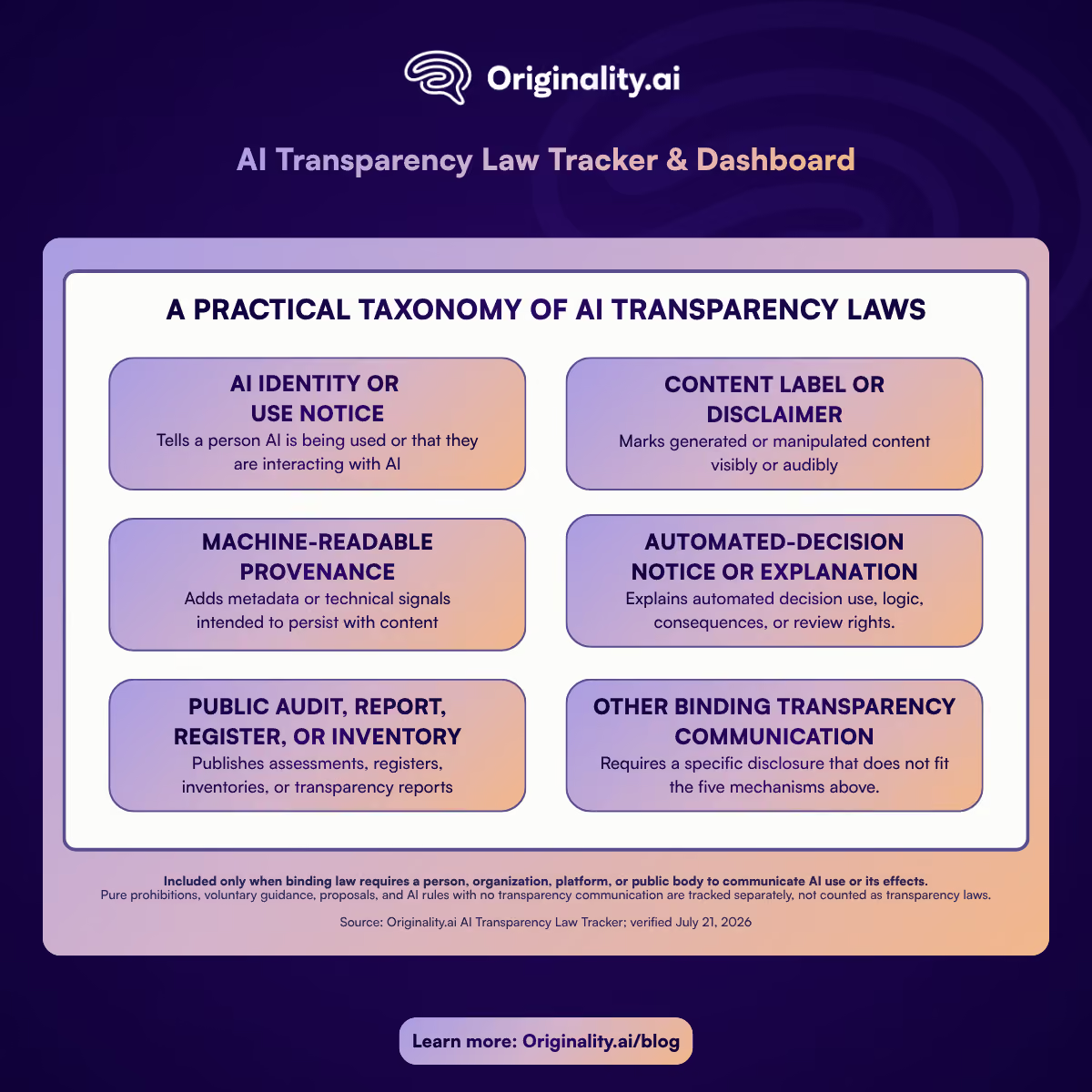
A transparency taxonomy based on the required communication
Sector labels alone often hide the most useful comparison. For compliance and reporting, a more useful first question is: what communication does the law require, who must make it, and who receives it?
Figure 5. The tracker’s obligation-level transparency taxonomy. Source: Originality.ai Global AI Transparency Law Tracker.
Publicly visible disclosure is only one part of the tracker. A candidate notice, patient explanation or data-subject response may be legally important but invisible to a journalist reviewing a public webpage. The dashboard therefore records the audience, timing, format and public observability of each obligation instead of treating all disclosures as equivalent.
Why the United States dominates the instrument count
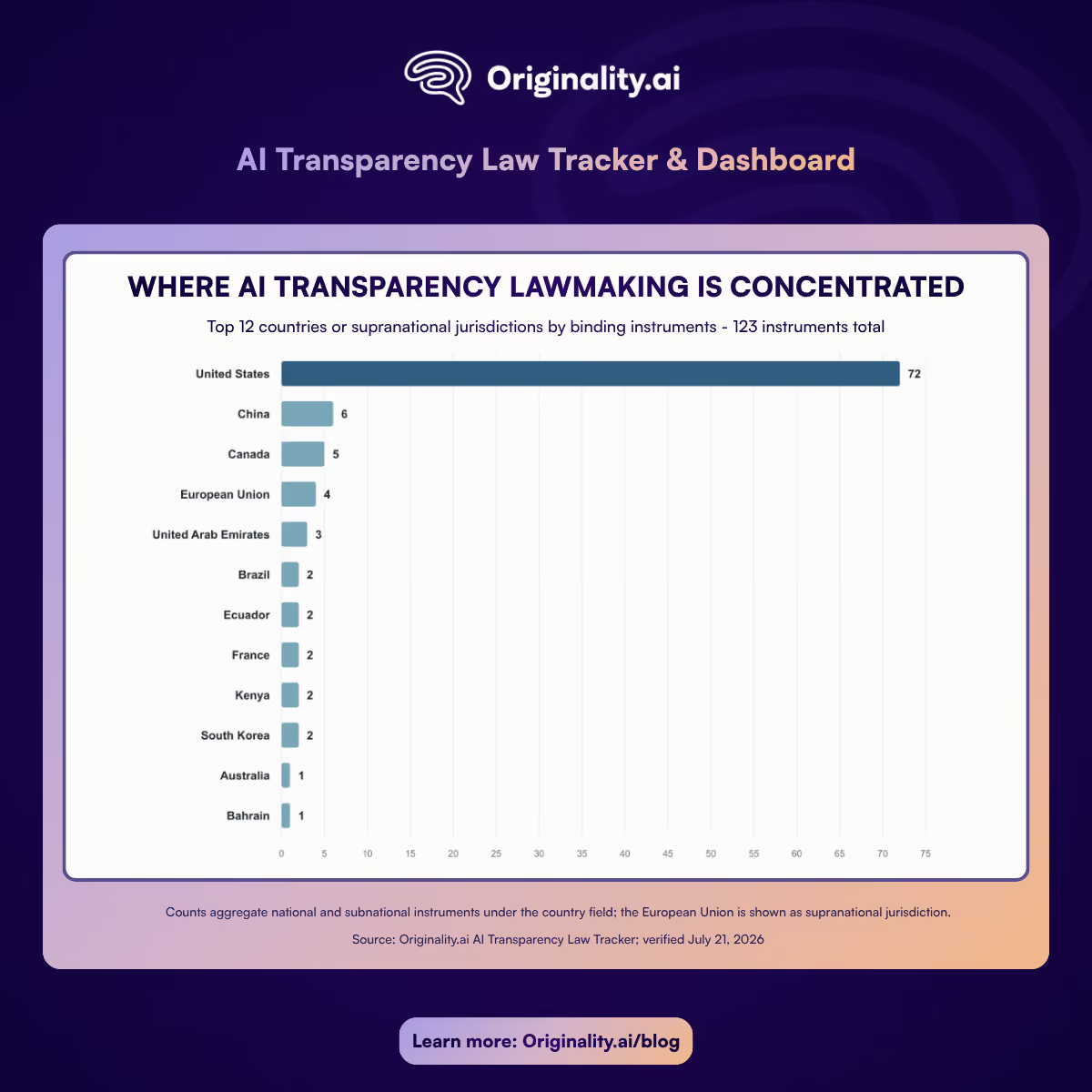
Figure 6. Countries and supranational jurisdictions with the most binding instruments. Source: Originality.ai Global AI Transparency Law Tracker.
The United States leads in total instrument count (72) due to statutory fragmentation and federalism rather than a single unified code. State and municipal legislatures frequently enact parallel statutes targeting specific verticals, such as political deepfakes, hiring tools, and companion chatbots. Conversely, single comprehensive enactments like the EU AI Act bundle multiple mechanisms under a unified supranational framework. Therefore, total instrument counts reflect legislative activity, not absolute regulatory burden or strictness.
Methodology & framework guidelines
Core inclusion criteria
Core inclusion requires a binding legal instrument and a concrete communication duty. The duty must require a person, organization, platform or public body to communicate AI use, synthetic origin, automated-decision involvement, logic or consequences, or a public transparency artifact to an identifiable audience.
Excluded from the core count: pure prohibitions; voluntary standards; proposals; internal governance or recordkeeping with no external audience; opt-out or objection rights without a notice/explanation duty; and takedown or removal systems that do not reveal AI use. These items remain visible on separate tabs when they are useful boundary cases.
Counting
The obligation table uses one row per legally distinct transparency duty. One instrument may create multiple rows.
The timeline counts every instrument once, at its earliest fixed effective transparency duty, and assigns one primary category. Please be advised that one Sri Lankan law without a fixed commencement is excluded from the plotted total.
Older laws remain in the June 2020 baseline. Five historical laws without a verified commencement use disclosed adoption/publication proxies; Maine uses its official July 29, 2026 general effective date.
Verification protocols and limitations
Every core obligation includes an official or controlling primary-source URL. Of 127 unique primary URLs, the endpoint audit found 116 reachable, nine access-restricted endpoints that still exist, and two network/TLS failures; restricted access is not treated as missing legal authority.
149 obligation rows are high-confidence and five are medium-confidence. Every medium-confidence row contains an explicit legal-editorial question.
Official English text is preferred. Where unavailable, the tracker discloses the official translation or machine-assisted translation basis.
Coverage is broad, not a guarantee of completeness. Laws change, commencement dates move, implementing rules appear and court decisions alter interpretation.
Disclaimer:This is a research and editorial resource, not legal advice. Applicability turns on definitions, actor, system, audience, geography, timing, thresholds and exceptions.
Patrick Austin is Senior Cybersecurity & Data Privacy Counsel at BroadStreet Partners, where he works on privacy compliance, cybersecurity, incident response and AI governance. He has more than a decade of public- and private-sector information-security experience and has written about high-risk AI regulation, AI governance and responsible AI use. Austin holds the CIPP/US, CIPP/E and CIPM credentials, is a Fellow of Information Privacy and an IAPP/ABA-designated Privacy Law Specialist. He earned his J.D. from George Mason University School of Law.