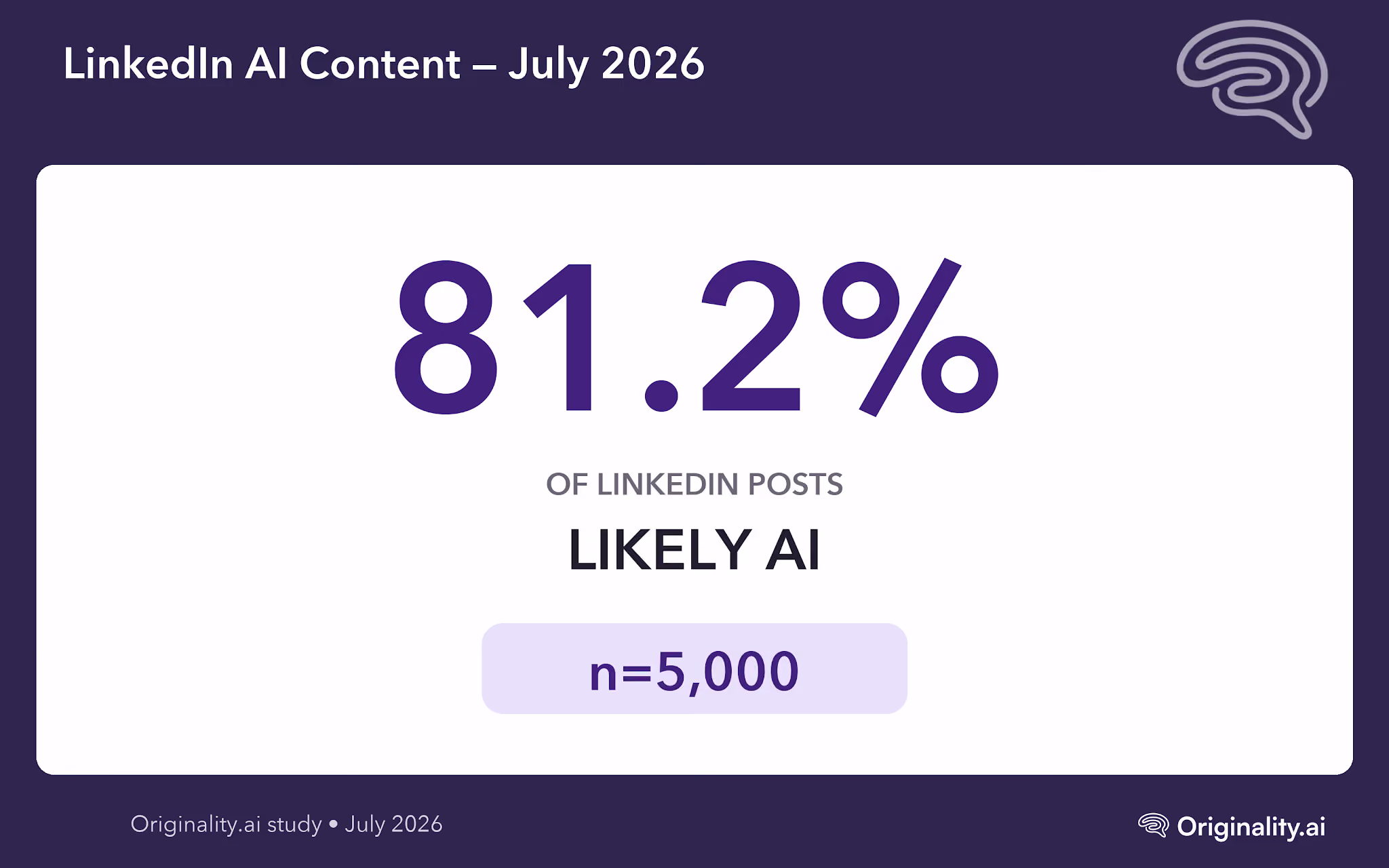
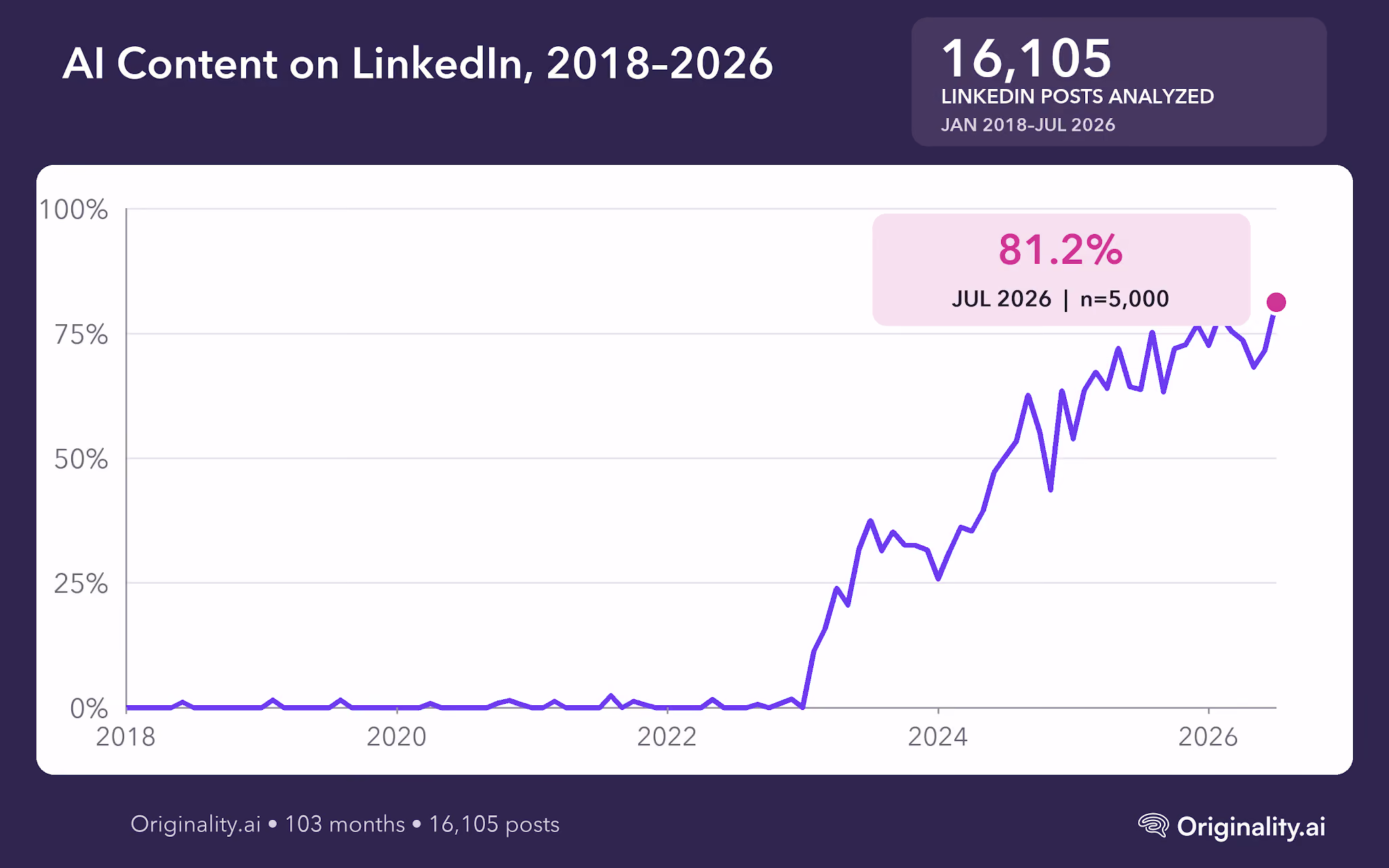
The more AI content floods platforms, the more valuable human writing becomes, and in 2025, LinkedIn’s platform was still a sea of Likely AI posts.
In 2025, over 50% of LinkedIn’s long-form content was Likely AI.
In this updated 2025 sample dataset, drawn from 99 influential profiles, we observed a more nuanced pattern between AI usage and engagement across varying industries.
Let’s take a closer look.
Note: This study was undertaken to update our last finding, which analyzed 8,795 LinkedIn long-form posts from January 2018 to October 2024.
For this study, we pulled 99 top LinkedIn influential voices that span tech, finance, healthcare, career guidance, and creative industries, including Bill Gates, Justin Trudeau, and Tony Robbins. The analysis also included a few engaged but non-public-facing users.
We analyzed posts published from January 2025 to November 2025. After collecting the dataset, we ran each post through our AI detector.
The profiles in the dataset were divided into 11 industries. LinkedIn’s professional landscape is very diverse. We settled on these categories to get a sample of content that ranges from trust-based to technical.
Here’s a quick overview of the industries:
1. Tech & AI
2. Career & Talent
3. Marketing & Branding
4. Finance & Business
5. Healthcare & Medicines
6. Leadership & Inspiration
7. Innovation & Strategy
8. Government & Public Affairs
9. Architecture & Design
10. Wellness & Personal Development
11. Uncategorized
For further insights, see the complete table in the Methodology.

The study results showed widespread, consistent use of probable AI longform writing (posts with 100+ words).
The dataset pulled 3,368 posts. The analysis revealed:
This confirms that, as with our earlier findings, over half of long-form posts on LinkedIn were still Likely AI in 2025.
The longform posts were classified as Likely AI if their AI confidence score = 0.5 (or higher) with the Originality.ai AI detector. This signaled a 50% or higher confidence that the text was likely machine-generated (learn about AI scores).
Learn more about what we think should be classified as AI writing in our AI Accuracy Study.

Industries relating to Design & Architecture and Wellness & Personal Development revealed the highest percentage of Likely AI posts.
Then, sectors like tech, marketing, career, finance, and leadership are in the middle.
On the other hand, sectors that rely on public trust and credibility, like healthcare, innovation strategy, and government, contained mostly human-written content.
Take a look at the graph above (or the table below) to compare Likely AI vs. human-written content by industry.
Note: The percentages in the table and graph have been rounded to the nearest whole number.
So, just how much better did Likely AI (or human) posts perform in certain industries?
The next step of our study involved analyzing the difference in average engagement (likes + comments) per post, between Likely AI vs. human-written posts, by industry (Chart 3).

Take a look at the graph above (or the table below) to compare engagement between Likely AI vs. human-written content by industry.
Note (1): The figures and percentages in the chart and graph have been rounded to the nearest whole number.
Note (2): The gap between architecture and design is not included in Chart 3, as our analysis found that 100% of posts in this industry were Likely AI. So, there was no gap between Likely AI vs. human content to analyze.
Likely AI-written posts outperformed human-written content in:
Specifically, Likely AI Leadership & Inspiration posts saw 75% more engagement than human-written ones.
This is likely driven by the consistent tone and emoji use on motivational content. Then, for both the Tech & AI industry as well as Finance & Business, long-form Likely AI posts saw 7% more engagement.
All three categories are industries where consistency and volume have a high impact.
Human-written longform posts outperformed human-written content in:
Government, Healthcare, and Innovation industries showed human-written posts yielded 40% to 80% better engagement on avg. per post than Likely AI content.
Whereas 61% of Marketing and Branding content is Likely AI, human-written posts still saw 73% more engagement on average per post, suggesting that users still value storytelling from a human voice.
Despite limited data points for some industries (such as wellness and personal development, which had 3 likely human-written posts), there is a meaningful preference for a human-written voice in the majority of industries analyzed in this study.
While over 50% of LinkedIn’s long-form posts remain crowded by Likely AI content, the engagement rates across the platform show that users typically prefer content written by humans.
One of the common issues with AI content is that its tone can be incredibly similar and repetitive, which may also drive users to engage more with human-written pieces, as they stand out more on the platform.
It’s evident that human-written content often garners more attention from readers, but people may turn to AI’s assistance as a way to prioritize efficiency and quantity.
This could be a strategic mistake, especially in industries where authentic storytelling matters more.
Curious if a LinkedIn post you’re reading is Likely AI? Use the industry-leading Originality.ai AI Checker to find out.
Learn more about the impact of AI across industries and platforms:
This study aims to update our last finding, which analyzed 8,795 LinkedIn long-form posts from January 2018 to October 2024.
In this updated study, we analyzed posts published from January 2025 to November 2025 by using a real-time LinkedIn API to analyze 99 profiles of influential voices across industries that contained over 100 words. After collecting the dataset, we ran each post through our AI detector.
The profiles in the dataset were divided into 11 industries based on their historical content themes and topics, professional expertise, and audience focus.
The complete table of industries is included below:
As noted in the study, the dataset pulled 3,368 posts. The analysis revealed:
The longform posts were classified as Likely AI if their AI confidence score = 0.5 (or higher) with the Originality.ai AI detector. This signaled a 50% or higher confidence that the text was likely machine-generated.