AI Checker
Plagiarism Checker
Grammar Checker
Content Quality
Guideline Checker
Readability Checker
Fact Checker

Chrome Extension


Keeping up with customer reviews has become a non-negotiable for e-commerce brands and local businesses serious about their online reputation.
Whether it’s responding to feedback or building social proof, the volume of work involved to maintain a steady stream of fresh reviews across platforms is easy to underestimate.
But managing that content consistently is time-consuming. That’s the issue that Loopple’s Review Generator claims to solve.
Here, we take a closer look at this AI-powered review tool and whether the AI reviews it generates are detectable by popular AI detection tools.

Before diving into the analysis, it’s worth establishing exactly what Loopple’s Review Generator is and what it claims to do.
First, its AI Review Generator is part of a broader suite of tools offered by the Loopple platform, which primarily focuses on website building.
As the name would suggest, its AI Review Generator is built specifically to produce review-style content, or output designed to read like customer feedback, across a range of platforms and product categories.
Beyond simply generating text, the tool aims to tailor reviews based on the user’s inputs, such as product type, rating, and sentiment (which could be optionally specified in the “Generate review for…” text field).
Essentially, by inputting more details, the goal is to produce content that feels contextually relevant rather than obviously templated.
Online reviews have become one of the most influential factors in purchasing decisions, helping businesses build trust, improve local search visibility, and convert browsers into buyers.
However, maintaining a consistent flow of review content is extremely resource-intensive, particularly for smaller businesses or agencies managing multiple clients. It’s the kind of task that gets deprioritized quickly when workloads increase.

If you are interested in testing out Loopple, you’ll be pleased to hear that there are four different subscription types, depending on your needs.
The free plan offers an option for users to try the platform and see if it’s something they want to use for their brand before spending marketing budget.
The Loople AI Review Generator is then offered as a free tool by the platform.
One of the biggest selling points surrounding AI review tools like Loopple’s Review Generator is whether or not the tool can produce content that is indistinguishable from genuine customer feedback. To do this, it must create review content that is natural enough in tone.
So, we decided to see whether the AI reviews that the tool generated were detectable as AI writing, with two of our own tests:
Then we ran the samples through three AI detection tools: Originality.ai, EaseMate, and ZeroGPT.

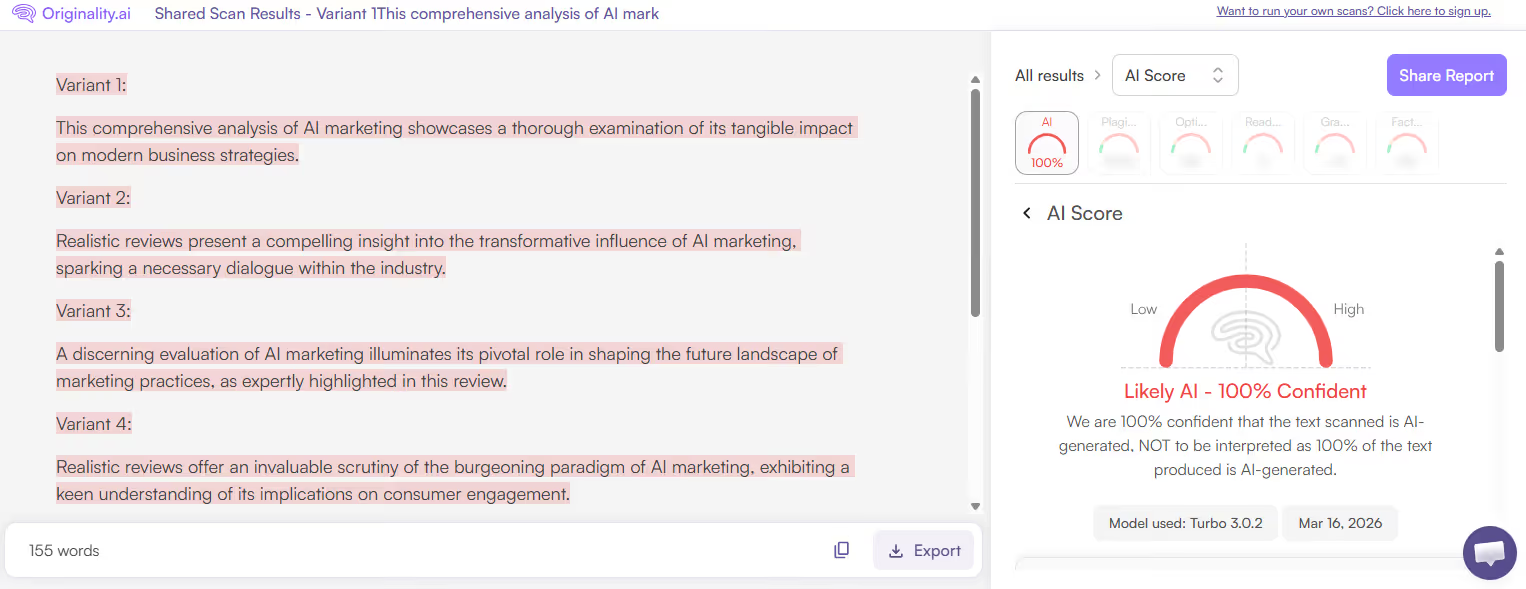
Originality.ai AI Checker: 100% Confidence it’s Likely AI
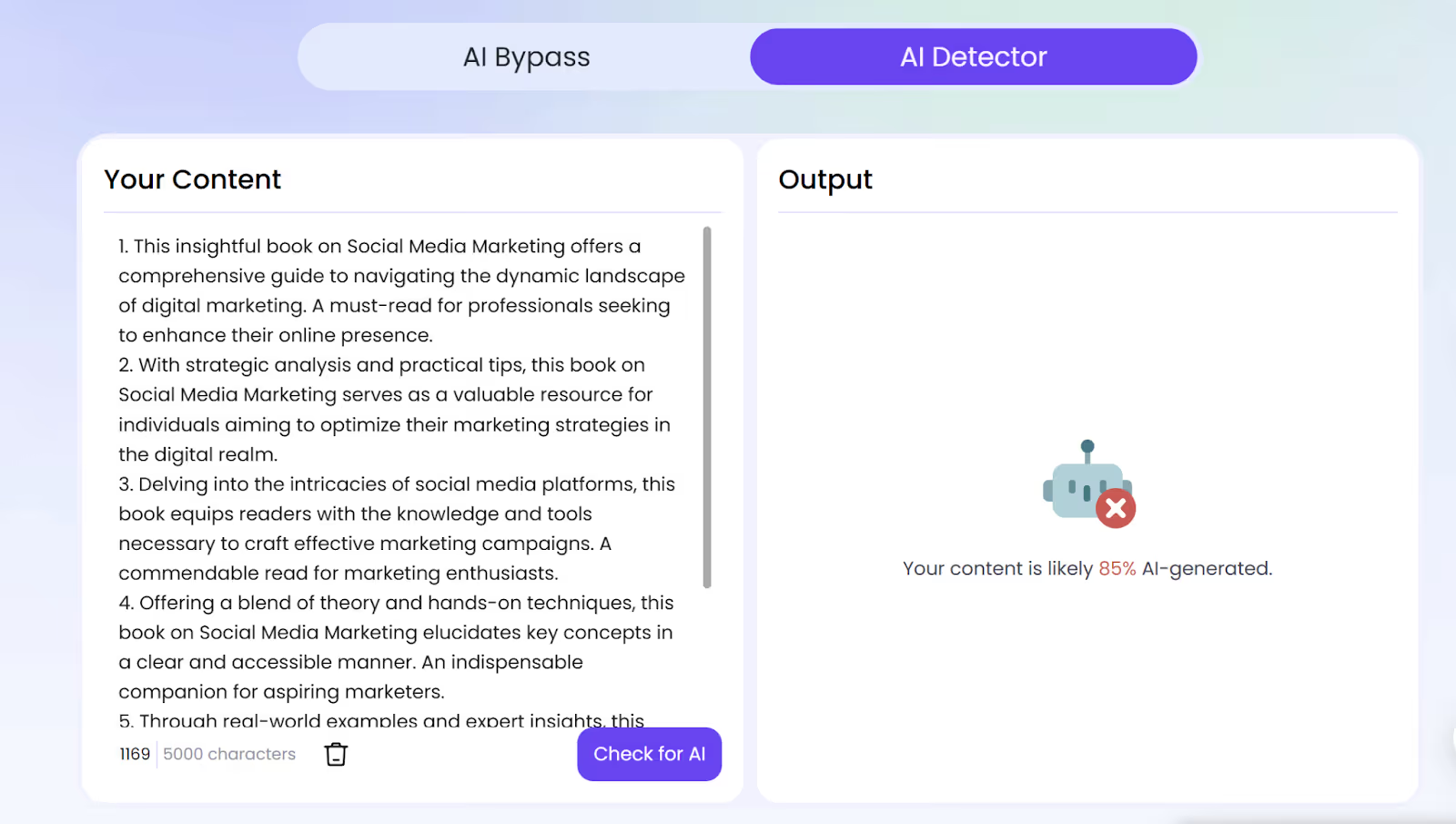
EaseMate AI Detector: 85% AI

ZeroGPT AI Detector Score: 100% AI GPT


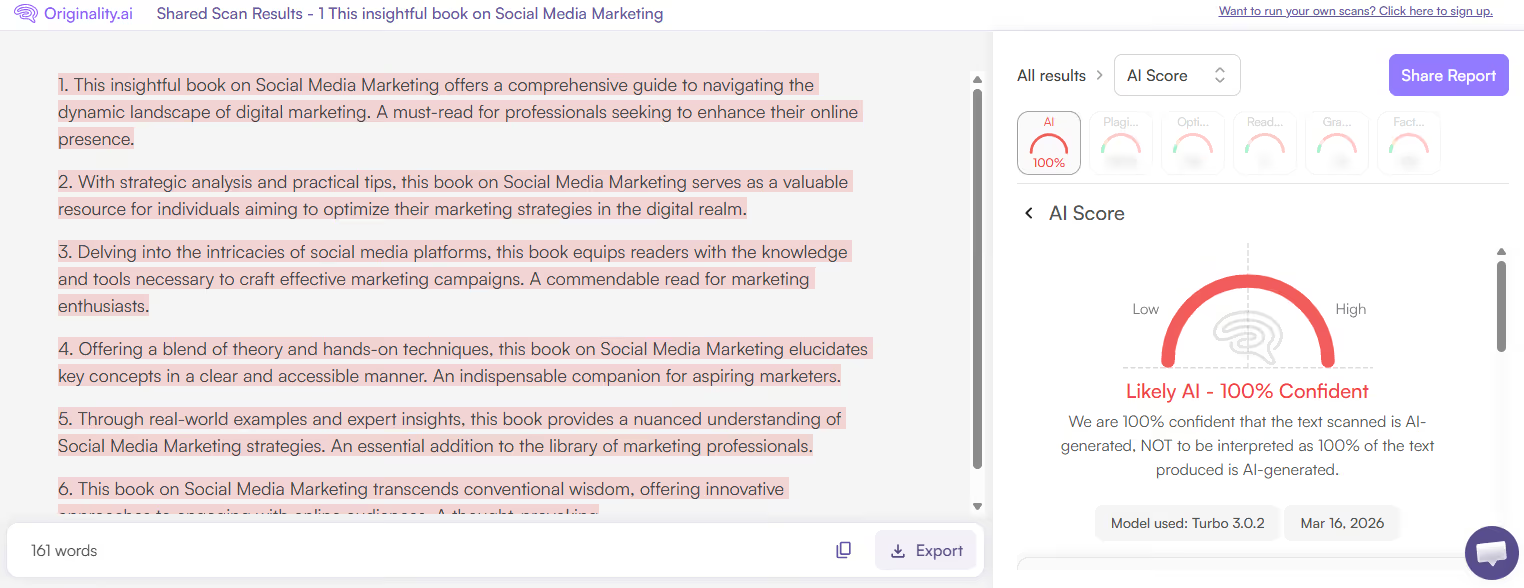
Originality.ai AI Checker: 100% Confidence it’s Likely AI
EaseMate AI Detector: 85% AI
ZeroGPT AI Detector Score: 100% AI GPT


As you can see from the results, AI reviews created by Loopple's AI Review Generator were detected as likely AI-generated.
As well as generating AI reviews that were identifiable as AI content, in the first prompt for our testing, the AI incorporated the request for ‘realistic reviews’ into the review itself, leading to awkward phrasing such as, “Variant 2: Realistic reviews present a compelling insight into the transformative influence of AI marketing, sparking a necessary dialogue within the industry.”
In summary, Loopple's Review Generator content is detectable by the industry-leading Originality.ai AI detector.
Read more AI tool reviews:
Then, check out studies on the impact of AI reviews across industries:
No. Loopple’s Review Generator does not get past AI detectors. While it automates review creation, the output was detectable as AI; Originality.ai identified the AI reviews as 100% Likely AI.
Loopple’s Review Generator cannot replicate genuine first-hand experience, so the output tends to lack the specific detail that makes a review credible.
Loople’s Review Generator uses large language model technology to produce review-style text based on inputs about the product.

AI & Plagiarism Detector for Serious Content Publishers
Originality.ai
64 Hurontario St
Collingwood, Ontario
L9Y 2L6