AI Checker
Plagiarism Checker
Grammar Checker
Content Quality
Guideline Checker
Readability Checker
Fact & AI Hallucination Checker

Extensions
MCP

Kimi K3 is a Chinese frontier model that was introduced in Kimi’s official K3 launch announcement in July 2026.
Its popularity has risen rapidly in a matter of days.
On July 20th, 2026, an article from The Associated Press via BNN Bloomberg noted that new subscriptions for Kimi K3 are paused while it looks into expanding capacity to meet high demand.
With the arrival of Kimi K3 (and other LLMs like GPT-5.6 (Luna, Sol, Terra), Claude Fable 5, or DeepSeek V4 Flash and V4 Pro), it’s essential for AI detectors like Originality.ai to test if they can still detect and identify its AI-generated content.
However, is Kimi K3 detectable? Let’s take a closer look.
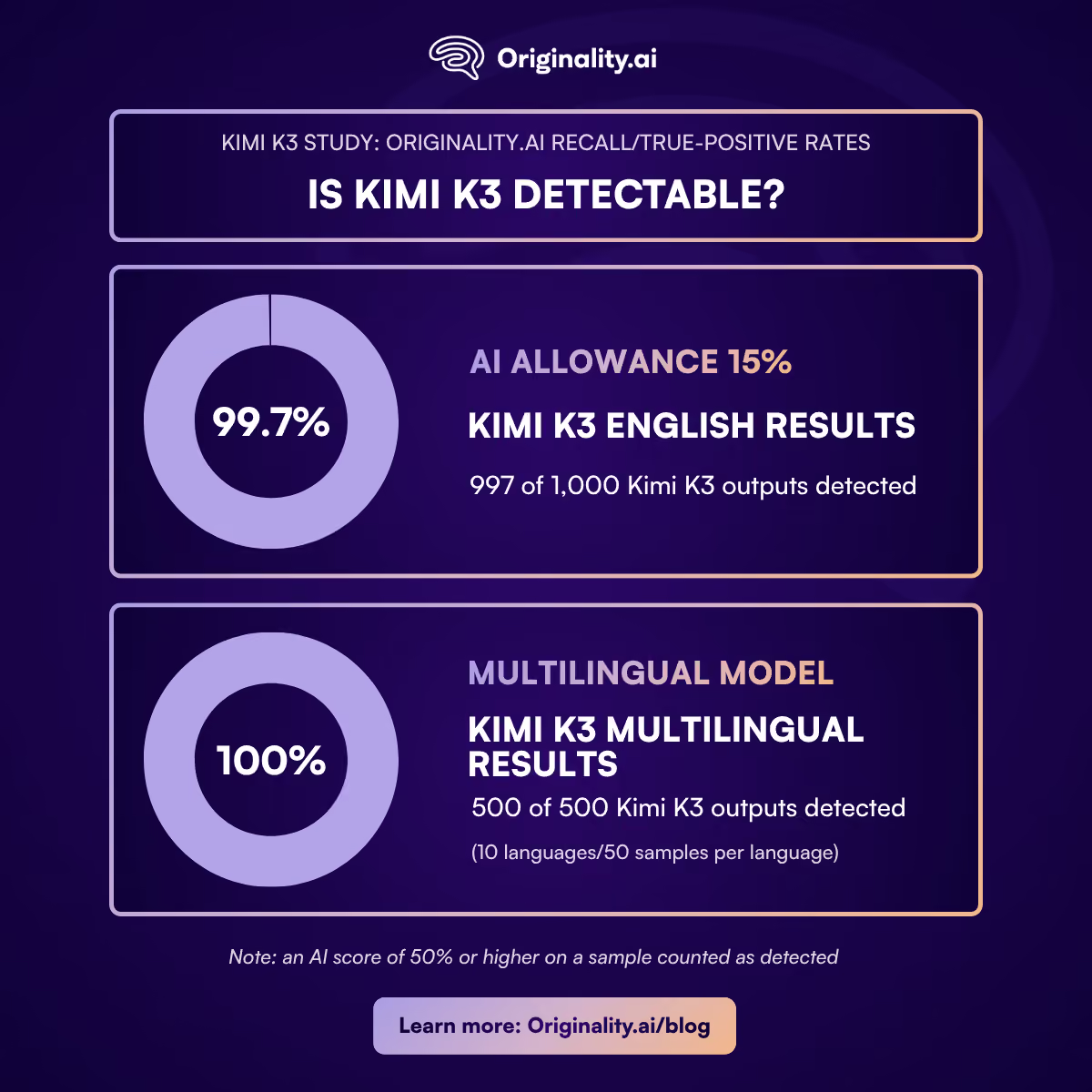
Yes! Originality.ai’s AI Allowance model (15%) and Multi Language models are still highly effective at identifying Kimi K3 content:
The Kimi K3 detection rates noted above reflect the recall/true-positive rate (not overall accuracy). Learn more about metrics that evaluate AI detection accuracy in our study.
Note: for this study, English and multilingual results are separate cohorts.
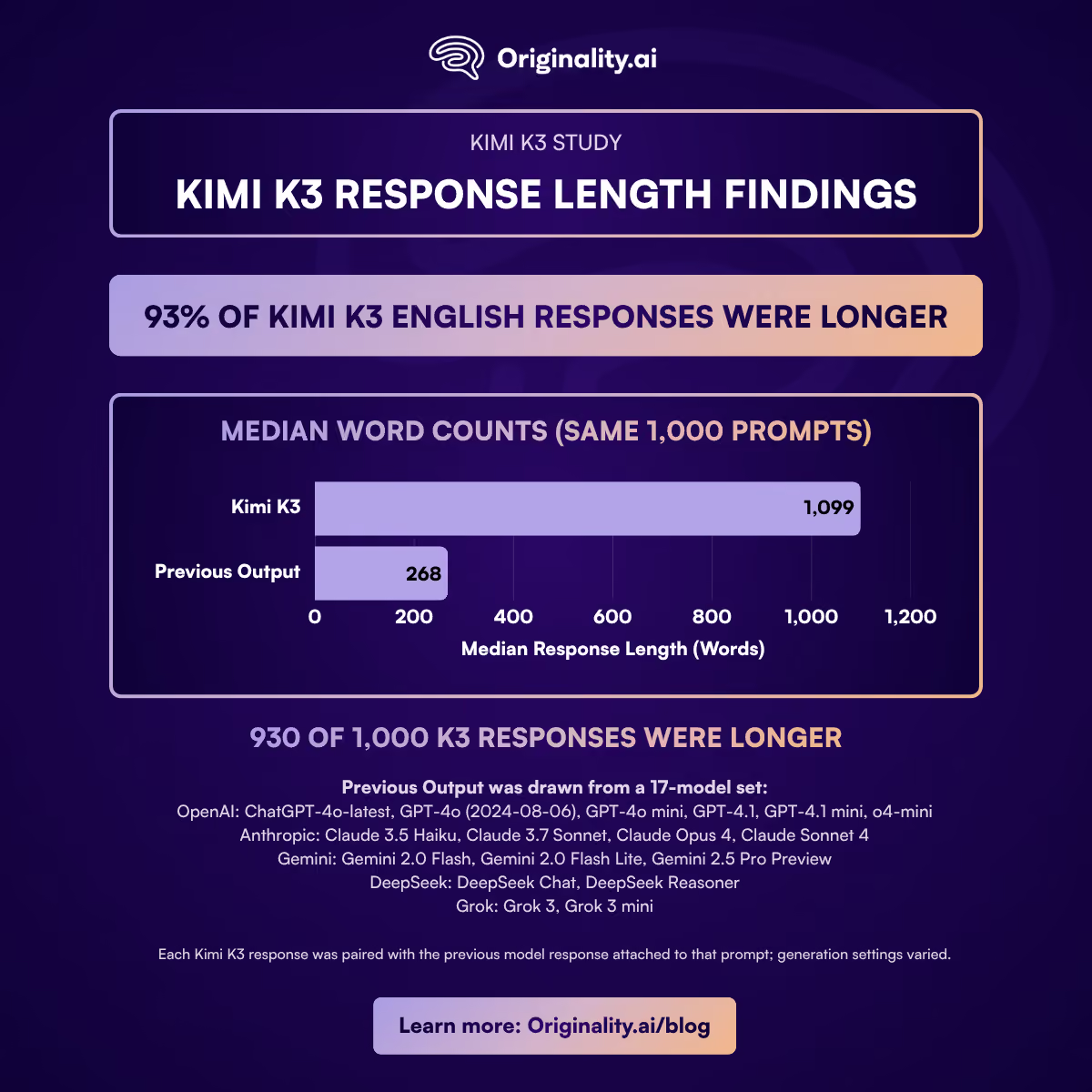
93% of Kimi K3 responses were longer (930 of 1,000).
Kimi K3’s English responses had a median length of 1,099 words, vs. 268 words for the matched prior-model responses (leading LLMs).
The key insight here? The median response or word count from Kimi K3 is noticeably longer than leading LLMs.
As reported by the BBC, Kimi K3 is an AI model released in July 2026 by Chinese start-up company Moonshot AI with over 2.8 trillion parameters that claims to rival leading AI companies OpenAI and Anthropic.
The release of Kimi K3 comes just a little over three years since Moonshot AI was founded (in 2023). Crunchbase notes that Moonshot AI has since received $4.8 billion in total funding over 7 funding rounds, as of May 2026.
Taking a closer look at Kimi K3 specifically, independent benchmarking by Artificial Analysis places Kimi K3 among the leading models for intelligence, with a score of 57 on its Intelligence Index versus a 31-point average for comparable models. The same analysis describes it as very verbose and relatively expensive.
We’ll analyze just how much more verbose (wordy) Kimi K3 is vs. other leading LLMs later in this study.
Our study assessed detectability (rather than answer quality), in which K3 completed 1,500 writing tasks spanning five English content types and 10 languages.
The AI Allowance model (at 15% default settings) detected 99.7% of the 1,000 English outputs, while the Multilingual Model detected all 500 multilingual outputs.
AI-recall study:
This is an AI-only recall study to determine what percentage of known Kimi K3 outputs received an AI score of at least 50%.
The Kimi K3 detection rates studied reflect the recall/true-positive rate, not overall accuracy.
Learn more about metrics that analyze AI detection accuracy in our study (including true positive rates).
Note: English and multilingual results are separate cohorts.
The English sample (cohort) analysis, with AI Allowance at the 15% setting:
1,000 unique prompts sampled directly from a prior Originality.ai model-study prompt bank, balanced across five content types (200 each). Generation used the Kimi API with the kimi-k3 model.
The Multilingual cohort analysis, with the Originality.ai Multilingual Model:
The same briefs were used across 10 languages. Kimi K3 was instructed to re-plan and compose for native readers, not translate or lightly paraphrase an English answer.
How was AI content determined? An AI score of 50% or higher counts as detected.
AI Allowance at 15% detected 997 of 1,000 Kimi K3 outputs (99.7%).
The multilingual extension of this study ran a 500-sample analysis.
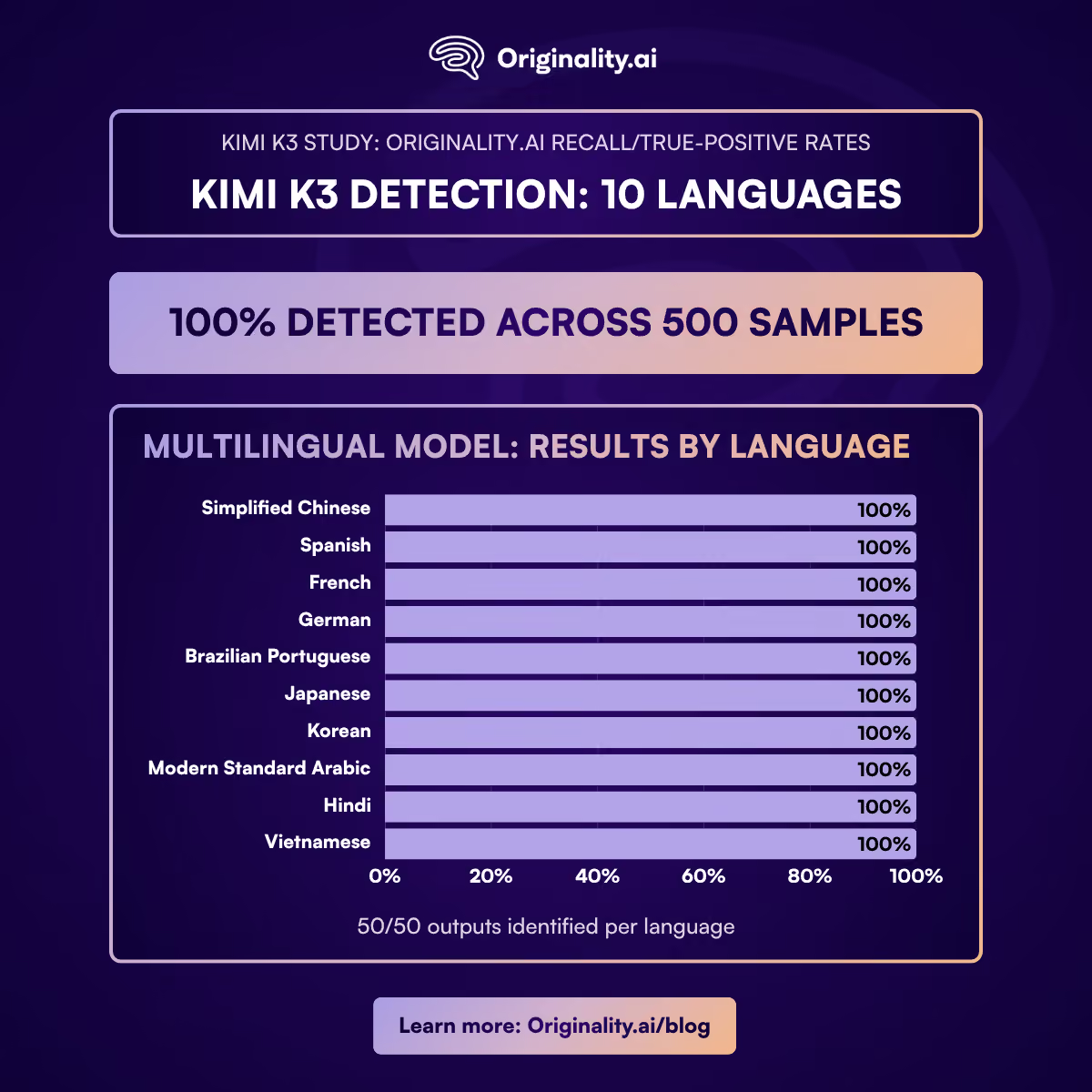
The completed multilingual cohort includes 50 Kimi K3 outputs in each of 10 languages (500 total). Each language reached 50/50 detection.
To measure response length beyond detectability, we used a matched-pair design: each Kimi K3 response was compared with the previous AI response attached to the exact same prompt in Originality.ai’s source dataset.
The 1,000 comparison responses came from a 17-model set:
The finding? Kimi K3 was substantially more verbose (wordy).
Its English responses had a median length of 1,099 words, compared with 268 words for the matched prior-model responses.
Kimi K3 produced the longer response in 930 of 1,000 same-prompt comparisons (93%).
These findings describe output behavior, formatting, and completion.
What they don’t take into consideration is factual accuracy, native-level fluency, semantic faithfulness, or human preference.
Each prompt was paired with one previous response from the mixed 17-model set, not with all 17 models.
Note: Generation settings also differed across the earlier studies, so the length result is a matched prompt-bank comparison, rather than a universal model ranking.
AI Allowance at 15% default settings identified 99.7% of known Kimi K3 outputs.
Further, Originality.ai’s multi-language model achieved 100%, 500/500 detected, across 10 languages, with 50/50 detected in every language.
The key takeaway? Originality.ai is still a highly effective way to identify AI-generated content from the latest LLMs, including Kimi K3.
Use Originality.ai to evaluate content with the detector mode that best matches your workflow.
Further Reading:

AI & Plagiarism Detector for Serious Content Publishers
Originality.ai
64 Hurontario St
Collingwood, Ontario
L9Y 2L6