AI Checker
Plagiarism Checker
Grammar Checker
Content Quality
Guideline Checker
Readability Checker
Fact & AI Hallucination Checker

Extensions
MCP

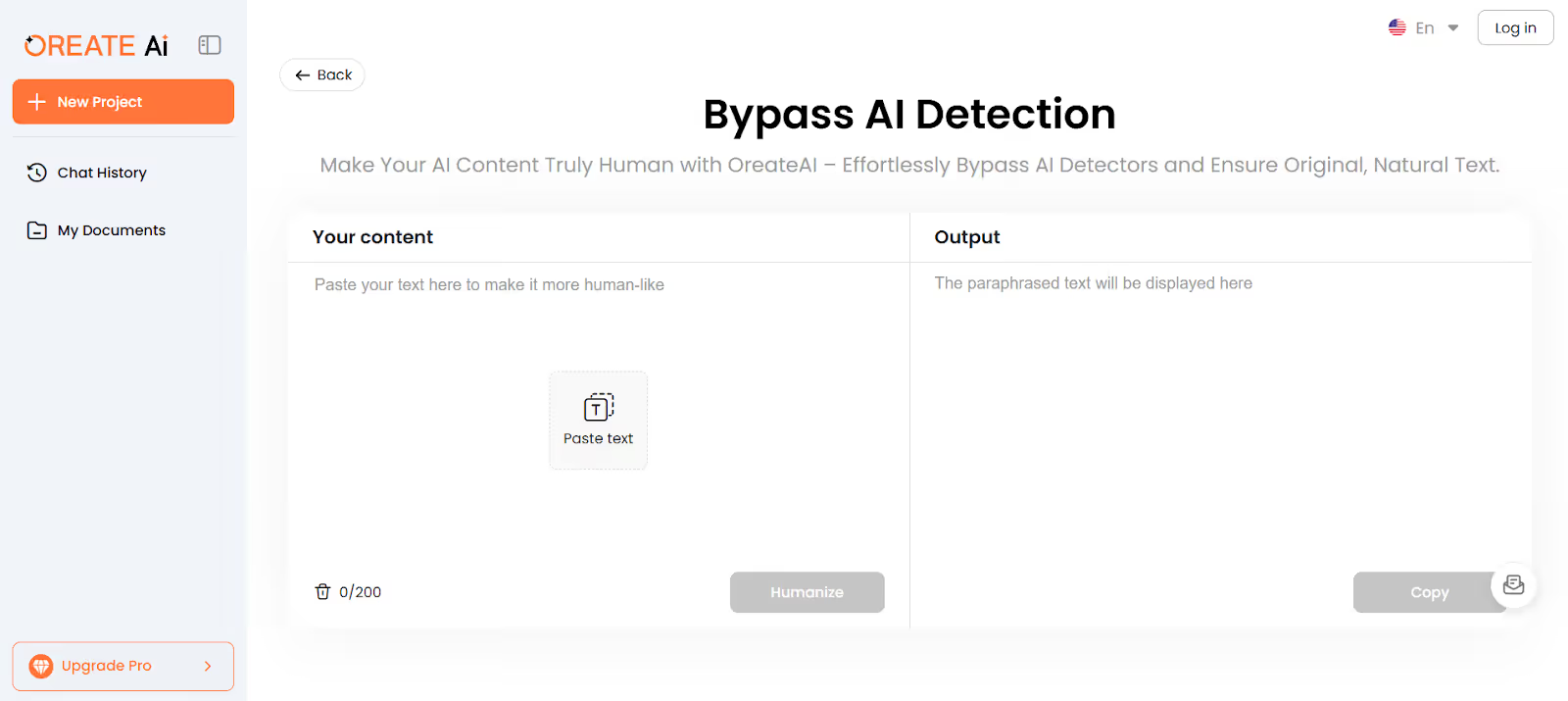
Oreate is an online platform that humanizes AI-generated text in an attempt to bypass AI detection.
It claims to bypass many leading AI detectors, including ZeroGPT and Originality.ai (see a screenshot below).

But does it really generate undetectable text?
We tested Oreate AI Humanizer’s output against ZeroGPT, Writer, and the industry-leading Originality.ai AI detector.
See the full results, including screenshots, in our detailed Oreate AI Humanizer review.
Oreate is an AI humanizer tool that quickly turns text generated by ChatGPT, Google Gemini, Claude, and others into text that claims to bypass popular AI detectors.
It lets users paste in their text directly from these platforms and click a button to “humanize” it. The result is ready in just a few seconds.
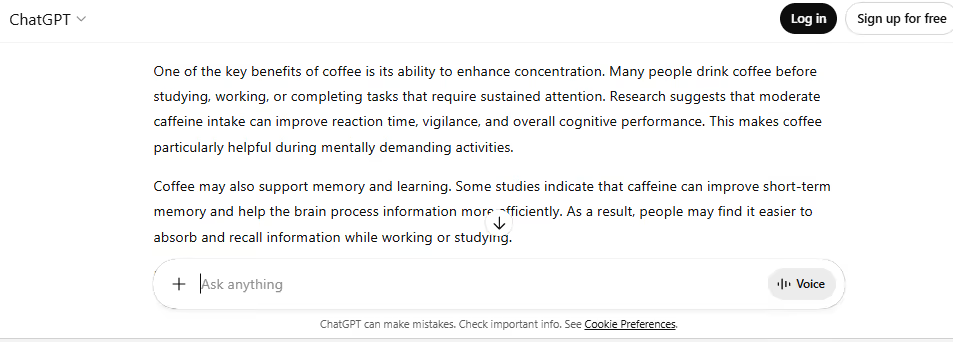
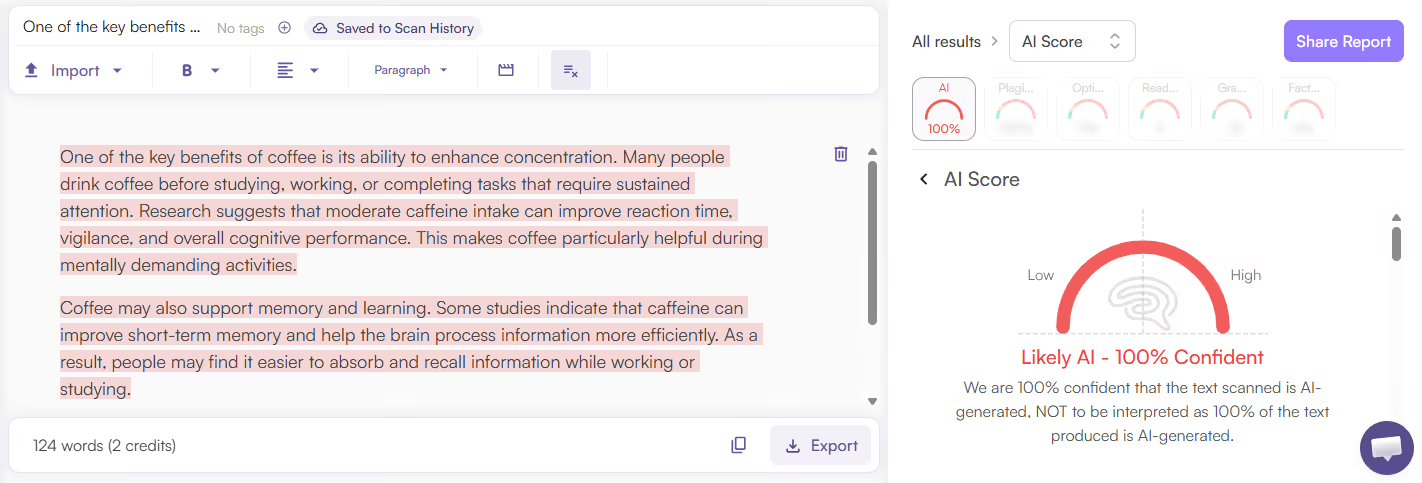
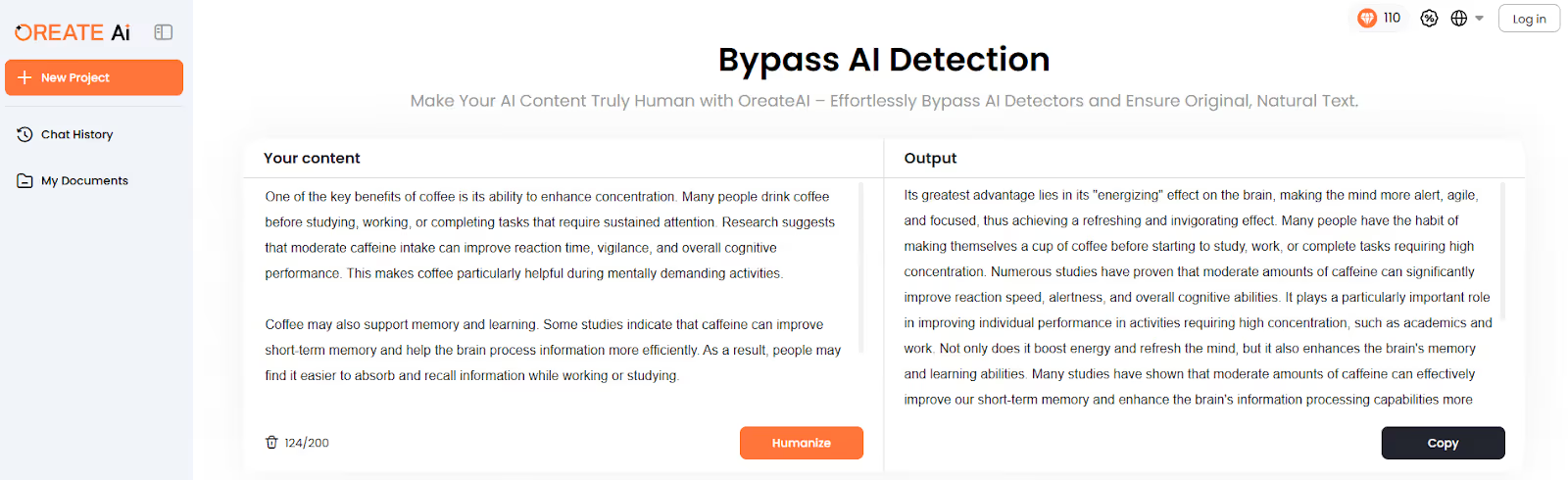
Although the AI humanizer requires you to paste in the AI text you want to humanize (and then shows the humanized result on the second pane), its My Documents folder lets you upload or create new documents for scanning.
As part of our test to determine whether or not Oreate AI Humanizer was detectable, we pasted the text directly from ChatGPT into the form field (similar to the steps shown in the screenshots above) to get the humanized result.
Oreate AI humanizer is designed to help avoid detection by AI detectors so that writing generated by ChatGPT and other platforms like it can attempt to bypass detection from AI detectors.
Oreate’s AI humanizer is free to use up to 200 words. If you paste in a longer string of words, the platform will cut off your text at the 200-word limit. Paid plans are also available; however, you’ll need to create an account first to even see pricing and limits.
The test was designed to see if three popular AI detectors, including the Originality.ai AI content detector, Writer, and ZeroGPT, could detect both AI-generated text and AI text rewritten by the Oreate AI Humanizer.
Step 1: First, we generated a paragraph of text on a random topic in ChatGPT. This was done to make sure that all tools would have a baseline of AI-generated text to identify, along with rewritten text.
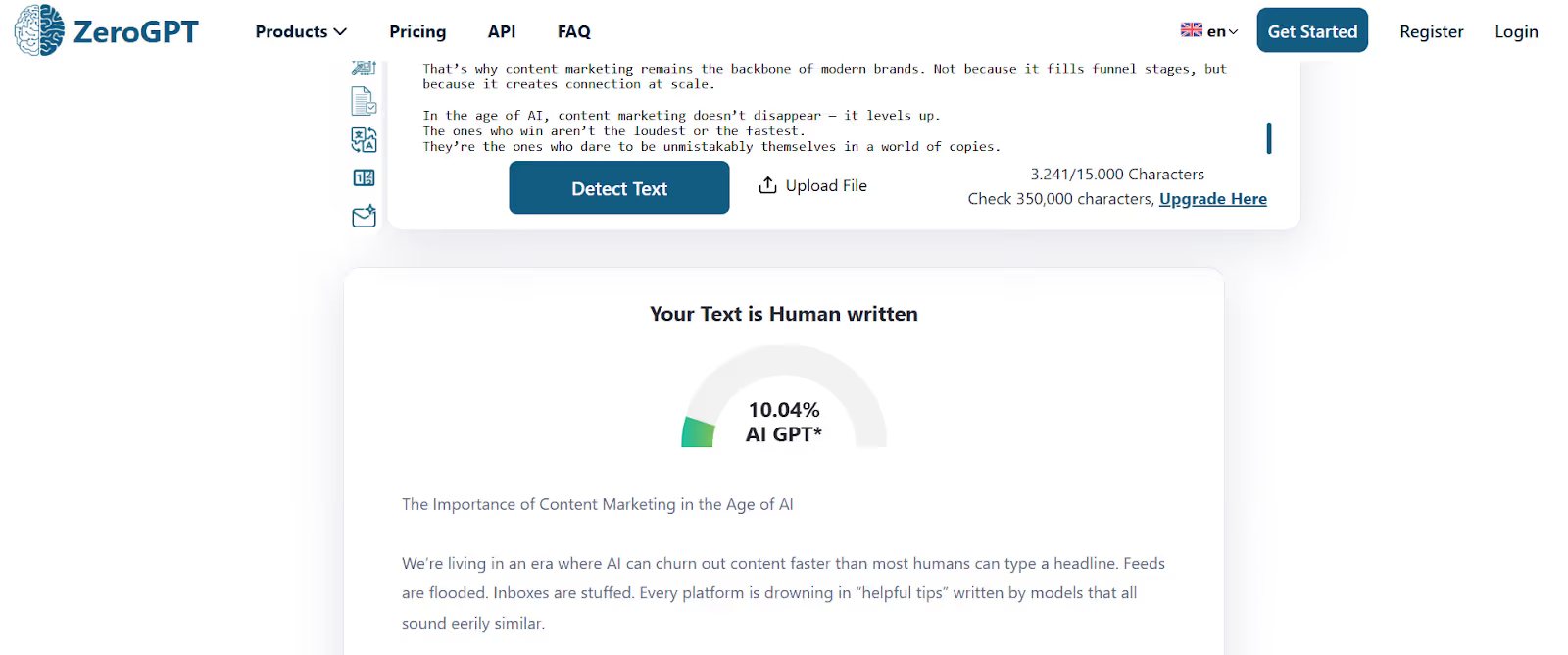
Step 2: We then ran the AI-generated text through Originality.ai, ZeroGPT, and Writer AI to get a base score.
Step 3: We pasted the same AI-generated text into the Oreate AI Humanizer and had the platform “rewrite” it.
Step 4: We then pasted the AI text into ZeroGPT, Writer AI, and Originality.ai to see if they could successfully detect the humanized version of the text as having been AI-generated or not.
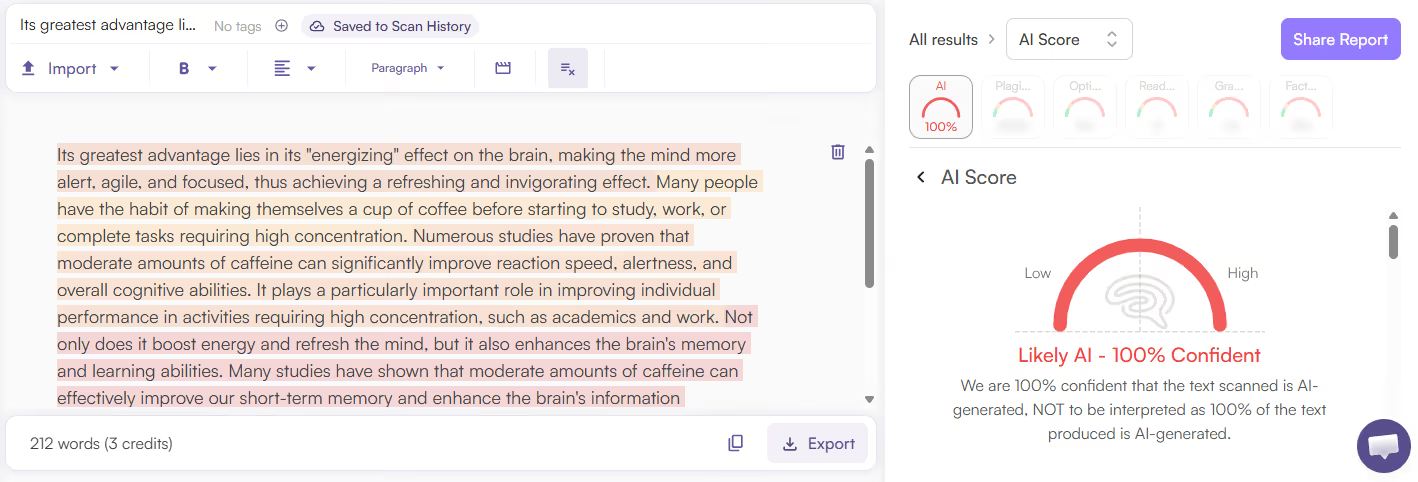
Original content (AI-generated): 100% Likely AI
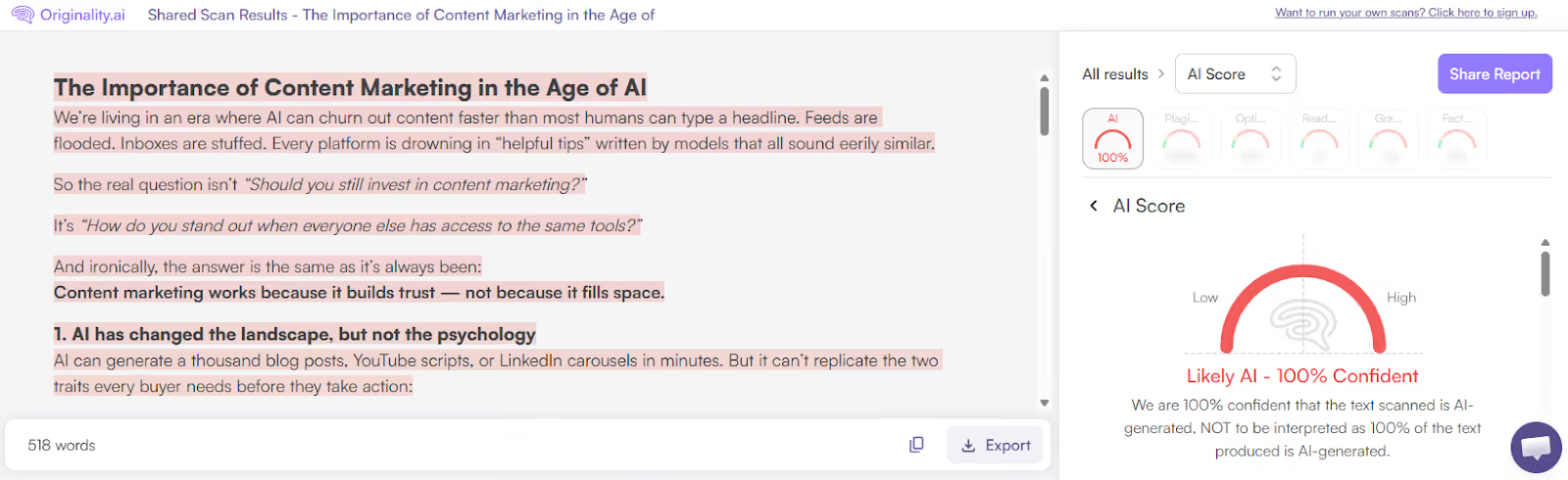
Oreate AI Humanizer Version: 100% Likely AI
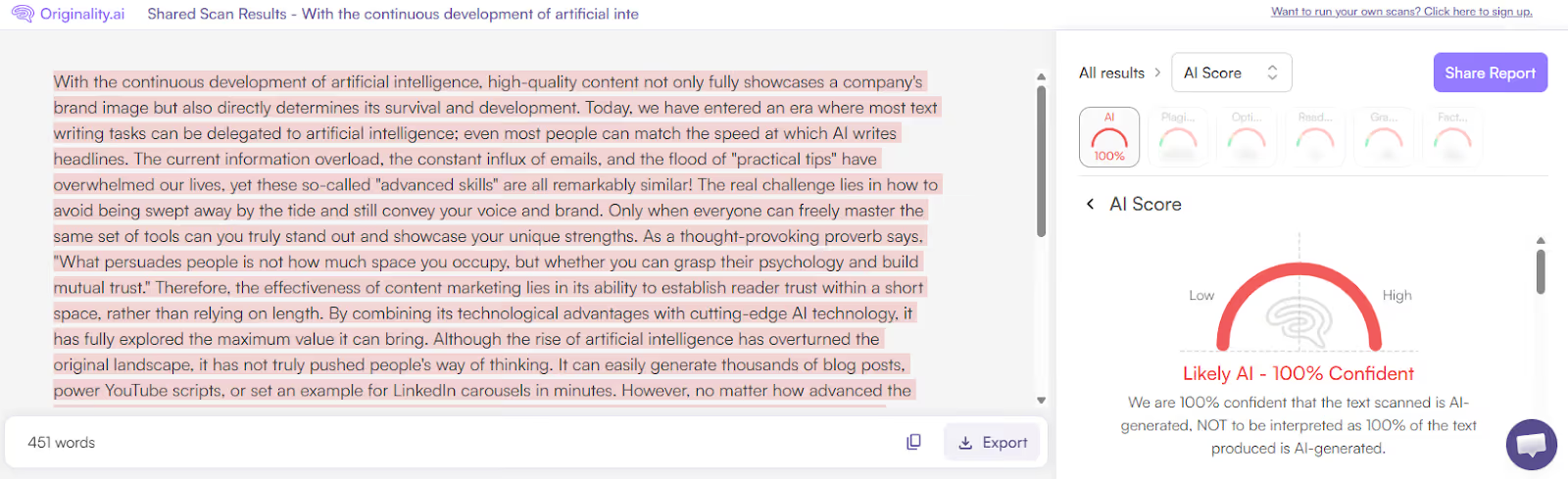
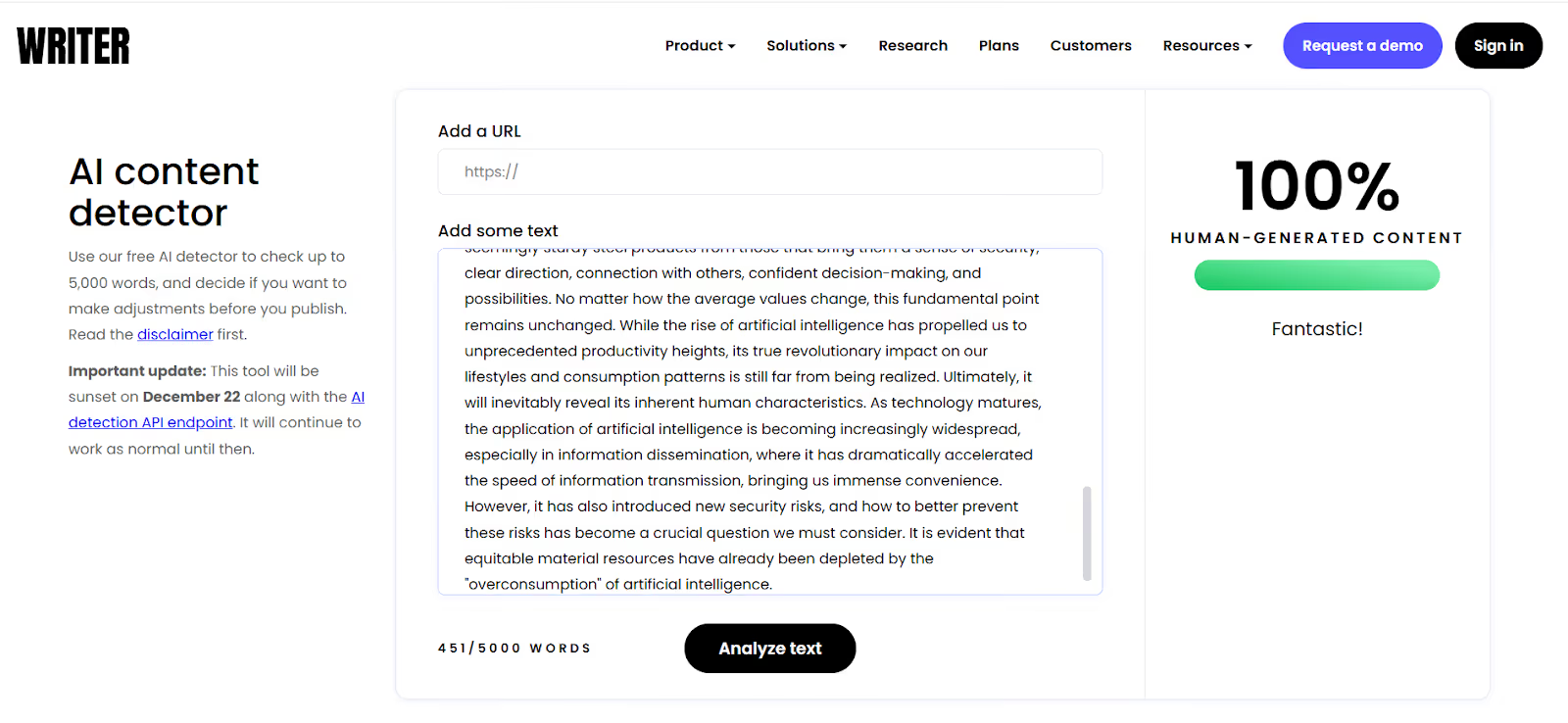
Original content (AI-generated): 100% (0% AI-generated)
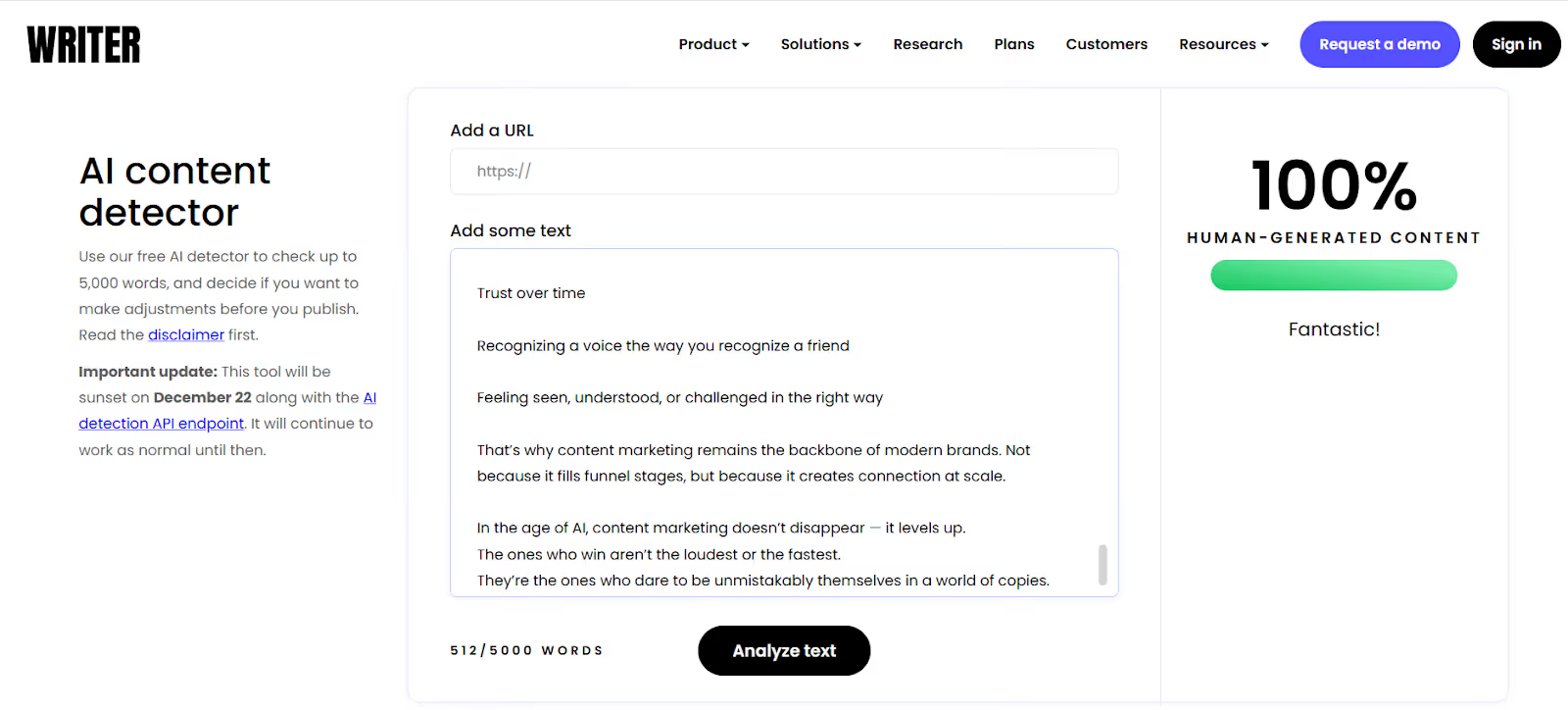
Oreate AI Humanizer Version: 100% human (0% AI-generated)
Original content (AI-generated): 10% AI generated
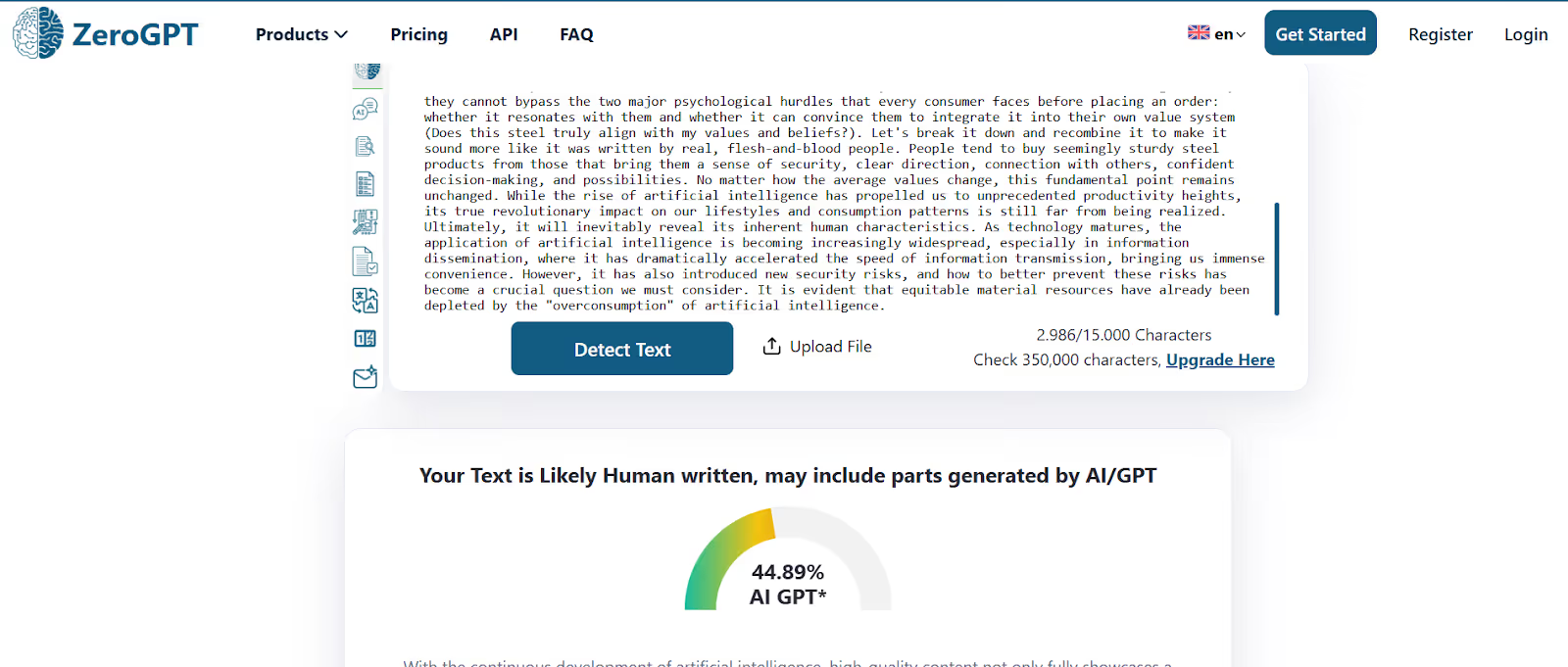
Oreate AI Humanizer Version: 44% AI-generated
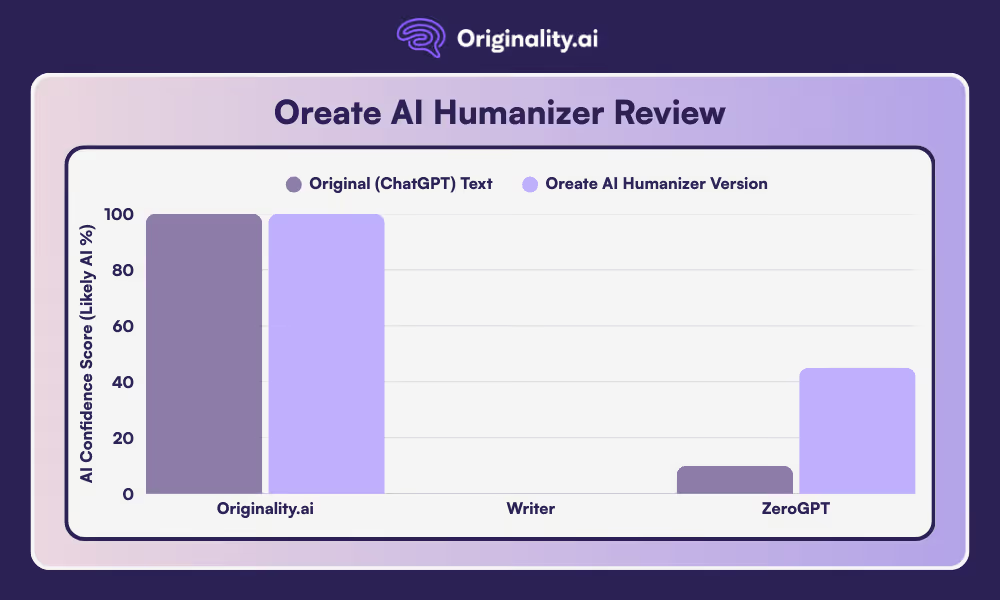
As you can see from the chart and our screenshots above, only the Originality.ai AI detector scored 100% Likely AI against both the ChatGPT-generated original text as well as the Oreate AI Humanizer text.
Writer (now retired) was unable to detect any AI use at all, while ZeroGPT scored a higher percentage of AI detection on the humanized version than the default.
With this in mind, it’s clear that despite their claims, content humanized with the Oreate AI humanizer is detected by Originality.ai.
If you’re looking for a reliable, highly accurate AI detector that works even with text that has been run through a “humanizer” like Oreate, choosing Originality.ai is the best way to detect AI writing.
Read more about AI detection:
Oreate AI Humanizer can be used for any type of content, including blog posts and essays. However, as our in-depth review and screenshots show, text that’s humanized with Oreate is detectable as AI-generated by the Originality.ai AI detector.
Although Oreate AI humanizer claims to make AI text undetectable by AI detectors, our own independent tests found that the Originality.ai AI detector was able to accurately detect the humanized text from Oreate as 100% Likely AI.
Even our own AI detector is not perfect, and can produce false positives. These false positives can be very painful for anyone who creates original content — whether you’re a student wrongly accused of using ChatGPT by TurnItIn or GPTZero or a writer who received a false positive from Originality.ai.

AI & Plagiarism Detector for Serious Content Publishers
Originality.ai
64 Hurontario St
Collingwood, Ontario
L9Y 2L6