AI Checker
Plagiarism Checker
Grammar Checker
Content Quality
Guideline Checker
Readability Checker
Fact & AI Hallucination Checker

Extensions
MCP

Since it was first published in 1917, Forbes has established itself as one of the world’s most recognizable, respected brands in business journalism — and, in the mid-2010s, the publication’s leadership realized they could capitalize on that fact by leaning into crowdsourced, pay-to-play content with Forbes Councils.
But as AI continues to redefine the boundaries of content creation, questions surrounding authorship, authenticity, and trustworthiness are taking center stage in user-generated digital publishing.
These exclusive communities of business leaders, executives, and entrepreneurs contribute thought leadership articles to Forbes’ platform, which is viewed by millions of people around the world.
However, the growing accessibility of AI writing tools has raised concerns about whether these articles are still authored by human experts or whether they are being increasingly composed — fully or partially — by LLMs.
Content that is likely AI-generated on Forbes’ platforms has risen dramatically over the last two years, while repeat offenders are leaving an outsized mark on the once-storied business brand.
Against this backdrop, Forbes Councils are growing exponentially, publishing more content each year and increasing fees to match the swelling demand, all in the service of high-ranking business leaders hoping to see their names in print.
Find out how AI is impacting Forbes Council articles in this study.
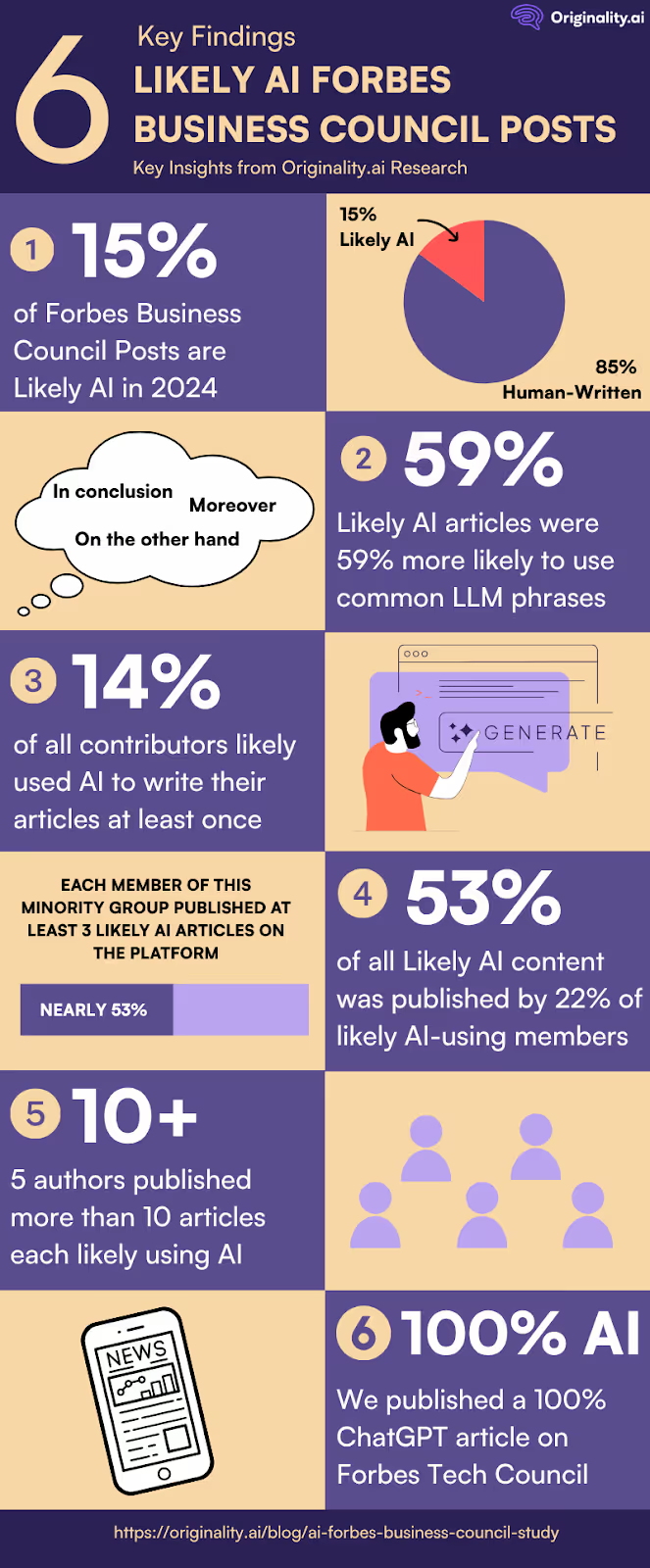
Using our proprietary Originality.ai AI detection software, we analyzed 19,004 Forbes Business Council posts, published between May 2019 and August 2025. While there are multiple councils, we limited our scope to the Business branch.
In addition, Originality.ai CEO and founder Jon Gillham wrote an entirely AI-generated article and submitted it to Forbes Technology Council — and got it published easily. (Full disclosure: Jon was a paying member of the Forbes Technology Council from Aug. 2024 to Aug. 2025, and published five articles on the platform, including one AI-generated article, which we’ll discuss in this report. Jon did not leverage any of the other benefits from his council membership.)
These are our findings:
Over the last decade, they have launched nine “council” organizations:
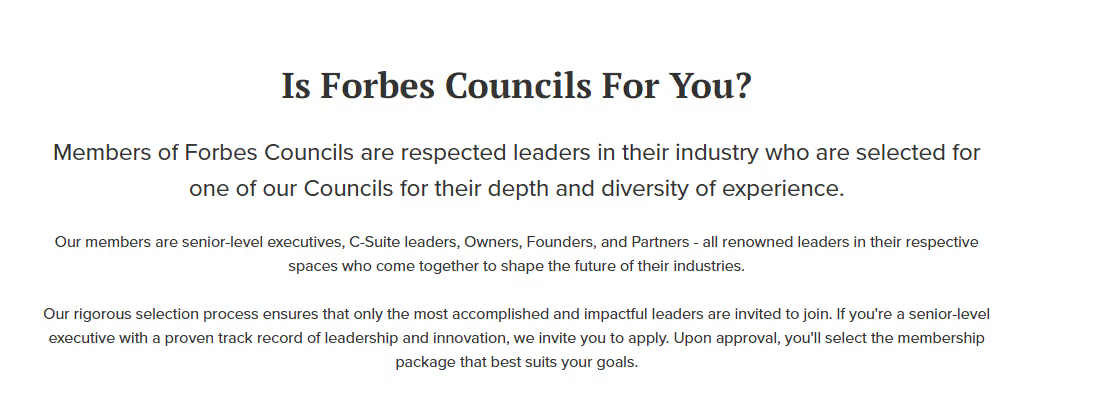
But how, you may ask, can an executive running a million-dollar company find the time to be a part-time blogger?
The answer: not all of them do.
Hundreds of these wealthy contributors have likely outsourced their writing to large language models — and the results are slipping past Forbes Council editors.
We at Originality.ai analyzed 19,004 Forbes Business Council posts, published between May 2019 and August 2025.
Of that overall data set, our AI detector found 1,255 articles that have a high likelihood of being AI-generated.
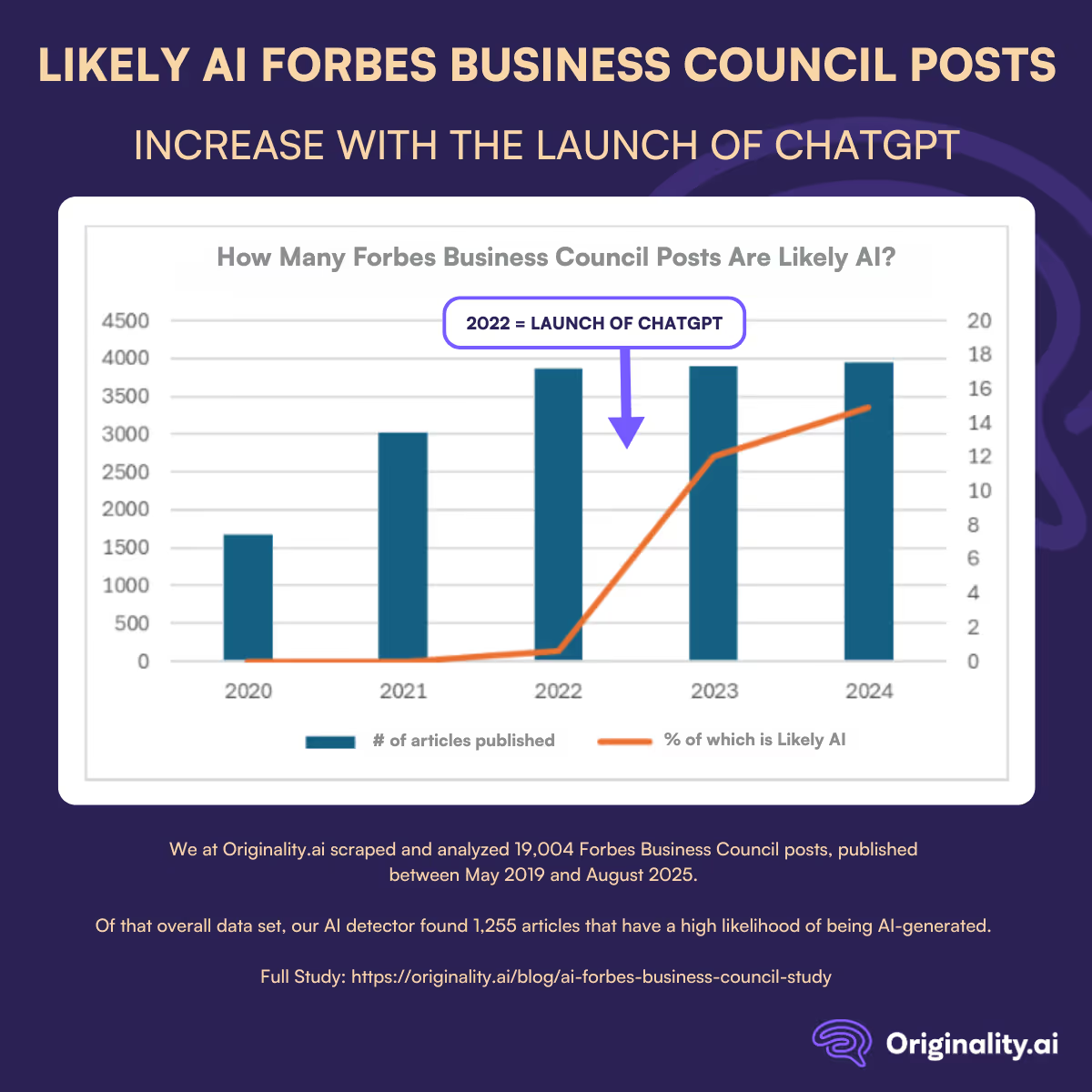
Between 2019 and 2021 (representing 4,884 articles), Originality.ai’s scanner only caught one instance of likely AI-generated content, well below the model’s 1% margin of error. (Read more about false positives in AI detection.)
However, in the second half of 2022, we noticed 18 instances. (ChatGPT launched in November 2022.)
By 2023, the trend caught on quickly.
Dissecting the 2023 data by fiscal quarter, the number of probable AI articles accelerated rapidly:

In total, 469 articles were likely AI-generated in 2023 — 12% of all content published that year.
In each fiscal quarter of 2023, Forbes Business Council published a consistent number of articles, between 961 and 995, totalling 3,906.
15% of Forbes Business Council posts were likely AI in 2024.
The trend continued in 2024, which marked the high point for probable AI publishing in Forbes Business Council.
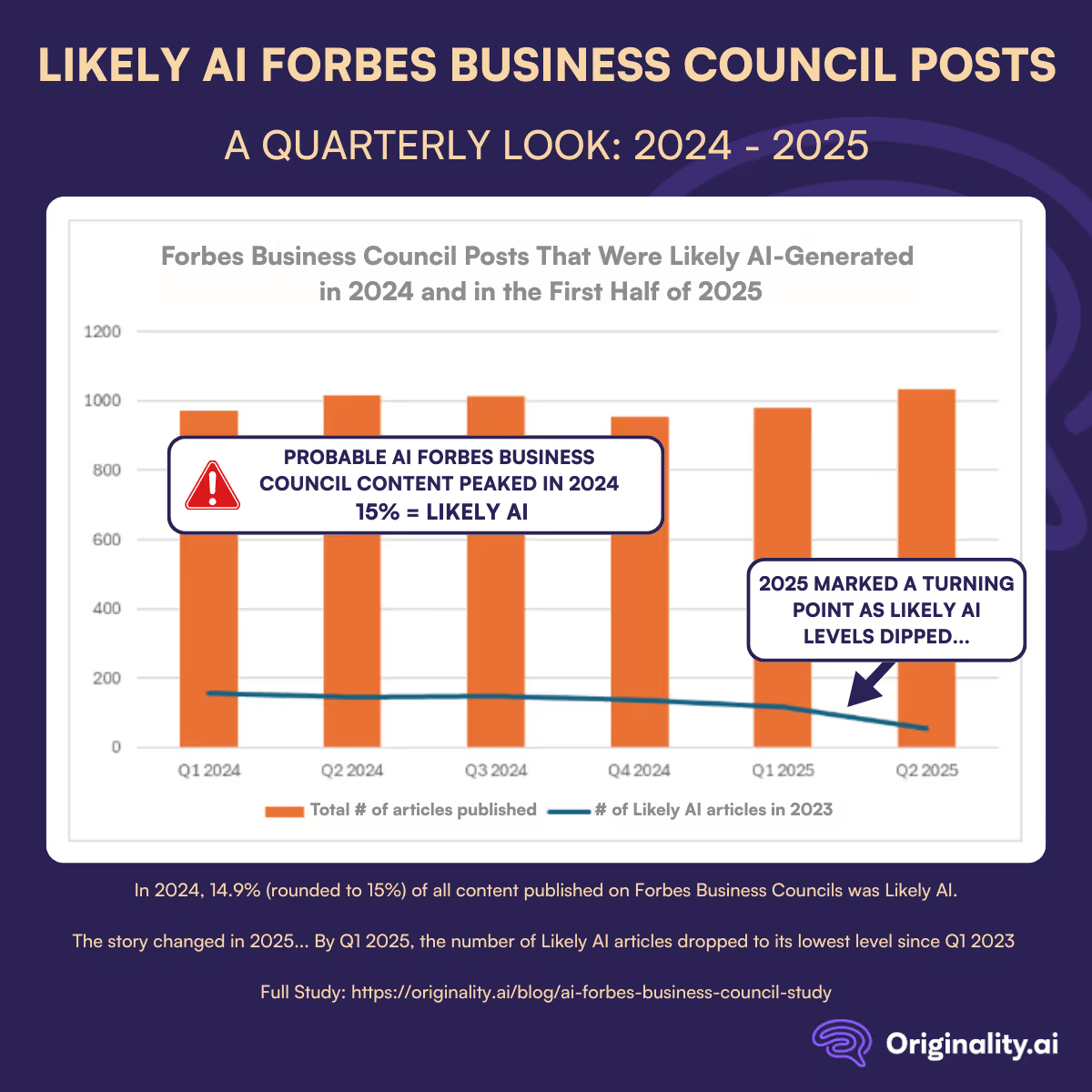
Out of 3,952 articles published, 587 were likely written by AI, representing 14.9% of all content published on the exclusive platform.
Each fiscal quarter in 2024 saw a relatively stable stream of likely AI-generated content, marking a plateau in the trend:
That annual total, 587 articles, marked a 25% increase year-over-year from 2023.
A turning point
The story changed in 2025.
By Q1 2025, the number of likely AI-generated articles dropped to 116, the lowest since Q1 2023 (which was shortly after ChatGPT launched in Nov. 2022).
By Q2 2025, that got sliced in half to 51.
Our data set finished in Aug. 2025, so how the trend will change over the remainder of 2025 is yet to be seen.
But the trend line clearly took a downturn, perhaps owing to an internal realization within the Forbes Council newsroom that the numbers were rising and required more awareness and vigilance.
We reached out to Forbes Councils to understand what practices they might have deployed to detect and counter AI-generated content, or to learn if the downturn in Q2 2025 was a fluke.
We called the phone number on their website and spoke briefly with a man who requested we submit our questions via email.
Over the following two weeks, we sent two emails to Forbes Councils and one to its parent company, Community.co.
We received no response by our deadline.
Anyone following the burgeoning LLM industry will be familiar with the stereotypical tropes of AI-generated writing. Cliched and contrived phrases abound — and Forbes Councils are a perfect case study.
We scanned the body text of each article for three phrases that LLMs might typically use:
In each category, these phrases appeared significantly more often in likely AI-generated articles than in human-generated ones.
On average, when put together, these phrases are 59% more likely to appear in probable AI-generated content.
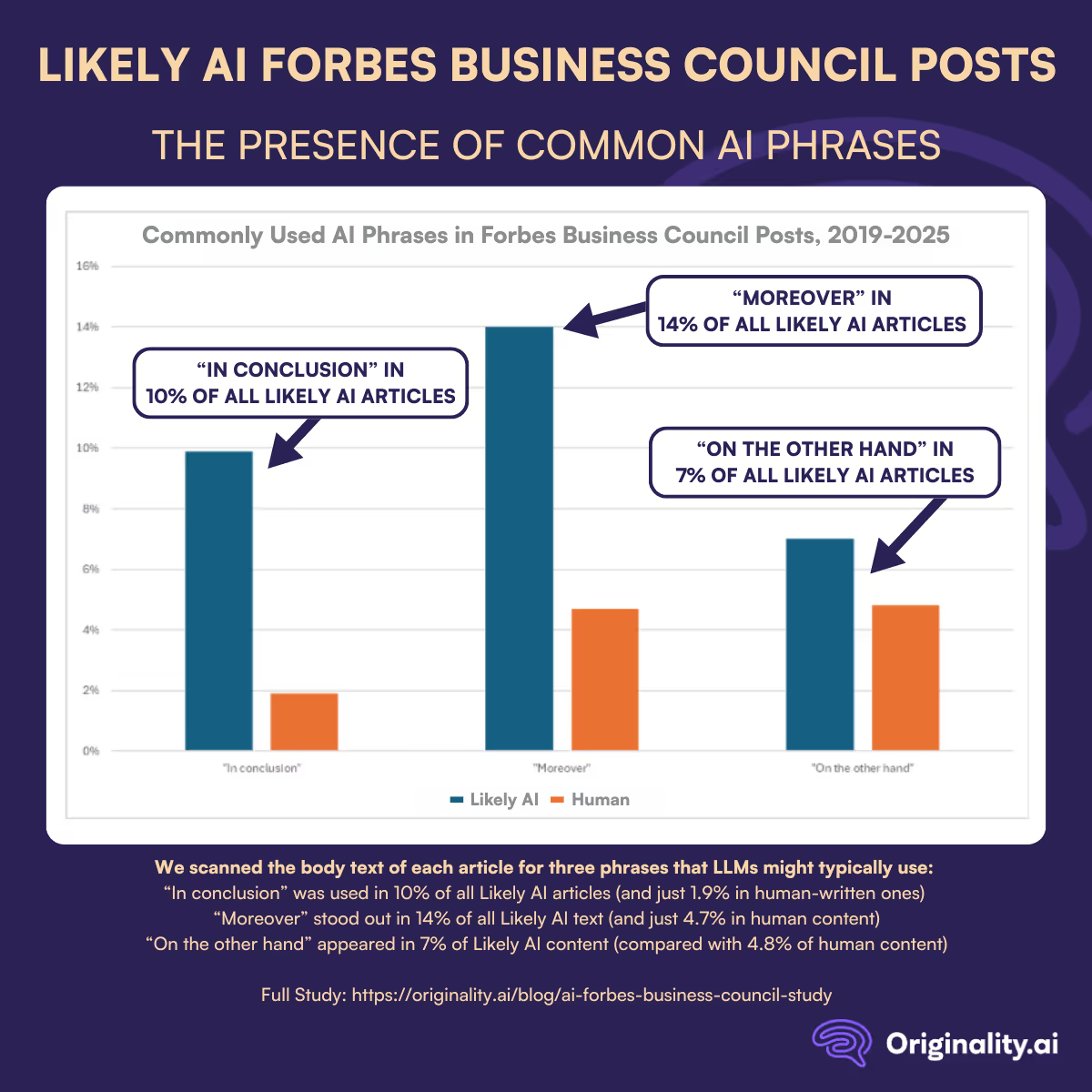
The trend is clear enough: not every writer who uses the word “moreover” is secretly a robot, but… the odds aren’t in their favour.
Of the 19,004 articles scanned, we counted 4,480 unique contributors.
Of those, 624 likely used AI to write their articles at least once — around 14% of all contributors.
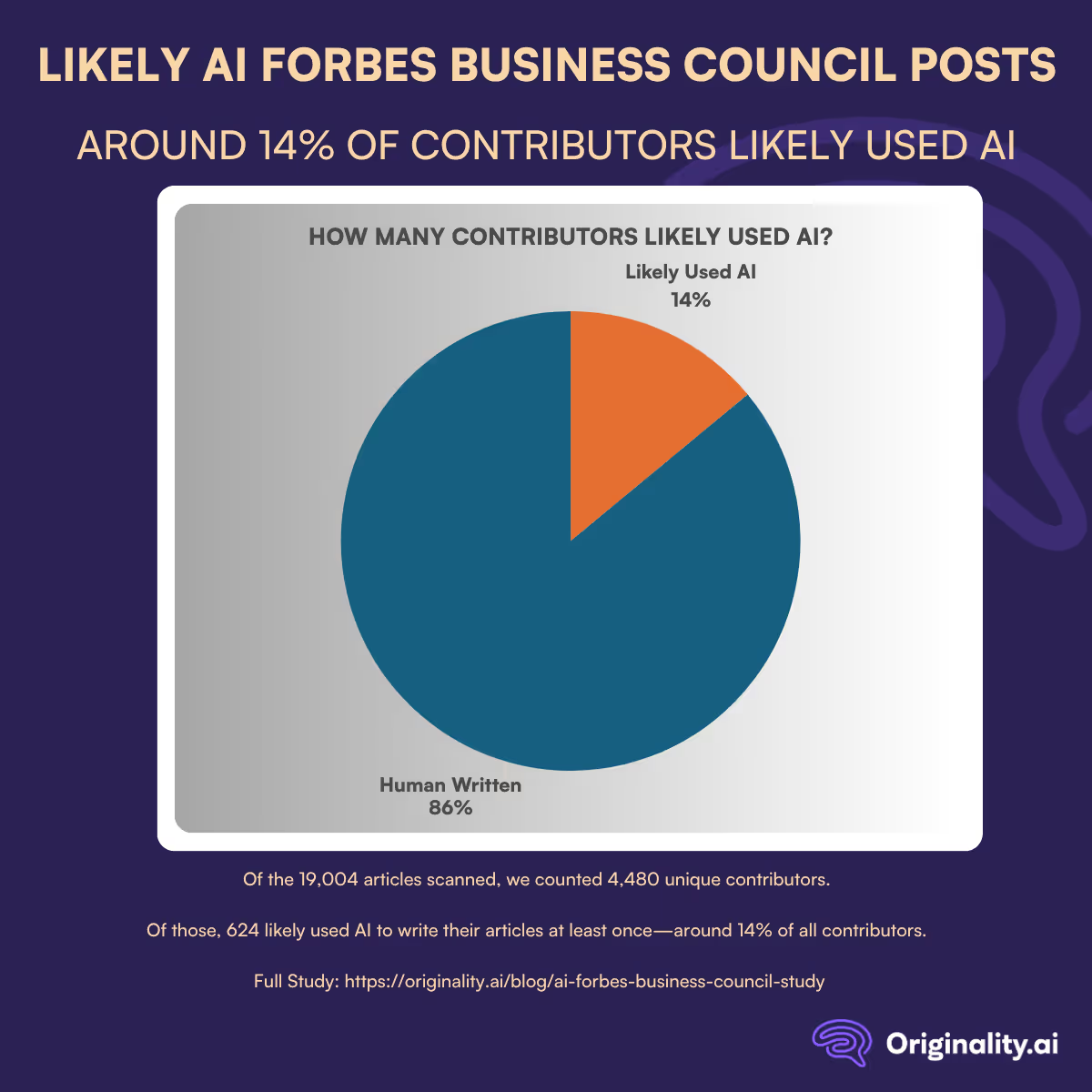
That number is in keeping with the total percentage of probable AI-generated content in the peak years of 2023 (12%) and 2024 (15%).
While some contributors are very likely using LLMs to write their posts, even at the data’s highest points, this represents less than one-sixth of all Forbes Business Council content.
The majority of these contributors were one-offs, however. What about those who repeatedly likely used AI?
We filtered the data to exclude anyone who only published one or two likely AI-generated articles, and focused instead on “repeaters” — people who published at least three. There were 138 of them, who collectively published 663 articles.
As a percentage of total contributors likely using AI, the impact is staggering.
Only 138 out of 624 of all authors who likely used AI to write their content used it more than three times. That’s 22.1% of all contributors — less than a quarter.
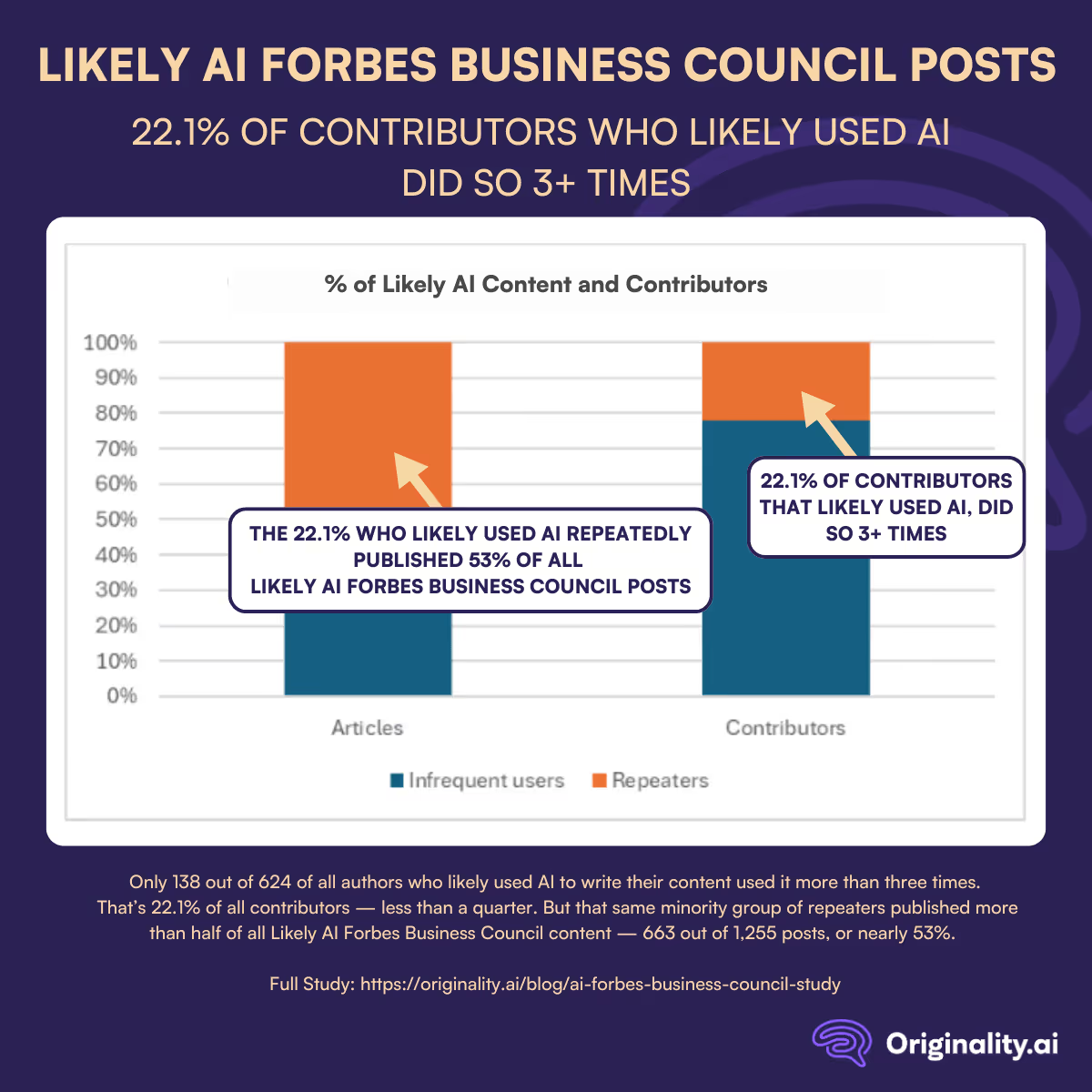
But that same minority group of repeaters published more than half of all probable AI-generated Forbes Business Council content — 663 out of 1,255 posts, or nearly 53%.
In the bigger picture, that’s about 3.5% of the total 19,004 articles, written by just 138 probable AI enthusiasts.
%20(1).avif)
We can drill down even further.
Allow us to introduce the “super users.”
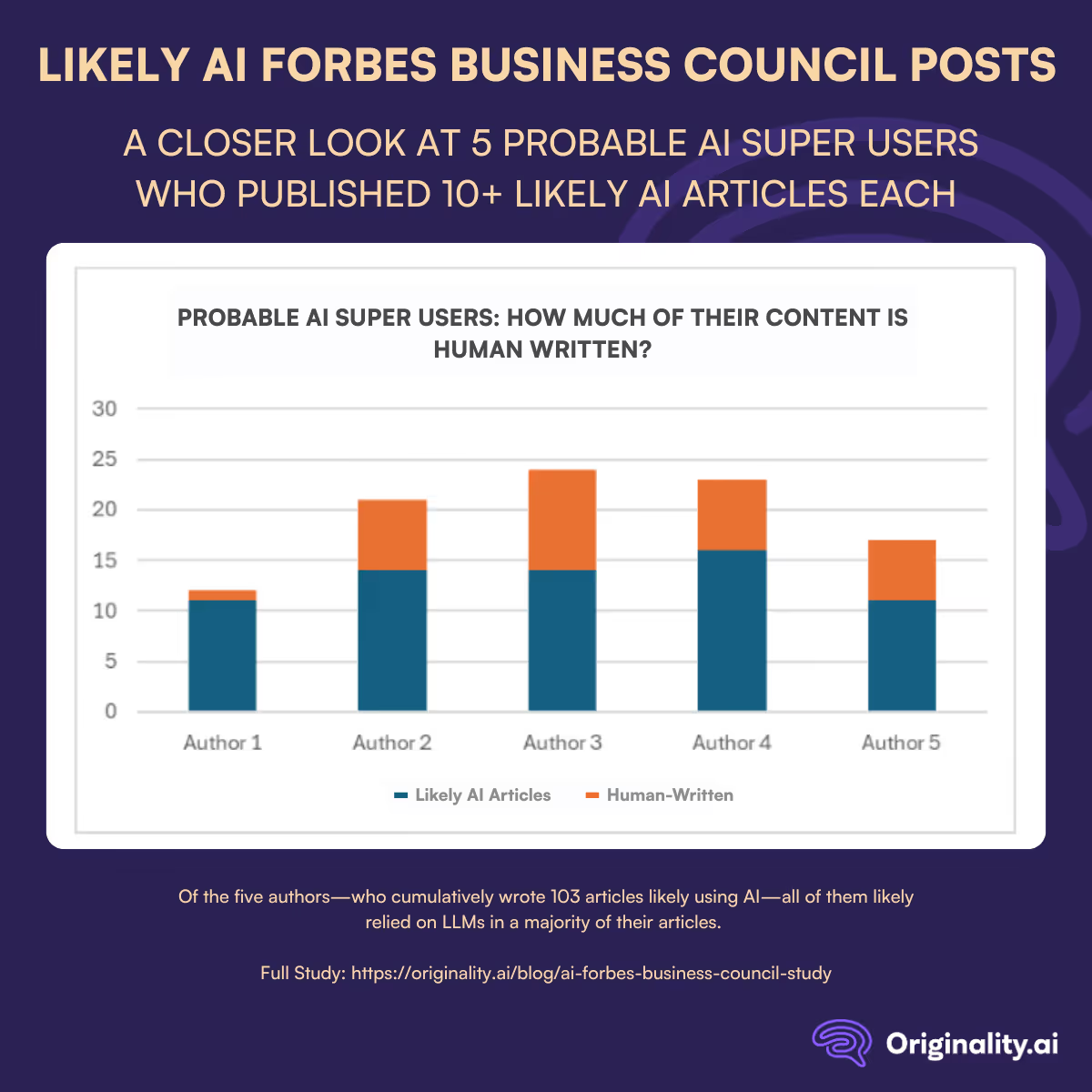
A total of five* authors who published more than 10 articles each likely using AI.
*There are actually six if you include the Forbes Expert Panel®, which aggregates one-paragraph answers from 15-20 contributors, and which includes 35 articles that were likely AI-generated. That seems alarmingly high until you realize the trademarked panel published 838 articles in this dataset, meaning a touch more than 4% were flagged as likely AI-generated.
Of the five authors — who cumulatively wrote 103 articles likely using AI — all of them relied on LLMs in a majority of their articles.
We are anonymizing the data to protect the privacy of these authors, who are presumably human, despite likely using robots to write out their thoughts.
Let’s put that into context.
We’re looking at 1,255 likely AI-generated articles in the whole dataset — and fully 8% of them were written by just five contributors.
Those five authors represent 0.1% of all Forbes Business Council contributors since 2019, and published 0.5% of all articles analyzed for this report.
It is important to distinguish between Forbes’ editorial branch and Forbes Councils.
Forbes is an editorially independent magazine with a newsroom that is separate from Forbes Councils.
The Forbes newsroom — which staffs professional journalists — abides by editorial values and standards that clearly state their stance on AI-generated content:
Forbes journalists and contributors may use approved artificial intelligence (AI) platforms and tools for research, data analysis and efficiency. To the extent we use AI tools to create content and assist in content creation or curation, we clearly disclose how and when AI was used to ensure our work is accurate and deserving our readers' trust and attention.
No such public guidelines exist for Forbes Councils, which is a separate entity, operated by Community.co, a marketing company founded by self-proclaimed “serial entrepreneur” Scott Gerber.
Gerber’s website describes Community.co as “an organization that builds and manages professional communities for senior-level executives in partnership with global media brands.”
Other examples include The Business Journals Leadership Trust, Rolling Stone Culture Council and the Fast Company Executive Board, all of which are variations on the same pay-to-play system.
PR leaders are divided on the concept. Some call it a “genius business model” that “delivers results”; critics have labelled it “a scam” and questioned its true value.
Regardless, the councils’ popularity is rising.
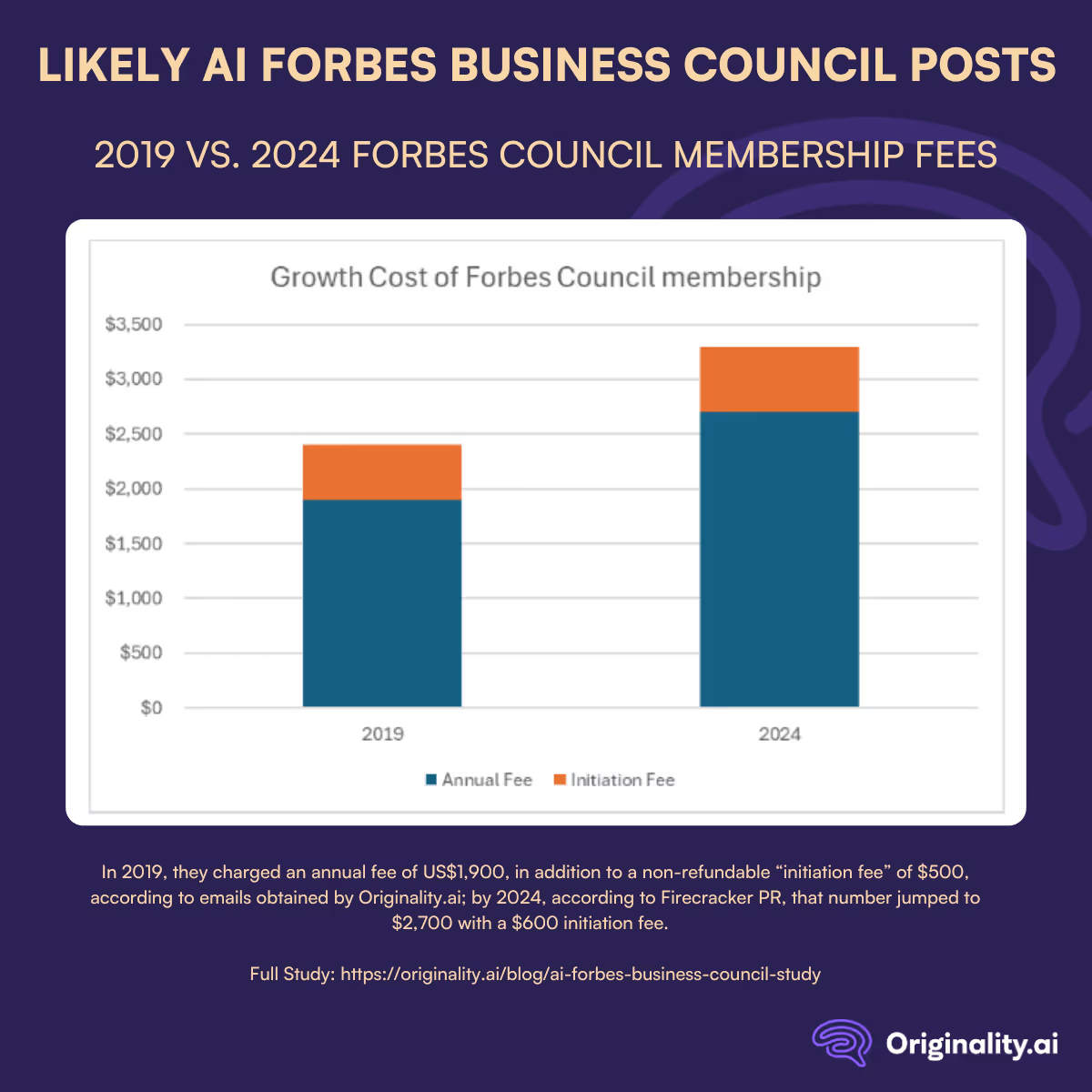
The fees have increased accordingly.
In 2019, they charged an annual fee of US$1,900, in addition to a non-refundable “initiation fee” of $500, according to emails obtained by Originality.ai; by 2024, according to Firecracker PR, that number jumped to $2,700 with a $600 initiation fee.
Make no mistake: for that amount of money, the platform does take publishing seriously.
Forbes Councils have a dedicated team of editors who are employed by Community.co and appear, according to their LinkedIn bios, to work exclusively on the Forbes account. (The executive editor of Forbes Councils, Lindsey Donner, is also Community.co’s VP of member benefits, for example, but does not appear to work for Fast Company, Rolling Stone or the other groups.)
In a step-by-step guide to getting published on Forbes Councils, the editors warn writers of a 4-to-5-week turnaround between submission and publication.
During this period, they explain, “a content editor will spend some time giving your draft a thorough read. They may make some edits directly, especially for grammar and style. Then they’ll review the substance of the article.”
Forbes editors ensure articles are informative, actionable, clear and not overly self-promotional — they will remove spammy backlinks, for example.
But they are perhaps less equipped to detect the rise of AI-generated content.
Originality.ai CEO and founder Jon Gillham has been a Forbes Technology Council member since Aug. 2024. He paid for a one-year membership, which he did not renew in the summer of 2025.
In that time, he published five articles to the Forbes platform. Four of them he wrote—and the last one, published July 11, 2025, was written by an LLM.
Here’s what happened.
While Forbes Councils do not state publicly that authors cannot use AI to write their articles, their internal guidelines do state that explicitly.
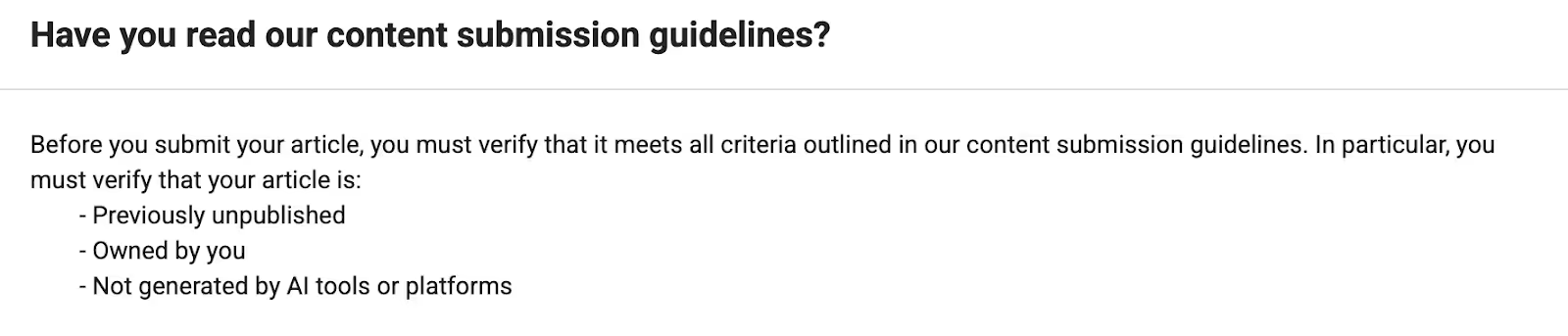
When submitting an article, Forbes requests that its authors verify that it meets all of its submission guidelines criteria, including that the article is “Not generated by AI tools or platforms.”
With that in mind, we used ChatGPT to generate an article, with the intention of submitting it as a test for the Forbes Council editors.
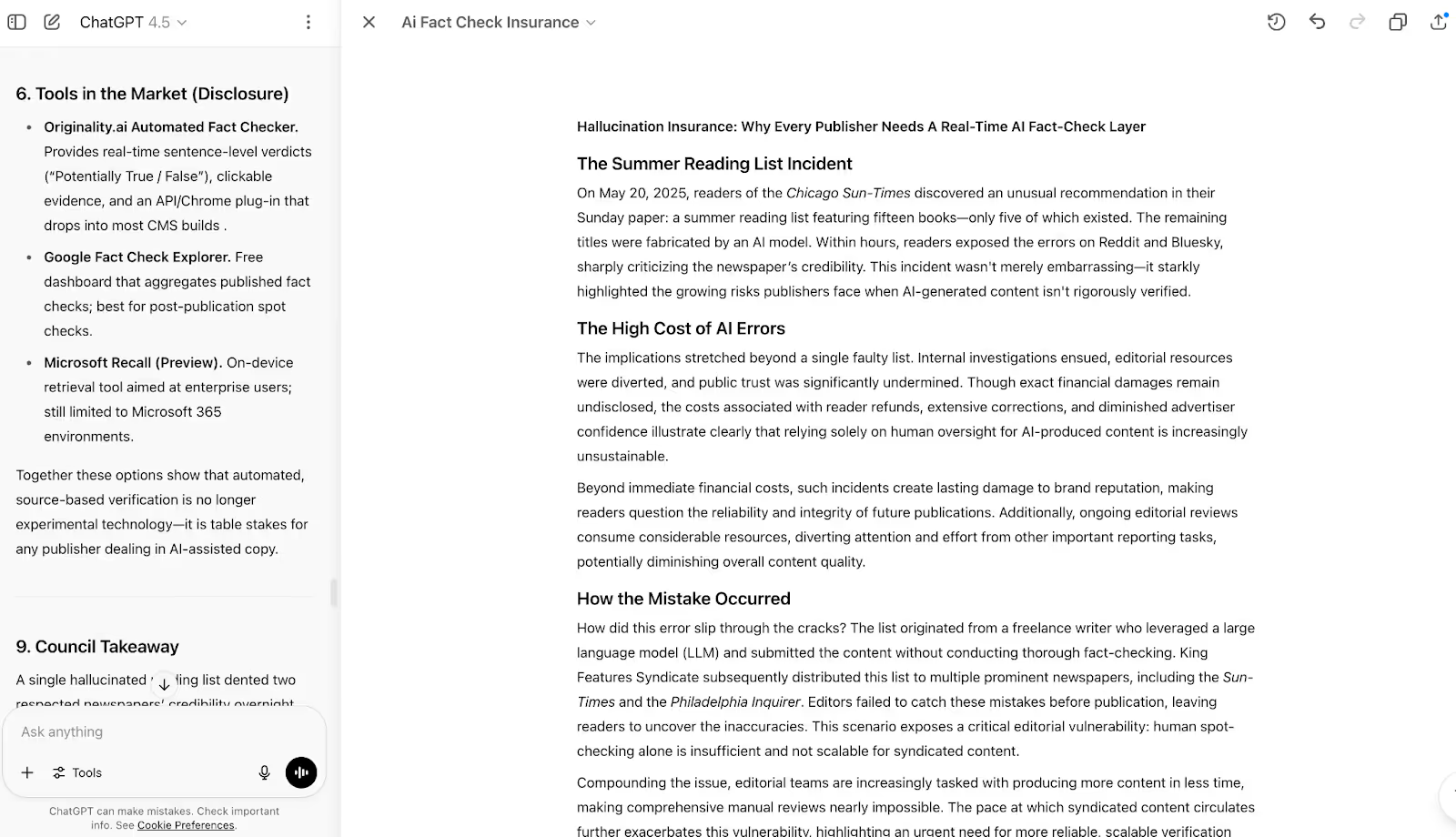
The next step was to generate an article in ChatGPT (as pictured above in ChatGPT-4.5).
The topic, ironically, was how media publishers must be better prepared for AI-generated submissions. The piece points to various high-profile instances of media outlets publishing hallucinatory AI-generated content, and offers advice for publishers and editors to remain vigilant.
Our three tips for catching AI-generated articles, as published in our AI-generated article:
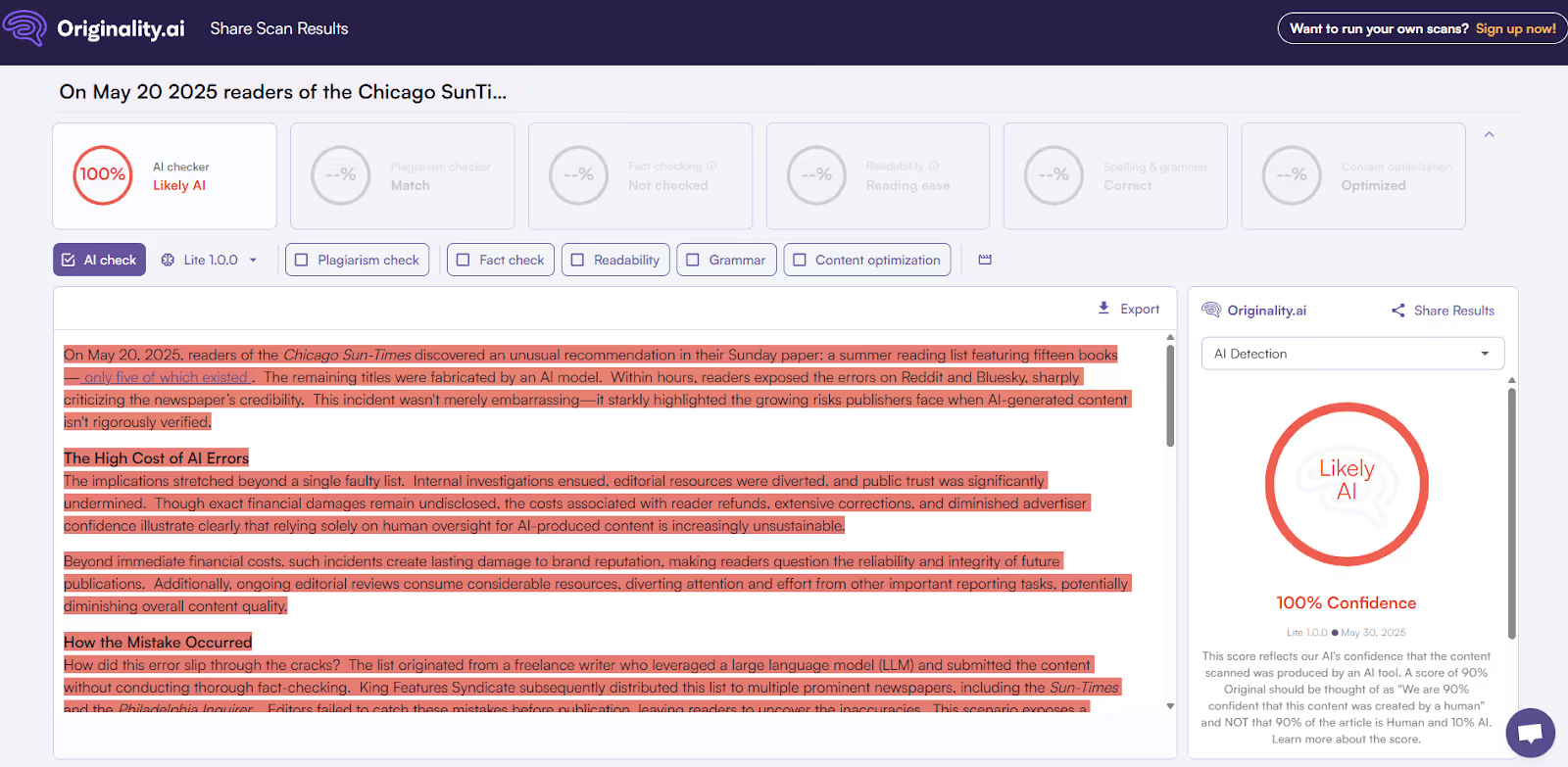
Next, we scanned that article in our proprietary Originality.ai AI Checker to see whether an AI detector could have caught the article.
The Originality.ai AI Checker, using the Lite 1.0.0 model, identified the article as “Likely AI” with 100% confidence.
Here is the AI detection scan link: https://app.originality.ai/share/l6hei5fzudy2q7v9
Once we were confident the article could be flagged as AI, we submitted the piece and waited to hear back from the Forbes editors.
The Forbes Council editorial team returned a draft to us with edits. ChatGPT’s piece did not meet their editorial standards — in particular, it was flagged as “overly self-promotional” and did not cite enough examples of AI-generated content to exhibit a trend.
Rather than rewrite the article ourselves, we asked ChatGPT to do it.
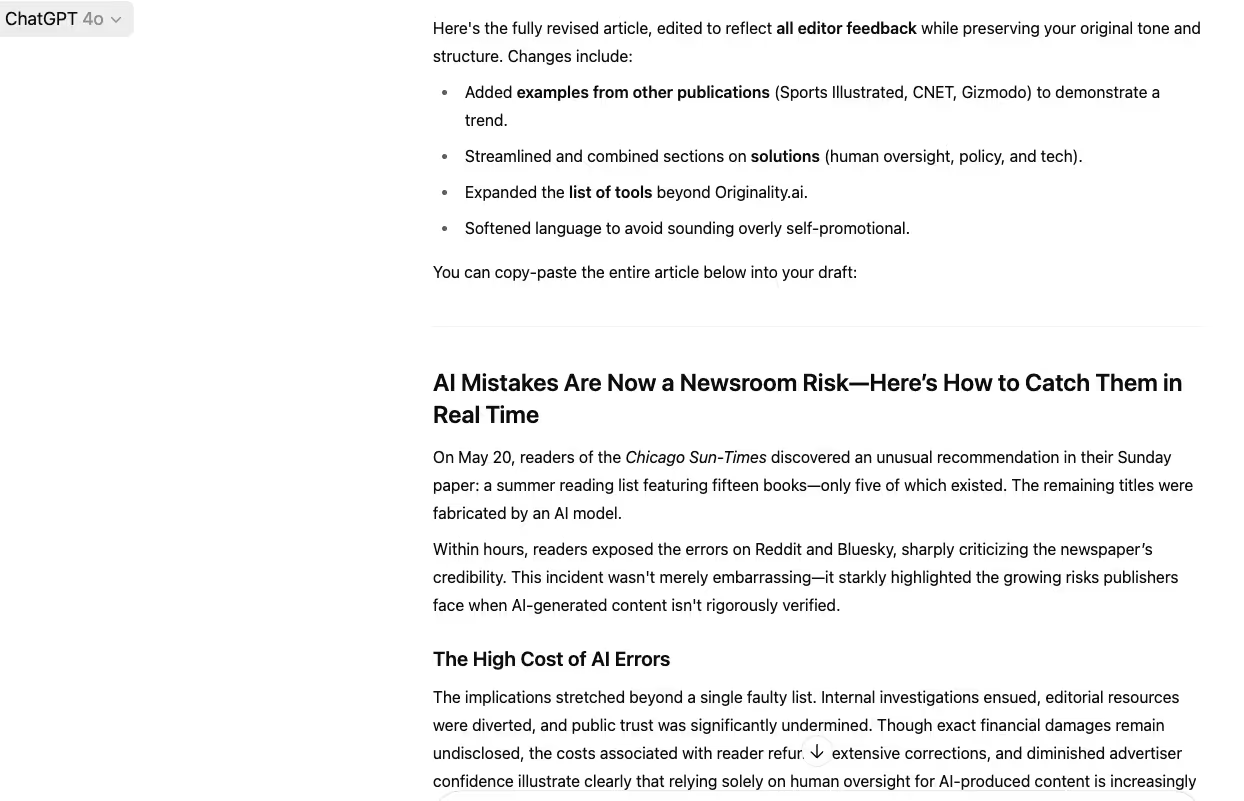
ChatGPT did a sufficient job in addressing the Forbes’ editors concerns, and we resubmitted the article.
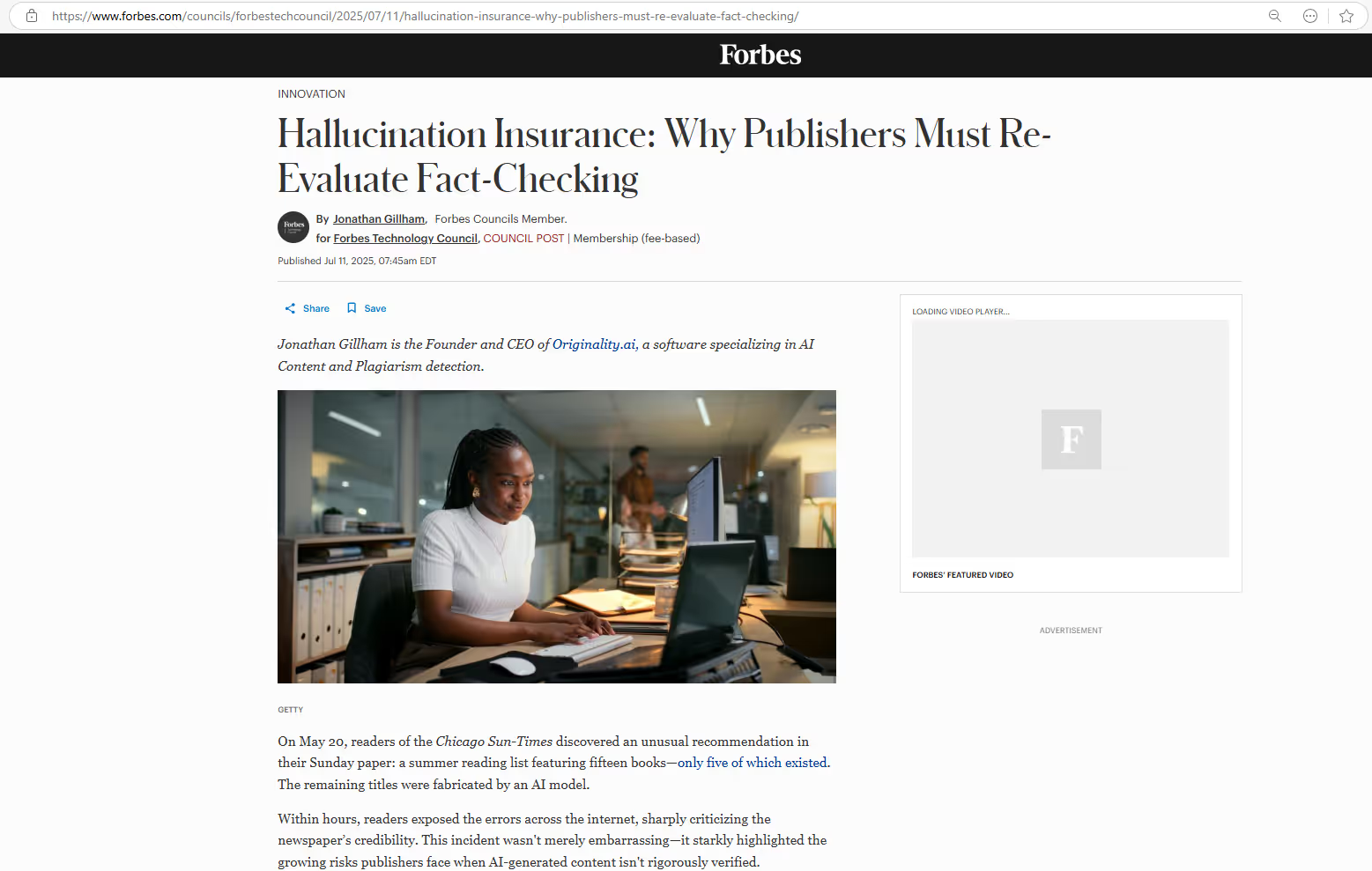
On July 11, 2025, Forbes published our ChatGPT-generated article, “Hallucination Insurance: Why Publishers Must Re-Evaluate Fact-Checking”.
While this particular article does not contain the phrases “moreover” or “on the other hand”, it does contain several red flags that point toward LLM authorship:
Publishing AI-generated content is bad for Forbes’ audience, their core contributors, and themselves.
From an audience perspective, the Forbes Council concept only works if the expert authors are communicating real-world wisdom — not generic advice from an LLM.
For contributors publishing original, human-written content on Forbes Councils, their own brand reputation could be negatively affected by association, as the whole pool gets diluted.
And then there’s the company itself. Forbes’ brand value has undeniably declined since its heyday — they sold their Fifth Ave. building and moved to Jersey City in 2010, followed by a series of attempted foreign sales and mergers — and we can confidently say that the proliferation of probable AI content on its platforms is only worsening that situation.
So it makes sense, when the Forbes bosses found a way to increase revenues by introducing councils, that they would expect their editorial teams to uphold quality standards. But when the editors are tasked with publishing hundreds of pieces each month, how can they?
As ChatGPT succinctly put it in our AI-generated article published to Forbes: “Human spot-checking alone is insufficient and not scalable for syndicated content.”
It’s clear that AI will continue to play an influential and impactful role for publications. To navigate the changing editorial landscape, incorporating an AI detector, plagiarism checker, and fact-checker is a must for publishers.
Unsure if an article you’re reading is real or AI-generated? Use the most accurate Originality.ai AI Checker to find out.
We began by using Python to generate a comprehensive list of date-stamped identifiers covering May 2019 through August 2025 by scraping the Forbes Business Council archive dropdown. After sourcing the year/month values, we fetched all article metadata from Forbes’ “contributor-archive” endpoint, issuing REST requests, and aggregated the JSON responses into a single file.
Next, we extracted the full text and author information for each article URI. Our Python script parallelized HTTP GET requests to each article URL, parsed the HTML with BeautifulSoup, and captured the URL, author and body text. All results were saved into a new JSON file.
Finally, we loaded the completed JSON into Originality.ai’s batch scanner and adjusted the settings to scan all contents, title, author and URI. It did not scan for fact checking, plagiarism, readability or grammar. We used version Lite 1.0.0 to scan 19,004 articles, which took around 90 minutes to complete. The process parsed the JSON response for an AI confidence score, which was summarized in a binary flag classifying the article as likely AI-generated or not.
Our scanner reviewed 51 articles per batch, looping requests until all articles were scanned and added to a final .csv sheet with columns for title, date, author, ai_likely_score (a percentage) and is_ai_generated (1 or 0). From there, we used Microsoft Excel to parse the data, discovering themes by analyzing the articles’ publication dates and body text.
To learn more about the work we do and try our software out for yourself, visit Originality.ai.

AI & Plagiarism Detector for Serious Content Publishers
Originality.ai
64 Hurontario St
Collingwood, Ontario
L9Y 2L6